Capital markets, insurance and pensions
- Syllabus
- Indian economy and issues relating to mobilisation of resources
- As of
- October 2026
- primary market
- secondary market
- initial public offering
- bond yield
- government securities
- SEBI
- derivatives
- insurance penetration
- IRDAI
- foreign direct investment in insurance
- PFRDA
- National Pension System
- Unified Pension Scheme
- defined benefit and defined contribution
- Financial Stability and Development Council
The first principle
Banks are not the only bridge between savers and investors. A firm or government can sell shares or bonds directly to savers, an insurer pools many small premiums to pay the few who suffer a loss, and a pension fund turns decades of small contributions into an income for old age. All three hold savings for long periods, which is what roads, factories and housing need, so deep markets for them let a country finance growth without leaning only on banks and the budget.
The core
Markets for shares and bonds
- Primary and secondary markets. In the primary market a company or government raises new money by issuing securities, as in an initial public offering (IPO), a rights issue or a government bond auction, and the money goes to the issuer. In the secondary market, the stock exchanges, investors trade existing securities among themselves, so the issuer receives nothing, but the ability to sell at any time is what makes people willing to buy in the primary market.
- Equity and debt. A share is part ownership that earns dividends and a claim on what is left after creditors are paid, while a bond is a loan that pays a fixed coupon and returns the principal at maturity. Government securities, issued by the Reserve Bank of India (RBI) for the Union and States, are the safest and largest part of the bond market, and the ten year government bond yield is the benchmark for long term interest rates.
- Derivatives. Futures and options are contracts whose value depends on an underlying share or index; they let firms and investors hedge risk, but because they need only a small margin they also allow highly leveraged betting.
Worked example: why bond prices fall when yields rise
- A two year bond with a face value of Rs 1,000 pays a coupon of 7 per cent, that is Rs 70 a year, and returns Rs 1,000 at the end. When the market yield is 7 per cent its price is 70 ÷ 1.07 + 1,070 ÷ 1.07² = 65.42 + 934.58 = Rs 1,000.
- If market yields rise to 8 per cent, nobody will pay Rs 1,000 for a 7 per cent coupon, and the price falls to 70 ÷ 1.08 + 1,070 ÷ 1.08² = 64.81 + 917.35 = Rs 982.17. If yields fall to 6 per cent the price rises to Rs 1,018.33.
- Why it matters. Banks holding government securities gain when yields fall and lose when they rise, and heavy government borrowing, which pushes yields up, raises the cost of capital for every firm.
Insurance and pensions
- Insurance pools risk. If 1,000 households each face a 1 in 100 chance of a loss of Rs 1 lakh, each can pay a premium a little above Rs 1,000 instead of risking the whole loss alone; insurers then invest the premiums for years before claims fall due, which makes life insurers large long term investors.
- Two designs of pension. A defined benefit pension promises a fixed share of final salary, so the employer carries the risk that returns or longevity turn out worse than expected; a defined contribution pension builds a personal fund from contributions, and the pension depends on what that fund earns, so the worker carries the risk.
Dimensions
- Growth. Long term savings in shares, bonds, insurance and pensions finance infrastructure and firms that banks, which fund themselves with short deposits, cannot safely lend to for twenty years.
- Social protection. Most Indian workers are informal, with no employer pension, so voluntary schemes such as the National Pension System (NPS) and Atal Pension Yojana are their only formal old age income.
- Fiscal. The old defined benefit pension for government employees is unfunded, so each year's pensions are paid from that year's revenue; a funded scheme moves that burden into a fund built up in advance.
- Stability. Market crashes, insurer failures or a run on a debt fund can spread to banks, so the regulators coordinate through the Financial Stability and Development Council (FSDC), set up in 2010 and chaired by the Finance Minister.
In practice
Capital markets
- The regulator. The Securities and Exchange Board of India (SEBI) was set up in 1988 and given statutory powers by the SEBI Act, 1992, and the securities scam exposed later that year showed why a strong regulator was needed. It regulates exchanges, brokers, mutual funds and listed companies, using disclosure rules, insider trading regulations and the power to bar wrongdoers.
- Market plumbing. Shares are held in electronic form in depositories under the Depositories Act, 1996, and India moved to settlement one working day after a trade (T+1) in January 2023, among the fastest cycles of any major market.
- Bonds and global investors. Indian government securities entered the JP Morgan emerging market bond index from June 2024, drawing foreign money into the bond market, while the corporate bond market stays shallow and dominated by highly rated issuers.
- The derivatives problem. A SEBI study of July 2025 found that 91 per cent of individual traders in equity derivatives lost money in 2024-25, with net losses of more than Rs 1 lakh crore, even after SEBI had raised contract sizes and limited weekly options from late 2024.
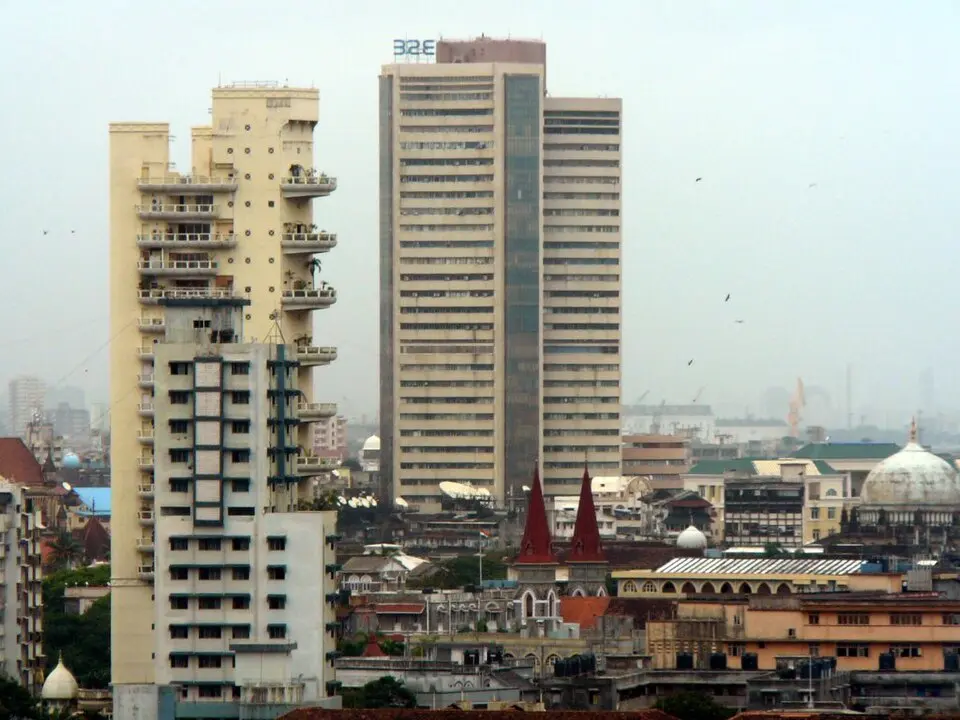

Insurance
- Opening the sector. The Malhotra Committee (1994) recommended private entry, and the Insurance Regulatory and Development Authority Act, 1999 created the regulator now named the Insurance Regulatory and Development Authority of India (IRDAI). The cap on foreign direct investment (FDI) rose from 26 per cent to 49 per cent in 2015 and 74 per cent in 2021, and the Sabka Bima Sabki Raksha (Amendment of Insurance Laws) Act 2025, passed by the Lok Sabha on 16 December and the Rajya Sabha on 17 December 2025, raised it to 100 per cent.
- Low penetration. Insurance premiums were 3.7 per cent of gross domestic product (GDP) in 2024-25, 2.7 per cent for life and 1.0 per cent for non life, and premium per person was about 97 US dollars (IRDAI Annual Report 2024-25). The regulator's stated aim is insurance for all by 2047.
Pensions
- NPS. The National Pension System replaced the defined benefit pension for Central government employees joining from 1 January 2004, except the armed forces, and was opened to all citizens in 2009. Employees contribute 10 per cent of basic pay and dearness allowance and the government 14 per cent. The Pension Fund Regulatory and Development Authority (PFRDA), set up in 2003, became statutory under the PFRDA Act, 2013. Together NPS and Atal Pension Yojana managed more than Rs 14 lakh crore of assets in 2025 (PFRDA).
- The Unified Pension Scheme (UPS). After a committee under Finance Secretary T V Somanathan reviewed NPS, the Union notified UPS on 24 January 2025, effective 1 April 2025, as an option within NPS for Central government employees. It assures 50 per cent of average basic pay over the last 12 months for 25 years of service, proportionately less for 10 to 25 years, a minimum of Rs 10,000 a month after 10 years, a family pension of 60 per cent and dearness relief. The employee still pays 10 per cent while the government's share rises to 18.5 per cent, and a lump sum of one tenth of monthly pay and dearness allowance for every six months of service is paid at retirement.
- Worked example. An employee with average basic pay of Rs 1,00,000 over the last year and 25 years of service gets an assured Rs 50,000 a month plus dearness relief; with 20 years of service the payout is 50,000 × 20 ÷ 25 = Rs 40,000. If pay and dearness allowance at retirement are also Rs 1,00,000, 25 years make 50 half years, so the lump sum is 50 × 1,00,000 ÷ 10 = Rs 5 lakh.
Issues and way forward
- Retail speculation. Cheap trading apps drew millions of first time investors into derivatives where most lose; limits on leverage, suitability checks and investor education are the response.
- A shallow corporate bond market. Most firms still borrow from banks, and bonds below the AA rating find few buyers; credit enhancement for infrastructure bonds, a working market for repurchase deals in corporate bonds and wider investment mandates for insurers and pension funds would deepen it.
- Under insurance. Low awareness, mis selling and slow claims keep penetration near 3.7 per cent; 100 per cent FDI should bring capital and products, while simple standard policies and quick claims build trust.
- The return of the old pension. Some States, including Rajasthan, Chhattisgarh, Jharkhand, Punjab and Himachal Pradesh, announced a return to the old pension scheme from 2022, which the RBI warned would load future budgets with unfunded liabilities; UPS tries to give assurance while keeping a funded, contributory design.
- Coverage of informal workers. Atal Pension Yojana pays a small fixed pension and many subscribers stop contributing, so automatic enrolment through employers and platforms, and contributions matched by the state for low earners, are the routes to universal old age income.
Common confusions
- Primary and secondary market. In the primary market new securities are sold and the issuer gets the money; in the secondary market existing securities change hands between investors.
- Bond price and yield. They move in opposite directions: a rise in market yields lowers the price of an existing bond because its fixed coupon is now worth less.
- NPS and UPS. NPS pays whatever the accumulated fund can buy, so the employee bears market risk, while UPS assures a share of last pay, so the government bears it; UPS is an option within the NPS framework, not a separate fund.
- Insurance penetration and density. Penetration is premiums as a share of GDP, while density is premium per person, so a rich country can have high density with modest penetration.
For the exam
- Keyword bank: primary and secondary market, initial public offering, government securities, bond yield, derivatives, T+1 settlement, SEBI, insurance penetration and density, IRDAI, 100 per cent FDI in insurance, PFRDA, National Pension System, Unified Pension Scheme, defined benefit and defined contribution, FSDC.
- Previous year questions: Practise the previous year questions on this topic →
- Use in an answer:
- Introduction with data: India's insurance penetration was only 3.7 per cent of GDP in 2024-25 (IRDAI), and 91 per cent of individual traders in equity derivatives lost money in 2024-25 (SEBI, July 2025).
- Introduction with a source: The Unified Pension Scheme, notified on 24 January 2025, assures Central government employees 50 per cent of their average basic pay for 25 years of service while keeping the contributory design of the National Pension System.
- Conclusion: Deep markets for long term savings let a country fund infrastructure without relying only on banks and the budget, so protecting the small investor is as important as attracting the large one.
- Conclusion: India's pension and insurance gaps are the other face of its informal economy, and closing them needs simple products, automatic enrolment and trust built on quick claims.