Radicalisation, media and social media
- Syllabus
- Challenges to internal security through communication networks, role of media and social networking sites in internal security challenges
- As of
- October 2026
- online radicalisation
- echo chamber
- algorithmic amplification
- misinformation and disinformation
- deepfake
- synthetically generated information
- safe harbour
- Section 69A
- IT Rules 2021
- Grievance Appellate Committee
- fact check unit
- Shreya Singhal
- Anuradha Bhasin
- deradicalisation
- media literacy
The first principle
A threat to internal security needs people willing to act, and people act on what they believe. Whoever shapes belief at scale holds a security lever; social media has handed it from a few editors bound by law to anyone with a phone, and its algorithms reward whatever holds attention, often outrage. The state's task is to blunt the harmful use of that lever without breaking the freedom of speech that a democracy rests on.
The core
Radicalisation and how it runs
- Radicalisation is a process, not an event. It is the gradual adoption of a belief that justifies violence against an out group, usually starting from a real or felt grievance. Push factors drive a person away from the mainstream, while pull factors, such as belonging, purpose, status and an enemy to blame, draw the person towards a group.
- Extremism and terrorism are later stages. A person can hold extreme views and never act, so the law punishes incitement, membership of a banned group and violence, not belief.
- Online radicalisation is faster and more private. Recommendation algorithms show more of what a user engages with, so a curious viewer can be led into an echo chamber, a closed space where only one view is heard. Encrypted messaging then lets a recruiter work on one person directly, which is how lone actors appear without meeting any group.
Information disorder
- Three kinds of harmful content. The Council of Europe's report on information disorder (2017) separates misinformation, which is false but shared without intent to harm, disinformation, which is false and spread on purpose, and malinformation, which is true but released to cause harm, such as a leaked private video.
- Deepfakes are synthetic media. They are images, audio or video made or altered by generative artificial intelligence (AI) models, which learn the patterns of real faces and voices from large data sets and produce new content that looks authentic (see the artificial intelligence note). A fake can trigger violence before it is checked, and the existence of fakes lets anyone dismiss a real recording as false.
Who regulates what
- Platforms are intermediaries. Section 79 of the Information Technology (IT) Act 2000 gives an intermediary safe harbour, meaning it is not liable for what users post, so long as it follows due diligence and removes unlawful content when told to by a court or the government.
- The government can block content. Section 69A, added by the 2008 amendment, lets the Centre, acting through the Ministry of Electronics and Information Technology (MeitY), block public access to content in the interest of sovereignty, security, public order or friendly relations, through a committee procedure under the Blocking Rules of 2009, with the orders kept confidential.
- Media regulation is split. The Press Council of India (Press Council Act 1978) sets norms for print, television follows the Programme Code under the Cable Television Networks (Regulation) Act 1995, and digital news follows Part III of the IT Rules 2021, overseen by the Ministry of Information and Broadcasting (MIB).
Dimensions
- Security. Hostile states and terror groups use social media for propaganda, recruitment and psychological operations, so information warfare is part of hybrid war (see the external actors note).
- Social. Rumours on messaging apps have triggered mob violence against strangers, and communal content can turn a local dispute into a riot across districts within hours.
- Political. Networks of fake or paid accounts can distort debate and elections, as can deepfakes of leaders.
- Legal and constitutional. Article 19(1)(a) protects speech, and Article 19(2) allows only reasonable restrictions on listed grounds, such as security of the State, public order and incitement to an offence.
- Economic and psychological. Platforms earn from engagement, so the business model rewards content that provokes, while people share what fits their group identity before they check, and a correction rarely reaches everyone the original reached.
In practice
Cases and their lessons
- Mumbai, November 2008. The attackers' handlers watched live television coverage of the commando operation and passed positions to the gunmen. This led to an amendment of the Cable Television Networks Rules in 2015 barring live coverage of anti terror operations, with media limited to briefings by a designated officer.
- Bengaluru and other cities, August 2012. Morphed images and threatening bulk text messages caused thousands of people from the North East to leave southern cities in fear. The government limited bulk messages for a time and blocked hundreds of web pages; a rumour had moved a population.
- Mob violence over child lifting rumours, 2018. Forwarded messages led to killings of strangers in several States. WhatsApp then limited forwarding to five chats and labelled forwards: friction in design slows a rumour better than takedown.
- Online recruitment by the Islamic State, 2014 to 2016. Small groups of young people from Maharashtra and Kerala travelled abroad to join the group after contact made online, which taught agencies that recruitment had become personal and that families often notice first.
- Pahalgam and Operation Sindoor, April to May 2025. During the conflict with Pakistan a flood of false videos and claims circulated, the Press Information Bureau (PIB) Fact Check unit issued frequent rebuttals, and the government ordered the blocking of several thousand accounts, including Pakistani channels. A military crisis now has an information front.
Law, rules and judgements
- Shreya Singhal v Union of India (2015). The Supreme Court struck down Section 66A of the IT Act, which punished "offensive" messages, as vague and overbroad; it upheld Section 69A blocking with its safeguards and read Section 79 to mean that a platform must act on a court or government order, not on private complaints alone.
- Anuradha Bhasin v Union of India (2020). Arising from the internet suspension in Jammu and Kashmir in 2019, the Court held that access to the internet for speech and trade is protected under Article 19, that an indefinite suspension is not permitted and that suspension orders must be published and proportionate. Suspensions now run under Section 20 of the Telecommunications Act 2023 and its Rules of 2024.
- The IT Rules 2021. They made platforms appoint grievance officers, and significant social media intermediaries, those with more than 50 lakh users in India, appoint compliance officers, publish monthly reports and, for messaging services, identify the first originator of a message on a lawful order. A 2022 amendment created Grievance Appellate Committees for users' appeals.
- The fact check unit. A 2023 amendment let a government fact check unit flag false content about the Centre's business for platforms to act on. The Supreme Court stayed its notification in March 2024, and in September 2024 the Bombay High Court struck the provision down in Kunal Kamra v Union of India; the Supreme Court has admitted the Union's appeal but refused to stay that judgement, so the unit cannot operate.
- Takedown by senior officers. From 15 November 2025, takedown notices under Rule 3(1)(d) may come only from officers of Joint Secretary rank, or police officers of Deputy Inspector General rank and above, with a monthly review by a Secretary.
- Synthetic content. An amendment notified on 10 February 2026 and in force from 20 February 2026 brought synthetically generated information within due diligence: lawful synthetic content must be clearly labelled and carry provenance metadata, large platforms must ask users to declare synthetic content and verify it, and the time to act on a court or government order fell from 36 hours to three hours.
- Sahyog portal. Agencies send such notices through a portal run by the Indian Cyber Crime Coordination Centre (I4C) of the Ministry of Home Affairs, and in September 2025 the Karnataka High Court dismissed X Corp's challenge to it.
- Criminal law. The Bharatiya Nyaya Sanhita (BNS) 2023 punishes promoting enmity between groups (Section 196), imputations prejudicial to national integration (Section 197), false statements conducing to public mischief (Section 353) and acts endangering sovereignty, unity and integrity (Section 152), while the Unlawful Activities (Prevention) Act (UAPA) punishes advocacy and incitement of terrorist acts.
Deradicalisation
- Three different aims. Counter radicalisation stops people being drawn in, deradicalisation changes the beliefs of those already drawn in, and disengagement only moves a person away from violence even if the belief stays.
- How it is done. Programmes such as Singapore's Religious Rehabilitation Group, set up in 2003, combine counselling by respected religious teachers, family support, education and a job, and police in several Indian States counsel young people found consuming extremist content online, with their parents, rather than arresting them.
Issues and way forward
- Speed against due process. A three hour deadline limits viral harm but pushes platforms to remove first and check later, and blocking orders under Section 69A are confidential; reasoned orders and a hearing for the user would balance the two.
- Encryption and traceability. Tracing the first originator may require breaking end to end encryption, weakening security for every user; targeted access through metadata and court orders is narrower.
- Labelling depends on detection. Watermarks and metadata can be stripped and detection lags behind generation, so provenance standards need fast public rebuttal behind them.
- Shutdowns are a blunt tool. They stop rumours and also stop payments, schooling and emergency help, so they should be local and short; the Telecommunications (Temporary Suspension of Services) Rules 2024 require every order to be published and cap each order at 15 days, though successive orders can extend a shutdown.
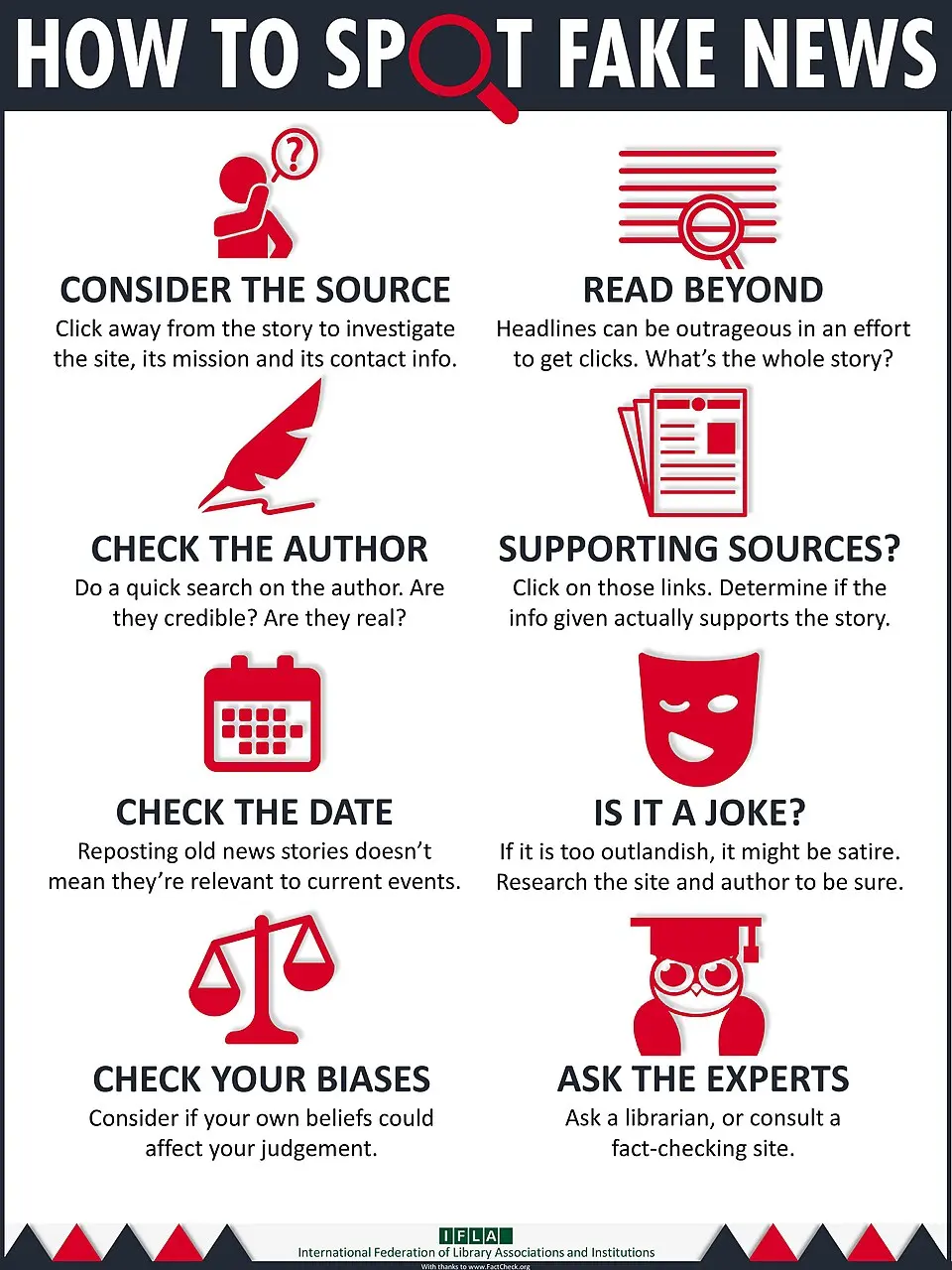
- Literacy and counter narrative. Media literacy in schools, as in Finland, and credible voices such as religious leaders and former extremists reach young people better than any rule.

Common confusions
- Section 66A and Section 69A. Section 66A punished sending an offensive message and was struck down in 2015; Section 69A lets the government block content and was upheld.
- Misinformation and disinformation. Both are false, but disinformation is spread deliberately, pointing to an organised actor.
- Deradicalisation and counter radicalisation. The first works on people already radicalised; the second prevents radicalisation in the wider population.
- Blocking and suspension. Blocking removes particular content or accounts under the IT Act, while suspension shuts off telecom or internet services in an area under the Telecommunications Act.
For the exam
- Keyword bank: online radicalisation, push and pull factors, echo chamber, algorithmic amplification, misinformation and disinformation, deepfake, synthetically generated information, safe harbour (Section 79), blocking (Section 69A), IT Rules 2021, Grievance Appellate Committee, Shreya Singhal (2015), Anuradha Bhasin (2020), deradicalisation, media literacy.
- Previous year questions: Practise the previous year questions on this topic →
- Use in an answer:
- Introduction with data: The amendment to the IT Rules in February 2026 cut the time for platforms to act on a lawful order from 36 hours to three hours, a measure of how fast harmful content now spreads.
- Introduction with a judgement: In Shreya Singhal v Union of India (2015) the Supreme Court struck down Section 66A while upholding Section 69A, drawing the line between punishing offence and blocking content that threatens security.
- Conclusion: Social media cannot be policed into safety alone; quick lawful takedowns must be joined by transparency, media literacy and credible counter narratives.
- Conclusion: The aim is an online space where harmful content travels slower than the truth, without the state judging every opinion.