Terrorism and counter terrorism
- Syllabus
- Role of external state and non-state actors in creating challenges to internal security; linkages of organised crime with terrorism
- As of
- October 2026
- terrorism
- terrorist act
- UAPA
- Section 113 BNS
- National Investigation Agency
- National Security Guard
- Multi Agency Centre
- NATGRID
- Comprehensive Convention on International Terrorism
- UNSC Resolution 1373
- FATF
- deradicalisation
- lone wolf
- state sponsored terrorism
- No Money for Terror
The first principle
Terrorism is violence used as a message: the people killed are rarely the real target, because the aim is to frighten a much larger audience and so force a government to change its policy. A terrorist group therefore needs far less strength than an army, but it does need a cause, recruits, money, weapons and publicity, and it cannot survive if those supplies are cut. Counter terrorism follows from this: it is less about winning a fight than about breaking the chain that keeps a group alive while protecting the society it wants to frighten.
The core
What terrorism is
- No agreed global definition. States disagree over whether armed struggle against occupation is terrorism, so the United Nations (UN) has no single definition and works through 19 sectoral instruments on hijacking, bombing, nuclear terrorism and financing. India proposed a Comprehensive Convention on International Terrorism (CCIT) in 1996, and it is still under negotiation.
- India's legal definition. Section 15 of the Unlawful Activities (Prevention) Act 1967 (UAPA) defines a terrorist act as one done with intent to threaten the unity, integrity, security, economic security or sovereignty of India, or to strike terror in the people, by bombs, firearms, poisons or other lethal means. Section 113 of the Bharatiya Nyaya Sanhita (BNS), in force from 1 July 2024, brought the same idea into the general criminal code, and an officer not below the rank of Superintendent of Police decides whether a case is registered under the BNS or under UAPA.
- Terrorism, insurgency and organised crime. An insurgency seeks to control territory and people and usually fights the state's forces, terrorism seeks to spread fear and often strikes civilians, and organised crime seeks profit; in India the three often share routes, money and weapons, which the organised crime note covers.
How it has changed
- Four waves. The scholar David Rapoport described modern terrorism in four waves, each lasting about a generation: anarchist from the 1880s, anti colonial from the 1920s, new left from the 1960s and religious from 1979. India has met every kind, from left wing extremism to religious and separatist groups.
- New forms. State sponsored terrorism uses militant groups as deniable proxies; lone wolf attacks are carried out by individuals radicalised online with no group contact; and drones, encrypted messaging and crypto assets have lowered the cost of an attack while raising the cost of tracing it.
Dimensions
- Security. Cross border terrorism in Jammu and Kashmir, insurgent groups in the North East, left wing extremism and isolated cells inspired by the Islamic State of Iraq and Syria (ISIS) each need a different response, so India has no single counter terror doctrine but several theatre strategies.
- Economic. Attacks on cities, tourists and investors raise risk premiums and drive away business, which is why terrorists choose places such as Mumbai or Pahalgam that carry economic weight.
- Social. Terrorists hope to provoke a communal backlash that will win them recruits, so social cohesion, calm reporting and a firm law and order response deny them the reaction they seek.
- Legal and rights. Special laws allow longer detention and stricter bail, which helps investigators but raises the risk of misuse, so courts weigh liberty against security case by case.
- Federal. Police and public order are State subjects under the Seventh Schedule, yet terror networks cross States and borders, so a central agency such as the National Investigation Agency (NIA) and a common intelligence grid are needed alongside State police.
- International. Training camps, handlers and money often lie abroad, so diplomacy, extradition, sanctions and financial standards are as much a part of counter terrorism as policing.
In practice
Cases and their lessons
- Kanishka bombing, 1985. Air India Flight 182 was blown up off Ireland by Khalistani extremists based in Canada, killing 329 people, which taught that aviation security and diaspora extremism are national security issues.
- Bombay serial blasts, 1993. A series of bombs on 12 March 1993 killed 257 people, and the explosives came in by sea through a smuggling network, which exposed the link between organised crime and terrorism.
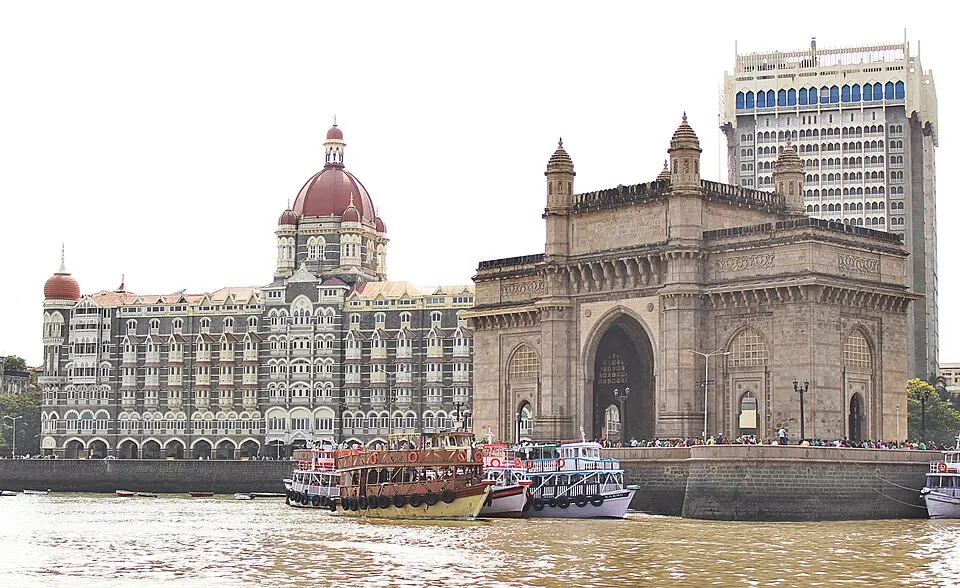
- Mumbai attacks, 2008. Ten Lashkar-e-Taiba (LeT) terrorists came by sea from Karachi on 26 November 2008 and killed 166 people over about three days. The lessons were the need for a federal investigating agency, faster special forces, a coastal security grid and shared intelligence, which led to the NIA, regional hubs of the National Security Guard (NSG) and the coastal security overhaul. Tahawwur Rana, accused in the conspiracy, was extradited from the United States in April 2025.
- Pathankot, 2016. Terrorists entered an Air Force base in January 2016, and a committee under Lieutenant General Philip Campose reviewed the perimeter security of military bases.
- Pahalgam, 2025. After the Pahalgam attack of 22 April 2025, India answered with Operation Sindoor on the night of 6 and 7 May 2025 against terrorist sites in Pakistan and Pakistan occupied Jammu and Kashmir (PoJK), and stated that it would make no distinction between terrorists and their sponsors; the Jammu and Kashmir note carries the details.

Laws
- TADA and POTA. The Terrorist and Disruptive Activities (Prevention) Act 1985 was upheld in Kartar Singh v State of Punjab (1994) but lapsed in 1995 after widespread misuse, and the Prevention of Terrorism Act 2002 was upheld in People's Union for Civil Liberties (PUCL) v Union of India (2004) but repealed the same year.
- UAPA. The 1967 Act was made against secession and unlawful associations; the 2004 amendment added the terrorism chapter; the 2008 amendment after the Mumbai attacks allowed 180 days of detention before a charge sheet and, through Section 43D(5), barred bail where the accusation appears prima facie true; the 2012 amendment added threats to economic security; and the 2019 amendment allowed individuals, not only organisations, to be designated as terrorists.
- The courts on bail. In NIA v Zahoor Ahmad Shah Watali (2019) the Supreme Court held that a court deciding bail under UAPA should not weigh the evidence in depth, but in Union of India v K A Najeeb (2021) it held that long detention without trial can justify bail despite that bar. In Arup Bhuyan v State of Assam (2023) it held that membership of a banned organisation is itself an offence.
Institutions
- NIA. Created by the NIA Act 2008 to investigate scheduled offences anywhere in India through special courts; the 2019 amendment let it investigate offences against Indians and Indian interests abroad and added human trafficking, counterfeit currency, prohibited arms and cyber terrorism.
- Intelligence. The Intelligence Bureau's Multi Agency Centre (MAC) shares alerts with State units, and the National Intelligence Grid (NATGRID), conceived after the Mumbai attacks, links government and private databases for authorised agencies.
- Response. The NSG, raised in 1984 and governed by the NSG Act 1986, set up hubs at Mumbai, Chennai, Kolkata and Hyderabad in 2009, and States have their own anti terror squads.
- Global cooperation. India works through UN Security Council Resolution 1267 (1999), which sanctions listed terrorists, and Resolution 1373 (2001), which obliges every state to criminalise terror financing; it hosted the third No Money for Terror ministerial conference and a special meeting of the UN Counter Terrorism Committee in 2022. The Financial Action Task Force (FATF) placed India in its top category, regular follow up, in its 2024 evaluation.
Issues and way forward
- Slow trials and low convictions. Cases under UAPA often take years, so the accused may spend long periods in jail while victims wait for justice; more special courts, trained prosecutors and digital evidence handling, as the Second Administrative Reforms Commission urged in its 2008 report on combating terrorism, would help.
- Risk of misuse. Wide definitions and strict bail can sweep in dissent, which erodes public trust, so periodic review of designations, independent oversight and time bound trials are the safeguards.
- Coordination. A National Counter Terrorism Centre was proposed in 2012 but shelved after States objected that it would intrude on their police powers, so the MAC and NATGRID carry the coordination load, and joint training with State forces remains vital.
- New technology. Drones, encrypted apps and crypto assets need anti drone systems, lawful access to data and financial monitoring, which the cybersecurity and terror financing notes cover.
- The global gap. Without a CCIT, states can shelter groups by calling them freedom fighters, so India's push for the convention, for UN listings and for FATF pressure on sponsors remains central.
- Prevention. Deradicalisation through families, community leaders and counselling, and counter narratives online, stop recruitment earlier and more cheaply than any operation.
Common confusions
- Terrorism and insurgency. Terrorism aims to spread fear through attacks often on civilians, while an insurgency aims to control territory and people; a group can use terror as a tactic within an insurgency.
- UAPA and BNS Section 113. Both define a terrorist act, but UAPA carries special rules on detention, bail, designation and property, while Section 113 brings the offence into the ordinary criminal code.
- NIA and NSG. The NIA investigates and prosecutes terror cases after the event, while the NSG is a strike force that responds during an attack.
- Resolution 1267 and Resolution 1373. The first lists named individuals and groups for sanctions, while the second sets duties for every state, such as criminalising terror financing.
For the exam
- Keyword bank: terrorist act, Section 15 UAPA, Section 113 BNS, designated terrorist, Section 43D(5), National Investigation Agency, National Security Guard, Multi Agency Centre, NATGRID, CCIT, UNSC Resolution 1373, FATF, deradicalisation, lone wolf, state sponsored terrorism.
- Previous year questions: Practise the previous year questions on this topic →
- Use in an answer:
- Introduction with data: The Mumbai attacks of 2008 killed 166 people and led within weeks to the NIA Act and a tighter UAPA, showing how one attack can reshape a country's counter terror system.
- Introduction with a report: The Second Administrative Reforms Commission (2008) called for a comprehensive anti terror law with strong safeguards and a federal agency to investigate terror offences.
- Conclusion: Counter terrorism succeeds when it cuts the supplies of money, recruits and publicity that keep a group alive, while upholding the rule of law that terrorists seek to provoke the state into abandoning.
- Conclusion: India's response has moved from absorbing attacks to raising the cost for sponsors, but a global convention, faster trials and prevention at home remain unfinished tasks.