VidBodh has grown into First Principles IAS. Same teachers, same free answer writing.

First Principles IASFirst Principles IAS

CSAT · Basic numeracy

Permutations, combinations and probability

53 questions, from 2011 to 2026.

2011

2 questions
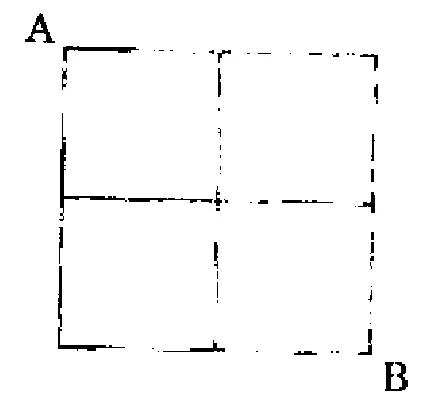
A square divided into a 2 × 2 grid of four equal smaller squares (three vertical and three horizontal lines). A is the top-left corner and B is the bottom-right corner.

2011 · Q25

Study the following figure:

A person goes from A to B always moving to the right or downwards along the lines. How many different routes can he adopt?

Select the correct answer from the codes given below:

  1. (a)4
  2. (b)5
  3. (c)6
  4. (d)7
Show answer

UPSC key: (c)

Basic numeracy · Permutations, combinations and probability

2011 · Q34

There are four routes to travel from city A to city B and six routes from city B to city C. How many routes are possible to travel from the city A to city C?

  1. (a)24
  2. (b)12
  3. (c)10
  4. (d)8
Show answer

UPSC key: (a)

Basic numeracy · Permutations, combinations and probability
2014

1 question
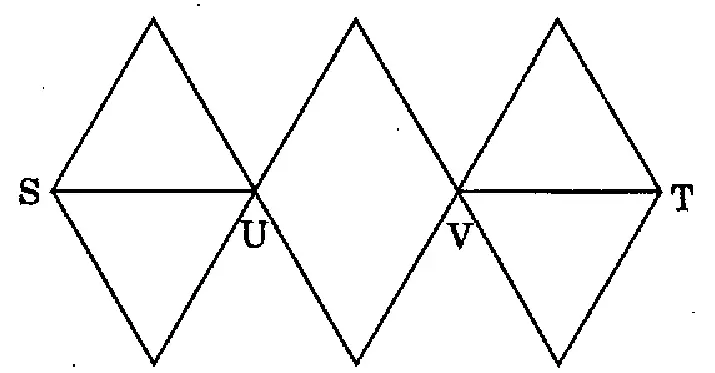
Three rhombuses (diamonds) placed side by side in a row, touching at vertices: the left rhombus has S at its left vertex and touches the middle rhombus at U; the middle rhombus touches the right rhombus at V; T is the right vertex of the right rhombus. A horizontal line joins S to U, and another horizontal line joins V to T (the diagonals of the left and right rhombuses); the middle rhombus has no horizontal diagonal. So between S and U there are 3 paths (upper, middle, lower), between U and V 2 paths (upper, lower), between V and T 3 paths.

2014 · Q44

With reference to the figure given below, the number of different routes from S to T without retracing from U and/or V, is

  1. (a)3
  2. (b)6
  3. (c)9
  4. (d)18
Show answer

UPSC key: (d)

Basic numeracy · Permutations, combinations and probability
2015

5 questions

2015 · Q9

Twelve people form a club. By picking lots, one of them will host a dinner for all once in a month. The number of dinners a particular member has to host in one year is

  1. (a)One
  2. (b)Zero
  3. (c)Three
  4. (d)Cannot be predicted
Show answer

UPSC key: (d)

Basic numeracy · Permutations, combinations and probability
2015 · Q48

A selection is to be made for one post of Principal and two posts of Vice-Principal. Amongst the six candidates called for the interview, only two are eligible for the post of Principal while they all are eligible for the post of Vice-Principal. The number of possible combinations of selectees is

  1. (a)4
  2. (b)12
  3. (c)18
  4. (d)None of the above
Show answer

UPSC key: (d)

Basic numeracy · Permutations, combinations and probability

2015 · Q49

A student has to opt for 2 subjects out of 5 subjects for a course, namely, Commerce, Economics, Statistics, Mathematics I and Mathematics II. Mathematics II can be offered only if Mathematics I is also opted. The number of different combinations of two subjects which can be opted is

  1. (a)5
  2. (b)6
  3. (c)7
  4. (d)8
Show answer

UPSC key: (c)

Basic numeracy · Permutations, combinations and probability

2015 · Q69

There are 5 tasks and 5 persons. Task-1 cannot be assigned to either person-1 or person-2. Task-2 must be assigned to either person-3 or person-4. Every person is to be assigned one task. In how many ways can the assignment be done?

  1. (a)6
  2. (b)12
  3. (c)24
  4. (d)144
Show answer

UPSC key: (c)

Basic numeracy · Permutations, combinations and probability

2015 · Q74

In a society it is customary for friends of the same sex to hug and for friends of opposite sex to shake hands when they meet. A group of friends met in a party and there were 24 handshakes.

Which one among the following numbers indicates the possible number of hugs?

  1. (a)39
  2. (b)30
  3. (c)21
  4. (d)20
Show answer

UPSC key: (c)

Basic numeracy · Permutations, combinations and probability

2016

3 questions

2016 · Q40

In a question paper there are five questions to be attempted and answer to each question has two choices – True (T) or False (F). It is given that no two candidates have given the answers to the five questions in an identical sequence. For this to happen the maximum number of candidates is:

  1. (a)10
  2. (b)18
  3. (c)26
  4. (d)32
Show answer

UPSC key: (d)

Basic numeracy · Permutations, combinations and probability

2016 · Q72

Four-digit numbers are to be formed using the digits 1, 2, 3 and 4; and none of these four digits are repeated in any manner. Further,

1.2 and 3 are not to immediately follow each other

2.1 is not to be immediately followed by 3

3.4 is not to appear at the last place

4.1 is not to appear at the first place

How many different numbers can be formed?

  1. (a)6
  2. (b)8
  3. (c)9
  4. (d)None of the above
Show answer

UPSC key: (a)

Basic numeracy · Permutations, combinations and probability

2016 · Q79

A round archery target of diameter 1 m is marked with four scoring regions from the centre outwards as red, blue, yellow and white. The radius of the red band is 0.20 m. The width of all the remaining bands is equal. If archers throw arrows towards the target, what is the probability that the arrows fall in the red region of the archery target?

  1. (a)0.40
  2. (b)0.20
  3. (c)0.16
  4. (d)0.04
Show answer

UPSC key: (c)

Basic numeracy · Permutations, combinations and probability

2017

3 questions

2017 · Q38

There are 4 horizontal and 4 vertical lines, parallel and equidistant to one another on a board. What is the maximum number of rectangles and squares that can be formed?

  1. (a)16
  2. (b)24
  3. (c)36
  4. (d)42
Show answer

UPSC key: (c)

Basic numeracy · Permutations, combinations and probability

2017 · Q56

A bag contains 20 balls. 8 balls are green, 7 are white and 5 are red. What is the minimum number of balls that must be picked up from the bag blindfolded (without replacing any of it) to be assured of picking at least one ball of each colour?

  1. (a)17
  2. (b)16
  3. (c)13
  4. (d)11
Show answer

UPSC key: (b)

Basic numeracy · Permutations, combinations and probability

2017 · Q57

If 2 boys and 2 girls are to be arranged in a row so that the girls are not next to each other, how many possible arrangements are there?

  1. (a)3
  2. (b)6
  3. (c)12
  4. (d)24
Show answer

UPSC key: (c)

Basic numeracy · Permutations, combinations and probability

2018

5 questions

2018 · Q4

How many diagonals can be drawn by joining the vertices of an octagon?

  1. (a)20
  2. (b)24
  3. (c)28
  4. (d)64
Show answer

UPSC key: (a)

Basic numeracy · Permutations, combinations and probability

2018 · Q36

While writing all the numbers from 700 to 1000, how many numbers occur in which the digit at hundred’s place is greater than the digit at ten’s place, and the digit at ten’s place is greater than the digit at unit’s place?

  1. (a)61
  2. (b)64
  3. (c)85
  4. (d)91
Show answer

UPSC key: (c)

Basic numeracy · Permutations, combinations and probability

2018 · Q39

A bag contains 15 red balls and 20 black balls. Each ball is numbered either 1 or 2 or 3. 20% of the red balls are numbered 1 and 40% of them are numbered 3. Similarly, among the black balls, 45% are numbered 2 and 30% are numbered 3. A boy picks a ball at random. He wins if the ball is red and numbered 3 or if it is black and numbered 1 or 2. What are the chances of his winning?

  1. (a)12\dfrac{1}{2}
  2. (b)47\dfrac{4}{7}
  3. (c)59\dfrac{5}{9}
  4. (d)1213\dfrac{12}{13}
Show answer

UPSC key: (b)

Basic numeracy · Permutations, combinations and probability

2018 · Q58

There are 24 equally spaced points lying on the circumference of a circle. What is the maximum number of equilateral triangles that can be drawn by taking sets of three points as the vertices?

  1. (a)4
  2. (b)6
  3. (c)8
  4. (d)12
Show answer

UPSC key: (c)

Basic numeracy · Permutations, combinations and probability

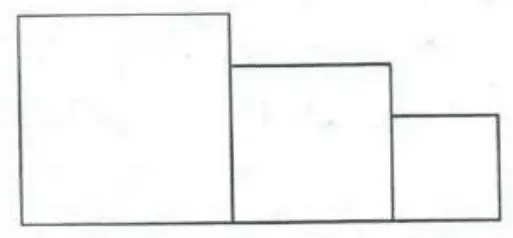
A winners’ stand of three rectangular blocks placed side by side: a tallest block on the left, a medium-height block in the middle, and a shortest block on the right.

2018 · Q62

For a sports meet, a winners’ stand comprising three wooden blocks is in the following form:

There are six different colours available to choose from and each of the three wooden blocks is to be painted such that no two of them has the same colour. In how many different ways can the winners’ stand be painted?

  1. (a)120
  2. (b)81
  3. (c)66
  4. (d)36
Show answer

UPSC key: (a)

Basic numeracy · Permutations, combinations and probability

2019

4 questions

2019 · Q14

The number of parallelograms that can be formed from a set of four parallel lines intersecting another set of four parallel lines, is

  1. (a)18
  2. (b)24
  3. (c)32
  4. (d)36
Show answer

UPSC key: (d)

Basic numeracy · Permutations, combinations and probability

2019 · Q56

Suppose you have sufficient amount of rupee currency in three denominations: ₹ 1, ₹ 10 and ₹ 50. In how many different ways can you pay a bill of ₹ 107?

  1. (a)16
  2. (b)17
  3. (c)18
  4. (d)19
Show answer

UPSC key: (c)

Basic numeracy · Permutations, combinations and probability

2019 · Q72

Each face of a cube can be painted in black or white colours. In how many different ways can the cube be painted?

  1. (a)9
  2. (b)10
  3. (c)11
  4. (d)12
Show answer

UPSC key: (b)

Basic numeracy · Permutations, combinations and probability

2019 · Q73

How many triplets (x, y, z) satisfy the equation x + y + z = 6, where x, y and z are natural numbers?

  1. (a)4
  2. (b)5
  3. (c)9
  4. (d)10
Show answer

UPSC key: (d)

Basic numeracy · Permutations, combinations and probability

2020

2 questions

2020 · Q60

How many different sums can be formed with the denominations ₹ 50, ₹ 100, ₹ 200, ₹ 500 and ₹ 2,000 taking at least three denominations at a time?

  1. (a)16
  2. (b)15
  3. (c)14
  4. (d)10
Show answer

UPSC key: (a)

Basic numeracy · Permutations, combinations and probability

2020 · Q67

How many different 5-letter words (with or without meaning) can be constructed using all the letters of the word ‘DELHI’ so that each word has to start with D and end with I?

  1. (a)24
  2. (b)18
  3. (c)12
  4. (d)6
Show answer

UPSC key: (d)

Basic numeracy · Permutations, combinations and probability

2021

3 questions

2021 · Q64

On a chess board, in how many different ways can 6 consecutive squares be chosen on the diagonals along a straight path?

  1. (a)4
  2. (b)6
  3. (c)8
  4. (d)12
Show answer

UPSC key: (b)

Basic numeracy · Permutations, combinations and probability

2021 · Q66

Using 2, 2, 3, 3, 3 as digits, how many distinct numbers greater than 30000 can be formed?

  1. (a)3
  2. (b)6
  3. (c)9
  4. (d)12
Show answer

UPSC key: (b)

Basic numeracy · Permutations, combinations and probability

2021 · Q69

There are 6 persons arranged in a row. Another person has to shake hands with 3 of them so that he should not shake hands with two consecutive persons. In how many distinct possible combinations can the handshakes take place?

  1. (a)3
  2. (b)4
  3. (c)5
  4. (d)6
Show answer

UPSC key: (b)

Basic numeracy · Permutations, combinations and probability

2022

9 questions

2022 · Q17

In a tournament of Chess having 150 entrants, a player is eliminated whenever he loses a match. It is given that no match results in a tie/draw. How many matches are played in the entire tournament?

  1. (a)151
  2. (b)150
  3. (c)149
  4. (d)148
Show answer

UPSC key: (c)

Basic numeracy · Permutations, combinations and probability

2022 · Q18

How many 3-digit natural numbers (without repetition of digits) are there such that each digit is odd and the number is divisible by 5?

  1. (a)8
  2. (b)12
  3. (c)16
  4. (d)24
Show answer

UPSC key: (b)

Basic numeracy · Permutations, combinations and probability

2022 · Q24

The letters A, B, C, D and E are arranged in such a way that there are exactly two letters between A and E. How many such arrangements are possible?

  1. (a)12
  2. (b)18
  3. (c)24
  4. (d)36
Show answer

UPSC key: (c)

Basic numeracy · Permutations, combinations and probability

2022 · Q27

A, B and C are three places such that there are three different roads from A to B, four different roads from B to C and three different roads from A to C. In how many different ways can one travel from A to C using these roads?

  1. (a)10
  2. (b)13
  3. (c)15
  4. (d)36
Show answer

UPSC key: (c)

Basic numeracy · Permutations, combinations and probability

2022 · Q55

There is a numeric lock which has a 3-digit PIN. The PIN contains digits 1 to 7. There is no repetition of digits. The digits in the PIN from left to right are in decreasing order. Any two digits in the PIN differ by at least 2. How many maximum attempts does one need to find out the PIN with certainty?

  1. (a)6
  2. (b)8
  3. (c)10
  4. (d)12
Show answer

UPSC key: (c)

Basic numeracy · Permutations, combinations and probability

2022 · Q56

There are eight equidistant points on a circle. How many right-angled triangles can be drawn using these points as vertices and taking the diameter as one side of the triangle?

  1. (a)24
  2. (b)16
  3. (c)12
  4. (d)8
Show answer

UPSC key: (a)

Basic numeracy · Permutations, combinations and probability

2022 · Q76

One non-zero digit, one vowel and one consonant from English alphabet (in capital) are to be used in forming passwords, such that each password has to start with a vowel and end with a consonant. How many such passwords can be generated?

  1. (a)105
  2. (b)525
  3. (c)945
  4. (d)1050
Show answer

UPSC key: (c)

Basic numeracy · Permutations, combinations and probability

2022 · Q77

There are 9 cups placed on a table arranged in equal number of rows and columns out of which 6 cups contain coffee and 3 cups contain tea. In how many ways can they be arranged so that each row should contain at least one cup of coffee?

  1. (a)18
  2. (b)27
  3. (c)54
  4. (d)81
Show answer

UPSC key: (d)

Basic numeracy · Permutations, combinations and probability

2022 · Q79

What is the number of numbers of the form 0.XY, where X and Y are distinct non-zero digits?

  1. (a)72
  2. (b)81
  3. (c)90
  4. (d)100
Show answer

UPSC key: (a)

Basic numeracy · Permutations, combinations and probability

2023

11 questions

2023 · Q4

Raj has ten pairs of red, nine pairs of white and eight pairs of black shoes in a box. If he randomly picks shoes one by one (without replacement) from the box to get a red pair of shoes to wear, what is the maximum number of attempts he has to make?

  1. (a)27
  2. (b)36
  3. (c)44
  4. (d)45
Show answer

UPSC key: (d)

Basic numeracy · Permutations, combinations and probability

2023 · Q5

In how many ways can a batsman score exactly 25 runs by scoring single runs, fours and sixes only, irrespective of the sequence of scoring shots?

  1. (a)18
  2. (b)19
  3. (c)20
  4. (d)21
Show answer

UPSC key: (b)

Basic numeracy · Permutations, combinations and probability

2023 · Q6

There are four letters and four envelopes and exactly one letter is to be put in exactly one envelope with the correct address. If the letters are randomly inserted into the envelopes, then consider the following statements:

1.It is possible that exactly one letter goes into an incorrect envelope.

2.There are only six ways in which only two letters can go into the correct envelopes.

Which of the statements given above is/are correct?

  1. (a)1 only
  2. (b)2 only
  3. (c)Both 1 and 2
  4. (d)Neither 1 nor 2
Show answer

UPSC key: (b)

Basic numeracy · Permutations, combinations and probability

2023 · Q19

How many distinct 8-digit numbers can be formed by rearranging the digits of the number 11223344 such that odd digits occupy odd positions and even digits occupy even positions?

  1. (a)12
  2. (b)18
  3. (c)36
  4. (d)72
Show answer

UPSC key: (c)

Basic numeracy · Permutations, combinations and probability

2023 · Q30

ABCD is a square. One point on each of AB and CD; and two distinct points on each of BC and DA are chosen. How many distinct triangles can be drawn using any three points as vertices out of these six points?

  1. (a)16
  2. (b)18
  3. (c)20
  4. (d)24
Show answer

UPSC key: (c)

Basic numeracy · Permutations, combinations and probability

2023 · Q36

A box contains 14 black balls, 20 blue balls, 26 green balls, 28 yellow balls, 38 red balls and 54 white balls. Consider the following statements:

1.The smallest number n such that any n balls drawn from the box randomly must contain one full group of at least one colour is 175.

2.The smallest number m such that any m balls drawn from the box randomly must contain at least one ball of each colour is 167.

Which of the above statements is/are correct?

  1. (a)1 only
  2. (b)2 only
  3. (c)Both 1 and 2
  4. (d)Neither 1 nor 2
Show answer

UPSC key: (c)

Basic numeracy · Permutations, combinations and probability

2023 · Q47

What is the sum of all 4-digit numbers less than 2000 formed by the digits 1, 2, 3 and 4, where none of the digits is repeated?

  1. (a)7998
  2. (b)8028
  3. (c)8878
  4. (d)9238
Show answer

UPSC key: (a)

Basic numeracy · Permutations, combinations and probability

2023 · Q48

What is the number of selections of 10 consecutive things out of 12 things in a circle taken in the clockwise direction?

  1. (a)3
  2. (b)11
  3. (c)12
  4. (d)66
Show answer

UPSC key: (c)

Basic numeracy · Permutations, combinations and probability

2023 · Q65

In an examination, the maximum marks for each of the four papers namely P, Q, R and S are 100. Marks scored by the students are in integers. A student can score 99% in n different ways. What is the value of n?

  1. (a)16
  2. (b)17
  3. (c)23
  4. (d)35
Show answer

UPSC key: (d)

Basic numeracy · Permutations, combinations and probability

2023 · Q66

A flag has to be designed with 4 horizontal stripes using some or all of the colours red, green and yellow. What is the number of different ways in which this can be done so that no two adjacent stripes have the same colour?

  1. (a)12
  2. (b)18
  3. (c)24
  4. (d)36
Show answer

UPSC key: (c)

Basic numeracy · Permutations, combinations and probability

2023 · Q68

There are five persons P, Q, R, S and T each one of whom has to be assigned one task. Neither P nor Q can be assigned Task-1. Task-2 must be assigned to either R or S. In how many ways can the assignment be done?

  1. (a)6
  2. (b)12
  3. (c)18
  4. (d)24
Show answer

UPSC key: (d)

Basic numeracy · Permutations, combinations and probability

2024

1 question

2024 · Q49

Three numbers x, y, z are selected from the set of the first seven natural numbers such that x > 2y > 3z. How many such distinct triplets (x, y, z) are possible?

  1. (a)One triplet
  2. (b)Two triplets
  3. (c)Three triplets
  4. (d)Four triplets
Show answer

UPSC key: (d)

Basic numeracy · Permutations, combinations and probability

2025

1 question

2025 · Q58

The 5-digit number PQRST (all distinct digits) is such that T ≠ 0. P is thrice T. S is greater than Q by 4, while Q is greater than R by 3. How many such 5-digit numbers are possible?

  1. (a)3
  2. (b)4
  3. (c)5
  4. (d)6
Show answer

UPSC key: (b)

Basic numeracy · Permutations, combinations and probability

2026

3 questions

2026 · Q9

How many words can one form by shuffling the letters of the word QUEUE, if Q is always followed by U? The words thus formed need not necessarily have any meaning.

  1. (a)6
  2. (b)8
  3. (c)10
  4. (d)12
Show answer

UPSC key: (d)

Basic numeracy · Permutations, combinations and probability

2026 · Q15

The top of a table is rectangular and its dimensions are 6′ × 10′. Two rectangular portions of the table top are painted in blue colour; both these portions have dimensions 2·5′ × 8′ and each of them has exactly two sides common with two edges of the table top. If the table is fixed to the ground and the remaining portion of the table top is painted in white, how many different patterns are possible when observed from above?

  1. (a)2
  2. (b)4
  3. (c)6
  4. (d)8
Show answer

UPSC key: (b)

Basic numeracy · Permutations, combinations and probability

2026 · Q23

There are four types of weights, namely 1 kg, 2 kg, 5 kg and 10 kg. What is the maximum number of different ways one can measure 20 kg, if at least eight but not more than eleven weights of 1 kg are to be used while measuring?

  1. (a)7
  2. (b)8
  3. (c)9
  4. (d)10
Show answer

UPSC key: (b)

Basic numeracy · Permutations, combinations and probability

← All of Basic numeracy