

First Principles IAS · Current affairs
The monthly magazine, September 2026 · Internal Security › Cybercrime and cyber law
Printed on · firstprinciplesias.com/current-affairs
India signs the UN Convention against Cybercrime
LeadPrelims and Mains25 Sep 2026
Why in news
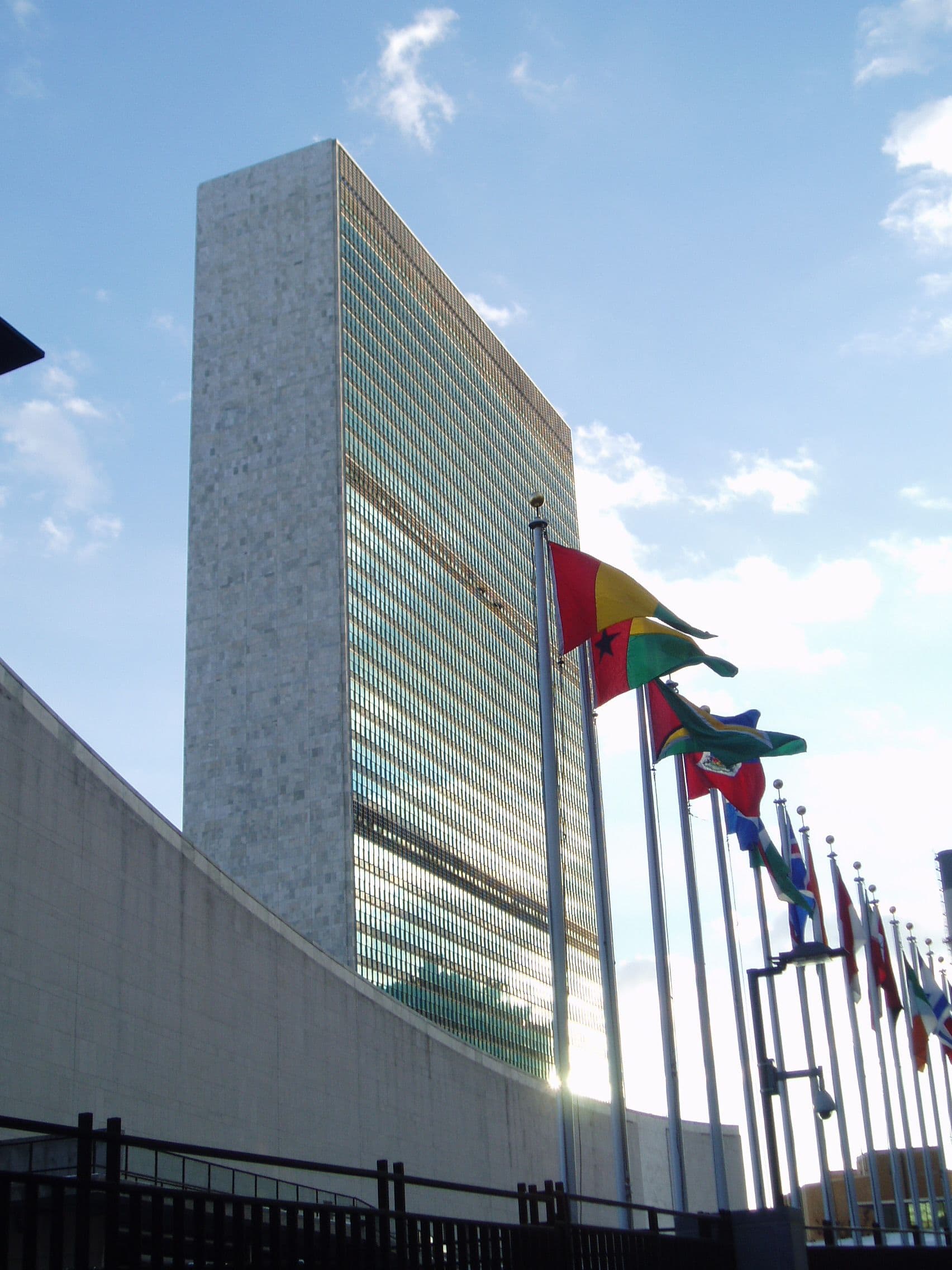
- On 25 September 2026 the External Affairs Minister signed the United Nations Convention against Cybercrime in New York, on the margins of the 81st General Assembly.
- The convention is the first global treaty on cybercrime.
- It was adopted by the General Assembly in December 2024 and opened for signature at Hanoi on 25 October 2025; it is not yet in force.
- India had stayed out of the only earlier treaty in the field, the Council of Europe's Budapest Convention of 2001, for twenty five years.
- 25 September 2026India signs, in New York
- December 2024adopted by the General Assembly; 25 October 2025: opened for signature at Hanoi
- 40 ratifications, then 90 daysthe rule for entry into force; three ratifications by May 2026
- 88 to 58, with 34 abstainingthe 2019 vote that began the process
- 81States that have ratified the Budapest Convention; India is not one
Background
- Russia proposed a UN treaty in 2017 and carried it through the General Assembly in 2019 as resolution 74/247, by 88 votes to 58 with 34 abstentions. An Ad Hoc Committee under the UN Office on Drugs and Crime negotiated from 2021 and agreed a text in August 2024.
- The Budapest Convention, in force since 2004, was drafted by the Council of Europe. Russia objected to it as a threat to its sovereignty over its own internet, and the UN convention is widely seen as its alternative. India never joined Budapest, having had no part in drafting it.
- Cybercrime is cross border by nature; the law that pursues it is not. A treaty is how a police force in one country reaches evidence held in another.
What the convention does
- Requires States to criminalise a core list of offences: illegal access to a system, interference with data or systems, computer enabled fraud, and the online exploitation of children.
- Gives investigators powers over electronic evidence: expedited preservation of data, production orders, search and seizure of stored data, and real time collection of traffic data.
- Creates a 24 hour, seven day network of contact points for urgent cooperation, and frameworks for extradition, jurisdiction and the confiscation of proceeds.
- Enters into force ninety days after the fortieth ratification. Signature is a first step; ratification binds.
The objections
- Rights groups say the definition of cybercrime is loose enough to cover any crime committed with a computer, and that the text leaves human rights safeguards to each State, including States with poor records. Access Now said it "pays lip service to human rights"; the Electronic Frontier Foundation warned it could enable transnational repression.
- Technology firms, through the International Chamber of Commerce and the Cybersecurity Tech Accord, called it a surveillance treaty and said it could criminalise ethical security research.
- During the negotiations India was among the States that supported removing a clause saying nothing in the convention permits the suppression of human rights.
India's stake
- India runs the Indian Cyber Crime Coordination Centre and the 1930 helpline, and its own laws, the Information Technology Act, 2000 and the Bharatiya Nyaya Sanhita, already cover the core offences; what it lacks is reach across borders, to the servers and the suspects abroad.
- The digital arrest and investment scams of recent years have been run from outside India, and the FATF's September warning on gaming platforms is about the same cross border money. A treaty with a 24 hour network is the tool India has asked for.
- The cost is the one the critics name: the same channels that fetch a scammer's server logs can be asked, by another State, for an Indian journalist's.
Analysis
- A choice between two treaties. Budapest was written by Europe and has safeguards India found intrusive; the UN text was pushed by Russia and has reach India finds useful. India chose the one it helped write, because it is the victim of cross border crime more often than the subject of a foreign request.
- Signature is not ratification: the convention is not yet in force, so nothing changes in Indian law this year.
- Breadth is both value and risk: a power to preserve and produce data for any serious crime helps against a scam compound in Cambodia and helps equally against a dissident whom some other party calls a criminal. India's own stand in the negotiations, against a rights clause, shows where its priorities lay.
- For the answer: welcome the cooperation, then ask what domestic safeguards India will build before it ratifies, such as a court order for cross border requests and refusal where a request is political.
The way forward
- Ratify with a domestic procedure that puts cross border data requests under judicial control and allows refusal on political or rights grounds.
- Use the 24 hour network for the scam compounds first, where India's case is strongest and the cooperation least contested.
- Keep working with the Budapest States informally, since the large platforms that hold the evidence are based in them.
- Report publicly on requests made and received, as the price of a treaty the rights groups distrust.
Exam lens
- Prelims: the convention was adopted in December 2024 and opened for signature at Hanoi in October 2025; India signed on 25 September 2026 in New York; it enters into force ninety days after 40 ratifications; the process began with resolution 74/247 of 2019, proposed by Russia; the Budapest Convention is the Council of Europe's treaty of 2001, in force 2004, which India has not joined.
- Mains: "A cybercrime treaty is as useful as its reach and as dangerous as its breadth." Examine India's decision to sign the UN Convention against Cybercrime.
Asked before: Mains 2020 GS3 · Mains 2021 GS3 · Prelims 2017
Show the questions
- Mains 2020 GS3: Discuss different types of cybercrimes and measures required to be taken to fight the menace.
- Mains 2021 GS3: Keeping in view India's internal security, analyse the impact of cross-border cyber attacks. Also discuss defensive measures against these sophisticated attacks.
- Prelims 2017: In India, it is legally mandatory for which of the following to report on cyber security incidents? 1. Service providers 2. Data centres 3. Body corporate. Select the correct answer using the code given below:
Connects to
- When AI agents cross the line (Science and Technology, September): the other September question about who is liable for an intrusion.
- FATF warning on gaming platforms (Global Affairs, September): the money side of cross border cybercrime.
- The 81st General Assembly (Global Affairs, September): the session on whose margins India signed.
Sources
- India Strategic, 25 September 2026, “EAM Jaishankar signs UN Convention against Cybercrime”
- The420.in, 26 September 2026
- UNODC
- News on AIR, 10 September 2026
Settled facts (dates of Acts, constitutional provisions, standing definitions) are from standard references.
Filed under: Cybercrime and cyber law · The monthly magazine, September 2026