Animal husbandry, dairy and fisheries
- Syllabus
- Economics of animal rearing
- As of
- October 2026
- economics of animal rearing
- Operation Flood
- Anand pattern
- white revolution
- per capita milk availability
- crossbred and indigenous cattle
- Rashtriya Gokul Mission
- sex sorted semen
- Livestock Census
- blue revolution
- Pradhan Mantri Matsya Sampada Yojana
- inland aquaculture
- feed and fodder
- crop livestock integration
The first principle
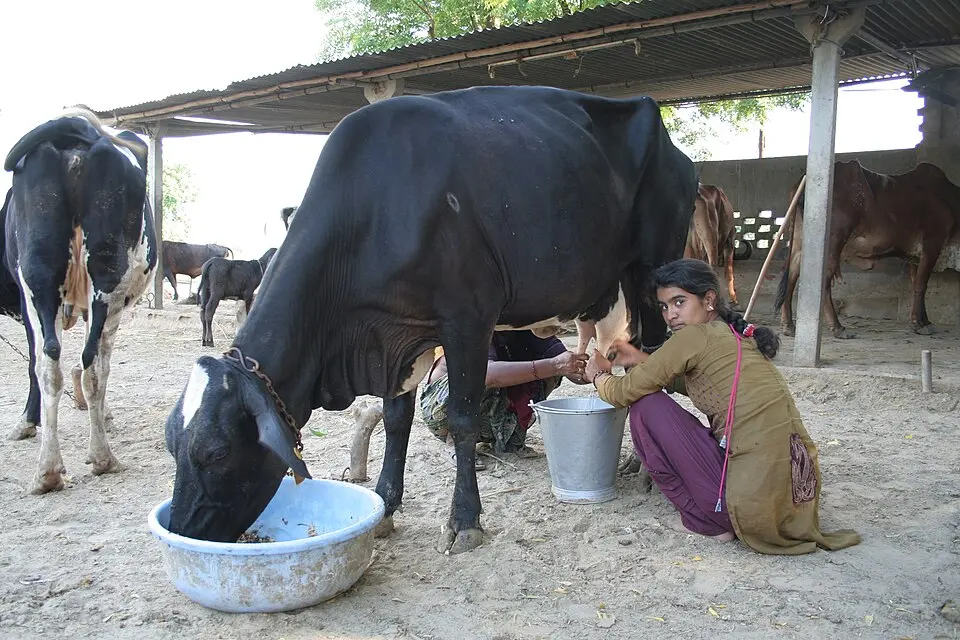
A crop farmer is paid once or twice a year, after a harvest that a failed monsoon can ruin, while a farmer with two buffaloes is paid every day. Animals turn crop residues, grass and spare family labour, which would otherwise earn nothing, into milk, meat, eggs and fish, so livestock is the part of agriculture that grows fastest and reaches the landless, small farmers and women most directly. The economics of animal rearing therefore rests on two quantities: how much an animal yields, and how cheaply it can be fed, kept healthy and joined to a buyer.
The core
Why animals pay
- Steady cash and insurance. In the Situation Assessment Survey of 2019 (National Sample Survey, 77th round), about 15 per cent of an agricultural household's monthly income of Rs 10,218 came from farming of animals. Animals need little land, so they are owned far more evenly than land, and an animal sold in a drought makes livestock a form of savings too.
- Feed is the main cost. Feed and fodder are the largest cost of producing milk, commonly put at 60 to 70 per cent, while cultivated fodder occupies only about 4 to 5 per cent of the gross cropped area, so the price of fodder and dry straw decides whether a dairy animal earns or loses money.
- Yield decides profit. An exotic or crossbred cow in milk gave on average 9.05 kg a day in 2024-25, against 3.86 kg for an indigenous or non descript cow (Basic Animal Husbandry Statistics, BAHS, 2025). The cost of keeping a cow does not fall in step with her yield, so a low yield means a high cost per kilogram.
- A perishable product needs an organised buyer. Raw milk sours within hours in Indian heat, so a farmer needs chilling and a buyer twice a day; the cooperative answer to this problem built Indian dairying.
Operation Flood and the white revolution
- The Anand pattern. The Kaira district milk union of farmers, set up at Anand in 1946 and later known by its brand Amul, gave India a three tier model: a village dairy cooperative society collects and tests milk twice a day and pays by its fat and solids not fat content, a district union chills, processes and markets it, and a State federation sells under one brand. Profits return to the producers, so the farmer keeps a larger share of the consumer's rupee.
- Operation Flood (1970 to 1996). The National Dairy Development Board (NDDB), founded in 1965 at Anand with Verghese Kurien as its first chairman, ran Operation Flood in three phases. It sold skimmed milk powder and butter oil donated by the European Economic Community and used the money to build village societies and a national milk grid linking rural milksheds to the cities.
- The result. Milk output rose from 17 million tonnes in 1950-51 to about 54 million tonnes in 1990-91, and India became the largest milk producer in the world in 1998.
The blue revolution
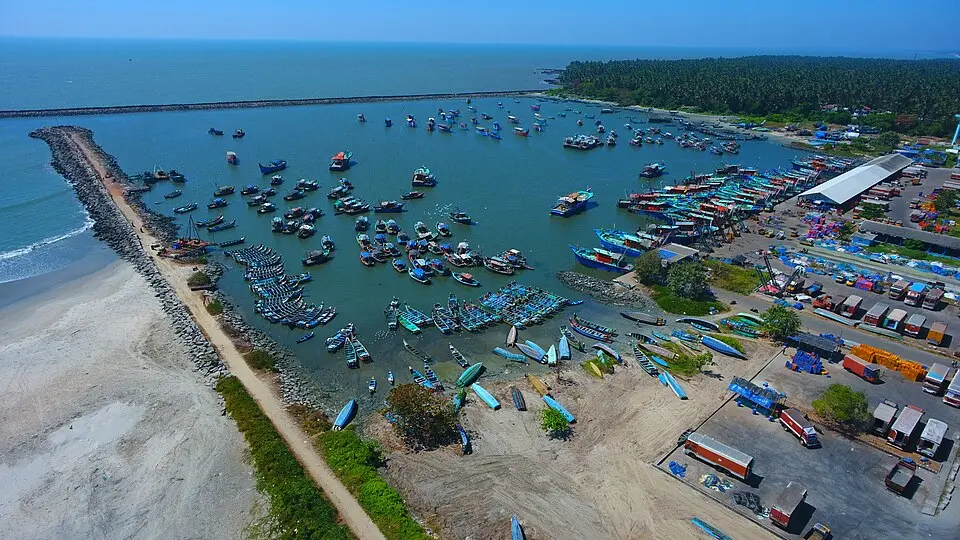
- Fish as a crop. Capture fisheries harvest wild stocks and are limited by the stock, while culture farms fish and shrimp in ponds, so its output rises with seed, feed and investment; Indian growth has come mainly from inland aquaculture.
- Fisheries are a State subject (Entry 21 of the State List), so the Centre works through schemes. The Blue Revolution scheme of 2015-16 merged earlier schemes, and a separate Department of Fisheries was created in 2019.
- Pradhan Mantri Matsya Sampada Yojana (PMMSY), launched in 2020 with Rs 20,050 crore, originally for 2020-21 to 2024-25, is the largest investment in the sector; it funds hatcheries, ponds, cold chains, harbours and boats, and it set a target of 220 lakh tonnes by 2024-25. A sub scheme of Rs 6,000 crore for 2023-24 to 2026-27 brings fishers into the formal system with registration, credit and aquaculture insurance.
Dimensions
- Economic. Over the decade to 2024-25, the gross value added (GVA) of livestock grew about 7.1 per cent a year and of fisheries about 8.8 per cent, against about 3.5 per cent for crops (Economic Survey 2025-26, on the 2011-12 base series).
- Social. Women do most of the daily care of animals, milk money paid to them at a village society adds to their bargaining power, and landless families can enter dairying or poultry with one animal.
- Nutritional. Milk, eggs and fish are cheap sources of complete protein and vitamin B12 for poor households.
- Environmental. Enteric fermentation in cattle and buffalo gave about 55 per cent of India's agricultural greenhouse gas emissions in 2020 (see the note on sustainable agriculture), while dung returned to fields closes the nutrient loop.
- Constitutional and legal. Article 48 asks the State to organise animal husbandry on modern and scientific lines and to prohibit the slaughter of cows, calves and other milch and draught cattle, and animal stock and disease is a State subject (Entry 15 of the State List).
- Health. Foot and mouth disease and lumpy skin disease, which spread widely in 2022, cut yields and exports, and careless antibiotic use in poultry and aquaculture feeds antimicrobial resistance.
- International. India exports buffalo meat and frozen shrimp, its largest seafood export, and fear of cheap dairy imports from New Zealand and Australia was one reason it left the Regional Comprehensive Economic Partnership talks in 2019.
In practice
- Output. Milk production was 247.87 million tonnes in 2024-25, 3.58 per cent above the year before, and per capita availability was 485 grams a day, up from 307 grams in 2013-14 (DAHD, BAHS 2025). Uttar Pradesh, Rajasthan, Madhya Pradesh, Gujarat and Maharashtra gave 54.09 per cent of it.
- Fish. Production was 197.75 lakh tonnes in 2024-25, more than double the 95.79 lakh tonnes of 2013-14; India is the second largest producer with about 8 per cent of world output, and exports earned Rs 62,408 crore (Department of Fisheries, 2026).
- The Livestock Census. The 20th Livestock Census of 2019 counted 535.78 million animals, 4.6 per cent more than in 2012, including 192.49 million cattle, 109.85 million buffaloes, 148.88 million goats and 851.81 million poultry. Crossbred and exotic cattle rose by about 27 per cent while indigenous cattle fell by about 6 per cent, as farmers moved to higher yielding animals. The 21st census was enumerated between October 2024 and early 2025.
- Breeds: the Rashtriya Gokul Mission. Launched in December 2014 to conserve and improve indigenous breeds such as Gir, Sahiwal and Tharparkar, it was revised in March 2025 with an extra Rs 1,000 crore, taking its outlay to Rs 3,400 crore for 2021-22 to 2025-26. It funds artificial insemination, sex sorted semen (which raises the share of female calves, made cheaper by NDDB's Gau Sort technology), in vitro fertilisation laboratories and heifer rearing centres.
- Health and infrastructure. The National Animal Disease Control Programme (2019) vaccinates cattle, buffaloes, sheep, goats and pigs against foot and mouth disease and female calves against brucellosis, and the Animal Husbandry Infrastructure Development Fund (2020) subsidises interest on loans for dairy, meat and feed plants. Kisan Credit Cards have covered the working capital of animal rearing and fisheries since 2019 (see the note on agricultural credit and insurance).
- Cases. Amul showed that small producers in cooperatives can own a national brand, and Andhra Pradesh, the largest fish producing State, built its output on pond culture of the Pacific white shrimp (Penaeus vannamei).

Issues and way forward
- Low yields. Most cattle are low yielding indigenous or non descript animals and artificial insemination reaches only part of the herd, so sex sorted semen, genomic selection of bulls and in vitro fertilisation are the way forward, keeping the heat tolerance of native breeds.
- Feed and fodder shortage. Fodder land is small and common grazing land is shrinking, so fodder on degraded land, silage and fodder seed under the National Livestock Mission are needed.
- Disease and too few veterinarians. One outbreak can wipe out a small farmer's capital, so universal vaccination, mobile veterinary units and livestock insurance come first.
- Abandoned cattle. Slaughter bans and the end of bullock farming leave male and old animals with no market, so they stray and damage crops; sex sorted semen is the long run answer.
- Uneven cooperatives. Strong unions in Gujarat and Karnataka contrast with weak coverage in the east and north east, where traders still set the price, so new village societies and chilling centres are needed there.
- Fisheries under stress. Overfishing and bottom trawling deplete marine stocks, much of the catch is lost after landing for want of ice and cold storage, and shrimp exports depend heavily on one market, the United States, where higher tariffs from 2025 hurt exporters. The 61 day monsoon fishing ban, deep sea fishing, mariculture, seaweed farming, cold chains and wider markets are the remedies.

Common confusions
- White revolution and Operation Flood. The white revolution is the rise in milk output and India's place as the largest producer, while Operation Flood (1970 to 1996) is the NDDB programme that brought it about.
- Production and per capita availability. Per capita availability is total production divided by population and by 365 days, so 247.87 million tonnes shared by about 1.4 billion people gives about 485 grams a day; it is not what each person drinks.
- Rashtriya Gokul Mission and the National Programme for Dairy Development. The first improves the breed, while the second builds chilling, processing and marketing.
- Capture and culture fisheries. Capture harvests wild fish and is limited by the stock, while culture farms fish and grows like any farm output.
For the exam
- Keyword bank: economics of animal rearing, feed and fodder, yield gap, Anand pattern, Operation Flood, national milk grid, white revolution, per capita availability, Rashtriya Gokul Mission, sex sorted semen, Livestock Census, blue revolution, Pradhan Mantri Matsya Sampada Yojana, inland aquaculture, crop livestock integration.
- Previous year questions: Practise the previous year questions on this topic →
- Use in an answer:
- Introduction with data: India produced 247.87 million tonnes of milk in 2024-25, the largest in the world, and per capita availability rose from 307 grams a day in 2013-14 to 485 grams (DAHD, Basic Animal Husbandry Statistics 2025).
- Introduction with a report: The Economic Survey 2025-26 finds that over the last decade livestock grew about 7.1 per cent and fisheries about 8.8 per cent a year, against 3.5 per cent for crops, so animals now drive farm growth.
- Conclusion: India has already won the battle for volume in milk and fish; the next gains will come from yield, feed, animal health and fair markets for the small producer.
- Conclusion: Operation Flood showed that when small producers own the chain from village to city, growth and equity can move together, and the same model can serve fisheries and poultry.