Defence platforms and indigenisation
- Syllabus
- Indigenisation of technology and developing new technology; developments in science and technology and their applications and effects in everyday life
- As of
- October 2026
- radar cross section
- stealth
- fifth generation fighter
- Advanced Medium Combat Aircraft
- Tejas
- aero engine
- Defence Acquisition Procedure
- Buy (Indian IDDM)
- positive indigenisation list
- defence corridors
- iDEX
- strategic partnership model
- defence exports
- defence public sector undertakings
The first principle
A modern weapon platform, whether a fighter, a frigate or a tank, is a system of systems: a body carrying an engine, sensors, weapons and software that must all work together. A country can buy the body and still depend on others for the engine, radar or code, so the real measure of self reliance in defence is who designs the critical subsystems and can change them in war. The science of these platforms, above all how they hide from sensors, and the rules by which India buys them, both follow from that fact.
The core
How platforms are seen, and how they hide
- Radar and radar cross section. A radar sends out a radio pulse and listens for the echo, and the strength of the echo is set by the target's radar cross section (RCS), measured in square metres. A conventional fighter may have an RCS of several square metres, while a stealth fighter is designed to look like an object far smaller, so it is detected only at much shorter range.
- Shaping does most of the work. Flat panels and edges aligned at a few common angles reflect the pulse away from the radar in narrow spikes, curved air inlets hide the spinning engine fan, and weapons are carried in internal bays so that bombs and missiles add no echo.
- Materials absorb the rest. Radar absorbing coatings on the skin convert part of the incoming wave into heat, though they are costly and need careful maintenance.
- Other signatures matter too. Engine exhaust is cooled and shielded against infrared sensors, and a stealth aircraft must limit its own radio and radar emissions, since anything it transmits can give it away.
- Stealth is not invisibility. Long wavelength radars, infrared search and track, passive radars that use other transmitters, and networks of sensors viewing from many angles can still find a stealth platform, which is why stealth and counter stealth evolve together.
- The same physics at sea. Stealth frigates use sloped superstructures, enclosed decks and hidden fittings to reduce their echo, so that a warship looks like a much smaller vessel on a distant radar.
Generations of fighters
- Fourth generation fighters, such as the Rafale, the Su-30MKI and India's Tejas, have digital fly by wire controls, multirole weapons and modern radars, and the newest of them are often called fourth generation plus.
- Fifth generation fighters add stealth designed in from the start, internal weapons, sensor fusion that gives the pilot one combined picture from all sensors, and networked operation; the American F-22 and F-35, the Russian Su-57 and the Chinese J-20 are the examples in service.
Dimensions
- Strategic. A platform whose engine or radar is foreign can be grounded by sanctions or a refusal of spares in a crisis, so design control of critical subsystems is a matter of national security.
- Economic. Defence imports drain foreign exchange, while domestic production builds skilled jobs and a supplier base of small firms that also serves civilian industry.
- Technological. Aero engines, high end sensors, special steels and composites are the hardest parts, because they need decades of testing and a large market to recover costs.
- Fiscal. Indigenous programmes are slow and their early units cost more, so the forces bear capability gaps in return for long term independence, which strains budgets already heavy with salaries and pensions.
- International. Joint development, licensed production and exports tie India to partners such as France, Russia, the United States and Israel, and exports to friendly countries extend India's strategic influence.
In practice
Platforms
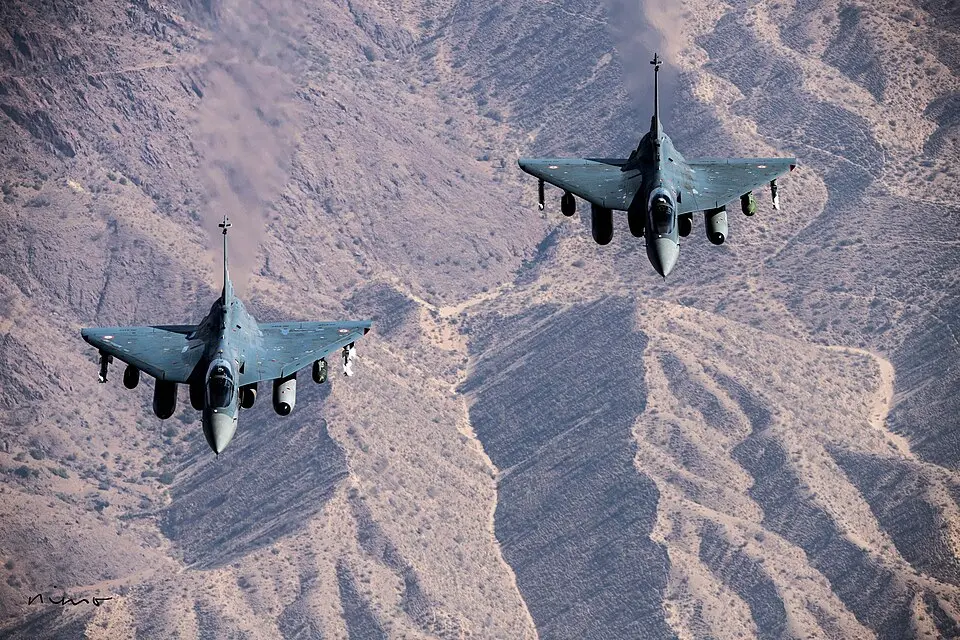
- Aircraft. The Light Combat Aircraft Tejas, designed by the Aeronautical Development Agency (ADA) and built by Hindustan Aeronautics Limited (HAL), flies on an American engine; a contract for 97 Tejas Mk1A was signed in September 2025 for about Rs 62,370 crore. The Advanced Medium Combat Aircraft (AMCA) is India's fifth generation stealth fighter programme, and in May 2025 the Defence Minister approved an execution model under which ADA will choose an industry partner, public or private, by competition. The Light Combat Helicopter Prachand and the Advanced Light Helicopter Dhruv are HAL designs.
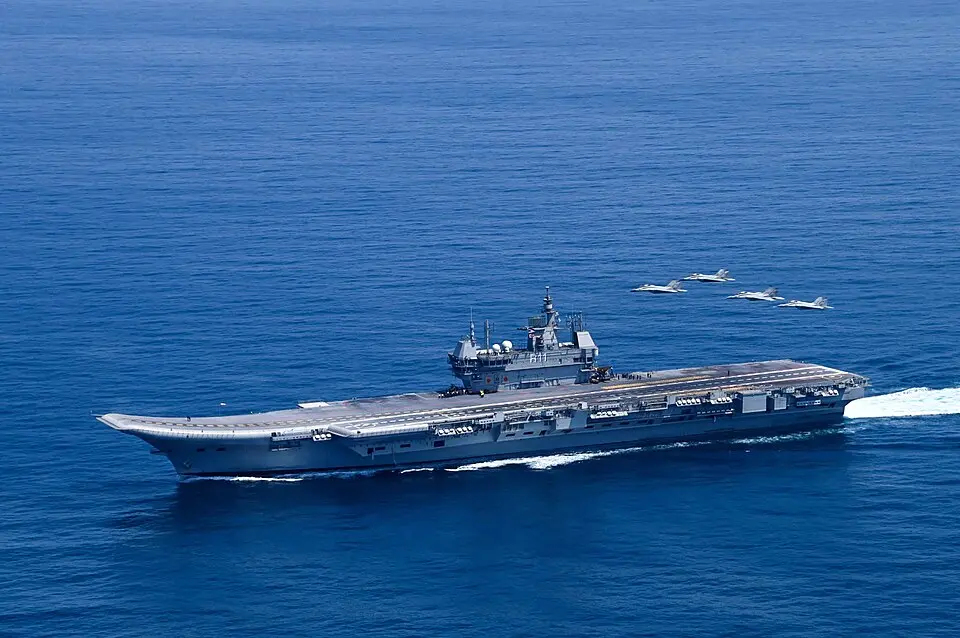
- Ships and submarines. The aircraft carrier Indian Naval Ship (INS) Vikrant, designed by the Navy and built at Cochin Shipyard, was commissioned in 2022. Project 17A Nilgiri class stealth frigates are built at Mazagon Dock and Garden Reach, and six Kalvari class submarines of the French Scorpene design were built at Mazagon under transfer of technology. The nuclear submarines are in the missiles note.
- Land systems. The Arjun main battle tank, the Advanced Towed Artillery Gun System and the Pinaka multiple rocket launcher are Indian designs, and Pinaka and artillery are among India's exports.


The procurement rules
- The Defence Acquisition Procedure (DAP) 2020 governs capital purchases, and every purchase is first placed in a category, in order of preference: Buy (Indian, indigenously designed, developed and manufactured, IDDM), Buy (Indian), Buy and Make (Indian), Buy (Global, manufacture in India) and Buy (Global). The Defence Acquisition Council under the Defence Minister grants the acceptance of necessity that starts a purchase. A draft DAP 2026, released in February 2026 for comments, keeps the IDDM category first and adds fast track routes for technologies with short life cycles.
- Positive indigenisation lists name items that may not be imported after a set date, so that industry can plan to make them. Five lists for the services, with 509 items, were issued from 2020 to 2024 alongside separate lists for the defence public sector undertakings (DPSU), and a sixth list of 405 subsystems, spares and components, mostly for DPSUs, followed in August 2026.
- Support for industry. Innovations for Defence Excellence (iDEX), launched in 2018, gives grants and challenges to start ups, the Technology Development Fund supports small firms, the SRIJAN portal lists imported items open for indigenisation, and the strategic partnership model of 2017 lets chosen Indian firms build major platforms with foreign partners.
- Industry and investment. Two defence industrial corridors in Uttar Pradesh and Tamil Nadu offer land and incentives, foreign direct investment is allowed up to 74 per cent through the automatic route and beyond with approval, and the Ordnance Factory Board was split into seven public sector companies in 2021.
Results
- Production and exports. Defence production reached a record Rs 1.78 lakh crore in 2025-26, of which the private sector made about 24 per cent, and exports reached Rs 38,424 crore (Press Information Bureau, PIB, June 2026); the government aims for Rs 50,000 crore of exports a year by 2029.
- Dependence remains. India was still the world's second largest arms importer in 2020-24 (Stockholm International Peace Research Institute, SIPRI, 2025), because engines, many sensors and several major platforms come from abroad.
Issues and way forward
- The engine gap. The Kaveri engine did not reach the thrust the Tejas needs, so Indian fighters fly on imported engines; a joint development of a high thrust engine with a foreign partner, with full transfer of design knowledge, is the stated path for the AMCA.
- Delays and cost overruns. Long programmes such as Tejas and Arjun lost years to changing requirements and slow testing, so the user should fix requirements early and stay involved through design, and trials should be faster and concurrent.
- Small and uncertain orders. Firms will not invest for one order, so assured long term orders, like the 97 Tejas contract, and spiral development, which improves a platform in steps, give industry a reason to build capacity.
- Thin private role. Public sector units still make about three quarters of output, so open competition for programmes like the AMCA, and fair access to testing ranges and orders, are needed to bring private capital and ideas.
- Research base. The laboratories of the Defence Research and Development Organisation (DRDO) need stronger links with academia and industry so that designs move from prototype to production; the general causes of slow indigenisation are in the indigenisation note.
Common confusions
- Indigenous content and indigenous design. A platform built in India with an imported engine and radar can have high local content by value yet little design control; the IDDM category exists to reward design.
- Stealth and invisibility. Stealth reduces how far away a platform can be detected and tracked, but does not make it invisible to every sensor at every wavelength.
- Positive indigenisation list and import ban. A positive list bars import of named items only after set dates and for the forces or DPSUs, so that industry can prepare; it is not an immediate ban on all imports.
- Offsets and transfer of technology. An offset obliges a foreign seller to spend part of the contract value in India, while transfer of technology hands over specific know how to make a product.
- Defence production and defence exports. Production is the value of all equipment made in India, mostly for Indian forces, while exports are the part sold abroad.
For the exam
- Keyword bank: system of systems, radar cross section, shaping and radar absorbing material, fifth generation fighter, sensor fusion, aero engine gap, indigenously designed, developed and manufactured, positive indigenisation list, strategic partnership model, iDEX, defence corridors, spiral development, design authority, defence exports.
- Previous year questions: Practise the previous year questions on this topic →
- Use in an answer:
- Introduction with data: India's defence production reached a record Rs 1.78 lakh crore and its exports Rs 38,424 crore in 2025-26, yet it remained the world's second largest arms importer in 2020-24.
- Introduction with a source: The Defence Acquisition Procedure 2020 makes Buy (Indian, IDDM) the first choice for every capital purchase, turning indigenisation from an aim into a procurement rule.
- Conclusion: India has learnt to build platforms; the next step is to design the engines, sensors and materials inside them, because that is where control in war lies.
- Conclusion: Assured orders, open competition and an industry that designs as well as assembles will decide whether the AMCA becomes the first Indian platform that is Indian all the way through.