Missiles and strategic systems
- Syllabus
- Developments in science and technology and their applications and effects in everyday life; indigenisation of technology and developing new technology
- As of
- October 2026
- ballistic missile
- cruise missile
- hypersonic glide vehicle
- scramjet
- ramjet
- MIRV
- Integrated Guided Missile Development Programme
- Agni
- BrahMos
- ballistic missile defence
- nuclear triad
- credible minimum deterrence
- no first use
- Missile Technology Control Regime
- Mission Sudarshan Chakra
The first principle
A missile is a guided weapon that carries its own propulsion, and how it is pushed decides how it flies, which in turn decides how it can be stopped. A rocket carries both fuel and oxidiser, so it can climb above the atmosphere and then coast like a thrown stone, while an air breathing engine takes oxygen from the air, so it must stay low but can be powered and steered all the way. Every class of missile, and every defence against it, follows from this trade between speed, height and manoeuvre.
The core
Ballistic missiles
- How they fly. A ballistic missile is driven by a rocket for its first few minutes (the boost phase), then coasts unpowered on a high arc under gravity (the midcourse, mostly above the atmosphere on long ranges), and finally falls back through the atmosphere at many times the speed of sound (the terminal phase). Its path is set at burnout, so it is fast but predictable.
- Range classes. Short range ballistic missiles fly up to 1,000 km, medium range from 1,000 to 3,000 km, intermediate range from 3,000 to 5,500 km, and intercontinental ballistic missiles beyond 5,500 km.
- Staging and fuel. Long ranges need several stages, each dropped when empty so the rest carries less dead weight. Solid fuel missiles can be stored ready and launched in minutes from a canister on a road or rail vehicle, which is why India's newer missiles use solid fuel and canisters.
- Re entry. A warhead returning from space is heated to several thousand degrees by compressing the air ahead of it, so it needs a heat shield that slowly burns away, as crewed capsules do.
- Multiple warheads. A multiple independently targetable re entry vehicle (MIRV) system carries several warheads on one missile, each released by a small manoeuvring bus at a different point and falling on a different target, which multiplies the effect of one launch and makes defence much harder.
Cruise missiles
- How they fly. A cruise missile is an unmanned aircraft with wings and an air breathing engine that powers it all the way, so it can fly low, follow the terrain and change course, which hides it from ground radars below their horizon.
- Engines. A turbojet or turbofan gives subsonic speed and long range, as in India's Nirbhay. A ramjet has no moving parts and compresses incoming air by the missile's own speed, so it works only once a booster has taken the missile to supersonic speed; BrahMos flies at about Mach 2.8 this way.
Hypersonic weapons
- Speed and manoeuvre. A hypersonic weapon flies above Mach 5 inside the atmosphere and can change course, so it combines the speed of a ballistic missile with the unpredictability of a cruise missile.
- Two kinds. A hypersonic glide vehicle is lifted by a rocket and then glides at very high speed on its own lift, steering as it goes, while a hypersonic cruise missile uses a scramjet, a ramjet in which the air stays supersonic through the combustor and fuel must burn in a few thousandths of a second.
- The hard part is heat and control, since the skin heats strongly and the ionised air around it can block radio signals.
Dimensions
- Strategic. Missiles are the means by which a state can threaten a target far away at little risk to its own people, and for India they carry the nuclear deterrent against two nuclear armed neighbours.
- Technological. The same rockets, guidance and heat shields serve space launch, so the missile and space programmes have grown from a shared base of solid motors and navigation.
- Arms control. Missiles are controlled through export regimes rather than treaties: the Missile Technology Control Regime (MTCR) restricts the export of missiles able to carry 500 kg to 300 km or more. India joined the MTCR in 2016, which allowed it to export BrahMos and extend its range; non proliferation as diplomacy belongs to GS2 International Relations.
- Stability. Fast, accurate and hard to detect weapons shorten the time leaders have to decide in a crisis, so hypersonic and multiple warhead weapons can make deterrence less stable even as they make it more credible.
In practice
From the missile programme of 1983 to today
- The Integrated Guided Missile Development Programme (IGMDP), begun in 1983 by the Defence Research and Development Organisation (DRDO) under A P J Abdul Kalam, set out to build five missiles at once: Prithvi (short range surface to surface), Agni (longer range ballistic), Trishul and Akash (surface to air) and Nag (anti tank). Most entered service, Trishul was dropped, and the programme trained today's missile industry.
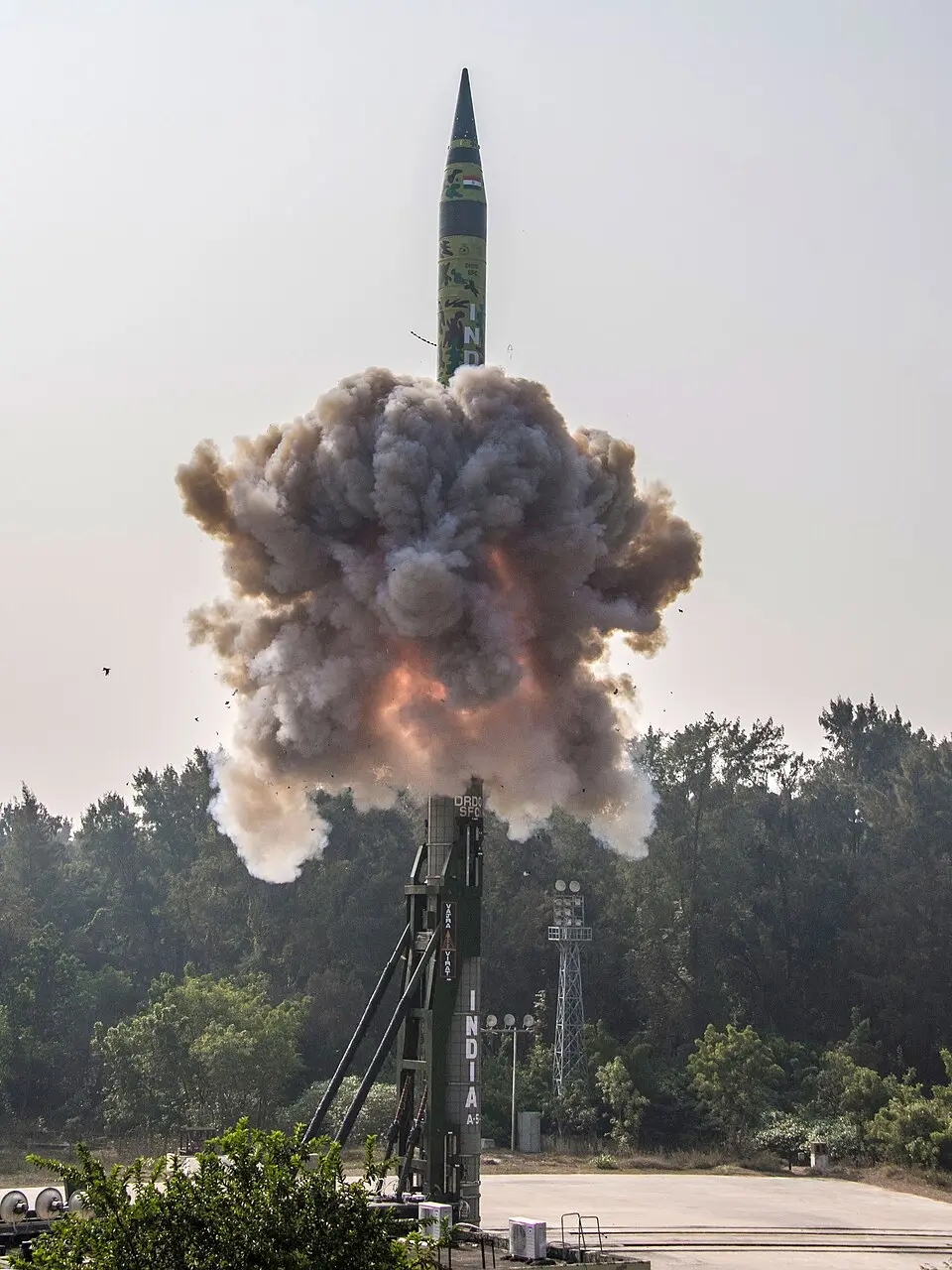
- Ballistic. The Agni series runs from Agni-1 to Agni-5, which has a range of over 5,000 km and was tested with multiple independently targetable warheads in Mission Divyastra in March 2024. Agni-Prime, a lighter canister launched missile, was fired from a rail based mobile launcher for the first time in September 2025, and Pralay is a short range tactical missile.
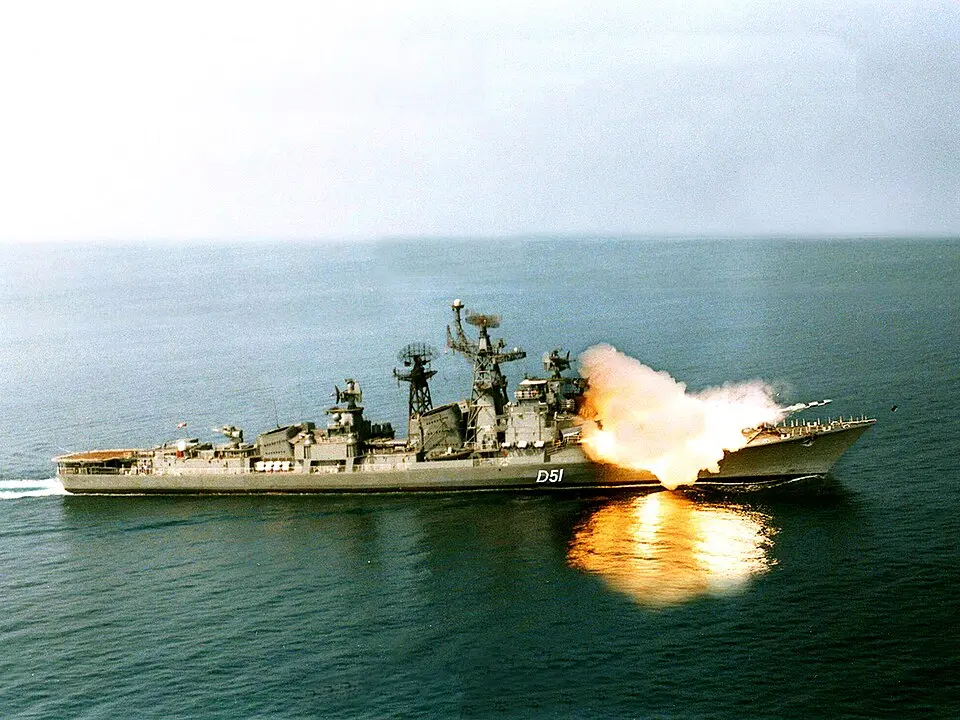
- Cruise. BrahMos, built by a joint venture with Russia, is a supersonic cruise missile launched from land, ships, submarines and Su-30MKI aircraft, and the Philippines became its first export customer in 2022, while Nirbhay is the subsonic long range line.
- Hypersonic. DRDO flew the Hypersonic Technology Demonstrator Vehicle (HSTDV), powered by a scramjet, in 2020, and on 16 November 2024 it tested a long range hypersonic missile designed for ranges beyond 1,500 km.
- Space. In Mission Shakti, in March 2019, an Indian interceptor destroyed an Indian satellite in low earth orbit, demonstrating an anti satellite capability; the space side is in the space notes.


Defence against missiles and aircraft
- Layers by range. Akash and the Quick Reaction Surface to Air Missile (QRSAM) defend at short range, the Medium Range Surface to Air Missile built with Israel at medium range, and the Russian S-400 at long range, while Astra is India's air to air missile.
- Ballistic missile defence. DRDO's two tier system intercepts incoming warheads at high altitude and again lower down, and a longer range interceptor, AD-1, was tested in its second phase.
- Mission Sudarshan Chakra, announced on Independence Day 2025, aims to build a national shield of air and missile defence by 2035, and the Integrated Air Defence Weapon System, combining QRSAM, a very short range missile and a laser weapon under one command, was first tested in August 2025.
The nuclear triad
- Doctrine. India's nuclear doctrine, made public in January 2003, rests on credible minimum deterrence and no first use, with massive retaliation if India is attacked with nuclear weapons, and only the civilian political leadership, through the Nuclear Command Authority, can order their use; the Strategic Forces Command manages the weapons.
- Three legs. Land based Agni missiles, aircraft that can deliver nuclear bombs, and ballistic missile submarines together make up the triad. The submarine leg matters most for a no first use country, because a submarine hidden at sea survives a first strike. Indian Naval Ship (INS) Arihant was commissioned in 2016 and INS Arighaat in 2024, and the K-4 missile, with a range of about 3,500 km, was tested from Arighaat in November 2024. A third and larger boat, INS Aridhaman, has since been commissioned.
Issues and way forward
- Hypersonics and defence. Interceptors built for predictable ballistic paths struggle against manoeuvring targets above Mach 5, so space based tracking, faster sensors and directed energy weapons are needed; India must continue its own hypersonic programme while building defences.
- Submarine leg. A credible sea leg needs enough submarines on patrol at all times and longer range missiles, so that boats need not come close to an enemy coast, so further boats and K series missiles must come on time.
- Engines and seekers. Small turbofan engines for cruise missiles, radar seekers and some materials are still imported or immature, and these are where indigenous development is slowest.
- Cost of defence. Cheap drones and rockets can exhaust expensive interceptors, so layered defences must answer cheap threats with cheap means such as guns and lasers.
- Crisis stability. Multiple warheads, canister missiles and fast weapons shorten warning time, so clear doctrine, secure command and control and confidence building measures matter as much as new weapons.
Common confusions
- Ballistic and cruise. A ballistic missile is rocket powered only at the start and then coasts on a high arc, while a cruise missile is powered all the way and flies low like an aircraft.
- Ramjet and scramjet. In a ramjet the incoming air is slowed to below the speed of sound before fuel burns, while in a scramjet the air stays supersonic through the engine, which is what makes speeds above Mach 5 possible.
- Hypersonic speed and hypersonic weapon. Long range ballistic warheads already re enter above Mach 5, so what defines a hypersonic weapon is sustained flight above Mach 5 inside the atmosphere with the ability to manoeuvre.
- MIRV and multiple warheads. A missile can carry several warheads that fall on one area, but a MIRV aims each warhead at a separate target.
For the exam
- Keyword bank: boost, midcourse and terminal phases, range classes, solid fuel canister launch, re entry heat shield, multiple independently targetable re entry vehicle, ramjet, scramjet, hypersonic glide vehicle, layered air defence, ballistic missile defence, nuclear triad, second strike capability, credible minimum deterrence, Missile Technology Control Regime.
- Previous year questions: Practise the previous year questions on this topic →
- Use in an answer:
- Introduction with data: In March 2024 India flew Agni-5 with multiple independently targetable warheads in Mission Divyastra, joining the small group of countries that can strike several targets with one missile.
- Introduction with a source: India's nuclear doctrine of 2003 commits it to credible minimum deterrence and no first use, which is why a survivable submarine leg is the heart of its strategic forces.
- Conclusion: The Integrated Guided Missile Development Programme turned technology denial into capability, and the next step is to master hypersonic flight and the defences against it.
- Conclusion: Missiles keep the peace only when they are survivable and under firm civilian control, so India's investment in submarines, command systems and layered defence matters as much as range and speed.