Space science and exploration missions
- Syllabus
- Awareness in the fields of IT, space, computers, robotics, nano-technology, bio-technology; achievements of Indians in science and technology
- As of
- October 2026
- Chandrayaan-3
- lunar south pole
- permanently shadowed regions
- spectroscopy
- Mars Orbiter Mission
- Aditya-L1
- coronal mass ejection
- AstroSat
- XPoSat
- X-ray polarimetry
- SpaDeX
- sample return
- Venus Orbiter Mission
- Square Kilometre Array
- LIGO-India
The first principle
Almost everything we know about the universe arrives as light, and every element and process leaves its own fingerprint in that light, so a space science mission is at heart a carefully placed instrument that reads one part of the spectrum from one vantage point. Some questions can be answered by looking from Earth orbit, above the atmosphere that blocks X-rays and ultraviolet; others need a craft to go to a world, orbit it, land on it or bring a piece of it home. Each mission of the Indian Space Research Organisation (ISRO) is best understood as one well chosen question, answered with a small set of instruments.
The core
Why go to space to do science
- The atmosphere is a filter. It lets through visible light and radio waves but absorbs most ultraviolet, X-rays and gamma rays and much of the infrared, so telescopes for those bands must fly above it. Radio and optical astronomy can stay on the ground, which is why India builds radio telescopes and mountain observatories as well as satellites.
- Spectroscopy identifies matter at a distance. Each element absorbs and emits light only at its own wavelengths, because its electrons can sit only at fixed energy levels, so a spectrometer can tell which elements are on the surface of the Moon or in the Sun's outer layers without touching them. A rover's laser can also heat a speck of soil to a glowing plasma and read the elements from its light.
- Polarisation carries geometry. When X-rays are scattered or emitted in strong magnetic fields, their electric field vibrates mostly in one direction, so measuring that direction tells astronomers about the shape and magnetic fields near black holes and neutron stars, which a picture alone cannot.
Why go to a world
- Orbiters map, landers touch, sample return confirms. An orbiter sees a whole planet but only its surface and atmosphere from a distance, a lander measures one spot directly, and a sample brought back can be studied with laboratory instruments too large to fly; each step is harder and costlier than the last.
- The Moon's south pole matters because of tilt. The Moon's axis is tilted only about 1.5 degrees, so the floors of some deep polar craters never see sunlight, and some stay colder than minus 200 degrees Celsius, cold enough to trap water ice for billions of years. Ice there could supply drinking water, oxygen and rocket fuel for future bases, while some nearby ridges are lit for most of the month and suit solar power.
- Trajectories are slow and fuel is precious. Indian missions have used a series of engine burns at the low point of each orbit to raise the orbit step by step, and the Moon or Mars then captures the craft, which costs time but saves fuel; the orbit physics, including the Lagrange points where Aditya-L1 sits, is in the orbits and launch vehicles note.
Dimensions
- Scientific. Water on the Moon, the composition of the polar soil and how the solar wind is driven are open questions that Indian instruments have helped answer, and the data is released to scientists worldwide through the Indian Space Science Data Centre.
- Technological. Soft landing, hazard avoidance, deep space communication and docking are skills that later serve human spaceflight and a station.
- Economic. Indian planetary missions have been notably cheap, the Mars Orbiter Mission at about Rs 450 crore, because they carry few instruments and use proven launchers, which is now a selling point for Indian industry.
- Practical. Watching the Sun is not only curiosity: coronal mass ejections, huge clouds of magnetised gas thrown out by the Sun, can disturb satellites, navigation signals and power grids, so space weather forecasting protects Earth's infrastructure.
- International. Instruments from the National Aeronautics and Space Administration (NASA), the European Space Agency and others flew on Chandrayaan-1, Japan is a partner for the next polar mission, and success brings India into the planning of lunar exploration.
- Social. Chandrayaan-3's landing drew one of the largest audiences for any science event in India, and 23 August is now observed as National Space Day.
In practice
The Moon
- Chandrayaan-1 (October 2008) orbited the Moon and released a Moon Impact Probe; its NASA built Moon Mineralogy Mapper found the infrared signature of water and hydroxyl on the surface, one of the most cited results of Indian space science. Contact was lost in August 2009.
- Chandrayaan-2 (July 2019) put an orbiter round the Moon that is still working and mapping, but its lander Vikram crashed in September 2019 when its descent went off its planned path in the final phase.
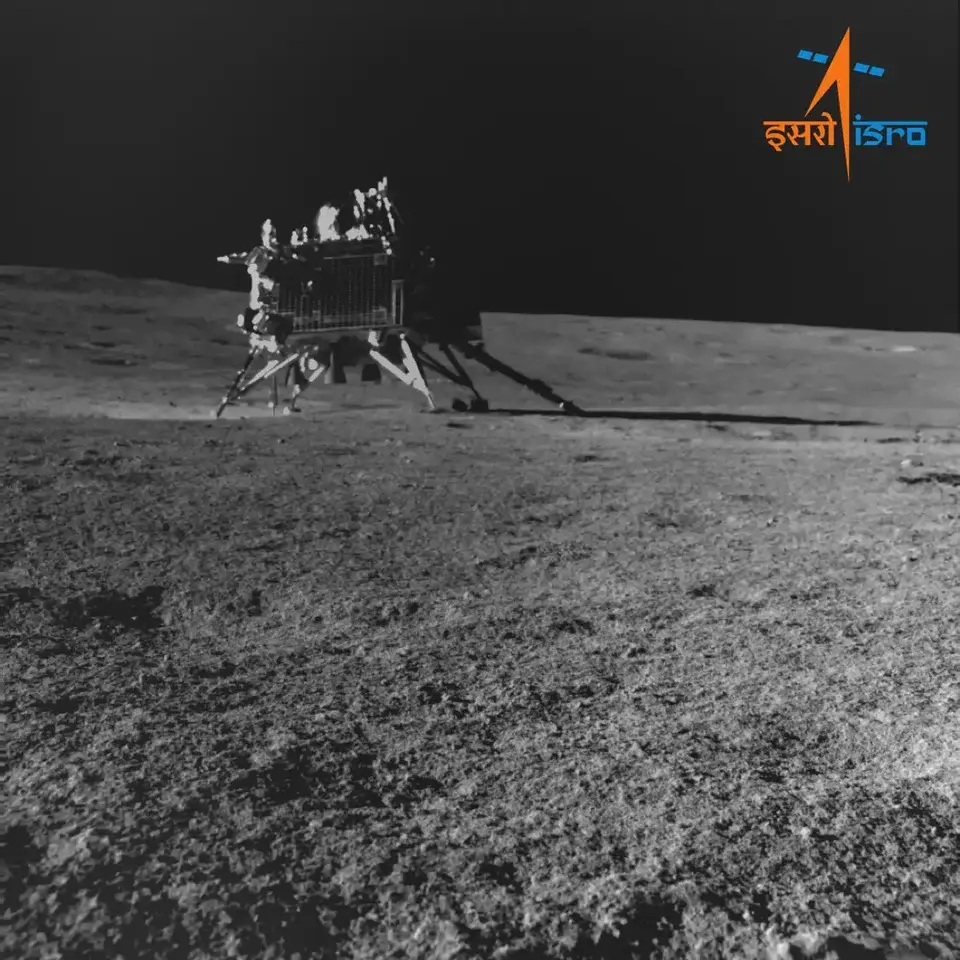
- Chandrayaan-3 (launched July 2023) landed Vikram with the rover Pragyan near the south pole on 23 August 2023, at a site named Shiv Shakti point, making India the fourth country to soft land on the Moon and the first near its south pole. The lander's probe showed the topsoil to be an excellent insulator, its seismometer recorded vibrations, and the rover's laser spectroscope confirmed sulphur in the polar soil, alongside aluminium, iron, calcium and other elements. Vikram also made a short hop, and the propulsion module was later returned to an orbit round the Earth.

Mars, the Sun and the sky
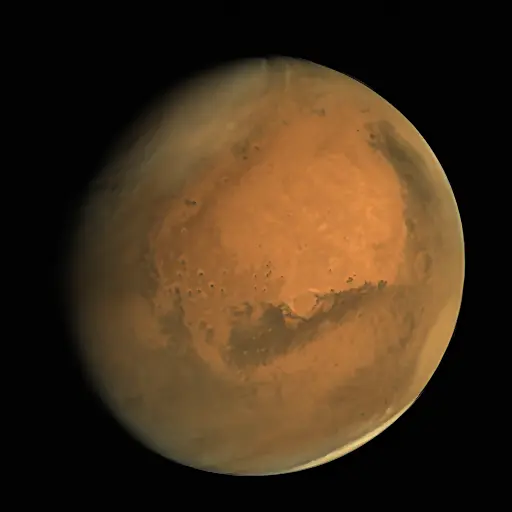
- The Mars Orbiter Mission (Mangalyaan), launched in November 2013, entered Mars orbit on 24 September 2014, making India the first country to do so on its first attempt and the first in Asia. Planned for six months, it worked for about eight years, imaging the planet and its moon Phobos, and coped with a one way signal delay that reached about 20 minutes.
- Aditya-L1, launched in September 2023, reached a halo orbit around the first Sun–Earth Lagrange point, about 1.5 million km from Earth, in January 2024, and watches the Sun without ever being eclipsed. Of its seven payloads, the Visible Emission Line Coronagraph blocks the bright disc to study the corona and the Solar Ultraviolet Imaging Telescope images the lower layers, while others sample the solar wind and the magnetic field at L1.
- AstroSat (2015), India's first dedicated astronomy satellite, observes in ultraviolet, visible and X-ray bands at once, and XPoSat (January 2024) made India the second country, after the United States, with a dedicated mission to measure X-ray polarisation.

Building blocks and what comes next
- The Space Docking Experiment (SpaDeX), launched in December 2024, joined two small satellites in orbit in January 2025, making India the fourth country to dock spacecraft; docking is needed for sample return and for the station.
- Chandrayaan-4, approved in September 2024 at Rs 2,104.06 crore, will use two LVM3 launches to land, collect lunar soil and bring it back, which needs its modules to dock and undock in orbit. The Venus Orbiter Mission, approved at the same time at Rs 1,236 crore with launch expected in March 2028, will study the planet's surface, atmosphere and its interaction with the Sun. The Lunar Polar Exploration mission (LUPEX), also called Chandrayaan-5, is planned with the Japan Aerospace Exploration Agency (JAXA) to survey water ice near the south pole.
- On the ground. India's Giant Metrewave Radio Telescope near Pune, run by the National Centre for Radio Astrophysics, is among the largest of its kind; India has committed Rs 1,250 crore to join the Square Kilometre Array radio telescope in Australia and South Africa, and LIGO-India, a detector for the Laser Interferometer Gravitational-Wave Observatory (LIGO) network in Maharashtra's Hingoli district, was approved in April 2023.
Issues and way forward
- Few instruments, thin science. Missions carry a handful of payloads, so each answers a narrow question, and the number of research papers from Indian data is modest; more funding for university teams to build instruments and analyse data, through bodies such as the Anusandhan National Research Foundation, would raise the return.
- Failures are part of the record. Chandrayaan-2's lander was lost in descent, and the fixes, wider margins, a larger landing zone and more testing, made Chandrayaan-3 succeed; publishing failure reports in full builds trust and lets others learn.
- Launch cadence. Science missions queue behind commercial and strategic launches, and the Venus window of 2028 cannot be moved, so a reliable LVM3 and the Next Generation Launch Vehicle matter to science too.
- Ground stations and data. Deep space tracking from the Indian Deep Space Network at Byalalu limits how many distant craft India can fly at once, and data archives need better access and documentation for global users.
- Sharing the Moon. As several nations and companies head for the same polar craters, rules on safety zones and use of resources become urgent; that law is in the space policy, commerce and law note.
Common confusions
- Chandrayaan-2 and Chandrayaan-3. Chandrayaan-2 had an orbiter, lander and rover and lost its lander, while Chandrayaan-3 carried only a lander, rover and propulsion module, with Chandrayaan-2's orbiter available as a backup relay.
- Water and ice. Chandrayaan-1 found signs of water and hydroxyl bound in surface minerals across much of the Moon, which is different from thick ice deposits in permanently shadowed polar craters, which later missions seek to confirm.
- Aditya-L1 and a satellite in Earth orbit. Aditya-L1 is not in orbit round the Earth at all; it circles a point between the Earth and the Sun, about four times farther than the Moon.
- AstroSat and XPoSat. AstroSat images and measures the brightness of sources across many bands, while XPoSat measures the direction in which X-rays are polarised from bright sources.
- Corona and solar wind. The corona is the Sun's thin, extremely hot outer atmosphere, while the solar wind is the stream of charged particles that flows out of it across the solar system.
For the exam
- Keyword bank: spectroscopy, atmospheric window, permanently shadowed regions, lunar south pole, soft landing, Shiv Shakti point, Mars orbit insertion, Lagrange point L1, coronagraph, space weather, X-ray polarimetry, docking, sample return, Venus Orbiter Mission, radio astronomy.
- Previous year questions: Practise the previous year questions on this topic →
- Use in an answer:
- Introduction with data: The Mars Orbiter Mission reached Mars on its first attempt in 2014 at a cost of about Rs 450 crore, and was planned for six months but worked for about eight years (ISRO).
- Introduction with a source: On 23 August 2023 Chandrayaan-3 made the first soft landing near the Moon's south pole, and the Government declared the day National Space Day.
- Conclusion: India's science missions show that clear goals, few instruments and proven launchers can produce results far beyond their cost, but the next phase of sample return and Venus will need deeper science teams and steadier launches.
- Conclusion: Exploration is a ladder in which each mission proves a step for the next, from orbit and landing to docking and return, and India is now on its higher rungs.