

24 Nov 2026GS1Revision
Revision: the whole GS1 paper
Questions you have written before will appear here. That is by design. Writing an answer a second time, after reading the model answer, is the point of the day.
Previous year questions
10 as set1 · GS1 202415 marks250 words
What are aurora australis and aurora borealis? How are these triggered?
Show the model answerHide the model answer
In May 2024, a strong solar storm produced an aurora visible even from Hanle in Ladakh. Such displays are usually seen only near the poles.
What they are
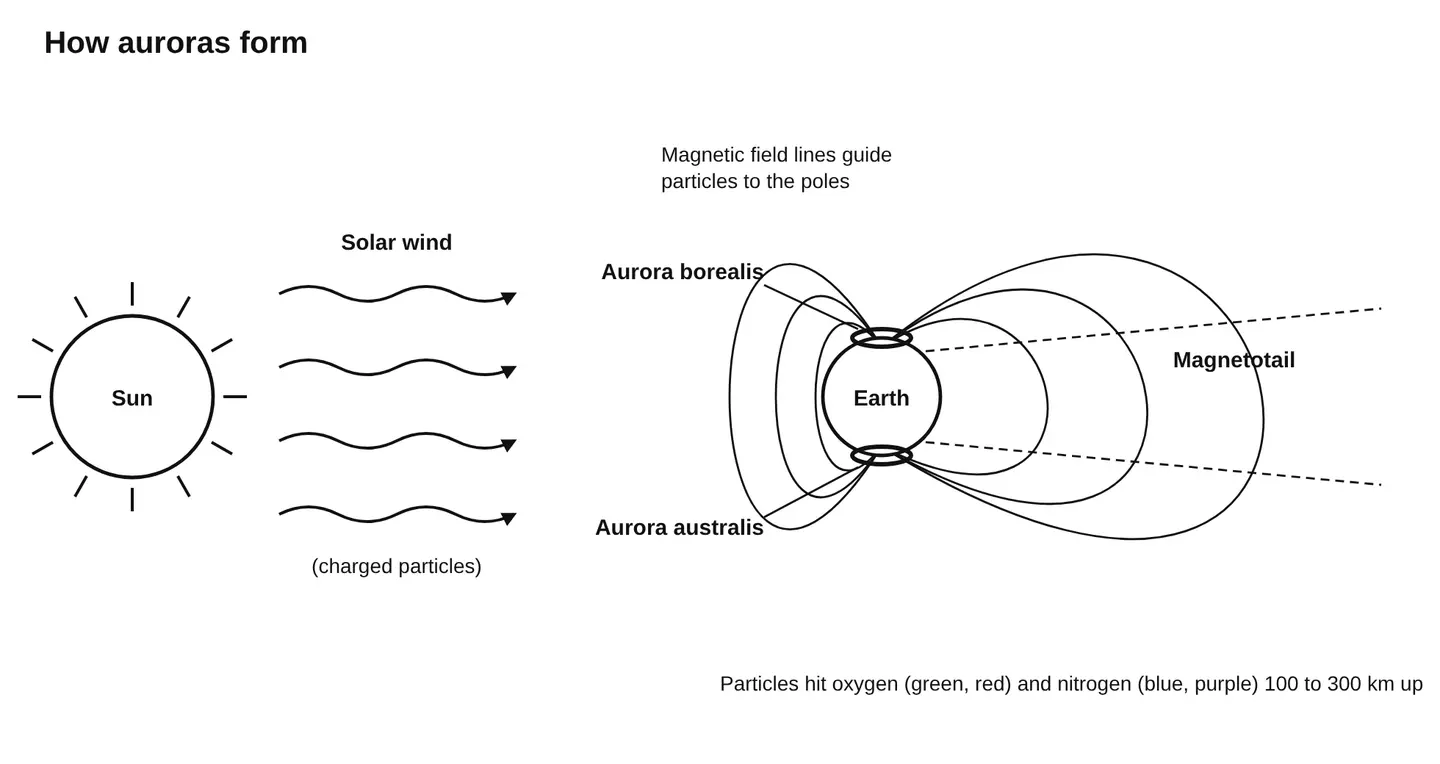
Auroras are natural lights in the night sky of high latitudes. The aurora borealis appears in the north and the aurora australis in the south. Both occur in rings called auroral ovals around the magnetic poles.
How they are triggered
Solar wind: The Sun constantly releases charged particles. Solar flares and coronal mass ejections send stronger bursts.
Magnetic shield: Earth's magnetosphere deflects most particles. Some enter where field lines converge near the poles.
Energy release: Magnetic reconnection in the magnetotail accelerates particles down the field lines.
Collisions and colour: Particles strike gases 100 to 300 kilometres up. Oxygen glows green and red, while nitrogen gives blue and purple.
Geomagnetic storms: Strong storms push the auroral ovals towards the equator, as in 2024.
Why they matter
Auroras signal space weather that can disrupt satellites, navigation and power grids. India's Aditya L1 (2023) studies the Sun to predict such storms.
Auroras are the visible meeting point of the Sun's wind and Earth's magnetic shield.
Show how the answer was builtHide how the answer was built
Decode
Explain what auroras are and what triggers them.
Implicit demand
The examiner wants the science step by step, with a diagram and colours explained.
Architecture
A current affairs introduction, a definition, a diagram, five triggers, significance, then a verdict.
Articulation
The 2024 Ladakh aurora hooks the reader. Money line: Sun's wind meets Earth's shield.
Show value added materialHide value added material
Facts
Solar Cycle 25 peaked around 2024 to 2025.
A geomagnetic storm caused the Quebec blackout of 1989.
Auroras also occur on Jupiter and Saturn.
2 · GS1 201810 marks150 words
Why is Indian Regional Navigational Satellite System (IRNSS) needed? How does it help in navigation?
Show the model answerHide the model answer
During the Kargil conflict of 1999, India could not get satellite navigation data when it needed it most. IRNSS, now called NavIC (Navigation with Indian Constellation), was built to end this dependence.
Why it is needed
Strategic autonomy: Foreign systems such as the American Global Positioning System can be denied or degraded in a crisis.
Secure service: An encrypted Restricted Service serves the armed forces.
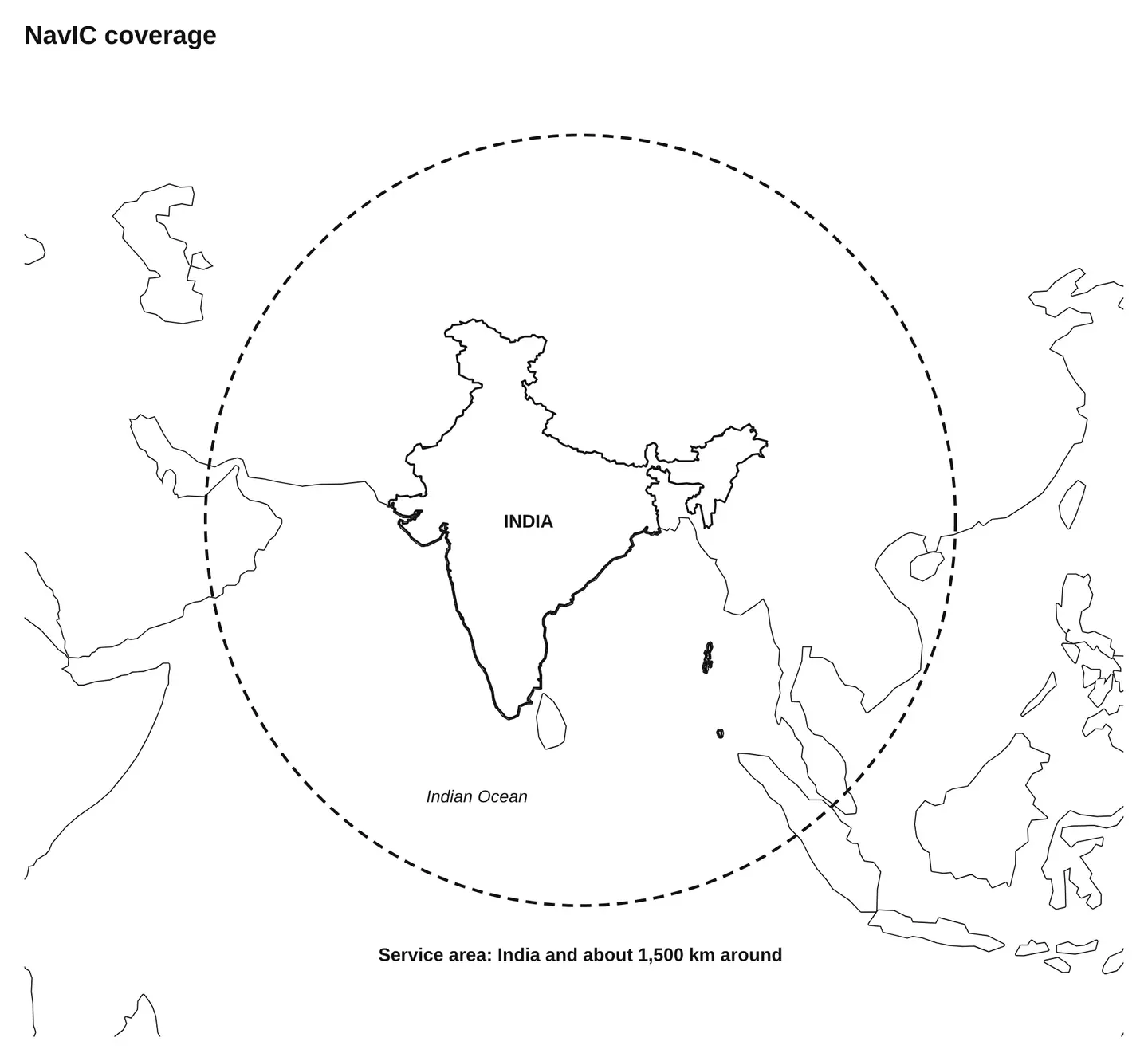
Regional focus: It covers India and about 1,500 kilometres around it, including the Indian Ocean.
How it helps in navigation
Constellation: Satellites in geostationary and inclined geosynchronous orbits stay over the region at all times.
Accuracy: Signals in two frequency bands correct ionospheric errors.
Applications: Vehicle tracking, alerts for fishermen, disaster warnings, railway tracking and precise timing for power grids and banks.
NavIC turns navigation from a borrowed service into a sovereign capability.
Show how the answer was builtHide how the answer was built
Decode
Explain why India needs its own navigation system and how it works.
Implicit demand
The examiner wants strategic reasons and technical working with uses.
Architecture
A historical introduction, a sketch, three needs, three ways it helps, then a verdict.
Articulation
Kargil gives the reason in one line. Money line: a sovereign capability.
Show value added materialHide value added material
Facts
NavIC uses the L5 and S bands, and new satellites add L1.
Other systems: GPS, GLONASS, Galileo and BeiDou.
GAGAN augments GPS for aviation over India.
3 · GS1 202415 marks250 words
Globalization has increased urban migration by skilled, young, unmarried women from various classes. How has this trend impacted upon their personal freedom and relationship with family?
Show the model answerHide the model answer
Young women now move from small towns to cities for jobs in technology, health care, retail and garment factories. This migration has widened their freedom, though families and society still set limits.
Impact on personal freedom
Economic independence: A regular income gives women control over spending, savings and careers.
Choice: Many now decide when and whom to marry, and delay marriage to build careers.
New identities: City life opens friendships, networks and lifestyles beyond caste and community.
Continuing limits: Safety fears, hostel curfews and moral policing restrict movement. Landlords often refuse single women.
Workplace risks: Harassment and wage gaps persist despite the Sexual Harassment of Women at Workplace Act (2013).
Impact on family relationships
Greater voice: Money sent home raises their status and voice in family decisions.
Renegotiated authority: Parents slowly accept daughters' choices, though pressure to marry often continues.
Control from afar: Phones let families monitor daughters, creating a tension between trust and control.
Care duties: Many women support ageing parents from a distance.
Class differences
Middle class professionals gain most freedom. Working class migrants, such as garment workers in Tiruppur, often face hostel control and exploitation.
Migration has given women freedom to choose, but that freedom is still negotiated with family and society.
Show how the answer was builtHide how the answer was built
Decode
Examine how urban migration affects young women's freedom and family ties.
Implicit demand
The examiner wants gains and limits on freedom, family changes, and class contrast.
Architecture
An introduction, five points on freedom, four on family, class differences, then a verdict.
Articulation
Tiruppur shows the class divide. Money line: freedom still negotiated.
Show value added materialHide value added material
Facts
Sumangali scheme in Tamil Nadu mills.
Kerala nurses' migration to cities and abroad.
Working women's hostels scheme.
4 · GS1 201715 marks250 words
Highlight the importance of the new objectives that got added to the vision of Indian independence since the twenties of the last century.
Show the model answerHide the model answer
Until 1920, the national movement sought mainly self government. From the 1920s, freedom came to mean social and economic justice as well.
New objectives
Complete independence: The Lahore session (1929) declared Purna Swaraj the goal.
Economic justice: The Karachi Resolution (1931) promised fundamental rights and state control of key industries. The National Planning Committee followed in 1938.
Social equality: Gandhi's campaign against untouchability and Ambedkar's struggle brought the depressed classes into the national agenda.
Rights of peasants and workers: The All India Kisan Sabha (1936) and trade unions linked freedom with land and wages.
Women's equality: Karachi promised equal rights regardless of sex.
Democracy and secularism: The Nehru Report (1928) sought adult franchise and a state with no official religion.
Linguistic provinces: Congress reorganised itself on linguistic lines in 1920.
Anti imperialism: Nehru linked India's struggle with movements against fascism and colonialism worldwide.
Importance
These goals widened the movement's social base. They later shaped the Constitution's Fundamental Rights, Directive Principles, planning and secular character.
The 1920s turned the freedom struggle from a demand for self rule into a blueprint for a just republic.
Show how the answer was builtHide how the answer was built
Decode
Highlight new goals added to the freedom struggle after 1920.
Implicit demand
The examiner wants each new objective with an event and its later importance.
Architecture
An introduction, eight objectives, their importance, then a verdict.
Articulation
Karachi links the struggle to the Constitution. Money line: a blueprint for a just republic.
Show value added materialHide value added material
Facts
Congress Socialist Party, 1934.
Indian Civil Liberties Union, 1936.
League against Imperialism, Brussels, 1927.
5 · GS1 202510 marks150 words
Examine the main aspects of Akbar's religious syncretism.
Show the model answerHide the model answer
Akbar ruled a land of many faiths. His religious syncretism combined political need with genuine curiosity.
Sulh i kul: His guiding idea of universal peace meant tolerance towards all faiths.
Equal treatment: He abolished the pilgrim tax (1563) and the jizya (1564) on non Muslims.
Dialogue: The Ibadat Khana (1575) at Fatehpur Sikri hosted debates among Muslims, Hindus, Jains, Christians and Zoroastrians.
Authority over the ulema: The Mahzar (1579) let him decide disputed religious questions.
Din i Ilahi (1582): A small spiritual order of disciples, not a new religion.
Cultural blending: The Maktab Khana translated the Mahabharata into Persian as the Razmnama. Rajput marriages and festivals such as Nauroz reflected the same spirit.
Orthodox critics such as Badauni opposed him, and the experiment faded after his death.
Akbar's syncretism made tolerance a principle of empire.
Show how the answer was builtHide how the answer was built
Decode
Examine the main aspects of Akbar's religious policy.
Implicit demand
The examiner wants concrete measures with dates and a note on limits.
Architecture
An introduction, six aspects, limits, then a verdict.
Articulation
Each aspect carries a date. Money line: tolerance a principle of empire.
Show value added materialHide value added material
Facts
Abul Fazl wrote the Akbarnama.
Jesuit missions reached Akbar's court in 1580.
Tauhid i Ilahi is another name for Din i Ilahi.
6 · GS1 202115 marks250 words
“There arose a serious challenge to the Democratic State System between the two World Wars.” Evaluate the statement.
Show the model answerHide the model answer
After the First World War, democracy spread across Europe with new republics such as Weimar Germany. Within two decades, most had collapsed into dictatorship.
The challenge
Fascism in Italy: Mussolini seized power in 1922 and ended parliamentary rule.
Nazism in Germany: Hitler became chancellor in 1933 and destroyed the Weimar Republic through the Enabling Act.
Military regimes: Japan came under militarists, and Spain fell to Franco after the civil war of 1936 to 1939.
Authoritarian Eastern Europe: Poland, Hungary and the Balkan states turned to strongmen.
Communist rival: Stalin's Soviet Union offered a one party model as an alternative.
Why democracy faltered
Humiliation: The Treaty of Versailles (1919) bred resentment in Germany.
Economic collapse: The Great Depression (1929) brought mass unemployment.
Weak governments: Unstable coalitions and fear of communism pushed elites towards dictators.
Failed collective security: The League of Nations could not stop aggression.
Evaluation
Democracy survived in Britain, France, the United States and Scandinavia. The New Deal in America showed democracies could reform. The challenge was serious, not total.
The interwar crisis showed democracy is fragile without economic security, a lesson that shaped the post war world.
Show how the answer was builtHide how the answer was built
Decode
Evaluate whether democracy faced a serious challenge between the wars.
Implicit demand
The examiner wants evidence, causes and a balanced judgement.
Architecture
An introduction, five challenges, four causes, an evaluation, then a verdict.
Articulation
Survivors balance the picture. Money line: fragile without economic security.
Show value added materialHide value added material
Facts
Weimar Constitution, 1919.
Munich Agreement, 1938.
Czechoslovakia remained democratic until 1938.
7 · GS1 202015 marks250 words
The interlinking of rivers can provide viable solutions to the multi-dimensional inter-related problems of droughts, floods and interrupted navigation. Critically examine.
Show the model answerHide the model answer
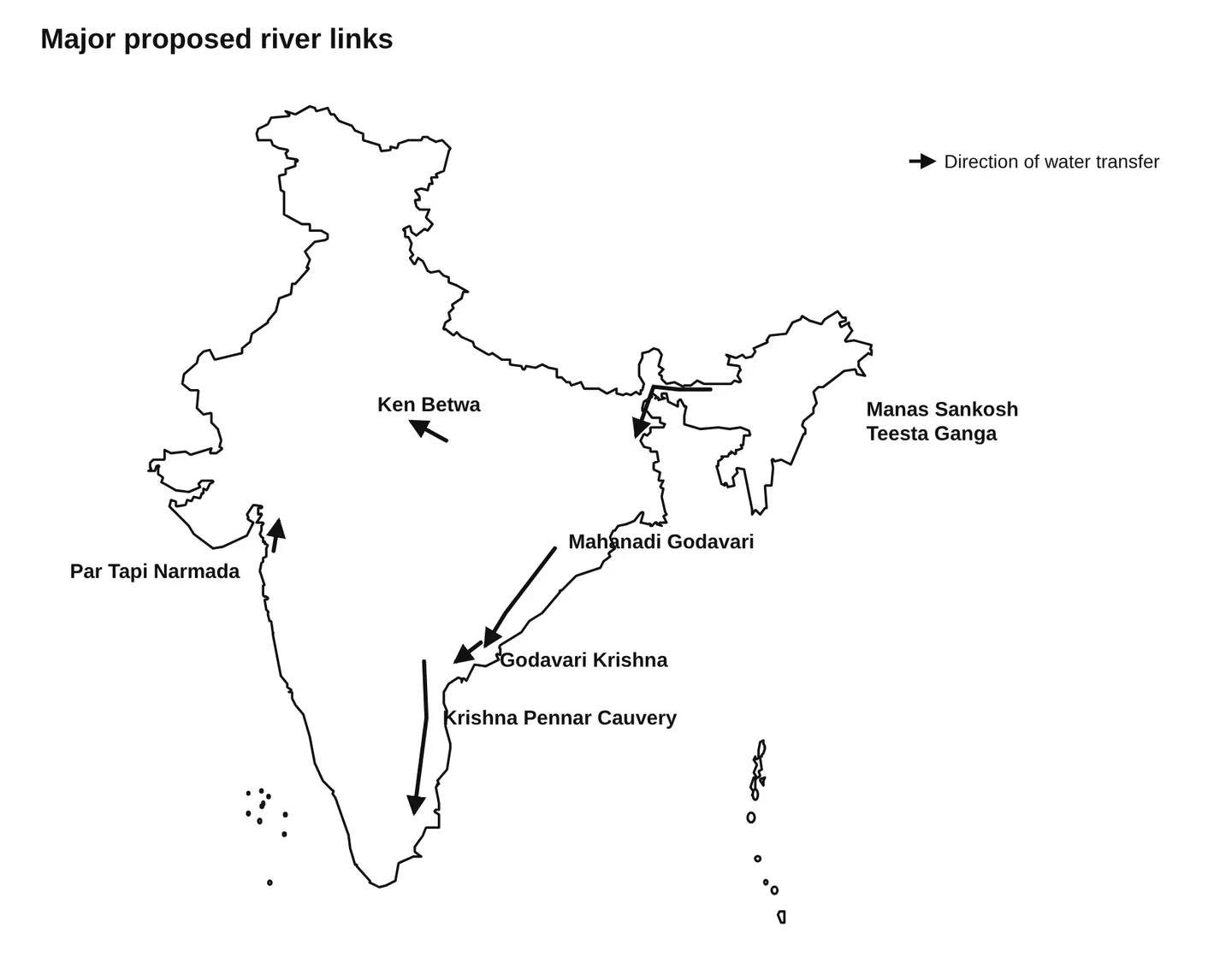
The National Perspective Plan (1980) proposed 30 river links, 14 Himalayan and 16 peninsular. The Ken Betwa link is the first being built.
How it can help
Drought relief: Surplus water from the Ganga, Brahmaputra and Mahanadi could reach dry Bundelkhand, Rayalaseema and Tamil Nadu.
Flood moderation: Diverting peak flows could reduce floods in Bihar and Assam.
Navigation and power: Linked canals could improve inland waterways and add hydropower.
Irrigation: Millions of hectares could gain assured water.
Proof of concept: The Godavari Krishna link through the Polavaram canal already carries Godavari water to the Krishna delta.
Concerns
Ecology: Ken Betwa will submerge part of Panna Tiger Reserve. Less silt would weaken deltas.
Displacement: Reservoirs and canals would uproot villages, many of them tribal.
Disputes: States contest the idea of surplus water, and Himalayan links need Nepal and Bangladesh.
Cost and climate: The cost runs into lakhs of crores, and floods and droughts may strike both basins together.
Engineering risk: Himalayan links would cross earthquake prone terrain with fragile slopes.
Way forward
Links should proceed case by case, alongside watershed development, groundwater recharge and efficient irrigation.
River interlinking can help, but only where science, consent and ecology all agree.
Show how the answer was builtHide how the answer was built
Decode
Critically examine river interlinking as a solution to water problems.
Implicit demand
The examiner wants benefits, concerns and a balanced way forward.
Architecture
An introduction, a sketch, four benefits, four concerns, a way forward, then a verdict.
Articulation
Ken Betwa grounds both sides. Money line: science, consent and ecology.
Show value added materialHide value added material
Facts
National Water Development Agency, 1982.
Pattiseema lift scheme links the Godavari and Krishna.
Suresh Prabhu task force on interlinking, 2002.
8 · GS1 202310 marks150 words
Discuss the consequences of climate change on the food security in tropical countries.
Show the model answerHide the model answer
Tropical countries already face heat and erratic rain. Climate change threatens food security there most.
Falling yields: Higher temperatures cut yields of wheat, rice and maize. A heatwave in 2022 reduced India's wheat harvest.
Erratic rainfall: Droughts and floods disrupt rain fed farming across Africa and South Asia.
Rising seas: Salinity damages rice fields in the deltas of Bangladesh and the Mekong.
Pests and disease: Warmer weather helped the locust outbreak of 2020 spread across East Africa and India.
Fisheries and livestock: Warming seas reduce catches, and heat stress lowers milk yields.
Poorer nutrition: Higher carbon dioxide reduces zinc, iron and protein in crops.
Prices and poverty: Crop failures raise prices and hurt smallholders most.
Climate resilient seeds, millets, crop insurance and better water use can protect food supply.
Climate change threatens food security first and hardest where hunger already exists.
Show how the answer was builtHide how the answer was built
Decode
Discuss how climate change threatens food security in the tropics.
Implicit demand
The examiner wants varied consequences with examples.
Architecture
An introduction, seven consequences, adaptation, then a verdict.
Articulation
The 2022 heatwave makes it concrete. Money line: hardest where hunger exists.
Show value added materialHide value added material
Facts
International Year of Millets, 2023.
Pradhan Mantri Fasal Bima Yojana, 2016.
National Innovations in Climate Resilient Agriculture, 2011.
9 · GS1 202210 marks150 words
Given the diversities among tribal communities in India, in which specific contexts should they be considered as a single category?
Show the model answerHide the model answer
India has over 700 Scheduled Tribes with distinct languages, livelihoods and customs. Yet in some contexts they must be treated as one category.
Constitutional safeguards: Reservation in jobs, education and legislatures, and the Fifth and Sixth Schedules, apply to all Scheduled Tribes.
Legal protection: The Scheduled Castes and Scheduled Tribes (Prevention of Atrocities) Act (1989) protects all tribes equally.
Land and forest rights: The Panchayats (Extension to Scheduled Areas) Act (1996) and the Forest Rights Act (2006) recognise shared rights over land and resources.
Planning and data: Tribal sub plans and census data treat tribes as one group to track development gaps.
Shared history: Most tribes faced displacement and exclusion, which justifies common protection.
Within this category, particularly vulnerable groups need special focus.
Tribes should be one category for rights and safeguards, but many communities for culture and policy design.
Show how the answer was builtHide how the answer was built
Decode
Identify contexts where diverse tribes should be treated as one.
Implicit demand
The examiner wants specific legal and policy contexts.
Architecture
An introduction, five contexts, a caveat, then a verdict.
Articulation
Rights versus culture gives a precise stand. Money line: one category, many communities.
Show value added materialHide value added material
Facts
National Commission for Scheduled Tribes.
75 particularly vulnerable tribal groups.
Lokur Committee criteria for scheduling tribes, 1965.
10 · GS1 202515 marks250 words
Does tribal development in India centre around two axes, those of displacement and of rehabilitation? Give your opinion.
Show the model answerHide the model answer
Tribal people form under a tenth of India's population but a far larger share of those displaced by development projects. Displacement and rehabilitation have therefore shaped much of tribal development, though not all of it.
The first axis: displacement
Resource rich homelands: Tribal areas hold forests, minerals and rivers. Dams such as Sardar Sarovar and Hirakud, mines and protected areas have uprooted lakhs of tribal families.
Loss beyond land: Displacement cuts people off from forests, sacred sites and community life. Many become migrant labourers.
Resistance: The Narmada Bachao Andolan challenged big dams, and gram sabhas at Niyamgiri rejected bauxite mining in 2013.
The second axis: rehabilitation
Poor record: Compensation was often late and inadequate. Cash replaced land, and many families were never properly resettled.
Legal reform: The Right to Fair Compensation and Transparency in Land Acquisition, Rehabilitation and Resettlement Act (2013) requires consent and a social impact assessment.
Continuing gaps: Resettlement colonies often lack livelihoods, schools and common lands, so families lose their old way of life.
Beyond the two axes
Rights and self rule: The Panchayats (Extension to Scheduled Areas) Act (1996) and the Forest Rights Act (2006) give communities control over land and resources.
Human development: Eklavya Model Residential Schools, Van Dhan Yojana (2018) and the Pradhan Mantri Janjati Adivasi Nyaya Maha Abhiyan (2023) target education, livelihoods and vulnerable groups.
Opinion
Displacement and rehabilitation remain the most visible axes. Real development must move from rehabilitation after loss to consent, ownership and a share in benefits.
Tribal development should be measured not by how well people are resettled, but by how rarely they need to be.
Show how the answer was builtHide how the answer was built
Decode
Give an opinion on whether tribal development revolves around displacement and rehabilitation.
Implicit demand
The examiner wants a clear stand with evidence on both sides.
Architecture
An introduction, three points on displacement, three on rehabilitation, two other axes, an opinion, then a verdict.
Articulation
Treating each axis in turn answers the question directly before going beyond it. Money line: how rarely they need to be resettled.
Show value added materialHide value added material
Facts
Verrier Elwin and Nehru's tribal Panchsheel.
District Mineral Foundations, 2015.
Dharti Aaba Janjatiya Gram Utkarsh Abhiyan, 2024.