Big cats and their conservation
- Syllabus
- Conservation, environmental pollution and degradation, environmental impact assessment
- As of
- October 2026
- apex predator
- umbrella species
- Project Tiger
- National Tiger Conservation Authority
- tiger reserve core and buffer
- All India Tiger Estimation
- camera trap capture recapture
- source and sink populations
- Project Lion
- Status of Leopards 2022
- Snow Leopard Population Assessment in India
- Project Cheetah
- Kuno National Park
- Gandhi Sagar
- International Big Cat Alliance
The first principle
A big cat sits at the top of its food chain, so it needs a large area, plenty of prey and little disturbance to survive. Protecting a viable population of tigers or snow leopards therefore means protecting whole landscapes, with their forests, grasslands, water and prey, which is why big cats are used as umbrella species. India's big cat policy follows from this: secure inviolate breeding cores, connect them with corridors, and keep the people around them on side.
The core
Why predators matter
- Top down control. Predators keep deer, wild pig and other herbivores in check, and so protect the vegetation those herbivores eat; this cascade of effects down the food chain is called a trophic cascade.
- Source and sink. A source population breeds more animals than it needs to replace itself, and the surplus disperses; a sink is an area where deaths exceed births. Tigers survive in the long run only as a metapopulation, a set of populations linked by corridors through which young animals move and genes are exchanged, which is why isolated populations become inbred.
- Counting. The National Tiger Conservation Authority (NTCA) and the Wildlife Institute of India (WII) count tigers by camera traps, identifying each tiger by its unique stripes, and estimate the total by capture recapture statistics; areas without cameras are covered by sign surveys and models, so each estimate is a range.
Project Tiger and the National Tiger Conservation Authority
- Project Tiger (1973). Launched with nine reserves, starting at Corbett on 1 April 1973, it created tiger reserves with a core kept free of human use and a buffer of managed use. By early 2026 India had 58 tiger reserves, the latest being Madhav in Madhya Pradesh in March 2025, together covering more than 2 per cent of the country.
- The 2006 amendment. After tigers were wiped out from Sariska in 2004 to 2005, the Tiger Task Force of 2005 led to the 2006 amendment of the Wildlife (Protection) Act, which inserted Chapter IVB creating the NTCA, chaired by the Union Environment Minister, and Chapter IVC creating the Wildlife Crime Control Bureau. Section 38V requires every State to notify a core or critical tiger habitat, kept inviolate, and a buffer, and to prepare a tiger conservation plan.
- The scheme. Project Tiger and Project Elephant were merged in 2023 into one Centrally Sponsored Scheme, Project Tiger and Elephant, which funds reserves, voluntary relocation of villages from cores and protection.
Dimensions
- Ecological. Tiger reserves protect forests that feed rivers and store carbon, so a big cat is a proxy for watershed and climate protection as well.
- Economic. Wildlife tourism supports thousands of jobs around reserves such as Ranthambore, Bandhavgarh and Kanha, but its benefits often go to outside hotel owners rather than villages.
- Social. Creating inviolate cores means relocating villages; voluntary relocation with fair packages has worked in places such as Bhadra, but forced or poorly compensated moves breed resentment.
- Security and trade. Tiger bone, skin and leopard skin move along smuggling routes to East Asia, so protection depends on intelligence, cross border cooperation and the enforcement of CITES.
- International. India hosts about three quarters of the world's wild tigers, set up the Global Tiger Forum in 1994 with other range countries, and launched the International Big Cat Alliance in April 2023 for the tiger, lion, leopard, snow leopard, cheetah, jaguar and puma.
In practice
Tiger
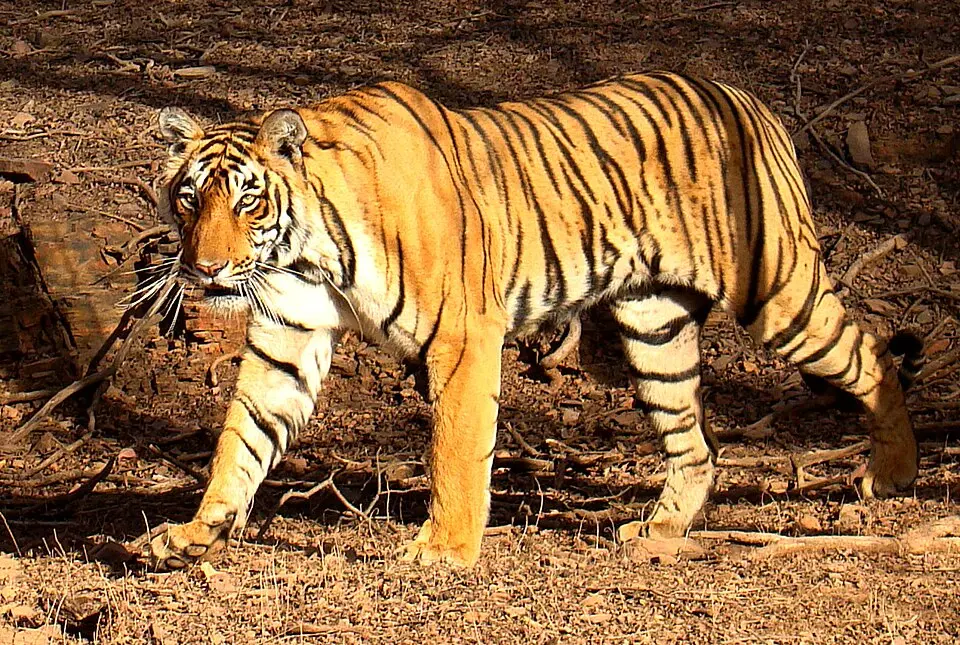
- Status block. Panthera tigris. IUCN: Endangered. Wildlife (Protection) Act: Schedule I. CITES: Appendix I. Range in India: from the Shivalik and terai forests through central India and the Western Ghats to the Sundarbans mangroves and the Northeast. Main threats: poaching, prey loss, fragmented corridors and conflict outside reserves. Programme: Project Tiger and Elephant, NTCA.
- Latest count. The 2022 cycle of the All India Tiger Estimation counted at least 3,167 tigers by camera traps and estimated an average of 3,682, with Madhya Pradesh (785), Karnataka (563), Uttarakhand (560) and Maharashtra (444) in the lead. The next cycle is the 2026 estimation.
- Reintroductions. Sariska and Panna, emptied by poaching, were restocked from 2008 and 2009 and now have breeding populations, while the reintroduction at Satkosia in Odisha in 2018 failed amid local opposition.

Asiatic lion
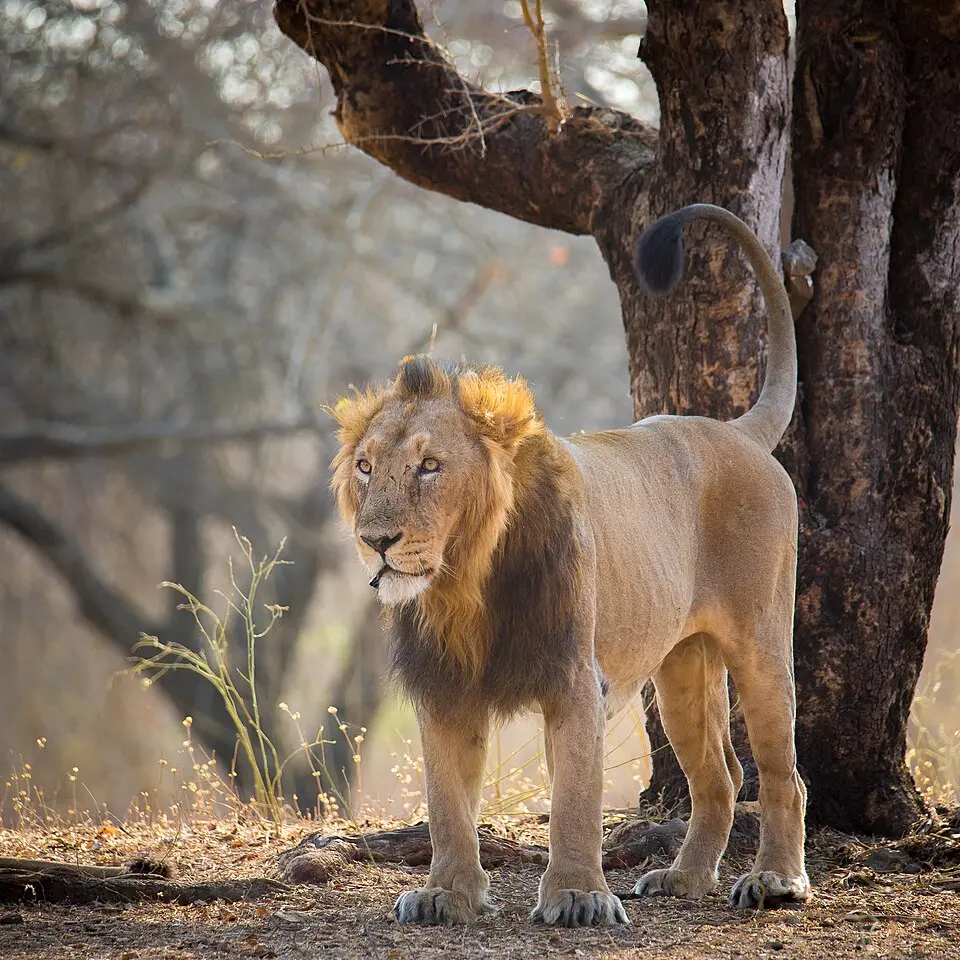
- Status block. Panthera leo, the Asiatic population once named Panthera leo persica. IUCN: Vulnerable for the species as a whole, and the Asiatic lion was assessed as Endangered when it was listed as a subspecies. Wildlife (Protection) Act: Schedule I. CITES: Appendix I for the Indian population. Range: only the Saurashtra region of Gujarat, in Gir and satellite populations around it. Main threats: a single population exposed to disease, open wells, roads and railway lines, and lions living among people. Programme: Project Lion (2020).
- Numbers. The 16th estimation of May 2025 counted 891 lions, up from 674 in 2020 and 523 in 2015, and more than half of them lived in satellite populations outside the Gir protected area. In 2013 the Supreme Court ordered some lions to be moved to Kuno in Madhya Pradesh as a second home, but this has not happened.

Leopard, snow leopard and clouded leopard
- Leopard. Panthera pardus. IUCN: Vulnerable. Schedule I. CITES: Appendix I. Found across India except the deserts and the high Himalaya, it lives easily near people. The Status of Leopards 2022 report estimated 13,874, with Madhya Pradesh highest. Main threats: conflict, road kills and skin trade.
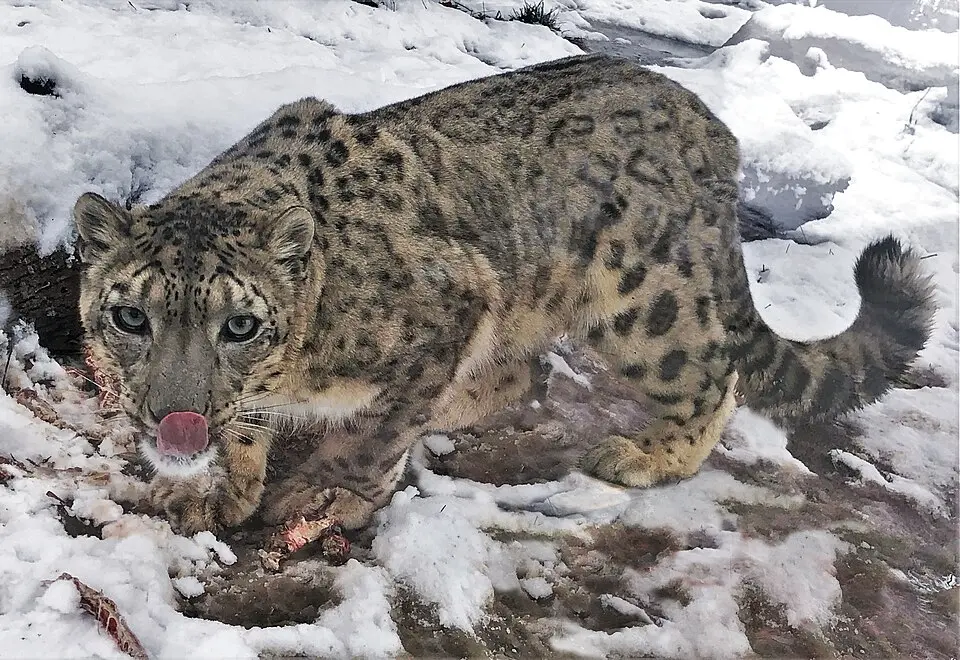
- Snow leopard. Panthera uncia. IUCN: Vulnerable. Schedule I. CITES: Appendix I. It lives above the tree line in Ladakh, Jammu and Kashmir, Himachal Pradesh, Uttarakhand, Sikkim and Arunachal Pradesh. The first Snow Leopard Population Assessment in India (2024) estimated 718, of which 477 were in Ladakh, and much of its range lies outside protected areas. Main threats: retaliation for livestock losses, feral dogs and loss of wild prey such as bharal and ibex. Programme: Project Snow Leopard (2009).
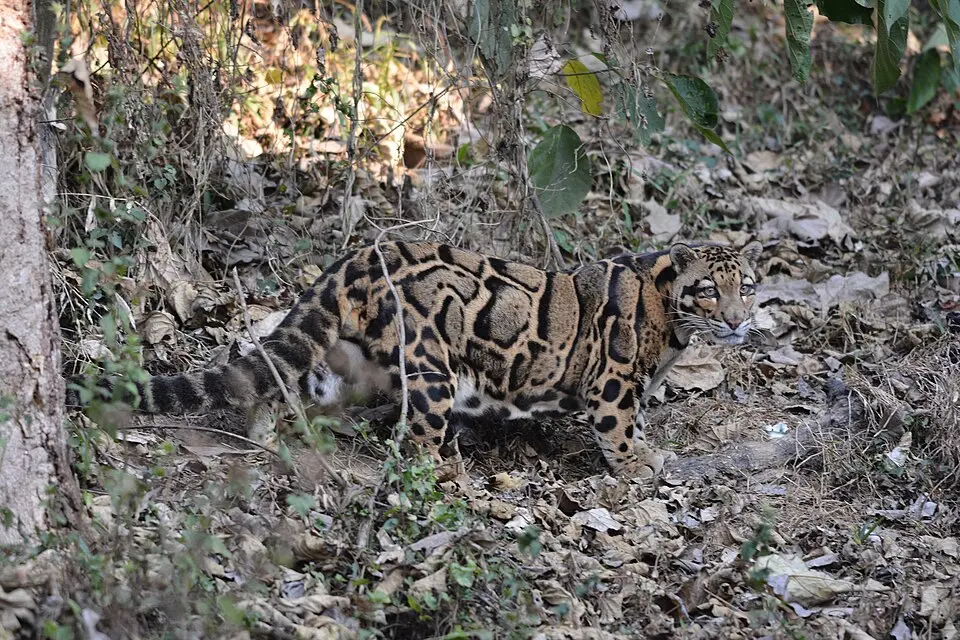
- Clouded leopard. Neofelis nebulosa. IUCN: Vulnerable. Schedule I. CITES: Appendix I. A tree climbing cat of the forests of the Northeast and the eastern Himalaya, it is the State animal of Meghalaya. Main threats: deforestation and hunting.


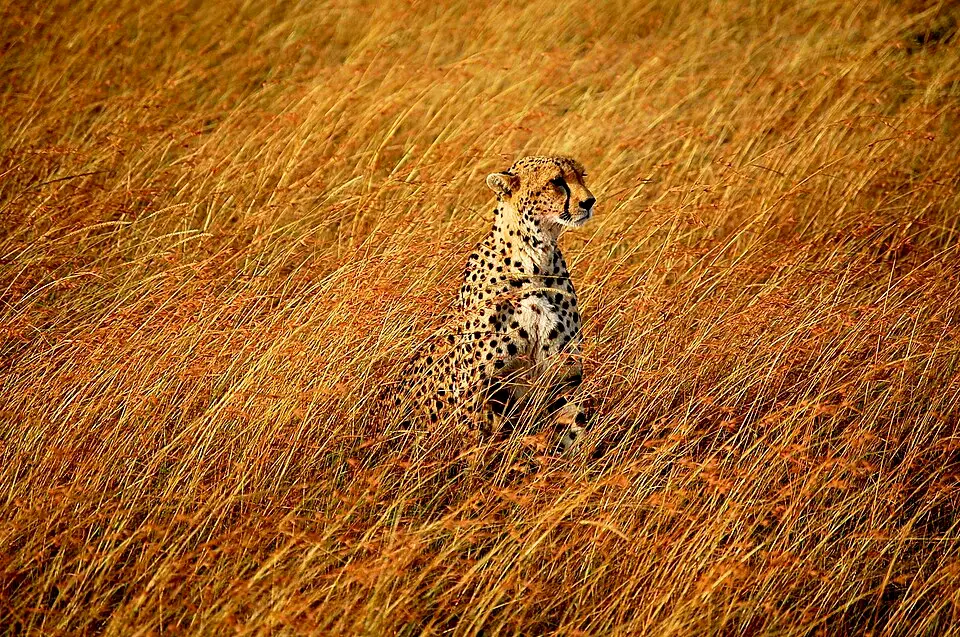
Cheetah
- Status block. Acinonyx jubatus. IUCN: Vulnerable. Schedule I. CITES: Appendix I. The Asiatic cheetah was declared extinct in India in 1952, and the animals brought in are African. Range now: Kuno National Park and Gandhi Sagar Wildlife Sanctuary in Madhya Pradesh. Main threats: deaths from infection, fights and heat stress, small founding numbers and limited fenced space. Programme: Project Cheetah, under the Action Plan for Introduction of Cheetah in India (2022).
- Translocations. Eight cheetahs came from Namibia in September 2022 and twelve from South Africa in February 2023, two males were moved to Gandhi Sagar in April 2025, and a further batch arrived from Botswana in February 2026. Cubs born in India now form a large part of the population, but many of the adults from the first two batches have died.

Issues and way forward
- Tigers outside reserves. A large share of India's tigers live outside reserves, where conflict and road deaths are highest; securing corridors, as the NTCA's landscape plans propose, and working with farmers on livestock protection are the answer.
- Reserves at capacity. Some reserves in Madhya Pradesh are close to the number of tigers they can hold, so young tigers disperse into farmland; restoring habitat in reserves with few tigers and moving tigers to them spreads the load.
- Lions in one place. All wild Asiatic lions live in one region of one State, so a single epidemic, such as the canine distemper deaths of 2018, could devastate them; a second, separate population is the standard safeguard against this risk.
- Cheetah viability. The cheetah project depends on repeated imports, fenced space and intensive care; whether it can build a free ranging, self sustaining population in Indian grasslands is still open, and restoring grasslands and their prey is the real test.
- Snow leopards and herders. Most snow leopard range is grazing land, so community programmes for predator proof livestock pens and insurance matter more than new protected areas.
- Trade. Leopard skins and tiger parts are still seized regularly; joint work by the Wildlife Crime Control Bureau, customs and neighbouring countries keeps the trade in check.
Common confusions
- Tiger reserve and national park. A tiger reserve is a layer notified under Section 38V on the advice of the NTCA over one or more parks and sanctuaries, with a core and a buffer, while a national park is a protected area declared under Section 35.
- Leopard, snow leopard and clouded leopard. The leopard is Panthera pardus; the snow leopard, Panthera uncia, is a separate species; and the clouded leopard belongs to a different genus, Neofelis.
- Minimum and mean tiger estimates. The 2022 figure of 3,167 is the number of tigers actually photographed, while 3,682 is the statistical estimate including areas without cameras.
- Asiatic and African cheetah. India's extinct cheetah was the Asiatic subspecies, which survives only in Iran; the cheetahs at Kuno are African.
For the exam
- Keyword bank: apex predator, umbrella species, trophic cascade, metapopulation, source and sink, inviolate core, buffer, corridor, critical tiger habitat, NTCA, camera trap capture recapture, Project Lion, satellite populations, Project Cheetah, International Big Cat Alliance.
- Previous year questions: Practise the previous year questions on this topic →
- Use in an answer:
- Introduction with data: India's tiger estimate rose from 1,411 in 2006 to an average of 3,682 in 2022, about three quarters of the world's wild tigers, across 58 tiger reserves.
- Introduction with a law: The 2006 amendment to the Wildlife (Protection) Act gave Project Tiger a statutory base by creating the NTCA and requiring inviolate core and buffer zones in every tiger reserve.
- Conclusion: India has shown that big cats can recover on a crowded subcontinent; the next step is to protect the corridors and the people outside reserves on whom that recovery now depends.
- Conclusion: A single home for the Asiatic lion and an imported cheetah population are reminders that conservation is about viable, connected populations, not only headline numbers.