Community conservation in India
- Syllabus
- Conservation, environmental pollution and degradation, environmental impact assessment
- As of
- October 2026
- community conservation
- commons
- Bishnoi
- Khejarli
- Chipko
- Appiko
- sacred groves
- oran
- Joint Forest Management
- Forest Rights Act 2006
- community forest resource rights
- gram sabha
- community reserve
- Biodiversity Management Committee
- other effective area based conservation measures
The first principle
People conserve what they depend on and control. A forest, grassland or lake that a village uses every day will be protected by that village if it has secure rights, clear rules and a share in the benefits, and it will be overused if it has none of these. This is the lesson of the commons, and it explains both the long history of community conservation in India and the conflicts that followed when the colonial and later the Indian state took forests under its own control. The modern task is to combine the strength of the state in law and science with the strength of communities in daily vigilance.
The core
Traditions of conservation
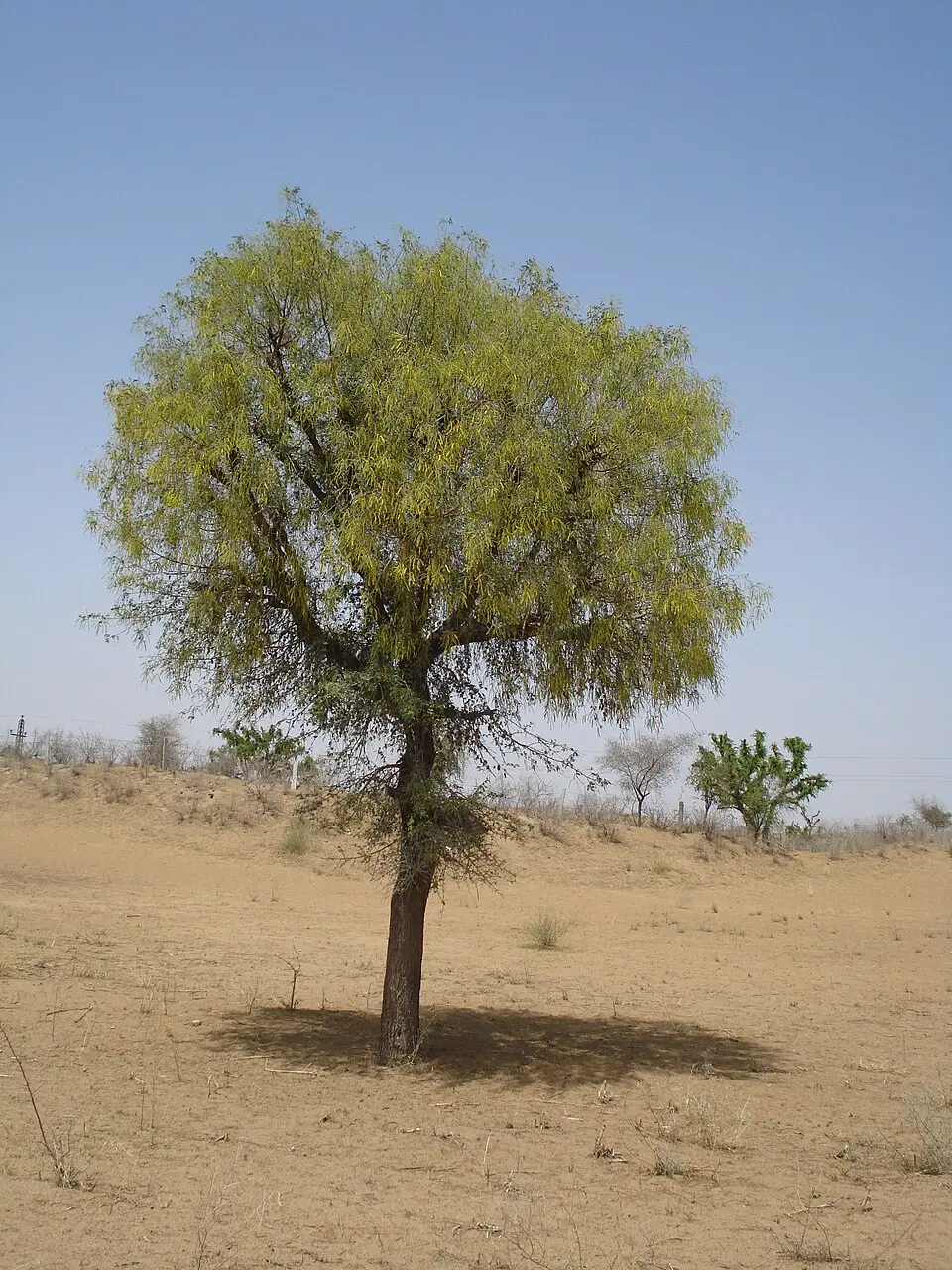
- The Bishnois. Followers of Guru Jambheshwar, who in 1485 gave them 29 principles that include protecting trees and animals, the Bishnois of western Rajasthan guard the khejri tree and the blackbuck and chinkara. In 1730, at Khejarli near Jodhpur, Amrita Devi and 363 Bishnois were killed while hugging khejri trees to stop the Maharaja's men from felling them, after which the ruler forbade felling in Bishnoi villages.
- Sacred groves. Patches of forest dedicated to a deity or ancestor, where cutting, hunting and often even collecting dead wood are forbidden by custom. They are the kavu of Kerala, the devrai of Maharashtra, the devarakadu of Karnataka, the oran of Rajasthan, the law kyntang of Meghalaya and the sarna of Jharkhand, and estimates of their number in India run into the tens of thousands or more.
- Customary rules elsewhere. Many communities have rules on when and where to fish, graze or hunt, such as the closed seasons and village reserves of the Northeast, and these often hold rare species that state protected areas miss.

Movements
- Chipko. In the 1970s women and men in the Garhwal Himalaya hugged trees to stop commercial felling, first at Mandal in 1973 and then at Reni in 1974, where Gaura Devi led the women of the village. Chandi Prasad Bhatt of the Dasholi Gram Swarajya Sangh and Sunderlal Bahuguna carried the movement, and in 1980 the Centre imposed a 15 year ban on green felling in the Himalayan forests of Uttar Pradesh.
- Appiko. In 1983 villagers at Salkani in Uttara Kannada district of Karnataka, led by Panduranga Hegde, hugged trees to stop felling in the Western Ghats; the movement's slogan was to save, grow and use forests wisely.
- Others. The Silent Valley campaign in Kerala, which stopped a hydroelectric dam in the 1980s, and the Jungle Bachao Andolan of Singhbhum, against the replacement of sal forest with teak, carried the same idea that forests are livelihoods, not only timber.
Dimensions
- Ecological. Community lands, sacred groves and village forests act as refuges and stepping stones between protected areas, and they often hold old trees, springs and endemic species that have vanished elsewhere.
- Economic. Minor forest produce such as tendu leaves, bamboo, mahua and honey supports millions of forest dwellers, and secure rights let communities sell it at better prices.
- Social justice. Colonial forest laws turned forest dwellers into encroachers on their own land, and the Forest Rights Act 2006 describes its purpose as undoing this historical injustice.
- Cultural. Sacred groves, totems and festivals carry ecological rules in a form people follow without enforcement, so their loss weakens conservation as well as culture.
- International. The Kunming–Montreal Global Biodiversity Framework of 2022 counts other effective area based conservation measures (OECMs), such as community conserved lands, towards its target of conserving 30 per cent of land and sea by 2030.
In practice
Joint Forest Management
- Origin. The Arabari experiment in West Bengal from about 1971, where forest officer A K Banerjee gave villagers a share of produce in return for protecting sal forest, showed that degraded forest recovers when people gain from it.
- Policy. The National Forest Policy 1988 put the needs of forest dwellers ahead of commercial use, and a Ministry circular of 1 June 1990 asked States to involve village communities in protecting and regenerating degraded forests in return for usufruct and a share of timber.
- Limit. Joint Forest Management (JFM) committees are created by the forest department under executive orders, so the department keeps control and the arrangement has no statutory footing.
The Forest Rights Act 2006
- Rights recognised. The Scheduled Tribes and Other Traditional Forest Dwellers (Recognition of Forest Rights) Act 2006 (FRA) recognises individual rights over land under cultivation, community rights over minor forest produce, grazing and water, and, under Section 3(1)(i), the right to protect, regenerate, conserve and manage any community forest resource.
- Conservation duties. Section 5 empowers rights holders and the gram sabha to protect wildlife, forest, biodiversity and water catchments, and the gram sabha decides how its community forest resource is used.
- Progress. As of 31 December 2025, about 51.9 lakh claims had been filed and about 25.4 lakh titles given, but only about 1.2 lakh of these were community titles, while about 18.9 lakh claims had been rejected.
- Mendha Lekha and Niyamgiri. Mendha Lekha in Gadchiroli, Maharashtra, was among the first villages to receive community forest resource rights in 2009 and later won the right to harvest and sell its own bamboo. In 2013 the Supreme Court, in Orissa Mining Corporation v Ministry of Environment and Forests, held that the gram sabhas of the Niyamgiri hills must decide whether bauxite mining would affect their religious and cultural rights, and the gram sabhas rejected it.
Reserves and committees
- Community reserves. Section 36C of the Wildlife (Protection) Act, inserted by the 2002 amendment, lets a State declare private or community land a community reserve where the community volunteers to conserve wildlife, managed by a committee of the community; Keshopur–Miani in Punjab is one, and is also a Ramsar site.
- Biodiversity Management Committees. Under the Biological Diversity Act 2002, each local body forms a committee that keeps a people's biodiversity register and has a say in access to local biological resources.
- Sacred groves in court. On 18 December 2024 the Supreme Court directed Rajasthan to map its orans and other sacred groves and protect them, suggested they could be declared community reserves, and recommended that the Union Environment Ministry survey sacred groves across the country and frame a policy for them.

Short cases
- Khonoma, Nagaland. The Angami village of Khonoma banned hunting in 1998 and set aside a community sanctuary for Blyth's tragopan, in a State where Article 371A protects community ownership of land and resources.
- Bird villages. At Kokkare Bellur in Karnataka villagers protect nesting painted storks and spot billed pelicans in the trees of their village, and at Khichan in Rajasthan villagers feed thousands of wintering demoiselle cranes.
Issues and way forward
- Rights on paper. Community forest resource titles are a small fraction of titles, and many claims are rejected without reasons or field verification; States should use the power of gram sabhas, mapping of customary boundaries and appeal processes to settle claims properly.
- Forest department resistance. Departments are reluctant to hand over management and income from bamboo or tendu leaves; working plans that merge the gram sabha's conservation plan with the department's, as the FRA intends, reduce this conflict.
- Conflict with protected areas. Critical wildlife habitats and tiger reserves can be made inviolate only after rights are settled and with informed consent, and relocation must be voluntary; doing it otherwise turns communities against conservation.
- Erosion of tradition. Sacred groves shrink under encroachment, temple construction and loss of belief, so legal recognition as community reserves or community forest resources, as the Supreme Court suggested, gives tradition a legal backbone.
- Elite capture. Committees can be dominated by powerful households or men; reserving seats for women and landless members and keeping accounts public make benefits reach everyone.
Common confusions
- JFM and community forest resource rights. JFM is an executive arrangement in which the forest department shares produce with a committee it creates, while community forest resource rights are statutory rights under the FRA that make the gram sabha the manager.
- Community reserve and conservation reserve. A community reserve is on private or community land and is run by a community committee, while a conservation reserve is on government land, usually a buffer or corridor next to a protected area.
- Chipko and Appiko. Both used tree hugging, but Chipko arose in the Garhwal Himalaya in 1973 and Appiko in the Western Ghats of Karnataka in 1983.
- Sacred grove and protected area. A sacred grove is protected by custom and belief, with no legal status unless the State recognises it, while a protected area is created by law.
For the exam
- Keyword bank: commons, tragedy of open access, sacred groves, Bishnoi ethic, Chipko, Appiko, Joint Forest Management, usufruct, Forest Rights Act, community forest resource rights, gram sabha, Section 36C community reserve, people's biodiversity register, other effective area based conservation measures, historical injustice.
- Previous year questions: Practise the previous year questions on this topic →
- Use in an answer:
- Introduction with data: Of about 25.4 lakh titles given under the Forest Rights Act by the end of 2025, only about 1.2 lakh were community titles, so the law's most powerful conservation tool remains the least used.
- Introduction with a judgement: In the Niyamgiri case of 2013 the Supreme Court let the gram sabhas decide on bauxite mining, recognising that communities have a say over the forests they live in.
- Conclusion: From Khejarli to Niyamgiri, India's experience shows that forests are best protected when the people who live in them hold secure rights and share in the benefits.
- Conclusion: Community conservation is not a substitute for the state but its partner, and the Forest Rights Act and community reserves give that partnership a legal form.