Biodiversity conventions
- Syllabus
- Conservation, environmental pollution and degradation, environmental impact assessment
- As of
- October 2026
- Convention on Biological Diversity
- Cartagena Protocol
- Nagoya Protocol
- access and benefit sharing
- digital sequence information
- Kunming–Montreal Global Biodiversity Framework
- 30 by 30
- Cali Fund
- NBSAP
- CITES appendices
- Convention on Migratory Species
- International Whaling Commission
- commercial whaling moratorium
The first principle
Biodiversity and the money to use it sit in different places: the tropical, mostly developing countries hold most of the world's species, and the rich countries and their companies hold most of the means to use them. Every biodiversity treaty is a bargain across that divide, in which providers agree to conserve and to allow access, and users agree to pay, share benefits and stop harmful trade. Where money or benefits do not flow, targets are missed.
The core
The Convention on Biological Diversity and its protocols
- The Convention on Biological Diversity (CBD). Opened for signature at the Rio Earth Summit in 1992 and in force since December 1993, it has 196 Parties, and the United States is the main country that has not ratified it. India ratified it in 1994. Its secretariat is in Montreal, and its Conference of the Parties (COP) meets about every two years.
- Three objectives. The CBD aims at conservation of biodiversity, sustainable use of its components, and fair and equitable sharing of the benefits from genetic resources. Its key legal shift was to recognise that states have sovereign rights over their genetic resources, ending the older idea that they were a free common heritage.
- How Parties act. Each Party prepares a National Biodiversity Strategy and Action Plan (NBSAP), and India implements the convention through the Biological Diversity Act, 2002.
- Cartagena Protocol on Biosafety (2000, in force 2003). It governs the movement across borders of living modified organisms, that is, genetically modified organisms that can reproduce. Organisms meant for release, such as seeds, need the importing country's advance informed agreement, while commodities for food, feed or processing are notified through the Biosafety Clearing House. India is a Party.
- Nagoya Protocol on Access and Benefit Sharing (2010, in force 2014). It makes the third objective operational: a user must obtain prior informed consent from the provider country and agree mutually agreed terms on sharing benefits, and the provider issues a permit recognised internationally as a certificate of compliance. India ratified it in 2012.
From Aichi to Kunming–Montreal
- The Aichi targets failed. The Strategic Plan for 2011 to 2020 set twenty Aichi targets, and Global Biodiversity Outlook 5 (2020) found that none was fully met, mainly because finance was thin, targets were not tied to national plans and drivers such as subsidies were left untouched.
- The Kunming–Montreal Global Biodiversity Framework (KMGBF). Adopted at COP15 in Montreal in December 2022, under China's presidency, it sets four goals for 2050 and 23 targets for 2030. Target 3, "30 by 30", asks that at least 30 per cent of land and inland waters and of coastal and marine areas be effectively conserved through protected areas and other effective area based conservation measures, respecting the rights of indigenous peoples. Target 2 asks for 30 per cent of degraded ecosystems to be under effective restoration.
- The money targets. Target 18 asks countries to cut harmful subsidies by at least 500 billion dollars a year by 2030, and Target 19 asks for at least 200 billion dollars a year for biodiversity from all sources, including international flows to developing countries of at least 20 billion dollars a year by 2025 and 30 billion dollars by 2030. A Global Biodiversity Framework Fund was opened under the Global Environment Facility in 2023.
Species conventions
- CITES. The Convention on International Trade in Endangered Species of Wild Fauna and Flora was signed in Washington in 1973 and came into force in 1975, and India joined in 1976. Appendix I lists species threatened with extinction, in which commercial trade is banned and both export and import permits are needed; Appendix II lists species that could become threatened unless trade is controlled, which need an export permit; and Appendix III lists species that one country protects and asks others to help regulate. Since the 2022 amendment, the Wildlife (Protection) Act implements CITES through Schedule IV, the list of specimens in the CITES appendices.
- The Convention on Migratory Species (CMS). Signed in Bonn in 1979 and in force since 1983, with India a Party since 1983, it protects animals that cross borders. Appendix I lists endangered migratory species that range states must strictly protect, and Appendix II lists species that need international agreements, such as the memoranda on dugongs, marine turtles of the Indian Ocean and birds of prey, all of which India has signed.
- The International Whaling Commission (IWC). It was set up under the International Convention for the Regulation of Whaling of 1946, and India has been a member since 1981. Its moratorium on commercial whaling, adopted in 1982, has applied since the 1985-86 season, and it has declared the Indian Ocean Sanctuary (1979) and the Southern Ocean Sanctuary (1994).
- Ramsar. The Ramsar Convention on Wetlands (1971, in force 1975, India a Party since 1982) is covered in the wetlands note.
Dimensions
- Economic. Genetic resources feed drugs, seeds and cosmetics, so access and benefit sharing is about who earns from nature; the newest fight is over digital sequence information (DSI), genetic data stored online that users can download without touching a physical sample, which escapes the Nagoya permit system.
- Equity and rights. Indigenous peoples and local communities manage much of the world's remaining wild land, so the KMGBF ties 30 by 30 to their rights, and COP16 created a permanent subsidiary body on their knowledge under Article 8(j).
- Trade and enforcement. Wildlife trafficking is organised crime, and CITES works only as far as national customs and wildlife agencies enforce it; in India that is the job of the Wildlife Crime Control Bureau along with customs.
- Geopolitical. Japan left the IWC in 2019 to resume commercial whaling in its own waters, which shows how voluntary membership limits these regimes.
In practice
- COP16, Cali, 2024. The meeting in Colombia set up the Cali Fund, which expects companies that profit from DSI, such as pharmaceutical and agribusiness firms, to contribute a share of their profits or revenue, with an indicative rate of 1 per cent of profits or 0.1 per cent of revenue, and at least half of its money is meant for indigenous peoples and local communities. The fund was launched in February 2025, but contributions are voluntary. COP16 ran out of time on finance and resumed in Rome in February 2025, where Parties agreed a resource mobilisation strategy and a roadmap to settle the permanent arrangements for its financial mechanism by 2030.
- India's plan. India released its updated NBSAP at COP16 in 2024, with 23 national targets aligned to the global ones. India has only about 5 per cent of its land in formal protected areas, so 30 by 30 depends on counting community reserves, sacred groves, reserve forests and other effective area based conservation measures.
- India at the table. India hosted COP11 of the CBD at Hyderabad in 2012, COP13 of the CMS at Gandhinagar in 2020, where the great Indian bustard, the Asian elephant and the Bengal florican were added to CMS Appendix I, and CoP3 of CITES at New Delhi in 1981. In the KMGBF talks India argued against a numerical cut in pesticide use, and the final Target 7 speaks of halving the overall risk from pesticides.
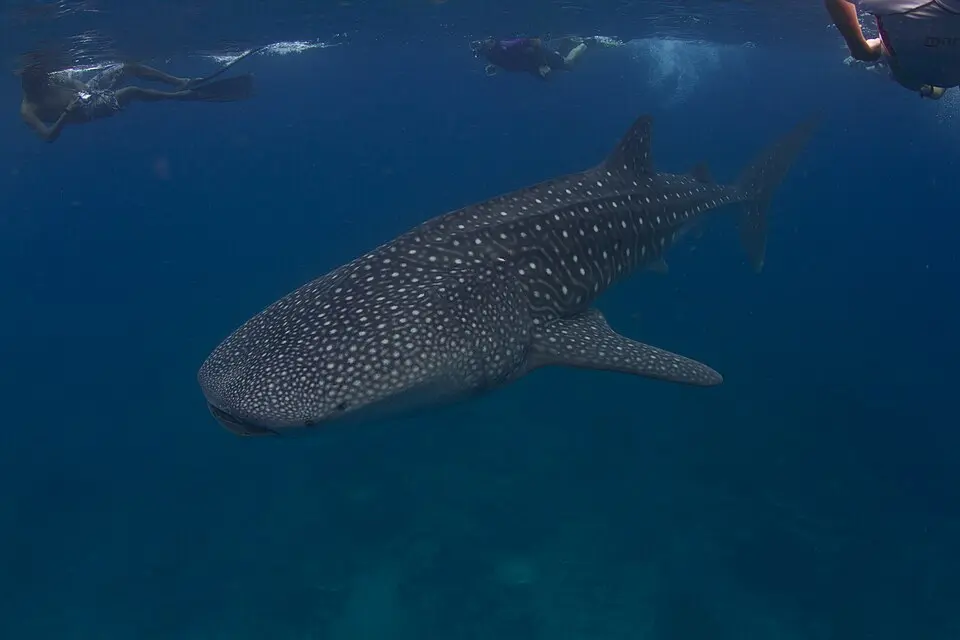
- CITES CoP20, Samarkand, 2025. The meeting took up proposals for stronger trade controls on several sharks and rays, a sign of how fast marine species have moved up the CITES agenda.
- Migratory species are declining. The first State of the World's Migratory Species report, released at CMS COP14 in Samarkand in 2024, found that 44 per cent of populations of species listed under CMS are declining and more than one in five listed species is threatened with extinction.
- The ICJ on whaling. In Whaling in the Antarctic (Australia v. Japan, New Zealand intervening), 2014, the International Court of Justice held that Japan's JARPA II programme was not "for purposes of scientific research" under Article VIII of the whaling convention and ordered its permits revoked.

Issues and way forward
- The finance gap. Rich countries were slow to meet the 20 billion dollar figure for 2025, and harmful subsidies to farming, fishing and fossil fuels still dwarf spending on nature, so reforming subsidies is the larger lever.
- Paper parks. A 30 per cent figure can be met by drawing lines on maps without effective management, so what counts as "effectively conserved" must be monitored and must not displace forest dwellers; in India the Forest Rights Act, 2006 is the safeguard.
- DSI and voluntary payment. The Cali Fund depends on goodwill, so the test is whether companies pay; India and other providers want linked national rules, such as India's own benefit sharing regulations, so that payment becomes routine.
- Implementation in India. Biodiversity management committees exist in most local bodies but often lack funds and expertise.
- Way forward. The global review at COP17 in Yerevan, Armenia, in October 2026 is the first chance to test progress on the 23 targets; a credible outcome would link NBSAPs to budgets, count community conserved areas properly and settle the permanent financial mechanism.
Common confusions
- Cartagena and Nagoya. Cartagena is about biosafety, the safe movement of living modified organisms, while Nagoya is about access to genetic resources and the sharing of benefits from their use.
- CITES and CMS. CITES regulates trade in any wild species, migratory or not, while CMS protects migratory species from all threats, including habitat loss, barriers and hunting, along their whole route.
- CITES appendix and Red List category. A CITES appendix is a binding trade rule decided by Parties, while a Red List category is a scientific assessment of extinction risk with no legal force; a species can be Least Concern and still be in Appendix II because trade could threaten it.
- Moratorium and sanctuary. The IWC moratorium sets a zero catch limit for commercial whaling everywhere, while a sanctuary bans commercial whaling in a defined ocean area.
For the exam
- Keyword bank: sovereign rights over genetic resources, three objectives of the CBD, living modified organisms, advance informed agreement, prior informed consent and mutually agreed terms, digital sequence information, Cali Fund, 30 by 30, other effective area based conservation measures, harmful subsidies, NBSAP, CITES appendices, migratory species, commercial whaling moratorium.
- Previous year questions: Practise the previous year questions on this topic →
- Use in an answer:
- Introduction with data: The CMS report of 2024 found that 44 per cent of populations of listed migratory species are declining, a reminder that species that cross borders can only be saved by states acting together.
- Introduction with a report: Global Biodiversity Outlook 5 (2020) found that not one of the twenty Aichi targets was fully met, which is why the Kunming–Montreal framework of 2022 adds money targets and a monitoring framework.
- Conclusion: Biodiversity treaties succeed when the bargain between providers and users is kept, so the Cali Fund, subsidy reform and the 2030 finance target will decide whether 30 by 30 becomes real.
- Conclusion: For India, which holds four of the world's biodiversity hotspots, the task is to meet 30 by 30 with communities rather than against them, through community reserves, forest rights and working benefit sharing.