Threats to biodiversity and the IUCN Red List
- Syllabus
- Conservation, environmental pollution and degradation, environmental impact assessment
- As of
- October 2026
- habitat loss and fragmentation
- invasive alien species
- overexploitation
- IPBES direct drivers
- sixth mass extinction
- IUCN Red List categories
- Red List criteria
- threatened species
- extinction vortex
- species area relationship
- co-extinction
- Wildlife (Protection) Act schedules
- CITES appendices
- diclofenac and vultures
The first principle
A species survives as long as its births keep pace with its deaths across its whole range, and anything that shrinks the range, kills more adults or cuts reproduction pushes it towards zero. Small populations then decline faster than large ones, because chance events, inbreeding and the loss of mates hit them harder, so threats compound once numbers fall. Conservation therefore needs two things: an honest measure of how close each species is to extinction, which the Red List of the International Union for Conservation of Nature (IUCN) provides, and laws that act on the causes, which in India are the Wildlife (Protection) Act 1972 (WPA) and the trade rules of the Convention on International Trade in Endangered Species of Wild Fauna and Flora (CITES).
The core
The five direct drivers
- Change in land and sea use. The Intergovernmental Science Policy Platform on Biodiversity and Ecosystem Services (IPBES), in its Global Assessment of 2019, ranked this as the largest driver on land, since clearing forests, draining wetlands and ploughing grasslands remove the habitat a species needs to feed and breed.
- Direct exploitation. Hunting, poaching, fishing and harvest beyond what a population can replace are the largest driver in the sea; the pangolin, killed for its scales and meat, is among the most trafficked mammals in the world.
- Climate change. Warming moves the climate a species is adapted to uphill and towards the poles faster than many can follow, and it breaks timing between flowers and pollinators; coral bleaching is the clearest case.
- Pollution. Nutrients, pesticides, plastics and drugs poison food chains; in India the veterinary painkiller diclofenac, eaten by vultures feeding on treated cattle, caused kidney failure and a collapse of more than 95 per cent in three Gyps vulture species, the white rumped, Indian and slender billed vultures, all now Critically Endangered, in Schedule I of the WPA and in CITES Appendix II.
- Invasive alien species. A species moved by people beyond its natural range becomes invasive when it spreads on its own and harms native life. The IPBES assessment of 2023 counted more than 37,000 established alien species worldwide, found invasives to be a major factor in about 60 per cent of recorded extinctions, and put their cost above 423 billion dollars a year in 2019.
The acronym HIPPO (habitat loss, invasive species, pollution, population and overharvesting) sums up the same drivers, and behind all of them sit indirect drivers such as consumption, trade and weak governance.
Why fragments lose species
- The species area relationship. The number of species S in an area A follows S = cA<sup>z</sup>, where c and z are constants; z is commonly 0.1 to 0.2 within a region and larger for islands and isolated fragments. If a habitat shrinks from A to 0.1A, the ratio of species is c(0.1A)<sup>z</sup> divided by cA<sup>z</sup>, which is 0.1<sup>z</sup>; with z = 0.25 this is about 0.56, so losing nine tenths of the area eventually costs more than two fifths of the species.
- Edge effects. A fragment has more edge for its area, and edges are hotter, drier, windier and open to predators and weeds, so interior species decline even inside a patch that looks intact.
- Extinction debt. Species in a fragment can persist for decades before dying out, so today's clearing commits future losses that the present count does not yet show.
- Co extinction. When a host or partner goes, its dependants follow, such as a specialist pollinator with its plant or a parasite with its host.
The IUCN Red List
- What it is. The IUCN Red List, begun in 1964, is a scientific assessment of extinction risk with no legal force of its own. Its assessments now cover more than 1,70,000 species, of which more than 48,000, over a quarter, are threatened.
- Nine categories. Extinct, Extinct in the Wild, Critically Endangered, Endangered, Vulnerable, Near Threatened, Least Concern, Data Deficient and Not Evaluated; only Critically Endangered, Endangered and Vulnerable are counted as "threatened".
- Five criteria. A species is placed in a threatened category if it meets any one of five criteria: A, a rapid fall in population; B, a small and fragmented or declining range; C, a small population that is declining; D, a very small or very restricted population; and E, a quantitative model of extinction probability. Under criterion D, for example, fewer than 50 mature individuals makes a species Critically Endangered, fewer than 250 Endangered and fewer than 1,000 Vulnerable.
- The Green Status of Species, added in 2021, measures the other side: how far a species has recovered towards a healthy population across its former range.
Dimensions
- Ecological. Losing a keystone species or a pollinator removes a function, not only a name, so food webs simplify and become less stable.
- Economic. Fisheries, pollination, timber and medicinal plants are harvested wealth; the collapse of vultures, for example, left carcasses to feral dogs and has been linked to a rise in rabies risk.
- Social and cultural. Forest dwellers, fishers and pastoralists depend most directly on wild species, and many species carry religious or cultural meaning, so the costs of loss fall unevenly.
- Health. Habitat clearing and the wildlife trade bring people, livestock and wild animals together and raise the risk of diseases jumping from animals to humans.
- Legal and international. Trade in wildlife crosses borders, so a species can be saved only if source, transit and consumer countries act together, which is the purpose of CITES.
In practice
- Three lists, three questions. The Red List says how close a species is to extinction; CITES (1973) says whether it may be traded across borders, with Appendix I barring commercial trade, Appendix II allowing it under permit and Appendix III listing species that one country protects; and the WPA says what Indian law does.
- The 2022 schedules. The Wild Life (Protection) Amendment Act, 2022 cut six schedules to four: Schedule I for animals with the highest protection, Schedule II for animals with lesser protection, Schedule III for protected plants and Schedule IV for specimens listed in the CITES appendices. Older notes that speak of Schedules V and VI are out of date.
- A national handle on invasives. The same 2022 amendment empowered the Central Government to regulate or prohibit the import, trade, possession or spread of invasive alien species, which India's law had not covered before.
- The vulture case. India banned diclofenac for veterinary use in 2006 and extended the ban to the painkillers aceclofenac and ketoprofen for animals in 2023, while breeding centres such as the one at Pinjore in Haryana rear birds for release.
- The cheetah case. The cheetah was declared extinct in India in 1952, mainly through hunting and the loss of its grassland prey base, and the reintroduction of African cheetahs at Kuno in Madhya Pradesh began in September 2022; the cheetah (Acinonyx jubatus) is Vulnerable on the Red List, in Schedule I and in CITES Appendix I.
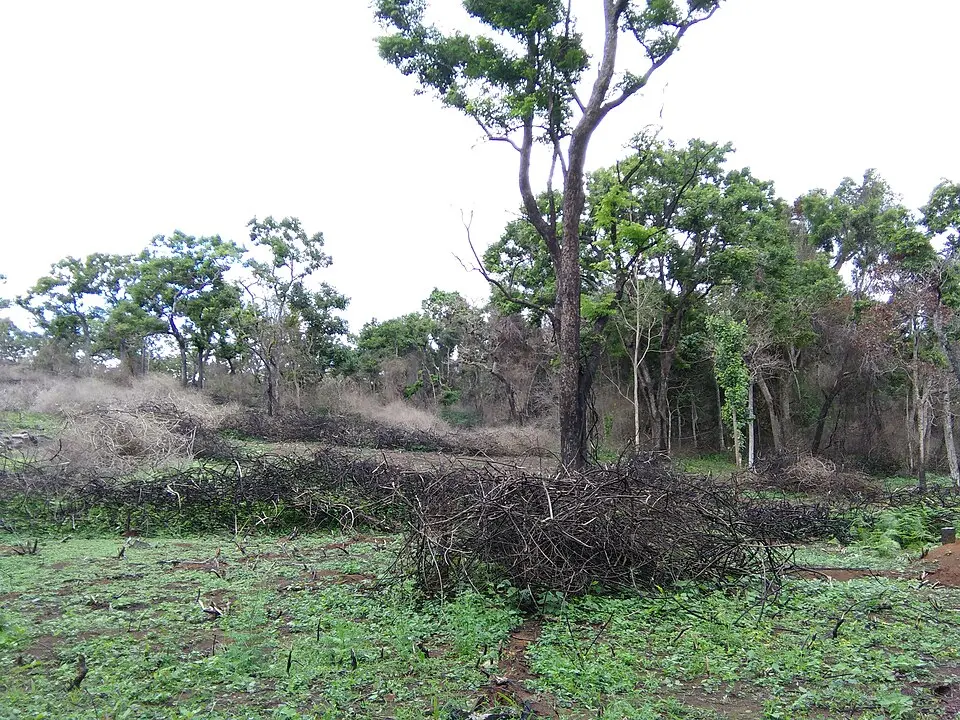
- India's invasives. Lantana camara, brought as a garden plant, now carpets forest floors and suppresses regeneration; Prosopis juliflora, planted for fuelwood, has spread across the Banni grasslands of Kachchh; Parthenium arrived as a contaminant of imported grain; and water hyacinth chokes lakes and rivers.

Issues and way forward
- Data gaps. Most insects, fungi and freshwater species have never been assessed, so the Red List is weighted towards vertebrates and plants; funding national red listing by the Zoological and Botanical Surveys would widen the base.
- Fragmentation by linear projects. Roads, railways, canals and power lines cut habitat into pieces; the Wildlife Institute of India's guidelines for eco friendly measures to mitigate the impacts of linear infrastructure (2016) recommend underpasses and overpasses, which should be built into project design rather than added later.
- Invasives without a list. The power to regulate invasive species is new, and India still needs a notified national list, quarantine at ports and a funded removal programme with restoration of native vegetation afterwards.
- Trafficking. Wildlife crime is organised and online, so the Wildlife Crime Control Bureau needs intelligence sharing with customs and with countries along the trade routes.
- Climate as a multiplier. Warming makes every other driver worse, so protected areas need corridors that let species move, as the National Wildlife Action Plan 2017–2031 recognises.
Common confusions
- Threatened and endangered. "Threatened" is the group of three categories (Critically Endangered, Endangered and Vulnerable), while "Endangered" is only one of them.
- Extinct and Extinct in the Wild. An Extinct species has no living individual anywhere, while an Extinct in the Wild species survives only in captivity or outside its historic range.
- Red List and CITES. The Red List measures risk and binds no one, while CITES is a treaty that controls trade; a threatened species that is not traded may sit outside CITES.
- Alien and invasive. Every invasive species is alien, but most aliens, such as many crops, never spread on their own or cause harm.
- Old and new schedules. Schedule I still carries the highest protection after 2022, but plants are now in Schedule III and CITES species in Schedule IV, so an old schedule number may now point to a different list.
For the exam
- Keyword bank: five direct drivers, habitat fragmentation, edge effect, species area relationship, extinction debt, extinction vortex, invasive alien species, overexploitation, IUCN Red List, threatened categories, Red List criteria, Green Status of Species, CITES appendices, 2022 WPA schedules, sixth mass extinction.
- Previous year questions: Practise the previous year questions on this topic →
- Use in an answer:
- Introduction with data: The IUCN Red List now covers more than 1,70,000 species, and more than one in four of them are threatened with extinction.
- Introduction with a report: The IPBES Global Assessment of 2019 found that land and sea use change, direct exploitation, climate change, pollution and invasive species, in that order, drive the present loss of biodiversity.
- Conclusion: Threats compound once a population is small, so the cheapest conservation is to keep common species common by protecting habitat and corridors before a species reaches the Red List.
- Conclusion: India's vulture collapse showed that one chemical can undo a species in a decade, and the levelling off of numbers after the ban shows that a clear ban, captive breeding and monitoring together can stop the slide.