Oceans, the high seas and deep sea mining
- Syllabus
- Conservation, environmental pollution and degradation, environmental impact assessment
- As of
- October 2026
- UNCLOS
- Part XII
- exclusive economic zone
- high seas
- the Area
- common heritage of mankind
- BBNJ Agreement
- marine protected areas
- marine genetic resources
- International Seabed Authority
- polymetallic nodules
- mining code
- precautionary pause
- blue economy
- ocean acidification
The first principle
What belongs to no one is used by everyone and protected by no one, which is the tragedy of the commons, and the open ocean is the largest commons on Earth. The law of the sea answers this in two ways: it hands coastal waters to coastal states, which then have a reason to look after them, and for the waters and seabed beyond, it builds shared institutions that must decide together how the commons may be used. Every current debate, from high seas protected areas to deep sea mining, is about how strong those shared institutions should be.
The core
UNCLOS: the constitution for the oceans
- The treaty. The United Nations Convention on the Law of the Sea (UNCLOS) was adopted in 1982 and came into force in 1994, and India ratified it in 1995; the United States is the main maritime power that has not. India's own Territorial Waters, Continental Shelf, Exclusive Economic Zone and Other Maritime Zones Act, 1976 predates it.
- Zones. A coastal state has sovereignty over a territorial sea of 12 nautical miles, limited control in a contiguous zone up to 24 nautical miles, and sovereign rights over the resources of an exclusive economic zone (EEZ) up to 200 nautical miles and of its continental shelf, which can extend up to 350 nautical miles where the shelf is wide. India's EEZ covers about 2.37 million km².
- Beyond national jurisdiction. The water beyond every EEZ is the high seas, open to all for navigation and fishing, and the seabed beyond the continental shelves is "the Area", whose minerals UNCLOS declares the common heritage of mankind (Article 136), to be managed by the International Seabed Authority (ISA) for the benefit of all. The high seas cover nearly two thirds of the ocean's surface.
- Part XII: the environment. Article 192 states plainly that states have the obligation to protect and preserve the marine environment, and later articles require them to control pollution from land, ships, dumping, seabed activities and the atmosphere, and to assess activities that may cause significant harm.
- Climate is now marine pollution. In its advisory opinion of May 2024, the International Tribunal for the Law of the Sea (ITLOS) held that greenhouse gas emissions absorbed by the ocean are pollution of the marine environment under UNCLOS, so states must take all necessary measures to reduce them.
The High Seas Treaty (BBNJ Agreement)
- What it is. The Agreement under UNCLOS on the Conservation and Sustainable Use of Marine Biological Diversity of Areas beyond National Jurisdiction (BBNJ) was adopted in June 2023 after nearly two decades of talks. It received its 60th ratification in September 2025 and came into force on 17 January 2026, and its first Conference of the Parties (COP) must meet within a year of that date.
- Four packages. It shares the benefits of marine genetic resources and their digital sequence information, including money through a fund; allows area based management tools, including high seas marine protected areas; requires environmental impact assessment of activities that may harm the high seas; and provides capacity building and marine technology for developing countries.
- How decisions are made. The COP decides by consensus, but protected areas can be adopted by a three fourths vote if consensus fails, which keeps a single country from blocking them, and the treaty must not undermine existing bodies such as the ISA, the International Maritime Organization (IMO) and regional fisheries bodies.
- India. India signed the agreement in September 2024 and, when it came into force, was preparing a domestic framework to ratify it.
Deep sea mining and the ISA
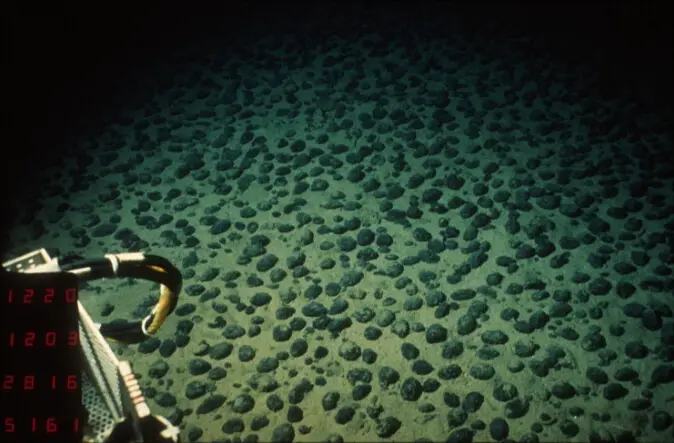
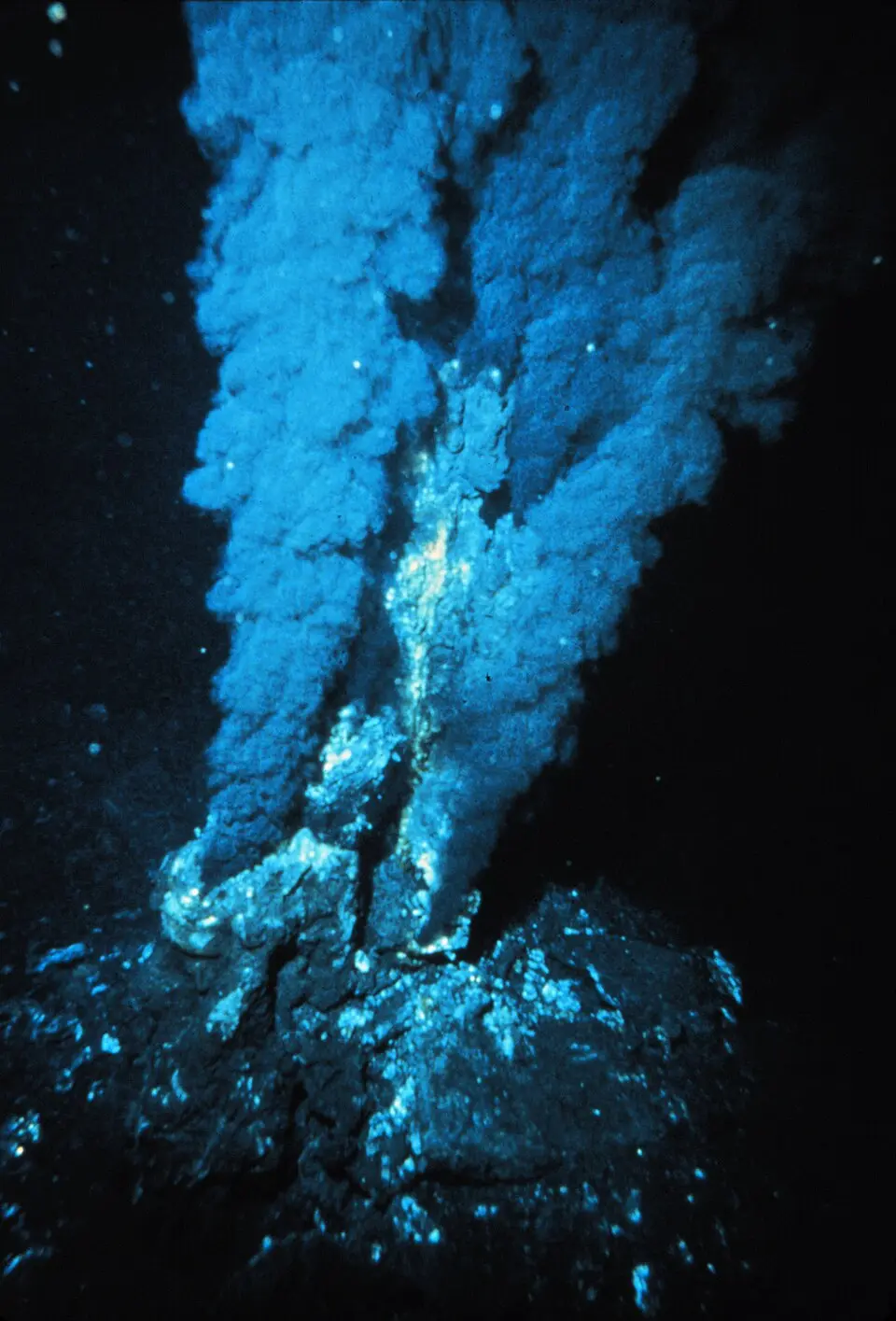
- The minerals. Polymetallic nodules, potato sized lumps on abyssal plains at about 4,000 to 6,000 m, carry manganese, nickel, cobalt and copper; polymetallic sulphides form at hydrothermal vents on mid ocean ridges and carry copper, zinc, gold and silver; and cobalt rich crusts coat the flanks of seamounts. Demand for battery metals is what makes them attractive.
- The ISA. Based in Kingston, Jamaica, and set up in 1994, it grants exploration contracts and must adopt rules for commercial exploitation, the "mining code". In 2021 Nauru invoked a clause that required the ISA to finish the code within two years, but the deadline passed in 2023 and the code was still unfinished in 2026, while a growing group of states has called for a moratorium or precautionary pause.
- The unilateral challenge. In April 2025 the United States moved to permit seabed mining under its own Deep Seabed Hard Mineral Resources Act of 1980, and a subsidiary of The Metals Company applied to the National Oceanic and Atmospheric Administration (NOAA) for permits; the legality of such permits under international law is disputed.
- India's contracts. India was registered as the first pioneer investor in 1987 and holds an ISA contract to explore nodules in the Central Indian Ocean Basin, and a 2016 contract for sulphides along the Indian Ocean ridges. The Deep Ocean Mission of the Ministry of Earth Sciences (2021), which includes the crewed submersible Matsya6000 of Samudrayaan, builds the technology.
Dimensions
- Ecological. The ocean has absorbed about a quarter of human carbon dioxide emissions and more than 90 per cent of the extra heat trapped by greenhouse gases (IPCC, 2019), so it is warming, losing oxygen and turning more acidic; surface pH has fallen by about 0.1 since preindustrial times, which means roughly 30 per cent more hydrogen ions and makes it harder for corals and shellfish to build carbonate shells.
- Economic. Fisheries, shipping, ports, offshore energy, tourism and marine biotechnology make up the blue economy, and for India, with a long coastline and millions of fishers, it is a growth sector that depends on a healthy sea.
- Strategic. Deep sea minerals touch the supply of critical minerals for batteries, which is why China, India, Japan, South Korea and several European states hold exploration contracts, and why unilateral mining outside the ISA would weaken a system that India has used for decades.
- Equity. The common heritage principle means that benefits from the Area should reach all states, including landlocked and poor ones, and the BBNJ fund and benefit sharing rules extend the same idea to marine genetic resources.
- Legal. Overlapping bodies govern different uses of the same water, fisheries by regional bodies, ships by the IMO and minerals by the ISA, so coordination is the main legal problem the BBNJ Agreement tries to solve.

In practice
- Sustainable Development Goal 14. "Life below water" sets the global targets for ocean health, and the United Nations Ocean Conference, held in New York in 2017, Lisbon in 2022 and Nice in 2025, tracks them; the Nice conference added momentum to BBNJ ratifications.
- Fisheries subsidies. The World Trade Organization (WTO) Agreement on Fisheries Subsidies, adopted in 2022, bans subsidies for illegal, unreported and unregulated fishing and for fishing overfished stocks, and it came into force in September 2025; India has argued for long transition periods and protection for its small scale fishers.
- Pollution rules. The International Convention for the Prevention of Pollution from Ships (MARPOL) controls oil, sewage, garbage and air emissions from ships, and the London Convention and its 1996 Protocol control dumping of waste at sea.
- India's ocean governance. The Coastal Regulation Zone notifications protect the coastal strip, the mangroves and coral reefs note covers them, and the Ministry of Earth Sciences prepared a draft blue economy policy framework in 2021.
- Example: hydrothermal vents. Vent fields on the Indian Ocean ridges, where India's sulphide contracts lie, host communities that live on chemical energy rather than sunlight, so they show both the scientific value and the risk of mining.

Issues and way forward
- Mining before knowledge. Most of the deep seabed has never been surveyed, and a test of nodule collection in the Pacific in 1989 left tracks with fewer animals decades later, so the precautionary principle argues that no commercial mining should begin until baseline studies and a strong mining code exist.
- Unilateralism. Permits issued by one state outside the ISA would undo the common heritage principle, so states that support the system, India among them, have an interest in finishing a credible code rather than leaving a vacuum.
- Making protected areas real. High seas protected areas need monitoring and enforcement far from any coast, which will depend on satellites and vessel tracking and on regional fisheries bodies agreeing to follow them.
- Paying for the treaty. Benefit sharing from marine genetic resources will bring little money at first, so early COPs must agree on funding for capacity building, or developing countries will be left out of the science.
- India's choices. India should ratify the BBNJ Agreement, use its exploration contracts to build deep sea science and environmental baselines before any mining, and link its blue economy plans to fishers' livelihoods and coastal protection.
Common confusions
- High seas and the Area. The high seas are the water column beyond every EEZ, governed by freedoms and now the BBNJ Agreement, while the Area is the seabed beyond the continental shelves, governed by the ISA.
- EEZ and continental shelf. The EEZ gives rights over the water and the seabed up to 200 nautical miles, while the continental shelf gives rights only over the seabed and subsoil, and can extend beyond 200 nautical miles.
- International Seabed Authority and International Solar Alliance. Both are written ISA; the seabed body is in Kingston under UNCLOS, while the solar body is an India led alliance based in Gurugram.
- Exploration and exploitation. Exploration contracts allow surveys and test collection, while exploitation is commercial mining, for which the ISA has no rules yet and has issued no licence.
- Common heritage and freedom of the high seas. Common heritage applies to the minerals of the Area, which no state may claim, while freedom of the high seas lets every state navigate and fish there.
For the exam
- Keyword bank: UNCLOS Part XII, Article 192, exclusive economic zone, high seas, the Area, common heritage of mankind, BBNJ Agreement, area based management tools, marine genetic resources, International Seabed Authority, mining code, precautionary pause, polymetallic nodules, blue economy, ocean acidification.
- Previous year questions: Practise the previous year questions on this topic →
- Use in an answer:
- Introduction with data: The ocean has absorbed more than 90 per cent of the extra heat from greenhouse gases and about a quarter of human carbon dioxide emissions (IPCC, 2019), yet until 2026 there was no treaty to protect life on the high seas.
- Introduction with a legal source: Article 192 of UNCLOS states that states have the obligation to protect and preserve the marine environment, and in 2024 ITLOS held that this covers greenhouse gas emissions absorbed by the ocean.
- Conclusion: The High Seas Treaty, in force since January 2026, gives the global commons its first common rules for conservation, and its value will depend on protected areas that are enforced and benefits that are shared.
- Conclusion: On deep sea mining, the sound course for India is precaution: build the science and the technology through the Deep Ocean Mission, and back a strong ISA mining code over any rush to mine.