Bhakti and Sufi movements
- Syllabus
- Indian culture will cover the salient aspects of Art Forms, Literature and Architecture from ancient to modern times.
- As of
- October 2026
- Alvars
- Nayanars
- Vishishtadvaita
- saguna and nirguna
- Varkari
- Virashaiva
- Ekasarana Dharma
- Gaudiya Vaishnavism
- achintya bhedabheda
- sankirtan
- silsila
- khanqah
- sama
- qawwali
- dargah
The first principle
Bhakti and Sufism rest on one idea: God is reached through love and surrender, not through ritual, learning or birth. If love alone matters, then the priest, the Sanskrit text and the caste order lose their monopoly, the saint speaks in the language of ordinary people, and singing becomes worship. That single shift explains why both movements produced vernacular poetry, music and shared shrines, and why they challenged hierarchy, though never completely.
The core
Origins in Tamil Nadu
- Between the sixth and ninth centuries the Alvars (devotees of Vishnu) and the Nayanars (devotees of Shiva) travelled from shrine to shrine singing in Tamil. They included women such as Andal and Karaikkal Ammaiyar and people of many castes, and they competed with Jainism and Buddhism for royal and popular support. Their hymns were later compiled as the Nalayira Divya Prabandham and the Tevaram, and the Chola kings honoured them as Tamil equivalents of the Vedas.
The philosophical base
- Shankara's Advaita held that only brahman is real, which leaves little room for loving a personal God. Ramanuja (Vishishtadvaita) answered that souls are real parts of God and that surrender (prapatti) brings liberation, and Madhva, Nimbarka, Vallabha and later Chaitanya built further schools. Through Ramananda, by tradition Ramanuja's spiritual descendant, these ideas reached the north.
The northern streams
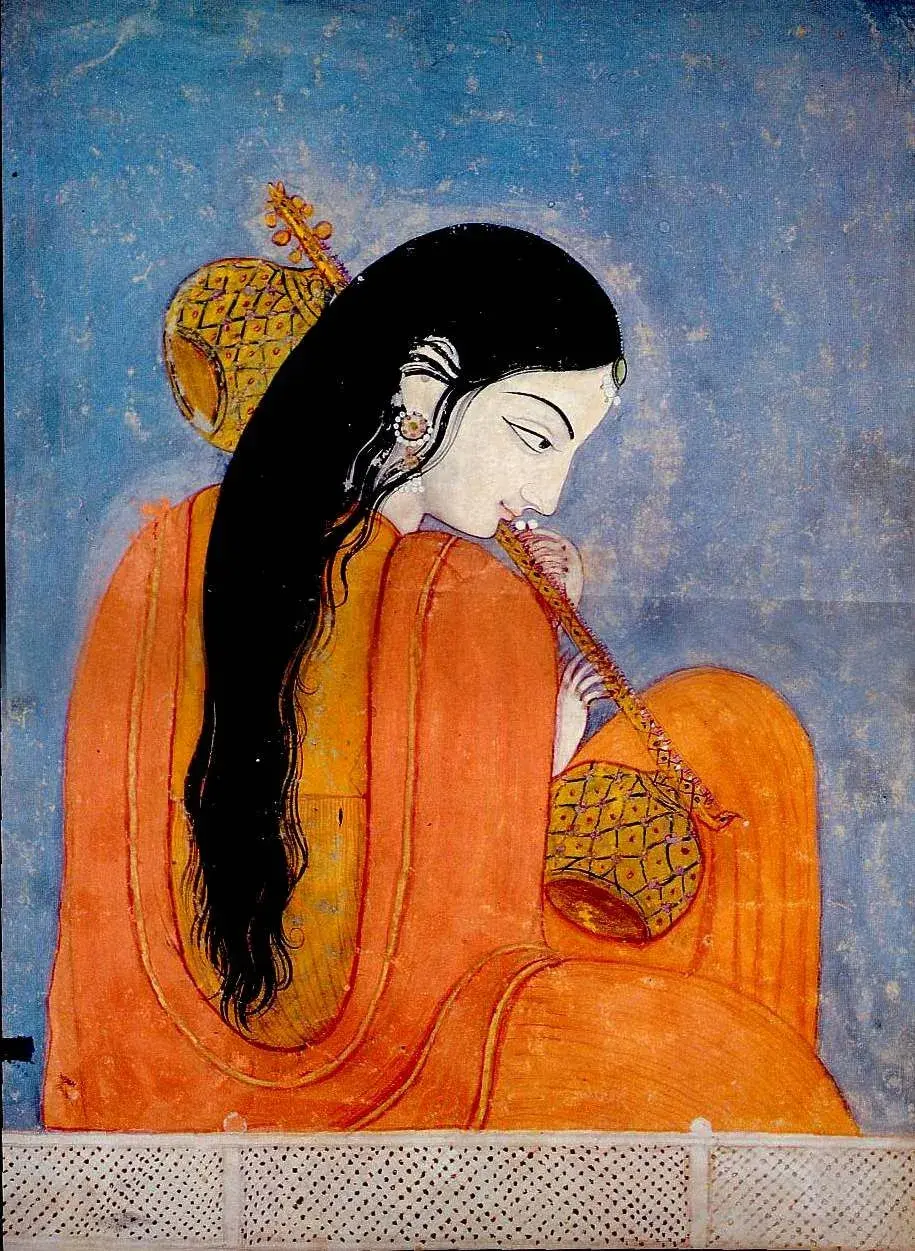
- Saguna saints worshipped God with form. Tulsidas retold the Ramayana in Awadhi as the Ramcharitmanas, Surdas sang of the child Krishna in Braj, and Mirabai, a Rajput princess, defied family and convention for Krishna.
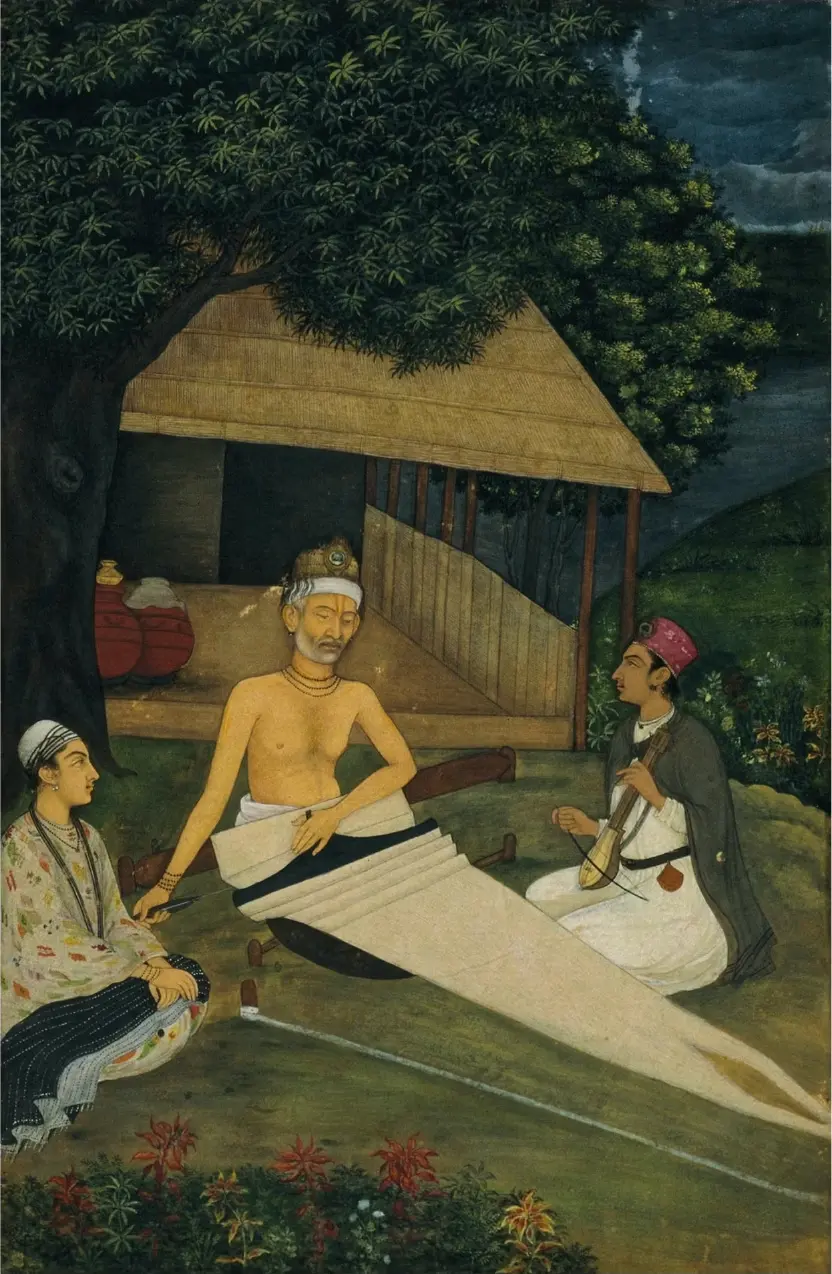
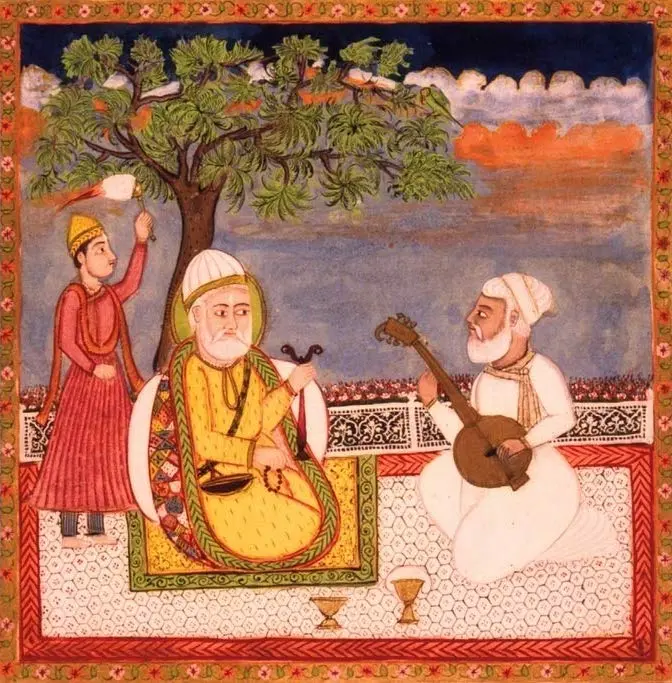
- Nirguna saints worshipped a formless God. Kabir, a weaver, mocked both pandit and mullah; Ravidas, a leather worker, imagined a city without sorrow or caste; and Guru Nanak (1469 to 1539) taught one God, honest work and shared food (langar). Guru Arjan included Kabir, Ravidas, Namdev and the Sufi Baba Farid in the Adi Granth (1604).



Regional traditions
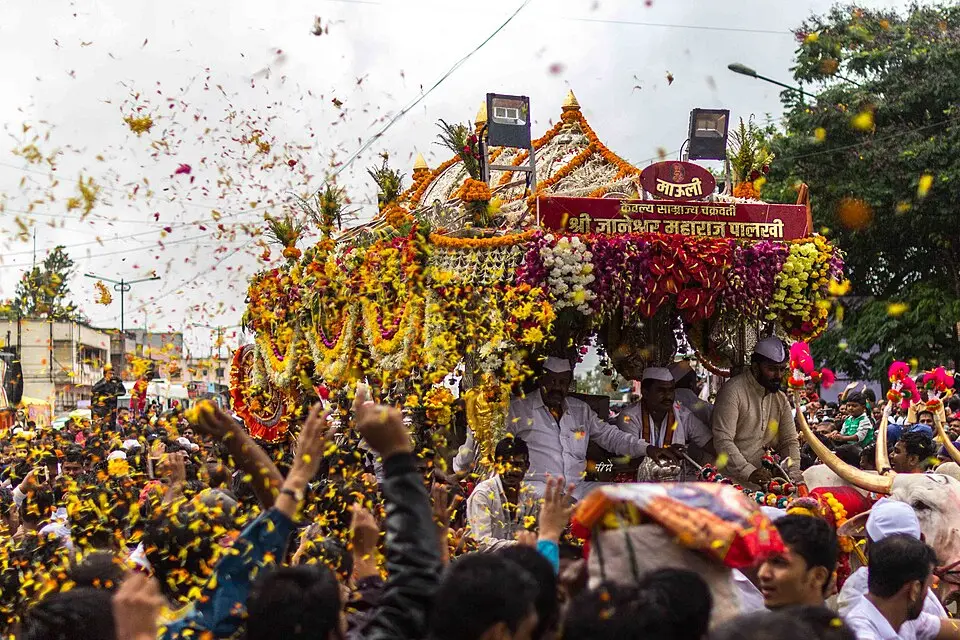
- Maharashtra, the Varkaris. Devotees of Vithoba at Pandharpur, led by Jnaneshwar, Namdev (a tailor), Eknath and Tukaram, with Chokhamela and Janabai, walk each year in the wari to Pandharpur singing abhangas.
- Karnataka, the Virashaivas. Basavanna (twelfth century), a minister at the Kalachuri court, with Akka Mahadevi and Allama Prabhu, rejected caste, temple ritual and the authority of the Vedas in short vachanas.
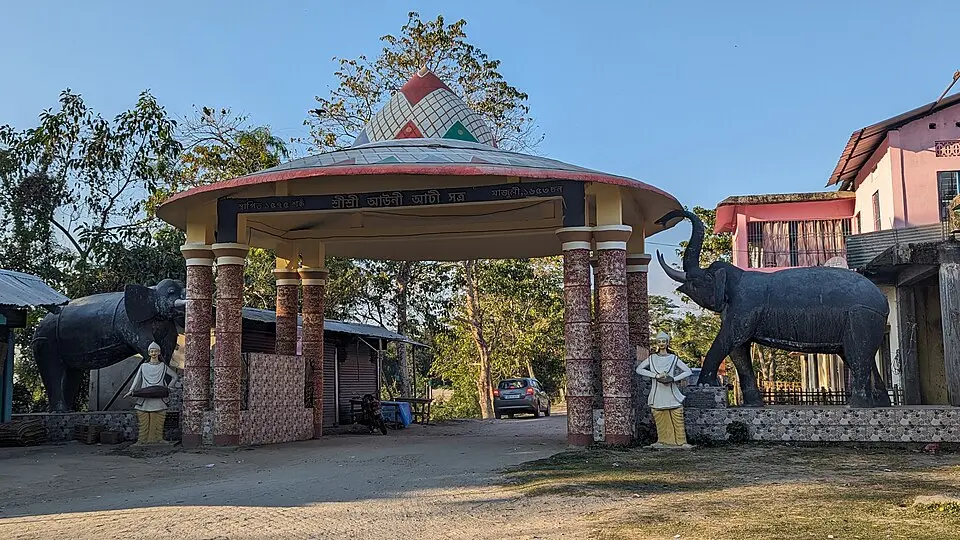
- Assam, Sankaradeva (1449 to 1568). His Ekasarana Dharma (refuge in one God, Krishna) set up the namghar for congregational prayer and the sattra as monastery and cultural centre, with Borgeet songs, Ankiya Naat plays and the Sattriya dance.


The nature of Bhakti literature
- Vernacular. It was composed in Tamil, Kannada, Marathi, Awadhi, Braj, Punjabi, Bengali and Assamese, because the saints spoke to people who did not know Sanskrit.
- Devotional and personal. The poet speaks directly to God as lover, child, friend or master, so emotion replaces doctrine.
- Critical of ritual and caste, in parts. Kabir, Basavanna and Ravidas attacked caste openly, while saguna saints like Tulsidas largely accepted the social order, so the anti caste strain is real but uneven.
- Women's voices. Andal, Akka Mahadevi, Janabai and Mirabai wrote against the expectations placed on women.
- Oral and musical. It was sung in kirtan, abhanga and bhajan before it was written, which is why it survived among ordinary people.
Its contribution to Indian culture
- Languages. It gave many regional languages their first great literature, from the Ramcharitmanas in Awadhi to the abhangas of Marathi.
- Music and performance. Kirtan, bhajan, abhanga, Borgeet and Sattriya grew from it.
- Social reform. It questioned caste and ritual and gave dignity to artisans and women, preparing the ground for later reformers.
- Syncretism. Shared ideas with Sufism, and the Adi Granth's mix of Hindu and Muslim saints, built a common devotional culture.
- Art. Krishna bhakti inspired Rajasthani and Pahari painting and temple traditions from Pandharpur to Puri.
How Chaitanya reoriented Bhakti
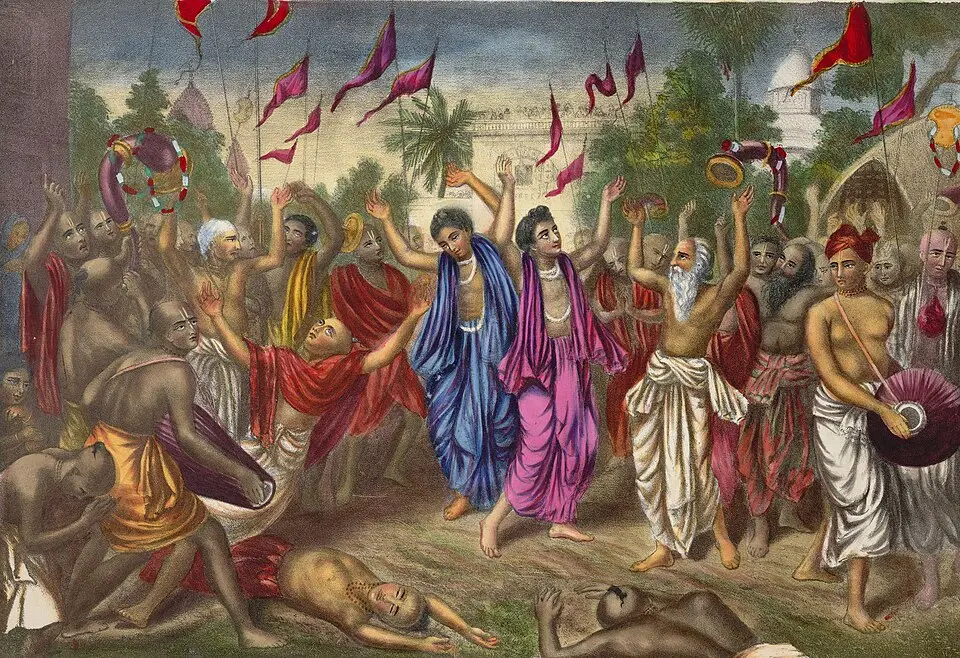
Sri Chaitanya Mahaprabhu (1486 to 1533), a Sanskrit scholar of Navadvipa in Bengal, turned Bhakti from a path of knowledge into one of ecstatic, collective emotion.
- Sankirtan. He made congregational singing of Krishna's name, often in street processions, the main form of worship, so devotion moved from temple and priest into the street and anyone could join.
- Radha Krishna devotion. He placed the love of Radha for Krishna (madhurya bhava) at the centre, treating the devotee's longing as the highest religious emotion.
- Theology. His followers, the six Goswamis of Vrindavan (Rupa, Sanatana, Jiva, Gopala Bhatta, Raghunatha Bhatta and Raghunatha Dasa), developed achintya bhedabheda, that God and soul are one and different in a way beyond reason, and Rupa Goswami set out devotion as a rasa or aesthetic emotion.
- Social openness. He accepted disciples across caste and creed, including Haridas, who was born a Muslim.
- Spread. From Navadvipa and Puri, where he spent his last two decades near Jagannath, Gaudiya Vaishnavism shaped Bengali padavali literature and kirtan, Odia devotion and, in the eighteenth century under Raja Bhagyachandra, the Raas Lila of Manipur.
- A balanced view. His movement softened caste in worship but did not attack it as a social system, and later Gaudiya lineages became hereditary.

Sufism
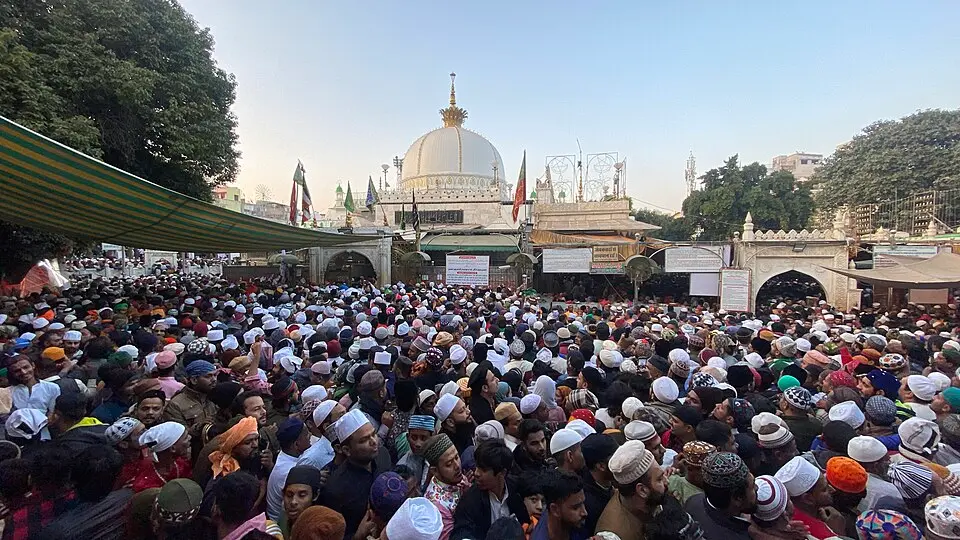
- Sufis are Muslim mystics who seek closeness to God through love, guided by a master (pir or shaikh) to whom the disciple (murid) gives allegiance. Each order (silsila) traces a chain of masters, and the master's hospice (khanqah) offered teaching, shelter and a common kitchen. Practices included zikr (remembrance of God) and sama (listening to music), and after a saint's death his tomb (dargah) became a place of pilgrimage marked by the annual urs.
- The Chishti order, brought to Ajmer by Khwaja Moinuddin Chishti in the late twelfth century, kept away from courts, used Hindavi and welcomed music. Nizamuddin Auliya (died 1325) made Delhi its centre, and his disciple Amir Khusrau is credited with shaping qawwali.

Dimensions
- Religious. Both moved faith from ritual to experience, Bhakti through the name and Sufism through zikr and sama.
- Social. Both drew followers from artisans, peasants and women, though neither dissolved caste or gender hierarchy.
- Political. Rulers patronised both for legitimacy, while the Chishtis and many saints kept their distance from the court.
- Cultural. Music, poetry, painting and dance carry their legacy, from qawwali to Sattriya.
- Bhakti Sufi interaction. Both used the vernacular, the guru or pir, music and love imagery. Malik Muhammad Jayasi's Padmavat (1540) is a Sufi romance in Awadhi, Baba Farid's verses sit in the Adi Granth, and Kabir is claimed by Hindus and Muslims alike.
In practice
- HRIDAY (Heritage City Development and Augmentation Yojana, 2015, Ministry of Housing and Urban Affairs): included Ajmer, Amritsar, Mathura and Puri, all shaped by these movements.
- Dr Noorjehan Safia Niaz v State of Maharashtra (Bombay High Court, 2016): women cannot be barred from the inner sanctum of the Haji Ali dargah, because such a ban violates equality.
- Case, Kartarpur Corridor (2019): opened for the 550th birth anniversary of Guru Nanak, it lets Indian pilgrims visit the gurdwara in Pakistan where he spent his last years.
- Case, Lingayat status: in 2018 the Justice H N Nagamohan Das committee recommended separate minority religion status for Lingayats, which Karnataka accepted but the Union did not; it shows Basavanna's legacy still shaping identity.

Issues and way forward
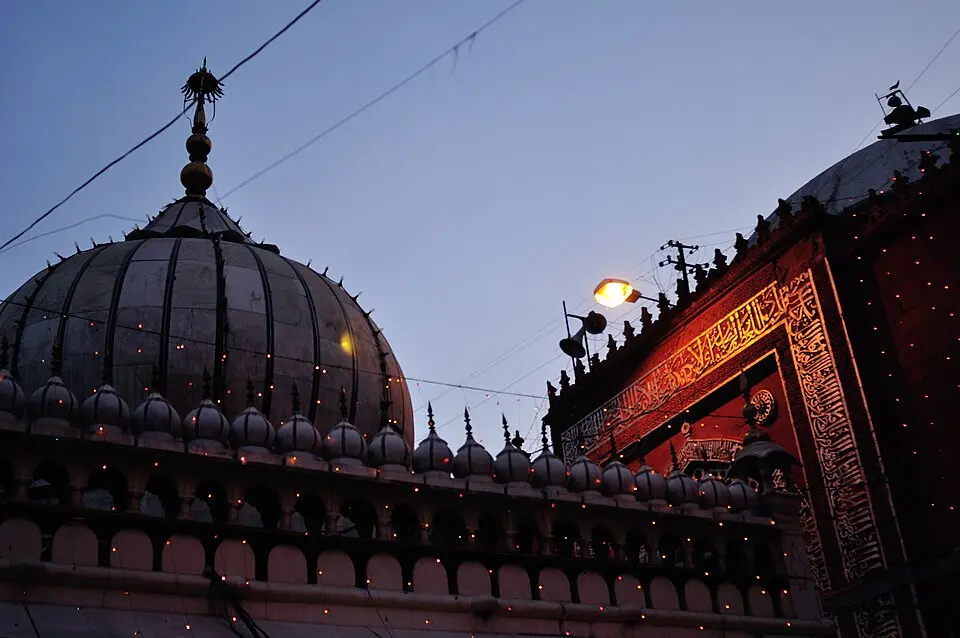
- Shrines under strain. Crowds and unplanned construction choke dargahs and pilgrim towns; heritage plans of the HRIDAY kind, made with shrine committees, are the remedy.
- Unequal access. Some shrines restrict women; the Haji Ali judgement shows that courts will enforce equality, and shrine boards can act without waiting for litigation.
- Message lost to sect. The saints' anti caste and syncretic message is often reduced to sectarian identity; teaching their poetry in schools, as the NCERT history syllabus does, keeps the original message alive.
- Oral traditions fading. Kirtan, Borgeet and sattra arts depend on living teachers; the Guru Shishya Parampara of the Ministry of Culture's Zonal Cultural Centres should reach these lineages.
Common confusions
- Saguna and nirguna. Saguna worships God with form (Rama, Krishna); nirguna worships a formless God.
- Alvars and Nayanars. Alvars sang of Vishnu, Nayanars of Shiva.
- Bhakti and Sufism. Bhakti grew within Hindu traditions and Sufism within Islam; they converged in practice without merging.
- Chishti and Naqshbandi. Chishtis kept away from court and welcomed music; Naqshbandis, notably Ahmad Sirhindi, were orthodox and sought to influence rulers.
For the exam
- Keyword bank: prapatti, saguna, nirguna, abhanga, vachana, namghar, sattra, sankirtan, madhurya bhava, achintya bhedabheda, silsila, pir and murid, khanqah, sama, urs, qawwali.
- Previous year questions: Practise the previous year questions on this topic →
- Use in an answer:
- Introduction (data): From the 12 Alvars and 63 Nayanars of Tamil Nadu to Sankaradeva in Assam, the Bhakti movement spread across India over nearly a thousand years.
- Introduction (judgement, quote or report): The Adi Granth of 1604, which places Kabir, Ravidas and the Sufi Baba Farid beside the Sikh Gurus, is the clearest proof that Bhakti and Sufi saints shared one devotional language.
- Conclusion: Bhakti literature gave India its regional languages, its devotional music and a lasting critique of ritual and caste, even if that critique remained unfinished.
- Conclusion: Chaitanya turned Bhakti from private contemplation into public, singing devotion, and that change still shapes the culture of Bengal, Odisha and Manipur.
Photo credits
Photographs are from Wikimedia Commons; each photo links to its file page, which gives the photographer and licence.