Indian literature through the ages
- Syllabus
- Indian culture will cover the salient aspects of Art Forms, Literature and Architecture from ancient to modern times.
- As of
- October 2026
- shruti and smriti
- Upanishads
- classical Sanskrit drama
- Tripitaka
- Jain Agamas
- Sangam
- akam and puram
- Tirukkural
- Jnaneshwari
- Persian chronicles
- Tarikh i Firoz Shahi
- Ain i Akbari
- sulh i kul
- Sirr i Akbar
- classical languages
The first principle
A text is written by someone, in some language, for some audience, and all three leave their mark on what it says. Sanskrit carried the voice of priests and courts, Pali and Prakrit the voice of monks speaking to ordinary people, Tamil the voice of bards and kings in the south, regional languages the voice of saints and local courts, and Persian the voice of a ruling elite. So Indian literature is both the record of a civilisation's ideas and a map of who held the right to speak, which is exactly why historians use it as a source and also why they read it with care.
The core
Vedic and classical Sanskrit
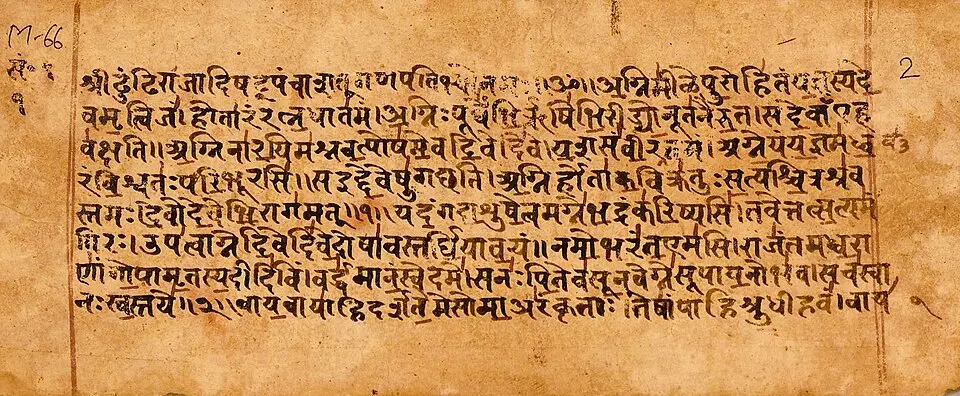
- The Vedas (Rig, Sama, Yajur and Atharva), with their Brahmanas, Aranyakas and Upanishads, are shruti, "heard" texts transmitted orally with great precision. The Rigveda's hymns praise Agni, Indra and Soma, while the Upanishads turn from ritual to the question of brahman and atman, the root of later Indian philosophy.
- The epics, the Mahabharata and the Ramayana, and the Puranas are smriti, "remembered" texts that grew over centuries and carried dharma to a wide audience through story.
- Classical Sanskrit peaked in the Gupta age. Kalidasa wrote Abhijnanashakuntalam, Meghaduta and Raghuvamsha; Bhasa's plays, including Svapnavasavadattam, were recovered in Kerala in 1912; and Sudraka's Mrichchhakatikam shows city life through a poor Brahmin and a courtesan. In these plays kings and Brahmins speak Sanskrit while women and servants speak Prakrit, so the language itself records the social hierarchy.

Pali and Prakrit
- The Buddhist Tripitaka (Vinaya, Sutta and Abhidhamma Pitaka) is in Pali, and the Jataka stories of the Buddha's earlier lives give rich detail on trade, guilds and village life. The Jain Agamas, in Ardhamagadhi Prakrit, were compiled at the council of Valabhi. Both chose the spoken language of the people because their message was meant for everyone, not only for those trained in Sanskrit.
Sangam Tamil literature
- The Sangam corpus, the Ettuthokai (eight anthologies) and Pattuppattu (ten idylls), is usually placed between about the third century BCE (before the Common Era) and the third century CE (Common Era). The Tolkappiyam, a grammar, also classifies poetry into akam (inner: love) and puram (outer: war, kings, generosity), each tied to a landscape (tinai) such as hills, forests or seashore.
- The Tirukkural of Tiruvalluvar, in 1,330 couplets on virtue, wealth and love, is a manual of ethics without any sectarian label. The twin epics, Ilango Adigal's Silappadikaram (the story of Kannagi) and Sattanar's Manimekalai (a Buddhist sequel), show merchants, cities and the spread of Jain and Buddhist ideas.


The rise of regional languages
- From about the tenth century, as regional kingdoms grew and Bhakti saints spoke to local people, regional languages acquired literature of their own. Pampa, called the first poet (adikavi) of Kannada, wrote the Vikramarjuna Vijaya; Nannaya began the Telugu Mahabharata under the Eastern Chalukyas; the Buddhist Charyapada songs mark the beginning of Bengali; and Jnaneshwar's Jnaneshwari (1290) explained the Gita in Marathi so that people outside the priestly class could read it.
Dimensions
- Religious and philosophical. Literature carried Vedanta, Buddhist and Jain ethics and later Bhakti and Sufi devotion.
- Social. Language choice mirrored hierarchy, and the move to vernaculars widened who could hear and compose.
- Political. Courts patronised poets and historians to give rulers legitimacy, from Kalidasa to Abul Fazl.
- Regional and foreign influences. Persian, Arabic and Turki met Sanskrit and the regional languages, producing translation, new genres and Urdu.
In practice
Persian literary sources and the spirit of their age
Persian became the language of the Delhi Sultanate's court and, under Akbar, of administration at every level, so the chief medieval histories are in Persian, with Arabic and Turki works beside them.
- Minhaj us Siraj, Tabaqat i Nasiri (1259 to 1260): written for Sultan Nasiruddin Mahmud, it records the Turkish conquest and the early Sultanate, including Iltutmish and Raziya.
- Amir Khusrau (1253 to 1325): poet at several Sultanate courts and disciple of Nizamuddin Auliya. His Khazain ul Futuh praises Alauddin Khalji's campaigns, while Nuh Sipihr celebrates India, its learning and its languages, including Hindavi.
- Ziauddin Barani, Tarikh i Firoz Shahi (1357) and Fatawa i Jahandari: the first gives the fullest account of Alauddin's market control; the second argues that rulers may make state laws (zawabit) where sharia is silent, which shows a real tension between religion and statecraft. Barani's contempt for the low born and for converts is itself evidence of the aristocratic outlook of his class.
- Ibn Battuta, Rihla (Arabic): a Moroccan traveller who served as qazi of Delhi under Muhammad bin Tughlaq, he describes the postal system, cities, food such as paan and coconut, and slavery.
- Babur, Baburnama (Chaghatai Turki, translated into Persian under Akbar): a frank memoir, it notes Hindustan's wealth and numbers while complaining of its lack of gardens and running water.
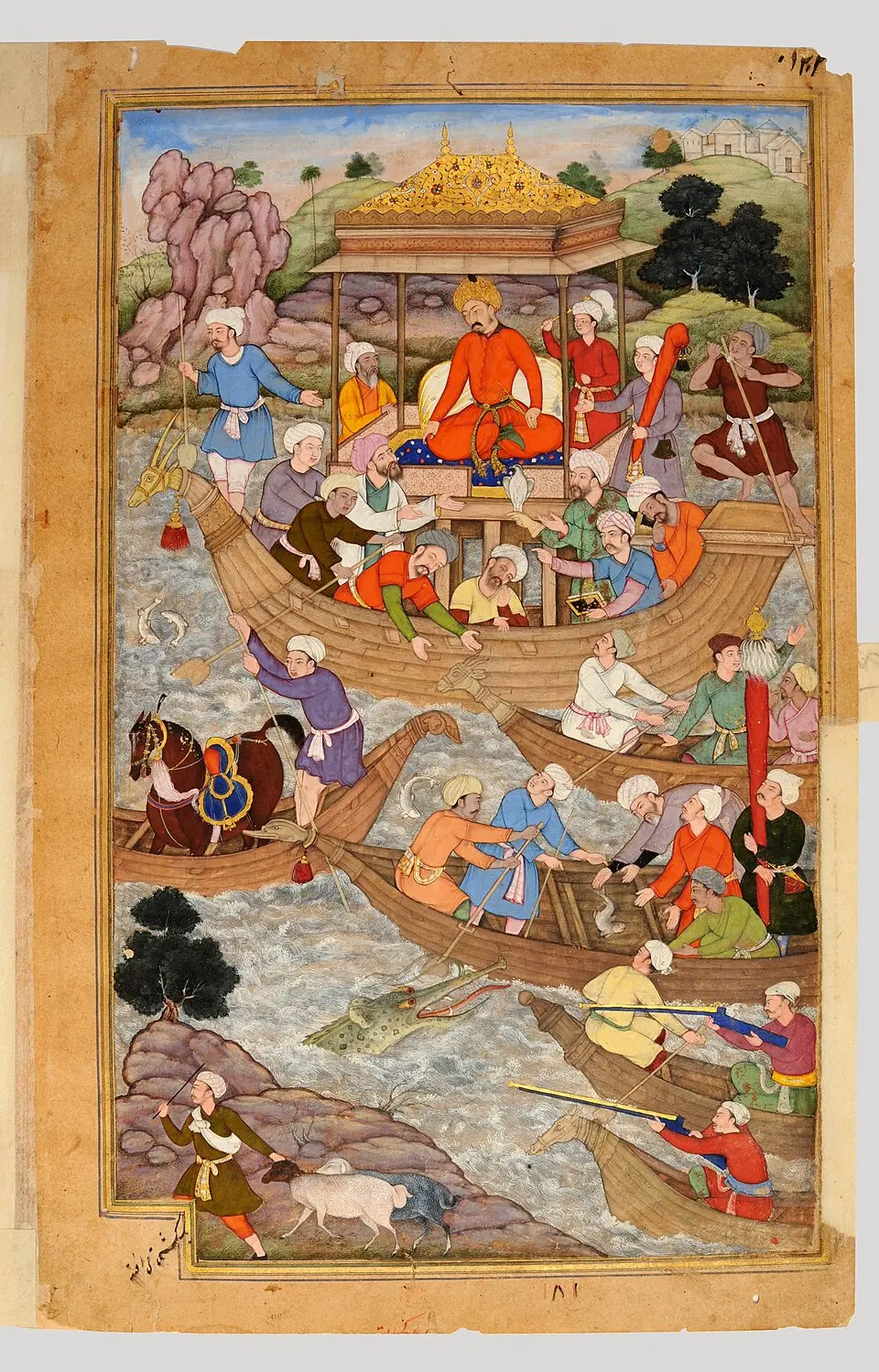
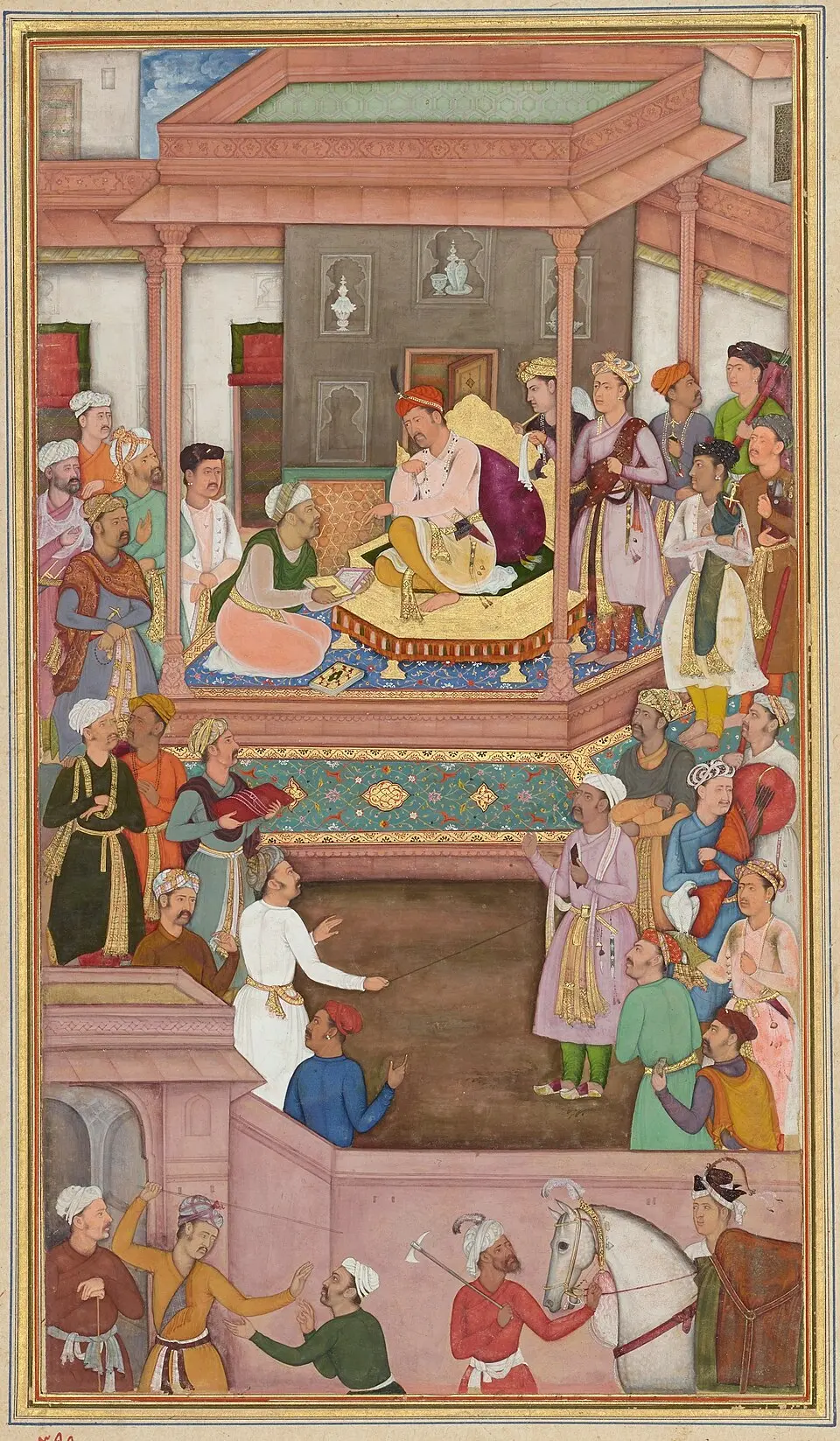
- Abul Fazl, Akbarnama, whose third volume is the Ain i Akbari: it presents Akbar as a ruler lit by divine light (farr i izadi) and policy as sulh i kul (peace with all), and gives data on revenue, mansabs, provinces, prices and crops that historians such as Irfan Habib have used extensively.
- Abdul Qadir Badauni, Muntakhab ut Tawarikh: written in secret, it criticises Akbar's religious debates from an orthodox standpoint, a useful counterweight to Abul Fazl.
- Jahangirnama: Jahangir's memoir records justice, nature and art in his own voice.
- Dara Shikoh, Majma ul Bahrain (1655) and Sirr i Akbar (1657): the first compares Sufi and Vedantic ideas; the second translates fifty Upanishads into Persian, and through a later Latin version it carried the Upanishads to Europe.

Do these sources reflect the spirit of the age?
Largely yes, because they record how the ruling class thought. Court culture is visible in titles, gifts and poetry; state ideology in Barani's zawabit and Abul Fazl's sulh i kul; social life in Ibn Battuta; and syncretism in Khusrau's love of Hindavi, Badauni's own Persian translation of the Ramayana at Akbar's order and Dara Shikoh's translations. At the same time they reflect only part of the age, since they were written by elite, urban, male authors for patrons, often inflate numbers, and view events through the author's faith. Read alongside coins, inscriptions, regional literature and Bhakti poetry, they become a reliable guide.


Urdu and early modern literature
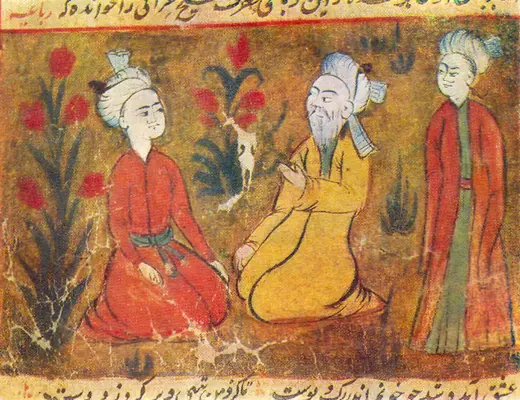
- Urdu grew from Hindavi and the Dakhni of the Deccan courts, reached Delhi with Wali in the early eighteenth century and flowered with Mir and Ghalib. In the nineteenth century print and nationalism changed literature again: Bankim Chandra's Anandamath (1882) gave Vande Mataram, Subramania Bharati wrote nationalist Tamil poetry, Premchand wrote of peasants, and Rabindranath Tagore's Gitanjali won the Nobel Prize in 1913.
Schemes and data
- Classical languages (Ministry of Culture): Tamil was first declared classical in 2004; with Marathi, Pali, Prakrit, Assamese and Bengali added in October 2024, the number is now eleven.
- National Mission for Manuscripts (2003, Ministry of Culture): documents and conserves manuscripts, and the Gyan Bharatam Mission announced in the Union Budget 2025 to 2026 aims to survey and digitise over one crore manuscripts.
Issues and way forward
- Manuscripts decaying in private hands. Most manuscripts lie with families and monasteries without climate control; the Gyan Bharatam Mission's survey, digitisation and conservation centres address this.
- Few readers of classical languages. Fewer scholars read Sanskrit, Persian or old Tamil, so sources go unread; the classical language centres and university chairs need sustained funding.
- Literature used as propaganda. Selective quotation of medieval texts fuels communal debate; historians recommend reading each text in its context and against other evidence, as the NCERT Themes in Indian History volumes model.
Common confusions
- Shruti and smriti. Shruti (the Vedas) is "heard" and held to be authorless revelation; smriti (epics, Puranas, Dharmashastras) is "remembered" and authored.
- Akbarnama and Ain i Akbari. The Ain is the third volume of the Akbarnama, devoted to administration and statistics.
- Tarikh i Firoz Shahi and Fatawa i Jahandari. Both are Barani's; the first is history, the second political theory.
- Rihla and Baburnama. Ibn Battuta wrote in Arabic and Babur in Turki; neither is originally Persian.
For the exam
- Keyword bank: shruti, smriti, Prakrit, Jataka, akam, puram, tinai, Tirukkural, adikavi, zawabit, farr i izadi, sulh i kul, panegyric, syncretism, classical language, Gyan Bharatam.
- Previous year questions: Practise the previous year questions on this topic →
- Use in an answer:
- Introduction (data): From the 1,028 hymns of the Rigveda to the 1,330 couplets of the Tirukkural, Indian literature records a civilisation in many languages at once.
- Introduction (judgement, quote or report): Barani's argument that a sultan needs state laws beyond sharia shows that medieval Persian texts debated statecraft, not just recorded battles.
- Conclusion: Persian sources mirror the mind of the medieval court, and read alongside other evidence they reveal the wider spirit of their age.
- Conclusion: Preserving manuscripts and training readers in classical languages is the only way to keep this record open to future historians.
Photo credits
Photographs are from Wikimedia Commons; each photo links to its file page, which gives the photographer and licence.