Performing arts
- Syllabus
- Indian culture will cover the salient aspects of Art Forms, Literature and Architecture from ancient to modern times.
- As of
- October 2026
- Natyashastra
- rasa
- bhava
- abhinaya
- nritta and nritya
- tandava and lasya
- classical dances
- raga and tala
- gharana
- Carnatic trinity
- Koodiyattam
- Yakshagana
- puppetry
- Sangeet Natak Akademi
- intangible cultural heritage
The first principle
Indian performing arts were built to carry an emotion from the performer to the spectator, not merely to display skill, and the Natyashastra of Bharata gave this a theory: the performer expresses bhava (feeling) through a coded body, voice and costume, and the trained spectator tastes it as rasa (aesthetic delight). Because the same theory served dance, music and drama, the three grew as one family, and because they were patronised by temples, courts and devotional movements, each region shaped the common grammar in its own way. That explains both the unity and the striking regional variety of Indian dance, music and theatre.
The core
Natyashastra foundations
- The Natyashastra, compiled between about 200 BCE and 200 CE and attributed to Bharata, treats drama, dance and music together and calls itself the fifth Veda, open to all classes. In 2025 its manuscripts were inscribed on the Memory of the World Register of the United Nations Educational, Scientific and Cultural Organization (UNESCO).
- It names eight rasas: shringara (love), hasya (mirth), karuna (pathos), raudra (fury), vira (heroism), bhayanaka (fear), bibhatsa (disgust) and adbhuta (wonder); a ninth, shanta (peace), was added later and defended by Abhinavagupta in Kashmir around the eleventh century.
- Rasa arises when vibhava (the cause), anubhava (the visible response) and vyabhichari bhava (passing moods) combine around a sthayi bhava (lasting emotion), which is why a dancer's eyes, hands and posture are trained so precisely.
- Dance has three layers: nritta is pure rhythmic movement, nritya adds meaning through gesture and expression, and natya adds story and speech. Movement is also classed as tandava, the vigorous style linked with Shiva, and lasya, the graceful style linked with Parvati.
Classical dances
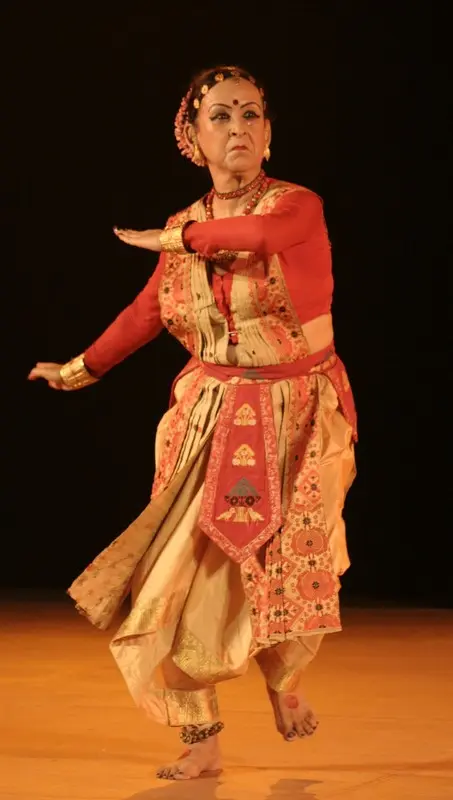
The Sangeet Natak Akademi recognises eight classical dances. Each began in a ritual or devotional setting, the temple for Bharatanatyam and Odissi, the Vaishnava monastery for Sattriya and Manipuri, the court and storyteller for Kathak, and each still follows the Natyashastra grammar of hasta mudras and abhinaya.
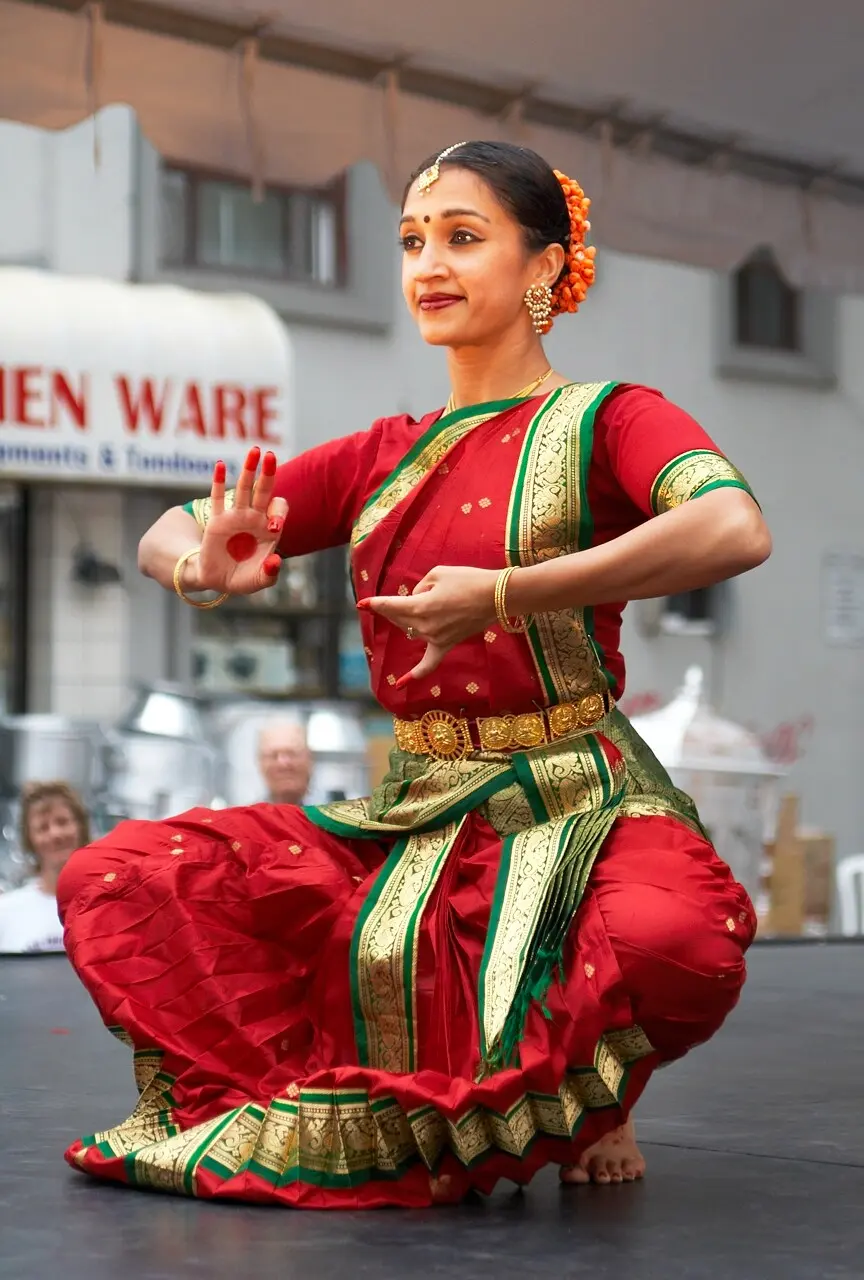

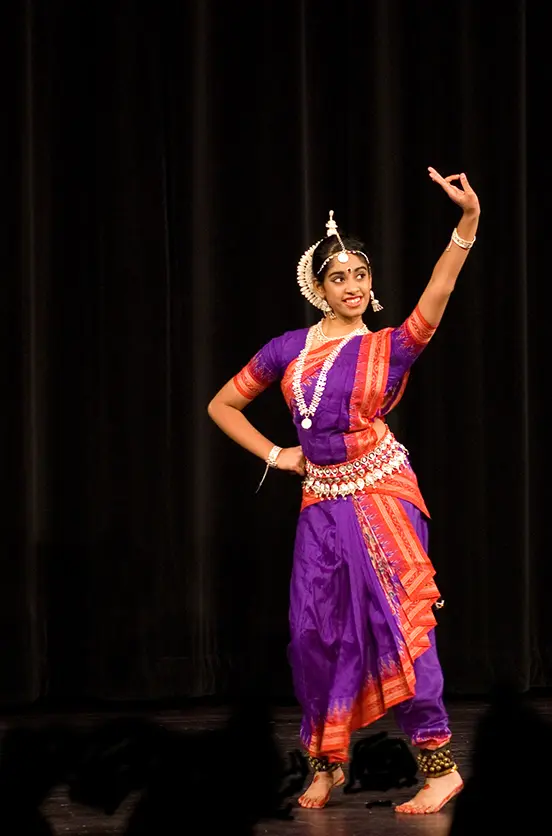

- Bharatanatyam grew from the sadir of temple dancers in Tamil Nadu; the Thanjavur Quartet fixed its margam (alarippu to tillana) in the nineteenth century, and E Krishna Iyer and Rukmini Devi Arundale, who founded Kalakshetra in 1936, brought it to the public stage.
- Kathak began with kathakars, storytellers of the epics, and absorbed Persian elegance at Mughal and Awadh courts, which explains its straight stance, fast footwork and spins; its gharanas are Lucknow, Jaipur and Banaras.
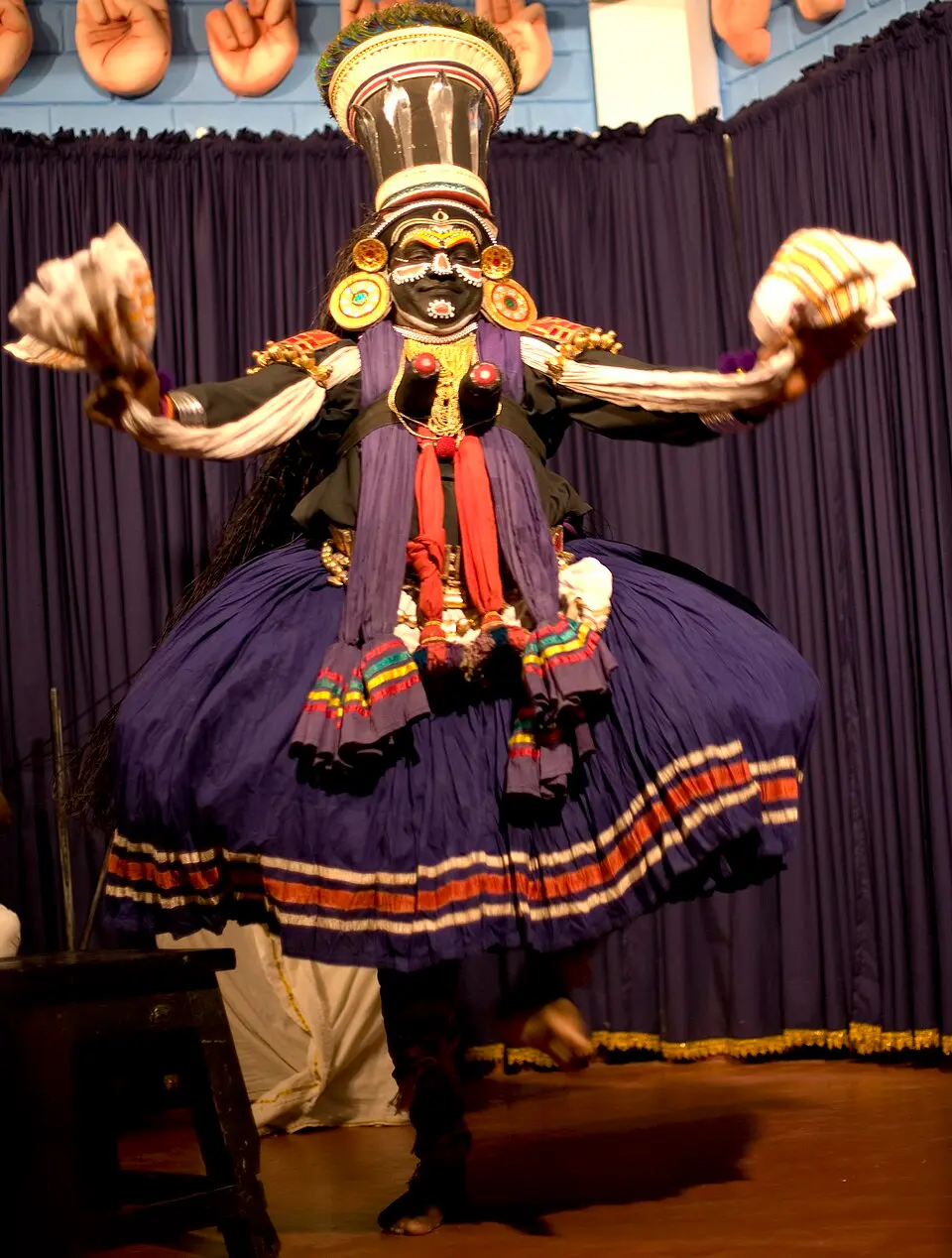
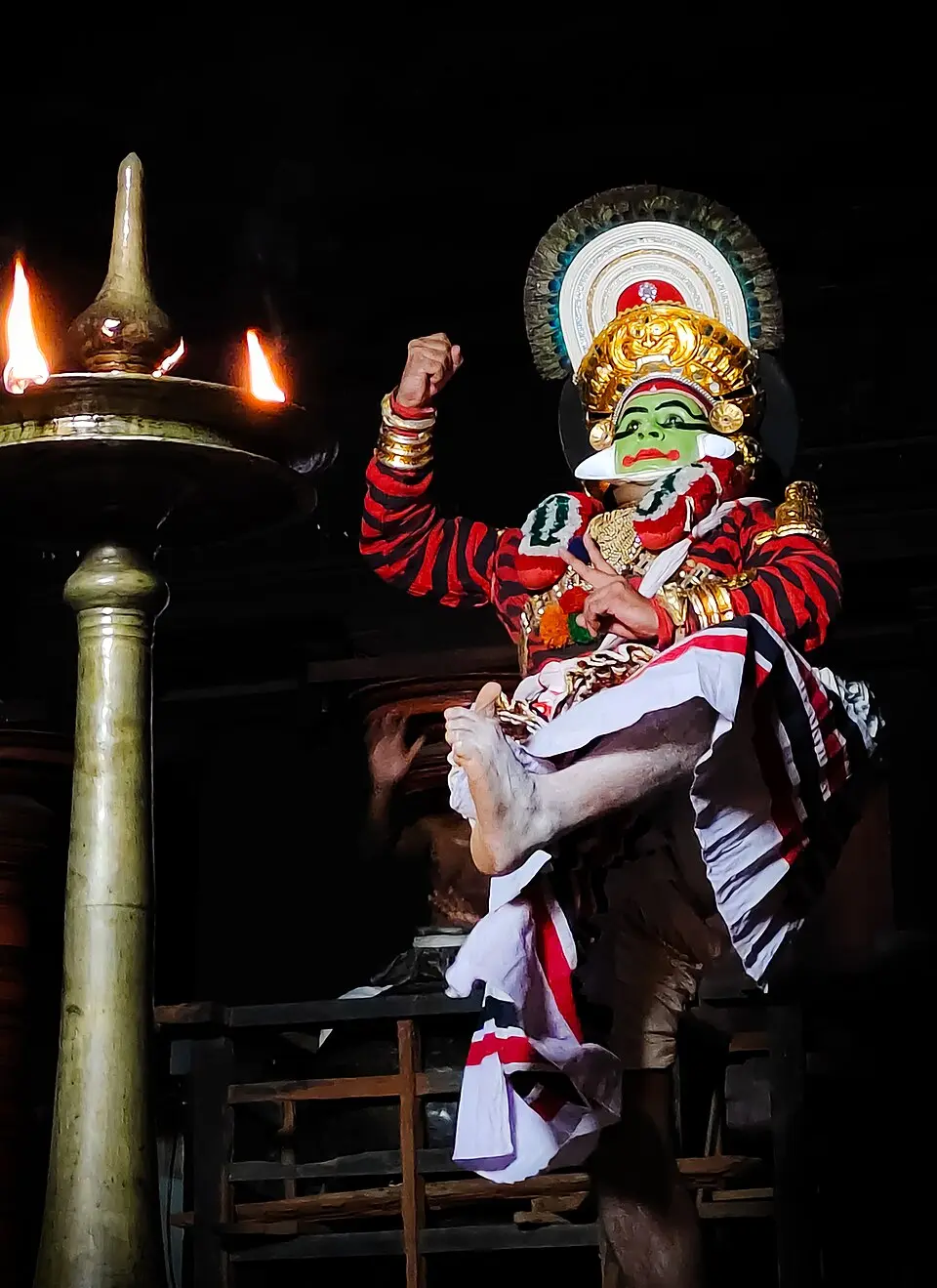
- Kathakali of Kerala emerged in the seventeenth century from Ramanattam and Krishnanattam; its make up codes character, with green (pacha) for noble heroes and red bearded or black faces for the violent and the base.
- Kuchipudi, named after a village in Andhra Pradesh, was shaped by Siddhendra Yogi and was long performed by Brahmin men as dance drama such as Bhama Kalapam.
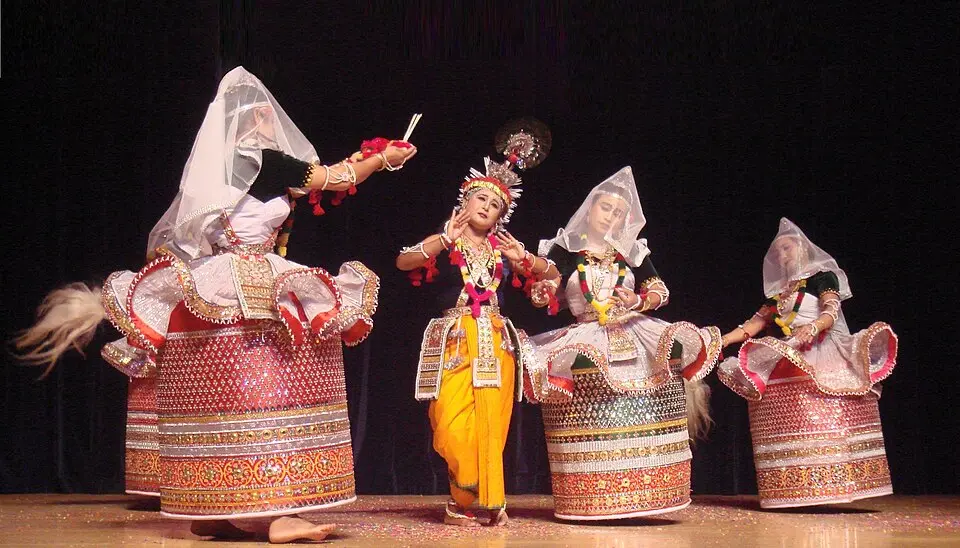
- Manipuri is devotional Vaishnava dance centred on the Ras Lila, given form under King Bhagyachandra in the eighteenth century, with soft rounded movement and no ankle bells.
- Mohiniyattam of Kerala is pure lasya, the dance of the enchantress, revived in the twentieth century at Kerala Kalamandalam, founded in 1930 by the poet Vallathol.
- Sattriya was created by Srimanta Sankaradeva in the fifteenth and sixteenth centuries for the sattras (monasteries) of Assam and was recognised as classical in 2000.



Music: Hindustani and Carnatic
- Both systems rest on raga, a melodic framework of notes with fixed ascent, descent and characteristic phrases, and tala, a rhythmic cycle. They separated gradually after the thirteenth century, as north India absorbed Persian and Central Asian influences under the Sultanate and Mughals.
- In the north, dhrupad, the oldest surviving form, flourished at Gwalior under Raja Man Singh Tomar, and Tansen, a disciple of Swami Haridas, shone at Akbar's court. Amir Khusrau (1253 to 1325), a disciple of Nizamuddin Auliya, is credited with shaping qawwali and tarana and traditionally with the sitar, though historians doubt the sitar attribution. Khayal grew in the eighteenth century, and teaching passed through gharanas such as Gwalior, Agra, Kirana and Jaipur Atrauli.
- In the south, Purandara Dasa (1484 to 1564), a Vijayanagara era saint, devised the graded lessons still used to teach beginners and is called the father of Carnatic music. Venkatamakhin set out the 72 melakarta scheme in the seventeenth century, and the trinity of Tyagaraja, Muthuswami Dikshitar and Syama Sastri composed the kritis that form the core repertoire.
Theatre and folk forms
- Sanskrit drama, from Bhasa and Kalidasa's Abhijnanashakuntalam to Shudraka's Mrichchhakatika, followed the Natyashastra: a sutradhara opened the play, a vidushaka (jester) provided comedy, women and common folk spoke Prakrit, and plays avoided a tragic ending.
- Koodiyattam of Kerala, performed by Chakyars and Nangiars in temple theatres called koothambalams, is the only surviving form of Sanskrit theatre; UNESCO proclaimed it a masterpiece in 2001 and inscribed it in 2008.
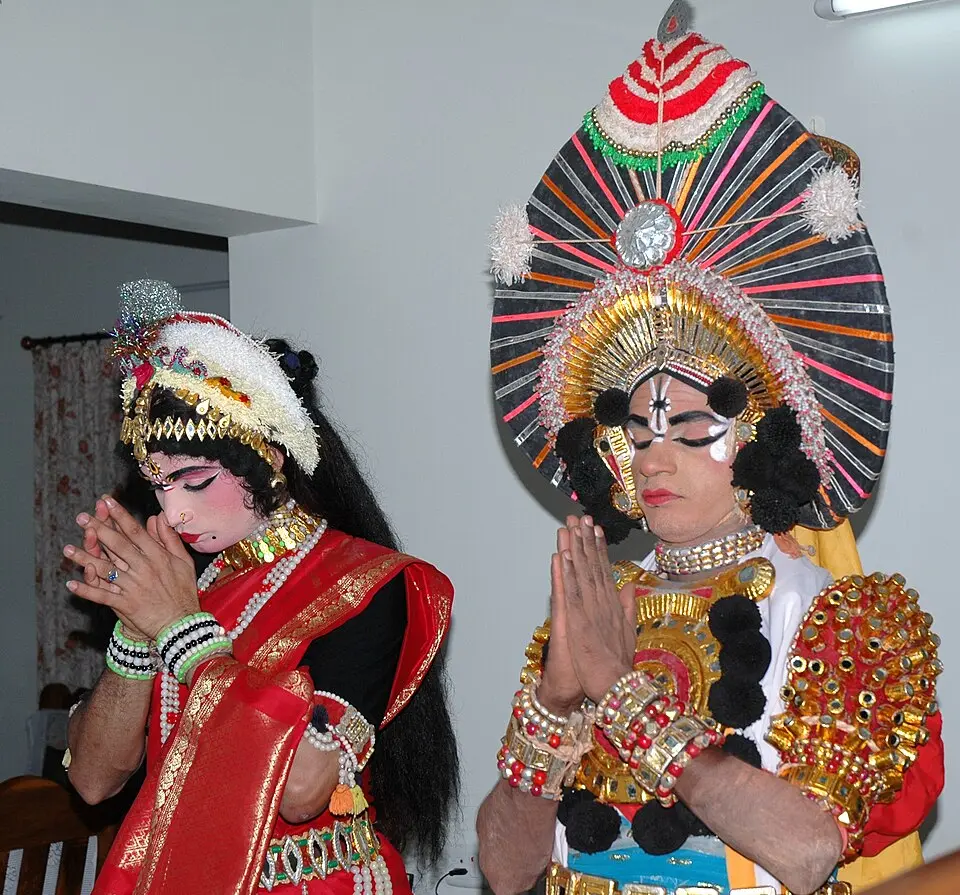
- Regional folk theatre grew from devotion and village life: Yakshagana in coastal Karnataka, Jatra in Bengal and Odisha (spread by the Chaitanya movement), Tamasha with lavani songs in Maharashtra, Nautanki in Uttar Pradesh and Bhavai in Gujarat. Folk dances such as Garba, Bihu, Bhangra, Ghoomar and Chhau mark harvests, seasons and rites of passage.


Puppetry
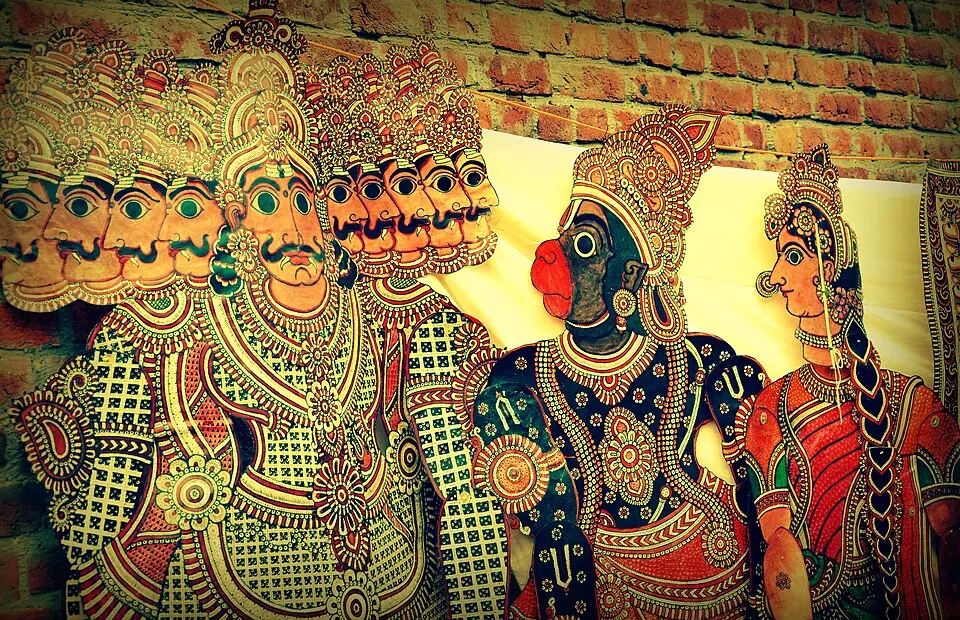
Puppetry is among India's oldest storytelling arts and takes four forms: string, shadow, rod and glove. Puppeteers were usually itinerant families who carried the epics to villages, which is why the same Ramayana episodes appear from Rajasthan to Kerala.

Dimensions
- Aesthetic. The goal is rasa, not realism, so gesture, colour and rhythm are stylised codes that a trained spectator reads.
- Religious and philosophical. Dance was offered to the deity, and bhakti made Krishna's Ras Lila, Shiva's cosmic dance and Vaishnava devotion the main themes.
- Social. Hereditary communities, such as devadasis, Chakyars and puppeteer families, carried the arts, so the arts rose and fell with their social standing.
- Economic and patronage. Temples, kings, zamindars and later the state and the ticketed urban stage paid for performance in turn.
- Regional and foreign influences. Persian taste shaped Kathak, khayal and qawwali, while regional languages and local deities gave each form its colour.
In practice
Institutions and schemes
- The Sangeet Natak Akademi was set up in 1952 as India's national academy of music, dance and drama; it runs Kathak Kendra in Delhi, the Jawaharlal Nehru Manipuri Dance Academy in Imphal and centres for Koodiyattam and Sattriya, and maintains the national inventory of intangible heritage.
- The Ministry of Culture runs the Scheme for Safeguarding the Intangible Cultural Heritage and Diverse Cultural Traditions of India (2013), the Guru Shishya Parampara scheme, seven Zonal Cultural Centres and the Centre for Cultural Resources and Training (CCRT) for teachers.
- UNESCO's intangible list includes several Indian performing traditions: Koodiyattam, Ramlila and Vedic chanting (2008), Ramman (2009), Chhau, Kalbelia and Mudiyettu (2010), Sankirtana of Manipur (2013) and Garba (2023).
Cases
- Bharatanatyam's reinvention. The Madras Devadasis (Prevention of Dedication) Act, 1947 ended temple dedication; the dance survived by moving to the urban stage, but the hereditary dancers who had preserved it lost their livelihood and recognition.
- Sattriya leaves the monastery. For centuries performed by celibate monks inside sattras, it gained classical status in 2000 and is now taught to women and performed nationally.
- Koodiyattam's rescue. Once confined to a few temple theatres, it now survives through institutions such as Kerala Kalamandalam and Margi, supported after UNESCO recognition.
Issues and way forward
- Loss of traditional patronage. Temples and princely courts no longer pay performers, and folk artists depend on irregular festival fees. Steady grants, pensions for elderly artists and paid slots in state festivals, as the Ministry of Culture's schemes intend, need wider reach.
- Shrinking audiences. Cinema, television and streaming draw audiences away, especially from long night performances; short formats, digital archives and school exposure through programmes such as those of the Society for the Promotion of Indian Classical Music and Culture Amongst Youth (SPIC MACAY) help build new audiences.
- Breaks in the guru shishya chain. Hereditary transmission weakens when children leave for other work; the Guru Shishya Parampara scheme and stipends to learners keep the chain alive.
- Displacement of performer communities. When the Kathputli Colony of puppeteers and street performers in west Delhi was cleared for redevelopment in 2017, a living cluster of artists was scattered; housing must keep such communities together.
- Commercial dilution. Folk forms are cut down for tourists and weddings; documentation and inventory by the Sangeet Natak Akademi preserve the full form for future revival.
Common confusions
- Nritta and nritya. Nritta is pure rhythmic dance with no meaning; nritya conveys meaning through gesture and expression.
- Eight or nine classical dances. The Sangeet Natak Akademi lists eight; the Ministry of Culture also counts Chhau, making nine.
- Koodiyattam and Kathakali. Koodiyattam is ancient Sanskrit theatre with spoken text; Kathakali is a seventeenth century dance drama in which actors do not speak and singers carry the text.
- Thaat and melakarta. Thaat is Bhatkhande's ten fold grouping of Hindustani ragas; melakarta is the 72 parent scale scheme of Carnatic music.
For the exam
- Keyword bank: Natyashastra, rasa, bhava, abhinaya, nritta, nritya, natya, tandava, lasya, margam, gharana, kriti, melakarta, Koodiyattam, Yakshagana, guru shishya parampara, intangible cultural heritage.
- Previous year questions: Practise the previous year questions on this topic →
- Use in an answer:
- Introduction (data): The Sangeet Natak Akademi recognises eight classical dances, and UNESCO's intangible list carries Indian performing traditions from Koodiyattam (2008) to Garba (2023).
- Introduction (judgement, quote or report): The Natyashastra, inscribed on UNESCO's Memory of the World Register in 2025, gave Indian dance, music and drama a shared grammar built around rasa.
- Conclusion: Indian performing arts survive best when they keep their communities alive, so safeguarding must fund the artist, not only the archive.
- Conclusion: Regional diversity within one shared theory of rasa makes the performing arts a living example of India's unity in diversity.
Photo credits
Photographs are from Wikimedia Commons; each photo links to its file page, which gives the photographer and licence.