Indian painting
- Syllabus
- Indian culture will cover the salient aspects of Art Forms, Literature and Architecture from ancient to modern times.
- As of
- October 2026
- shadanga
- Bhimbetka
- Ajanta murals
- tempera and fresco
- Pala manuscripts
- Western Indian Jain painting
- Mughal atelier
- Hamzanama
- Rajasthani miniature
- Pahari miniature
- Company painting
- Bengal School
- Raja Ravi Varma
- folk painting
- geographical indication
The first principle
Every Indian painting is the answer to three questions: what surface was available, who paid for it, and what it was meant to do. A rock shelter, a cave wall, a palm leaf, a sheet of paper and a mud wall each impose their own size, colours and technique, while the patron, whether a monastery, an emperor, a Rajput prince, a colonial officer or a village household, decides the theme. Read every school through surface, patron and purpose, and the long list of styles turns into one connected story.
The core
The theory: shadanga
- Indian painting had a theory long before it had schools. The Chitrasutra of the Vishnudharmottara Purana discusses proportion, emotion and shading, and Yashodhara's commentary on the Kamasutra lists six limbs (shadanga) that a good painting must satisfy. They are a teacher's checklist, so a student who knows them can judge any painting on its own terms.
Prehistoric rock art
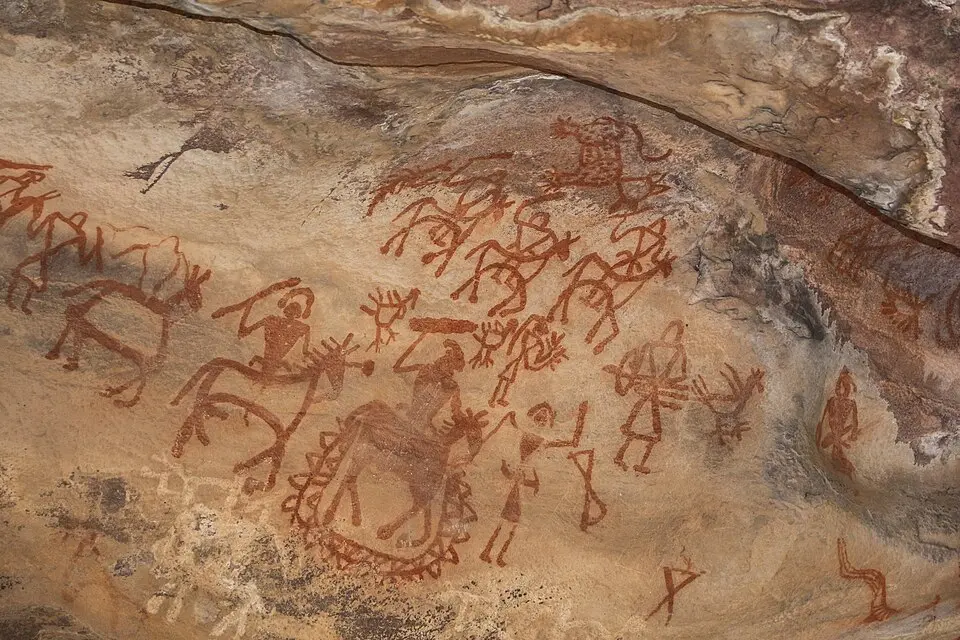
- Bhimbetka in Raisen district, Madhya Pradesh, discovered by V S Wakankar in 1957 and a UNESCO (United Nations Educational, Scientific and Cultural Organization) World Heritage Site since 2003, holds paintings from the Upper Palaeolithic to historical times. Early figures are large animals such as bison and rhinoceros drawn in outline; the Mesolithic phase, which has the most paintings, shows group hunting, dancing and daily life; later layers show contact with farming communities. Colours came from minerals, red from haematite and white from limestone, which is why they have lasted thousands of years on sheltered rock.

Murals
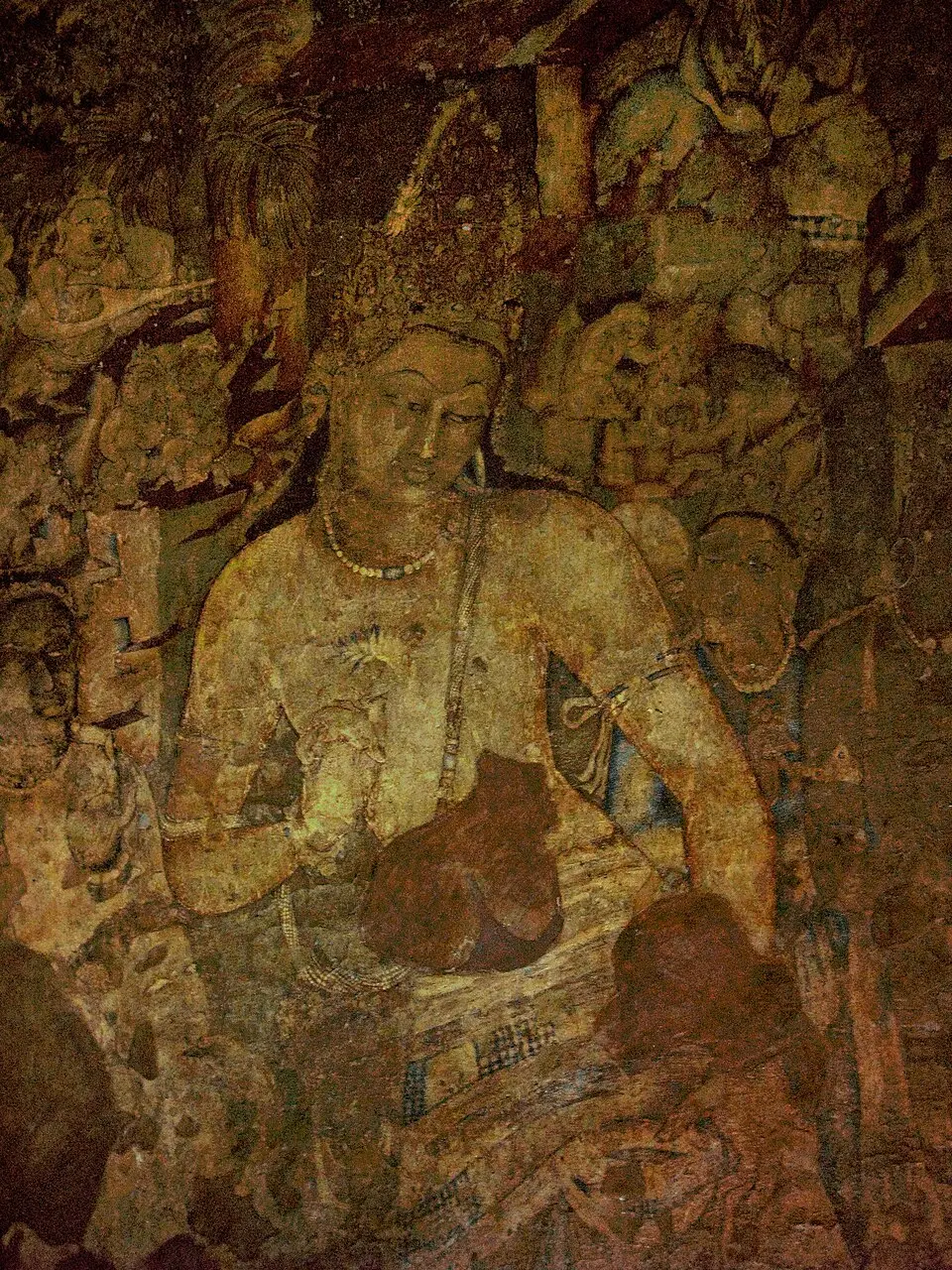
- Ajanta (Maharashtra) has paintings from two phases, the second century before the Common Era (BCE) and the fifth century of the Common Era (CE) under the Vakatakas. Jatakas and the life of the Buddha were painted to teach monks and pilgrims, and the figures have modelled volume, flowing outline and calm faces, as in the Padmapani of Cave 1.
- Bagh (Dhar, Madhya Pradesh) continues the Ajanta idiom in the Gupta age. Sittanavasal (Pudukkottai, Tamil Nadu), a Jain cave usually dated to a ninth century Pandya renovation, shows a lotus pond with bathers, fish and elephants.
- Brihadeeswara, Thanjavur: Chola murals of about 1010 CE in the passage around the sanctum show Shiva as Tripurantaka and the saint Sundarar; they were painted on wet lime as true fresco and were found under later Nayaka paintings.
- Lepakshi (Andhra Pradesh): sixteenth century Vijayanagara ceiling paintings in the Veerabhadra temple, with figures in profile, large eyes and earthy tones, show how mural art moved from monasteries into temples.

Manuscript painting
- Pala manuscripts of the eleventh and twelfth centuries, made at Nalanda and Vikramashila, illustrate Buddhist texts such as the Prajnaparamita on narrow palm leaves, so the pictures are small panels with a sinuous line and calm colours.
- Western Indian Jain painting, from Gujarat and Rajasthan, illustrates the Kalpasutra and Kalakacharya Katha. Its figures are angular, the far eye projects beyond the face, and red, yellow and gold dominate; the arrival of paper from about the fourteenth century allowed larger pages.
Miniatures
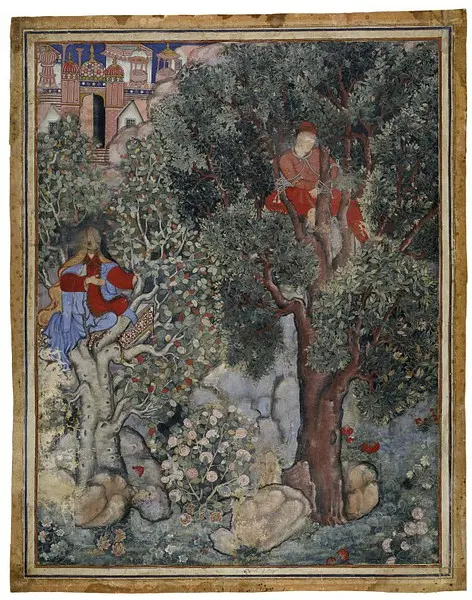
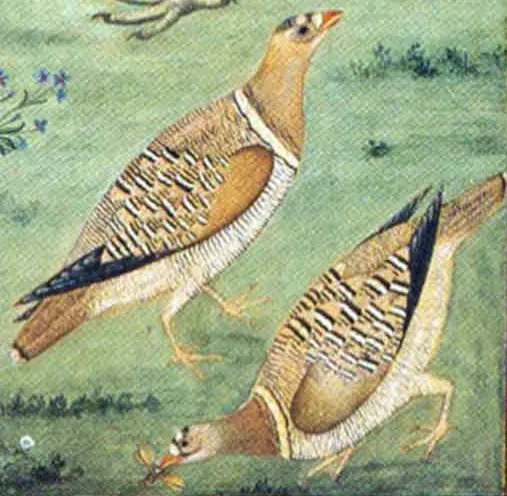
- Mughal. Humayun brought the Persian masters Mir Sayyid Ali and Abd al Samad, and Akbar built an imperial workshop where Indian artists such as Daswanth and Basawan worked under them. Its first great project, the Hamzanama, ran to about 1,400 large folios on cloth over some fifteen years. Jahangir wanted accurate records of nature and people, so Ustad Mansur painted birds and animals with scientific precision and Abul Hasan excelled at portraits, while European prints added shading and the halo. Under Shah Jahan painting became formal and jewel like, and under Aurangzeb artists dispersed to provincial courts.
- Deccani painting at Bijapur, Golconda and Ahmadnagar mixed Persian and local idioms with rich colours and gold.
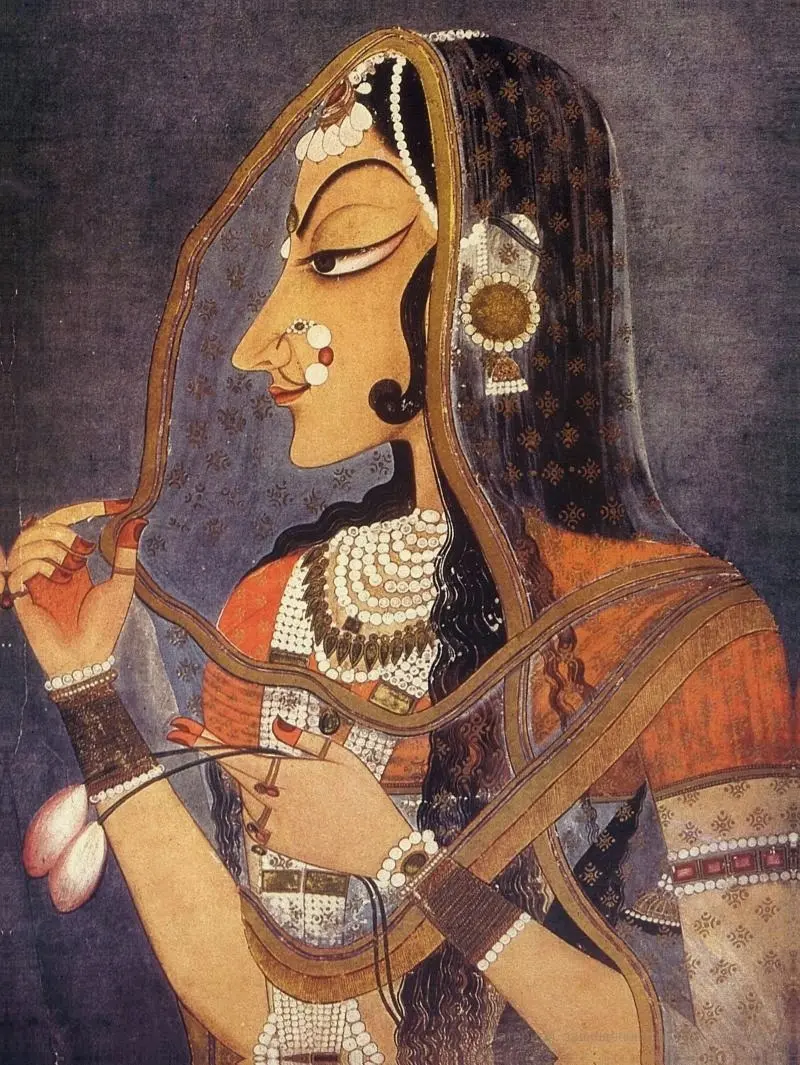
- Rajasthani painting served Rajput courts with Krishna themes, ragamala and court life: Mewar for narrative cycles, Bundi for lush landscape, Kishangarh for the stylised Bani Thani by Nihal Chand with long eyes and arched brows, and Marwar for bold colour.
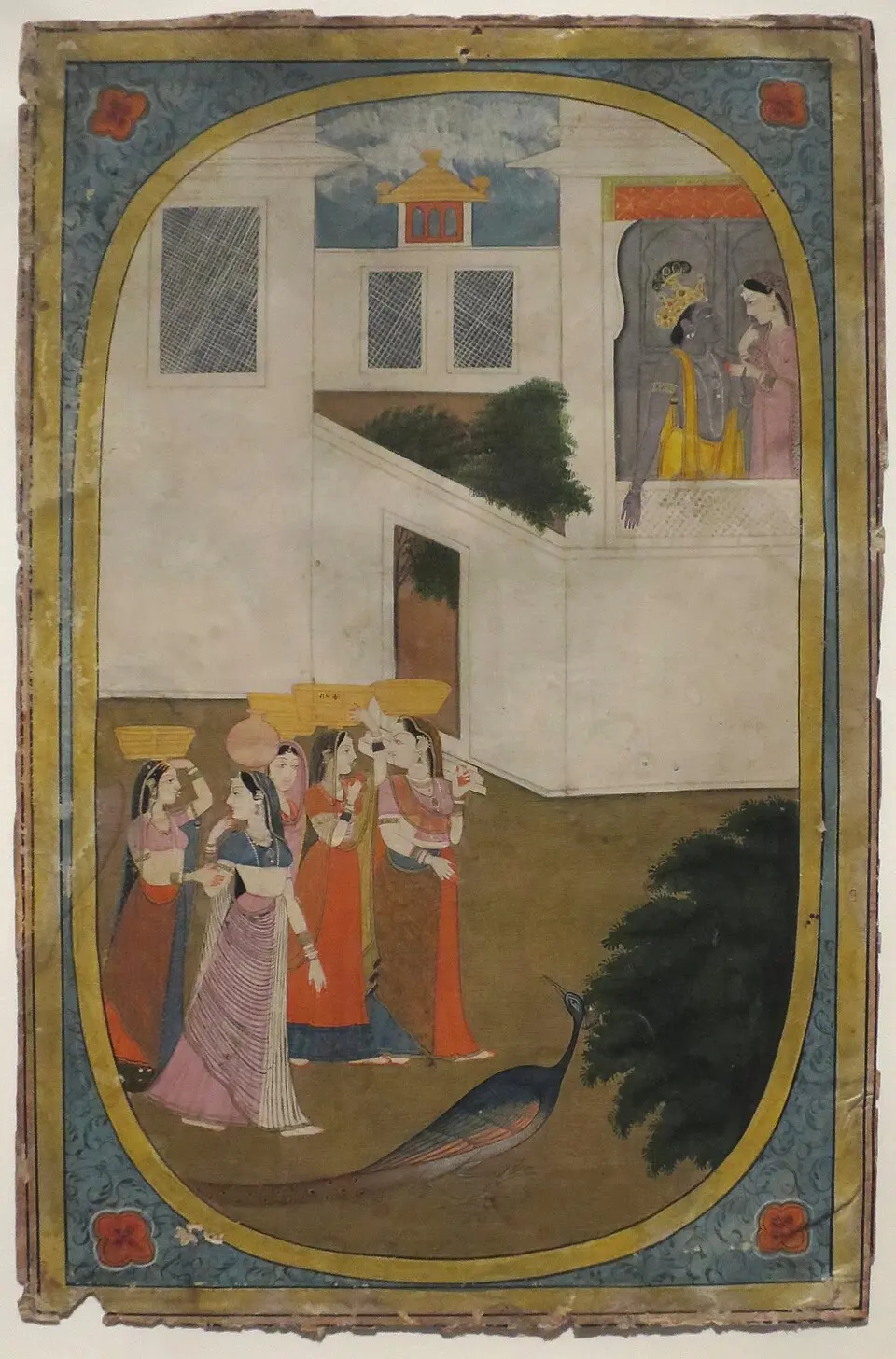
- Pahari painting in the hill states moved from the bold, primary colours of Basohli to the naturalism of Guler and the lyrical line of Kangra under Raja Sansar Chand, best seen in the Gita Govinda and Bhagavata series.
- Company painting arose when East India Company officials commissioned Indian artists to paint festivals, trades and natural history in watercolour on paper, at Patna, Murshidabad, Lucknow and Thanjavur.




Modern painting
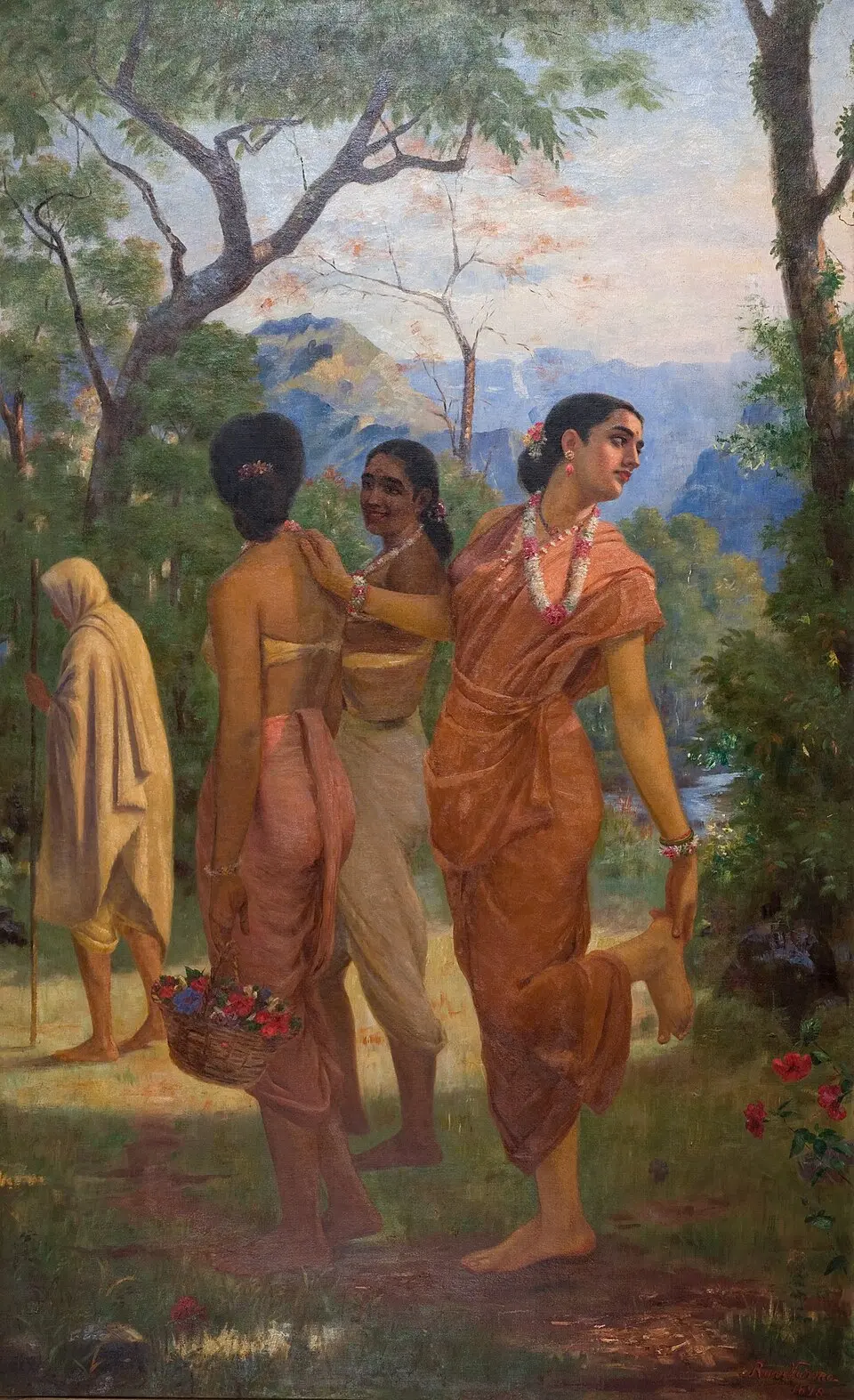
- Raja Ravi Varma (1848 to 1906) painted Indian myths in European oils, and his lithographic press, set up near Bombay in the 1890s, put gods and goddesses into ordinary homes as cheap prints.
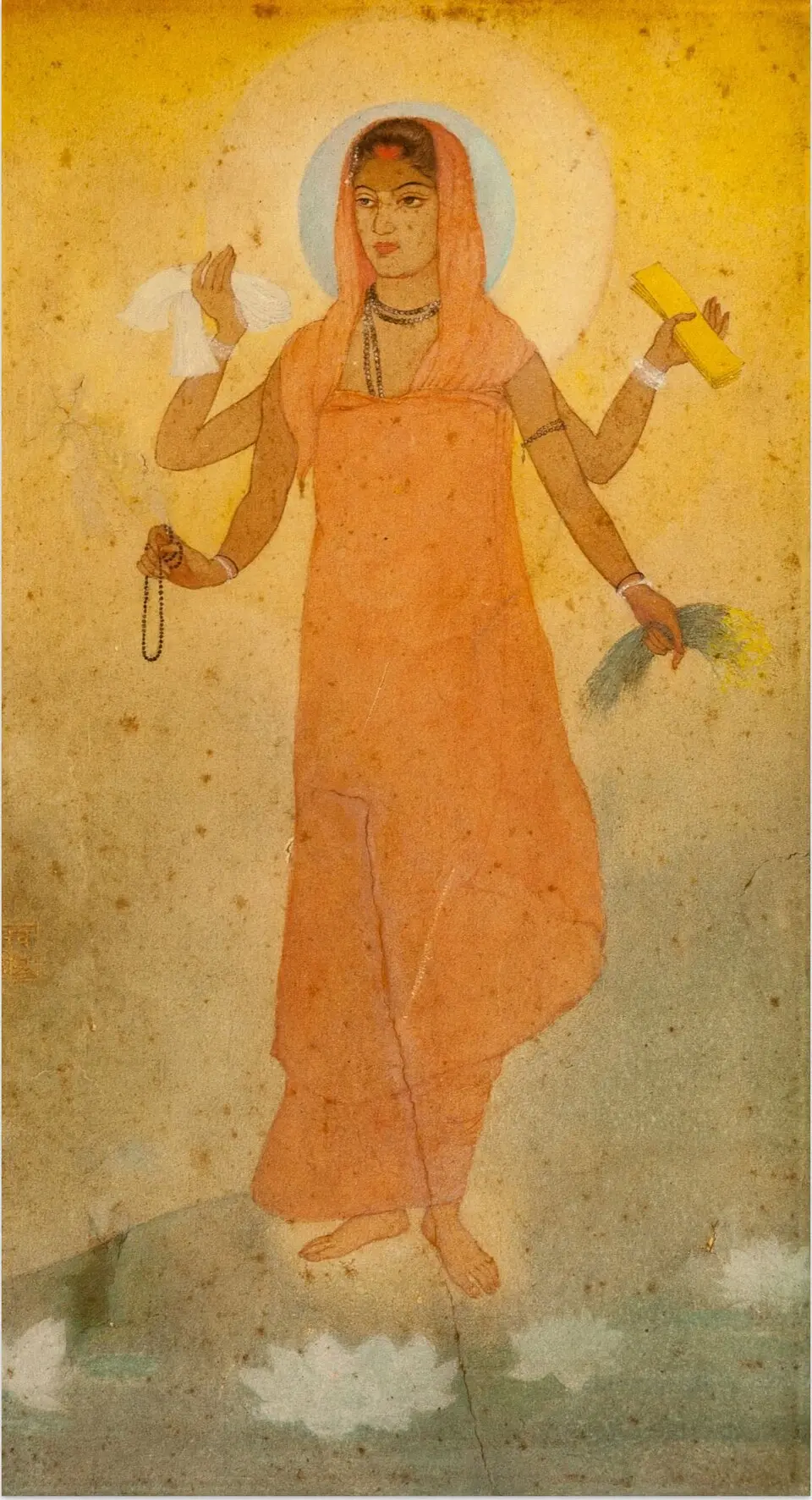
- The Bengal School, led by Abanindranath Tagore with the support of E B Havell, rejected academic oil painting and looked back to Ajanta and Mughal art, using a soft wash technique; his Bharat Mata (1905) gave the Swadeshi movement a gentle, ascetic image of the nation.
- Amrita Sher Gil (1913 to 1941) joined Western modernism to Indian subjects, and Nandalal Bose of Kala Bhavana, Santiniketan, made the Haripura posters (1938) and, with his students, illustrated the original manuscript of the Constitution.


Folk and tribal painting
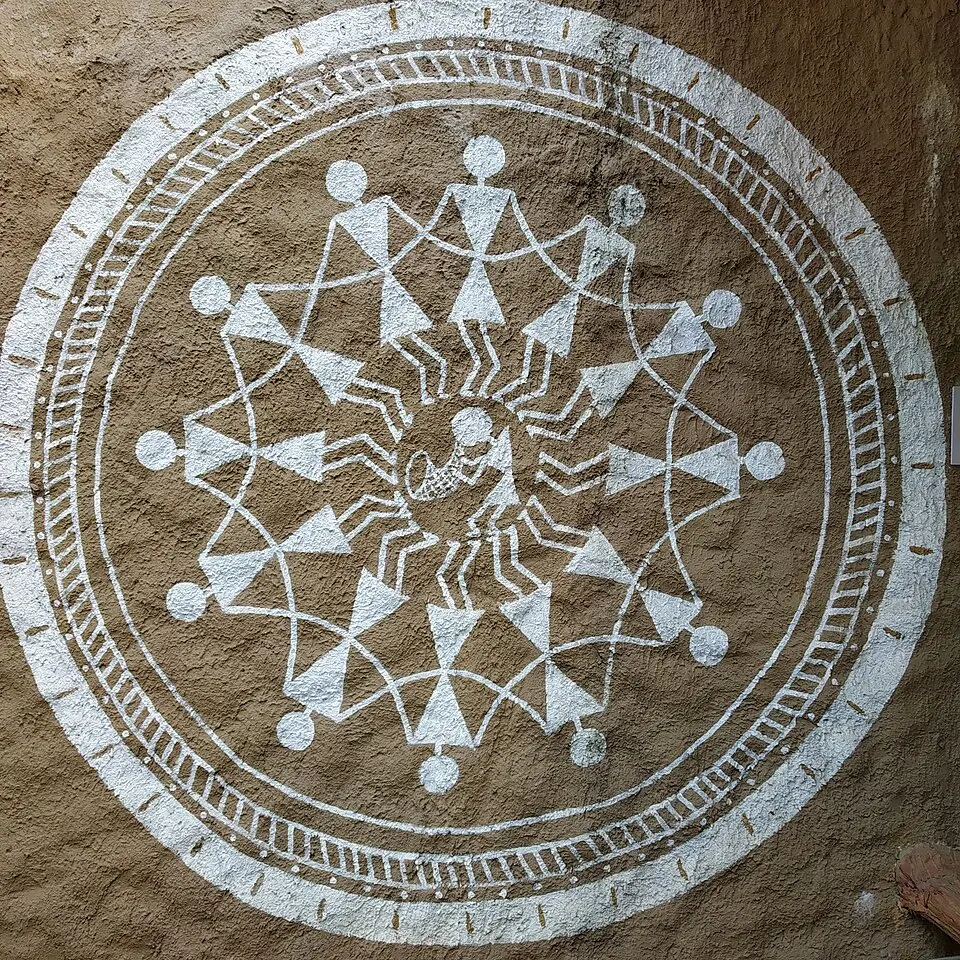
- Madhubani or Mithila painting (Bihar) was done by women on walls for weddings and rituals, and moved to paper in the late 1960s when drought relief encouraged sale. Warli painting (Maharashtra) uses white rice paste on mud walls with circles, triangles and lines. Pattachitra (Odisha) is painted on treated cloth around the Jagannath cult, Gond painting (Madhya Pradesh) builds animals and trees from dots and dashes, and Kalamkari (Andhra Pradesh) is drawn with a pen at Srikalahasti and block printed at Machilipatnam. Phad scrolls of Rajasthan narrate the deeds of Pabuji and Devnarayan for travelling singers, and Pithora paintings of the Rathwa and Bhil communities are ritual offerings on house walls.
- Madhubani, Warli, Odisha Pattachitra, Gond painting and both styles of Kalamkari carry geographical indication (GI) tags.

Dimensions
- Aesthetic. Indian painting prefers the ideal type and the emotion (bhava) over the exact likeness, which is why Bani Thani's eye is stylised; Jahangir's naturalism is the notable exception.
- Religious and philosophical. Buddhist compassion at Ajanta, Jain merit in manuscripts and Krishna bhakti in Rajasthani and Pahari work shaped both theme and mood.
- Economic and patronage. Monasteries, temples, emperors, Rajput courts and colonial officers each paid for a different kind of picture, and when patrons declined, artists migrated and styles spread.
- Technical. Mineral colours, burnishing with agate and the fine squirrel hair brush made miniature detail possible.
- Foreign influences. Persian composition, European shading and Japanese wash each entered and were absorbed into Indian forms.
In practice
- Antiquities and Art Treasures Act, 1972 (Ministry of Culture): regulates trade in antiquities, and the works of nine artists, including Raja Ravi Varma, Abanindranath Tagore, Amrita Sher Gil and Nandalal Bose, are declared National Art Treasures that cannot be exported.
- Geographical Indications of Goods (Registration and Protection) Act, 1999 (Ministry of Commerce and Industry): protects names such as Madhubani painting from imitation.
- National Mission on Monuments and Antiquities (2007, Ministry of Culture, through the Archaeological Survey of India (ASI)): builds a national database of antiquities, including paintings.
- Case, Ajanta: the ASI limits visitor numbers and lighting in the painted caves because breath, humidity and dust damage the plaster.
- Case, Madhubani railway station: local Mithila artists painted the station walls in 2017, showing how public commissions can give folk artists work and visibility.
Issues and way forward
- Decay of murals. Moisture, microbes and visitor pressure damage cave and temple paintings; scientific conservation by the ASI and controlled access, as at Ajanta, are the remedy.
- Poor inventory and theft. The Comptroller and Auditor General (CAG) in its 2013 performance audit found that the ASI had no complete database of antiquities, which makes theft hard to trace; it recommended a full survey and digital register.
- Cheap copies of folk art. Printed imitations undercut artists because GI tags are weakly enforced; registering authorised users and labelling genuine work would help.
- Loss of meaning. When ritual wall painting becomes a product for sale, the community context can fade, so training through the Guru Shishya Parampara of the Zonal Cultural Centres should teach the stories along with the style.
Common confusions
- Fresco and tempera. True fresco is painted on wet lime so colour binds chemically (Chola murals); Ajanta was painted on dry plaster with a binder, which is closer to tempera.
- Miniature and manuscript painting. Manuscript painting illustrates a text on palm leaf or paper; miniature is a broader term for small, finely detailed paintings, often in albums.
- Kangra and Kishangarh. Kangra is Pahari, from the Himalayan foothills; Kishangarh is Rajasthani.
- Bengal School and Santiniketan. The Bengal School began in Calcutta with Abanindranath; Santiniketan under Nandalal Bose grew from it but turned more to folk and everyday life.
For the exam
- Keyword bank: shadanga, rupabheda, bhava, Bhimbetka, tempera, fresco, Ajanta, Kalpasutra, tasvirkhana, Hamzanama, naturalism, ragamala, Bani Thani, Kangra, Company painting, wash technique, geographical indication.
- Previous year questions: Practise the previous year questions on this topic →
- Use in an answer:
- Introduction (data): Indian painting runs unbroken from the roughly five hundred painted shelters of Bhimbetka to the Constitution, whose 22 parts were framed by artists of Santiniketan.
- Introduction (judgement, quote or report): The six limbs of painting, which ask for form, proportion, emotion, grace, likeness and skill with colour, show that Indian painting had its own theory long before modern art criticism.
- Conclusion: Each school of Indian painting reflects its surface, its patron and its purpose, which is why a change in patronage has always meant a change in style.
- Conclusion: Protecting murals, enforcing GI tags and paying folk artists fairly will keep this living tradition from becoming a museum piece.
Photo credits
Photographs are from Wikimedia Commons; each photo links to its file page, which gives the photographer and licence.