Harappan art and architecture
- Syllabus
- Indian culture will cover the salient aspects of Art Forms, Literature and Architecture from ancient to modern times.
- As of
- October 2026
- town planning
- citadel
- lower town
- burnt brick
- 1:2:4 ratio
- covered drains
- Great Bath
- granary
- Lothal dockyard
- Dholavira
- steatite seals
- lost wax casting
- Dancing Girl
- Priest King
- terracotta
The first principle
The Harappan city was planned before it was built. Streets, drains, bricks and weights followed common standards across hundreds of kilometres, which means some authority could plan, measure and enforce over a wide area for centuries. That one fact explains both the strengths of Harappan architecture, its order, sanitation and uniformity, and its silences, because this authority did not display itself through palaces, temples or royal tombs. The same restraint marks the art: small, skilled and functional objects such as seals, beads, figurines and a few fine sculptures, rather than colossal monuments.
The core
Salient features of Harappan architecture
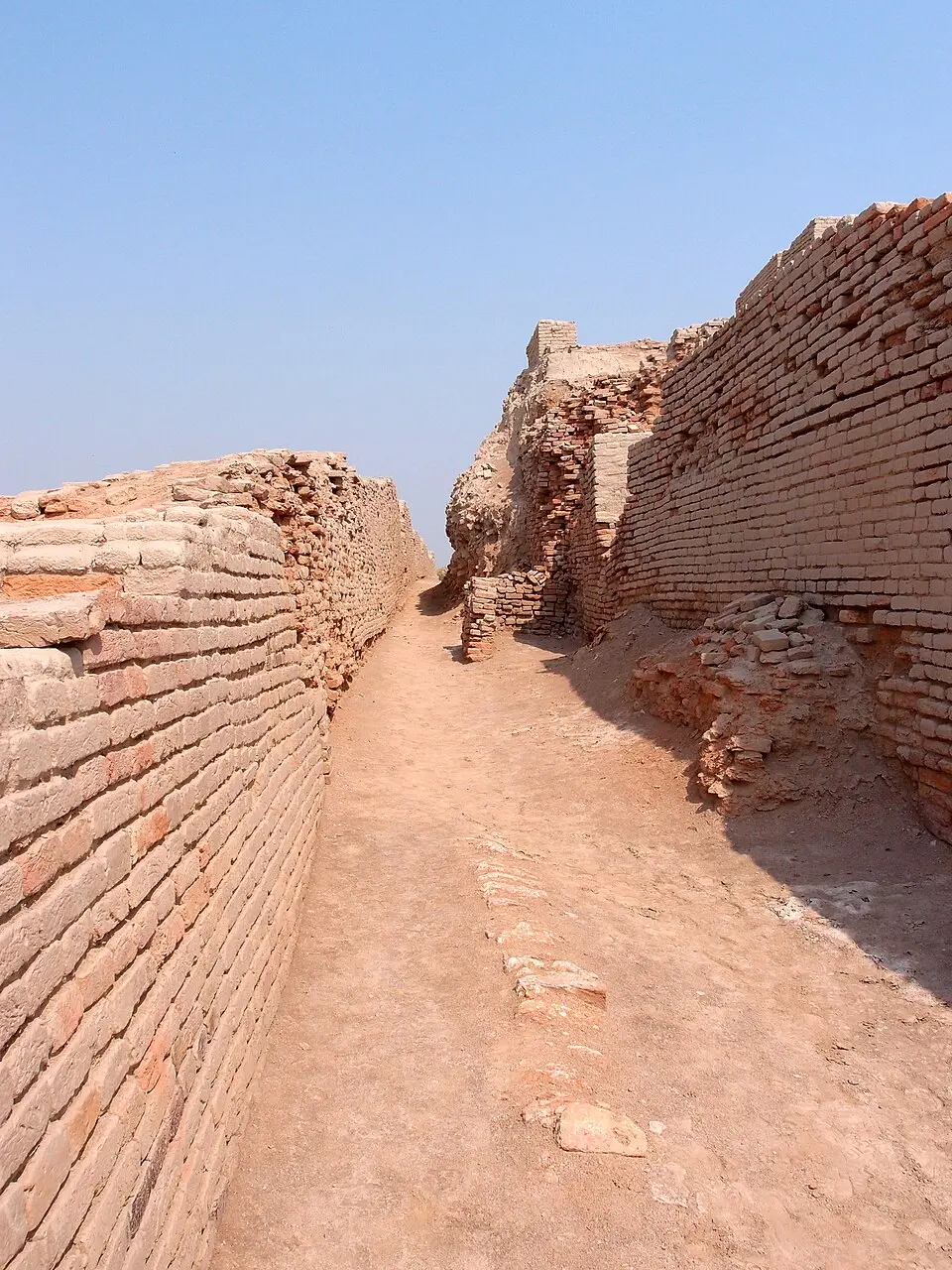
- A planned, two part city. At Mohenjo daro, Harappa and Kalibangan a smaller, higher citadel on the west stood on mud brick platforms and held public buildings, while a larger lower town on the east held houses. Both were often walled, which suggests control of access as much as defence.
- The grid. Main streets ran roughly north to south and east to west and met at right angles, dividing the town into blocks, and smaller lanes ran inside each block. Streets and drains were laid out first and houses built along them, which is why historians speak of planning rather than growth.
- Standard bricks. Burnt bricks for drains and baths and sun dried bricks for platforms followed a ratio of 1:2:4 (thickness to width to length) at every major site, so a builder anywhere used the same unit.
- Drainage. Every house drain joined a street drain laid with a gentle slope, covered with bricks or stone slabs and fitted with inspection holes for cleaning. Sanitation was clearly a civic duty rather than a private matter.
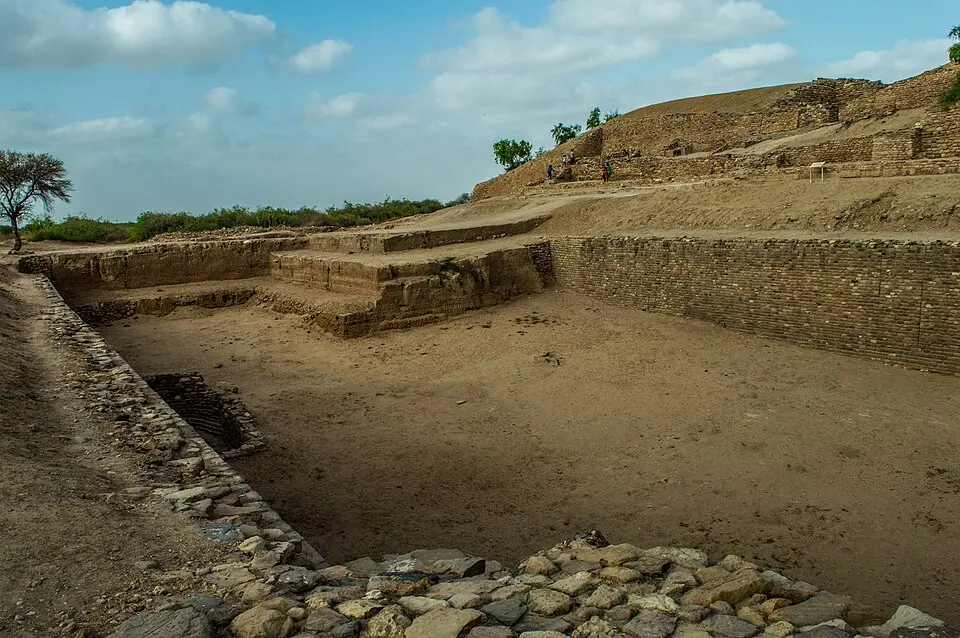
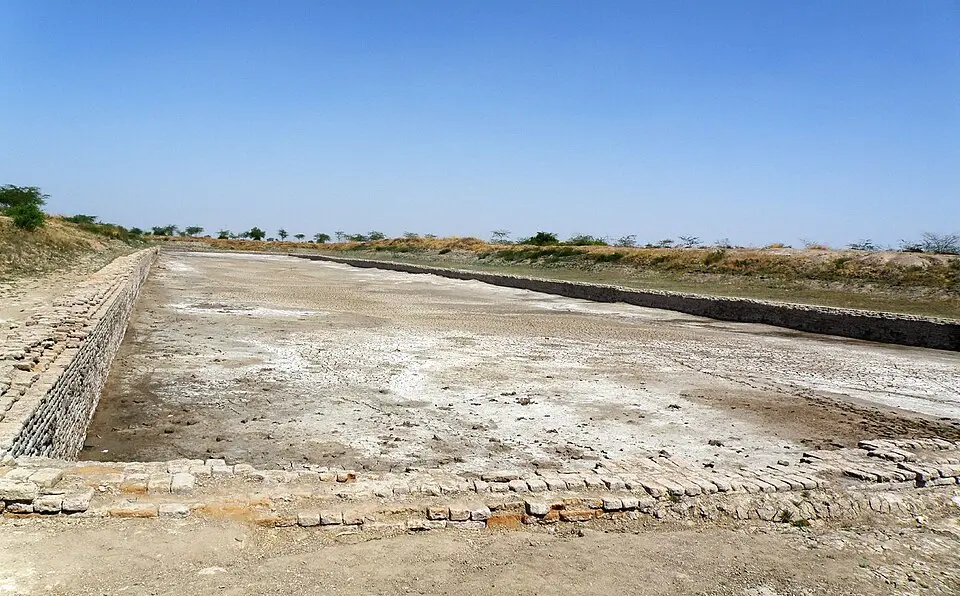
- Water. Mohenjo daro had about 700 wells, many of them inside houses, while Dholavira in the dry Rann of Kutch cut large reservoirs in rock and dammed seasonal streams to store rainwater.
- Houses for privacy. Houses of one or two storeys were built round a courtyard, with paved bathrooms, no windows in walls facing the main street and doors opening onto side lanes, so family life was screened from public view.
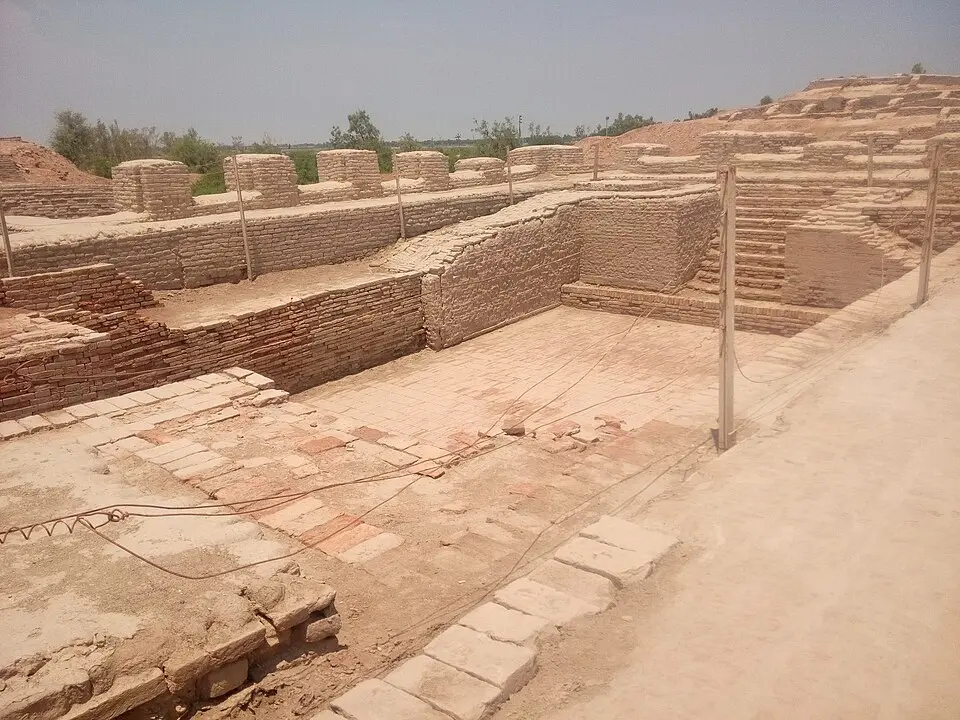
- Public buildings. The Great Bath at Mohenjo daro is a tank of about 12 m by 7 m, 2.4 m deep, with steps at both ends, made watertight by bricks set in gypsum mortar, and surrounded by rooms. Its care and its place on the citadel suggest ritual bathing. Large buildings at Mohenjo daro and Harappa were called granaries by early excavators; Lothal has a large brick basin read as a dockyard.
- No temples or palaces. No building has been securely identified as a temple or a royal palace, and burials show only modest differences in grave goods.


Harappan art
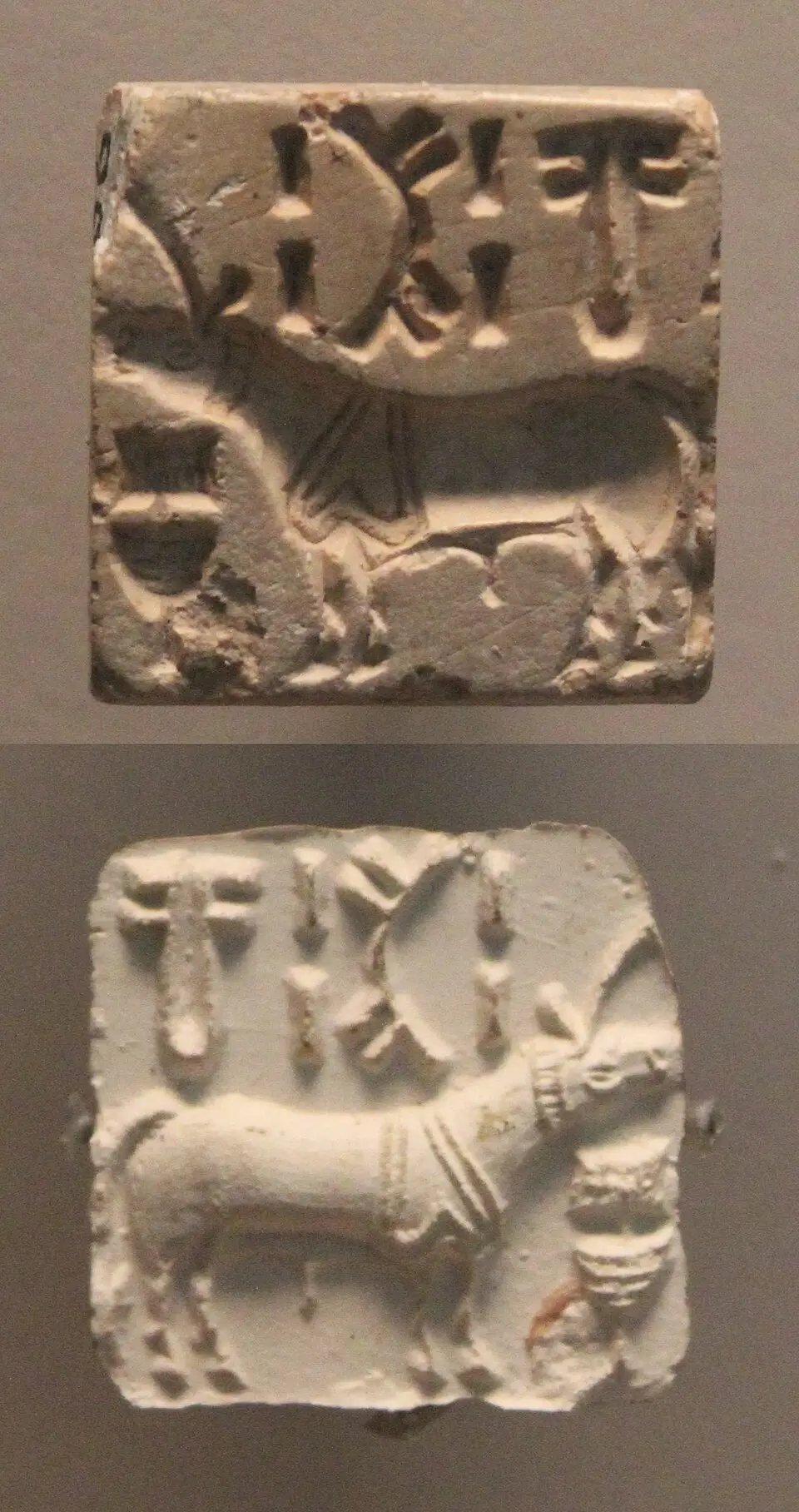
- Seals. Mostly square and carved in steatite, seals show an animal, most often the one horned "unicorn", and also the zebu, elephant, tiger and rhinoceros, with a line of the undeciphered script above. A boss at the back allowed handling, and their impressions on clay sealings show they marked goods and authority in trade, including with Mesopotamia.
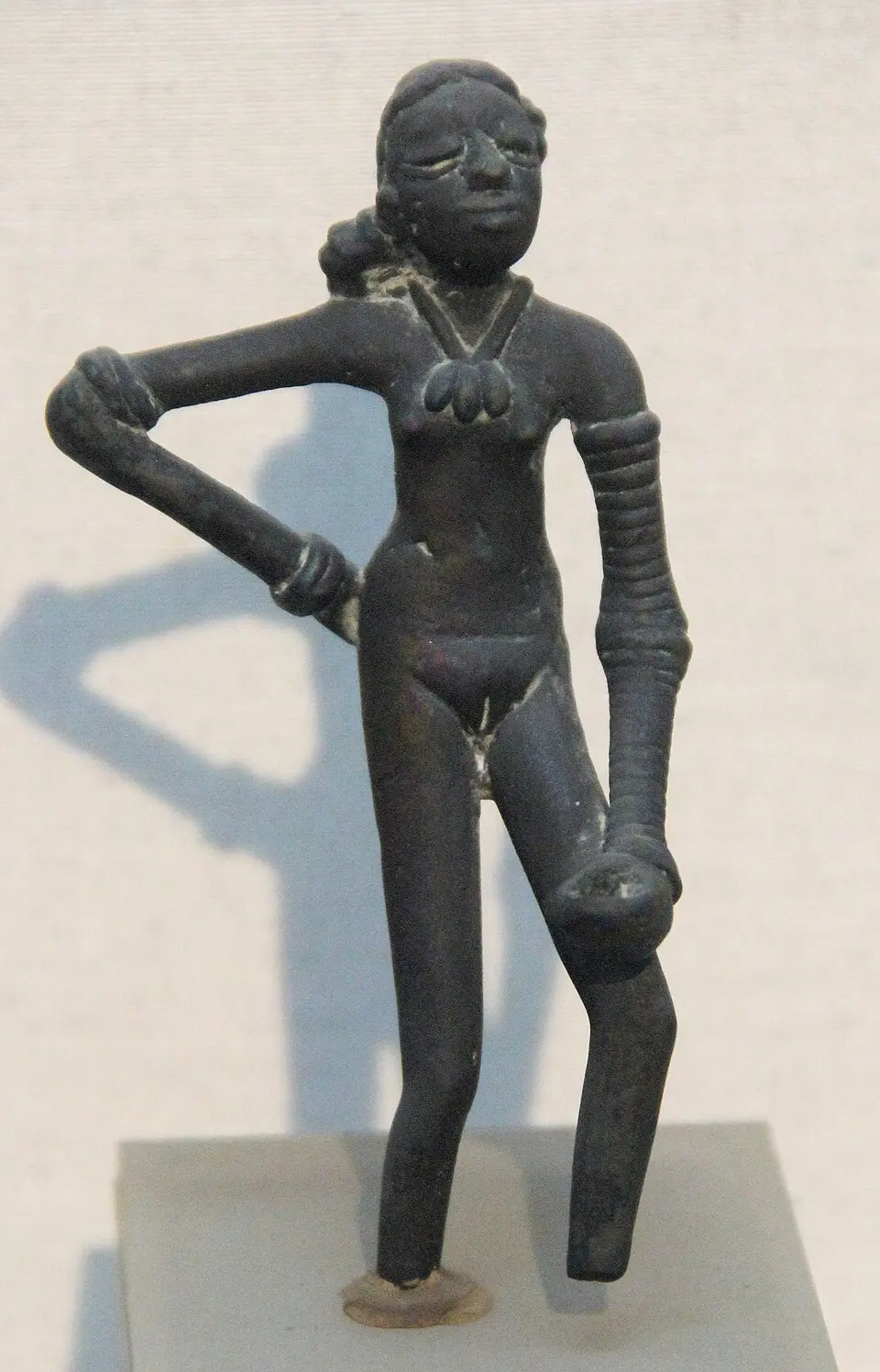
- Bronze. The Dancing Girl of Mohenjo daro, about 10.5 cm tall, was cast by the lost wax method, in which a wax model is coated with clay, heated so the wax runs out and replaced by molten metal. With one arm full of bangles and a hand on her hip, she shows an easy, confident stance that ritual stiffness could not produce.
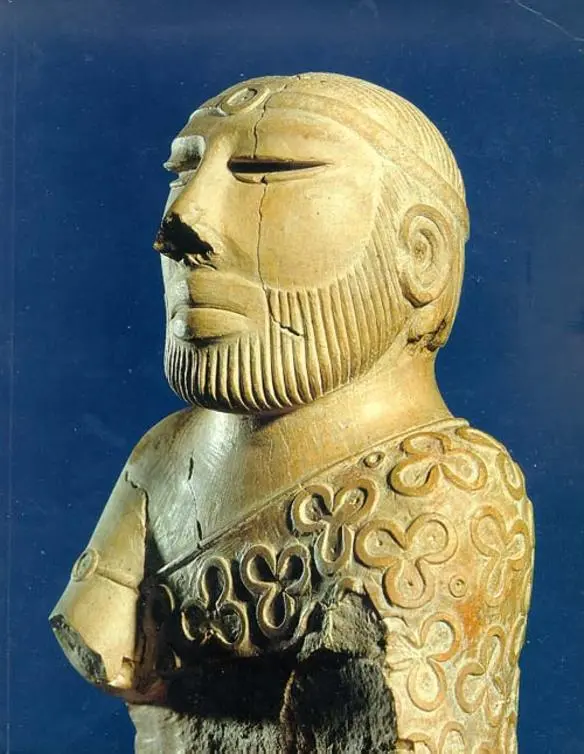
- Stone. The Priest King bust in steatite wears a trefoil patterned shawl over the left shoulder, a fillet round the head and a trimmed beard, while a small red sandstone male torso from Harappa shows surprisingly soft, realistic modelling.
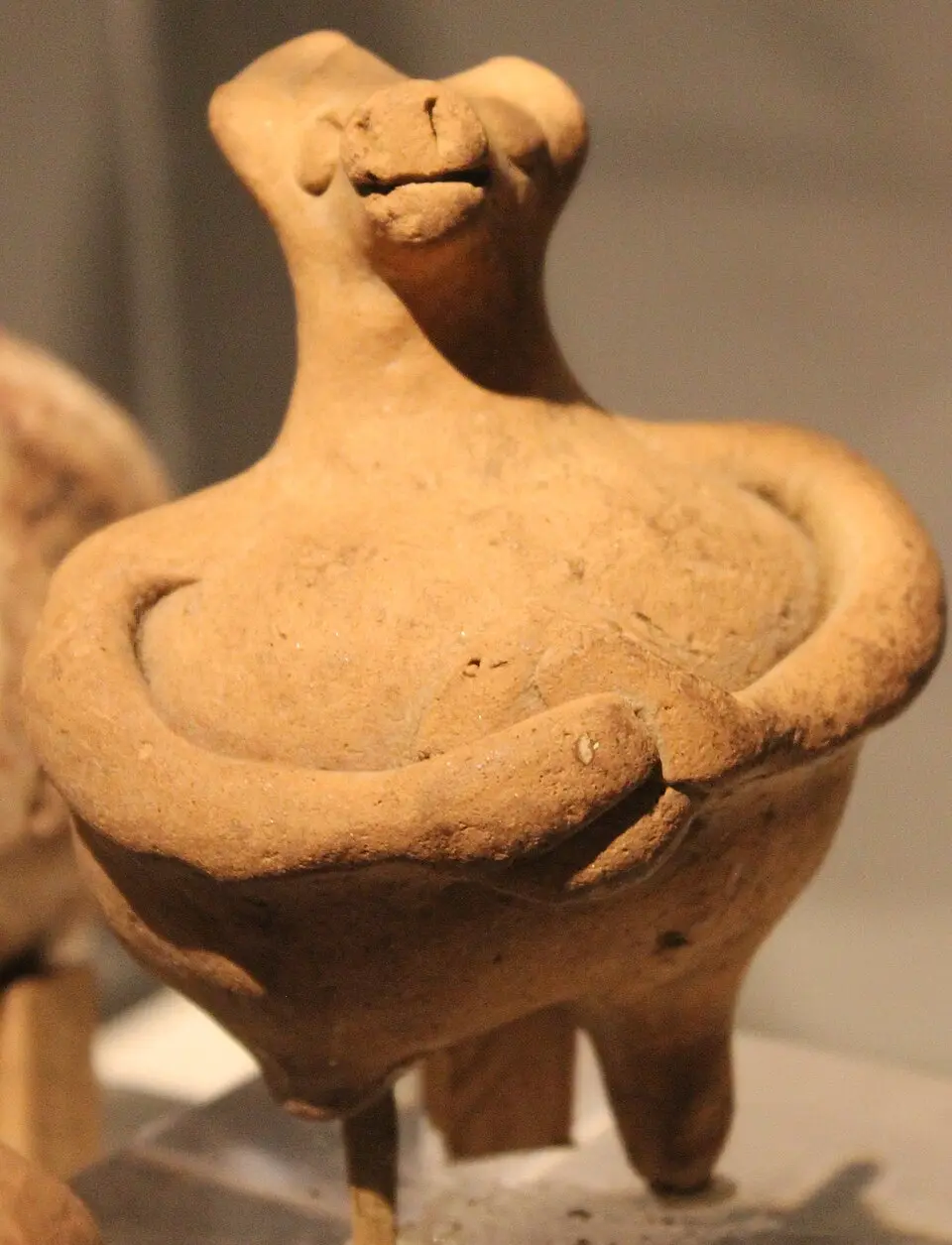
- Terracotta. Hand modelled figurines of women with fan shaped headdresses, often called mother goddesses, sit alongside toy carts with moving wheels, whistles and animals with nodding heads, the art of homes and children.
- Pottery and ornaments. Wheel made red pottery painted in black with pipal leaves, fish scales and intersecting circles was well fired and widely traded. Carnelian, faience, steatite and gold beads were made in workshops at Chanhudaro and Lothal.



Dimensions
- Social. Houses range from one room dwellings to large courtyard homes, and rows of small, uniform quarters at Harappa suggest a working population, so society was stratified even without visible kings.
- Political. Uniform bricks, weights and plans point to strong coordination, but who held it, priests, merchants or a council, remains debated because there are no palaces or royal inscriptions.
- Religious. The Great Bath suggests ritual purity through water, terracotta female figures suggest a fertility cult, Kalibangan and Lothal have fire altars, and a seal of a seated figure among animals has been read by some as a proto Shiva, a reading many scholars reject.
- Economic. Seals, standard weights in a binary then decimal series, bead factories and the Lothal basin show an economy organised for craft and long distance trade.
- Technical and aesthetic. Burnt brick, gypsum mortar, lost wax casting and fine drilling of hard carnelian show high skill, applied to useful objects more than to display.
Continuity into later Indian culture
- Several Harappan elements reappear in later India, though a direct line is hard to prove in each case: ritual bathing in temple tanks, the swastika, worship of a mother goddess, the pipal leaf motif, bullock carts of the same design and shell bangles. Grid planning returned much later, for example at Jaipur in 1727, as a parallel rather than a descent.
In practice
- Dholavira. Excavated by the Archaeological Survey of India (ASI) under R S Bisht from 1990, Dholavira has three parts rather than two (citadel, middle town and lower town), is built largely of stone, and stored water in rock cut reservoirs fed by two seasonal streams. A board of ten large script signs was found near its northern gate. It became India's 40th World Heritage Site in 2021, the first Harappan site in India on the list.
- Lothal. The brick basin was interpreted by S R Rao as a dockyard linked to a river channel, though some scholars see it as a water tank. The National Maritime Heritage Complex at Lothal, being developed by the Ministry of Ports, Shipping and Waterways, was approved by the Union Cabinet in 2024.
- Rakhigarhi. The Union Budget 2020 named Rakhigarhi and Dholavira among five archaeological sites to be developed as iconic sites, and an ancient DNA study of a Rakhigarhi skeleton was published in 2019.


Issues and way forward
- Decay of brick ruins. At Mohenjo daro salt rising with groundwater crumbles the exposed bricks, which is why UNESCO ran an international safeguarding campaign there from 1974. Excavated brick sites in India face the same threat, so the ASI's National Policy for Conservation of Ancient Monuments (2014) calls for site management plans and minimal intervention.
- Encroachment. At Rakhigarhi modern village houses stand on the mounds because the site is inhabited and was protected late, so acquisition with fair resettlement must precede development.
- Undeciphered script. Without a bilingual inscription, readings of religion and rule remain guesses; in 2025 the Tamil Nadu government announced a prize of one million US dollars for deciphering it, and open digital corpora of all seals would help researchers.
- Over reading the evidence. Labels such as "priest king", "granary" and "dockyard" came from early excavators and can mislead; site displays should present them as interpretations.

Common confusions
- Citadel and lower town. The citadel is the smaller, raised, western part with public buildings; the lower town is the larger residential area. Dholavira adds a middle town.
- Lost wax and moulding. Lost wax gives a unique solid casting from a wax model; moulding presses clay into a reusable form, as with many terracottas.
- Mohenjo daro and Harappa. Harappa was excavated first (1921) and gives the civilisation its name; Mohenjo daro (1922) is the best preserved planned city. Both are in Pakistan; Dholavira, Lothal, Kalibangan and Rakhigarhi are in India.
- Unicorn seal and Pashupati seal. The unicorn is the commonest seal animal; the "Pashupati" seal shows a seated figure among animals and is a single, debated object.
For the exam
- Keyword bank: citadel, lower town, grid plan, burnt brick, 1:2:4, covered drains, inspection holes, Great Bath, granary, dockyard, reservoirs, steatite seal, lost wax, Dancing Girl, Priest King, terracotta, carnelian beads.
- Previous year questions: Practise the previous year questions on this topic →
- Use in an answer:
- Introduction (data): Mohenjo daro had about 700 wells and a covered drain under almost every street more than four thousand years ago, a level of civic planning many towns lack today.
- Introduction (judgement, quote or report): UNESCO listed Dholavira in 2021 for its water management and three part planning, recognising Harappan architecture as a high point of Bronze Age urbanism.
- Conclusion: Harappan architecture placed the citizen's water and sanitation above the ruler's glory, a choice that still has lessons for Indian cities.
- Conclusion: Seen together, Harappan buildings and art show a society that valued order, skill and trade, and many of its forms survive in later Indian life.
Photo credits
Photographs are from Wikimedia Commons; each photo links to its file page, which gives the photographer and licence.