The Vedic age: society and religion
- Syllabus
- Indian culture will cover the salient aspects of Art Forms, Literature and Architecture from ancient to modern times.
- As of
- October 2026
- Sapta Sindhu
- Rigveda
- sabha and samiti
- gavishti
- varna
- gotra
- Painted Grey Ware
- Rajasuya and Ashvamedha
- rta
- yajna
- Upanishads
- karma and atman
- samskaras
- Vedic chanting
- geographical factors
The first principle
The Vedic age (about 1500 to 600 BCE) is the story of a pastoral, tribal people becoming a settled, agrarian, kingdom based society, and every change in its society and religion follows from that shift in how people made a living. Cattle herding on the rivers of Punjab favoured mobile tribes, simple sacrifices and a fluid social order; iron and rice farming in the Ganga plain produced a surplus, which supported kings, priests and elaborate rituals and hardened the varna order. The Upanishads were in part a reaction to that ritualism, and much of what survives in Indian society today, from the havan to gotra rules, comes from this formative period.
The core
Geography as the stage
- The Himalaya shut out cold winds and fed snow fed rivers, while passes such as the Khyber, Bolan and Gomal in the northwest let in migrants, traders and invaders, from Indo Aryan speakers to Persians, Greeks and Kushanas.
- The alluvial Indus and Ganga plains could feed large populations, and each in turn carried an urban phase: the Harappan cities and then the sixth century BCE towns of the Ganga valley.
- Iron ore and forests of the Chotanagpur region, fertile soil and river routes gave Magadha the tools, elephants and revenue to grow into India's first empire.
- The monsoon governed farming, war and travel; the Vindhyas and the Deccan plateau sheltered separate regional kingdoms; and the long coasts, with monsoon winds, carried trade to Rome and Southeast Asia.
- These barriers gave the subcontinent a sense of being one land, Bharatavarsha, while the openings brought in new peoples and ideas, so geography encouraged both isolation and contact.
Sources for the Vedic age
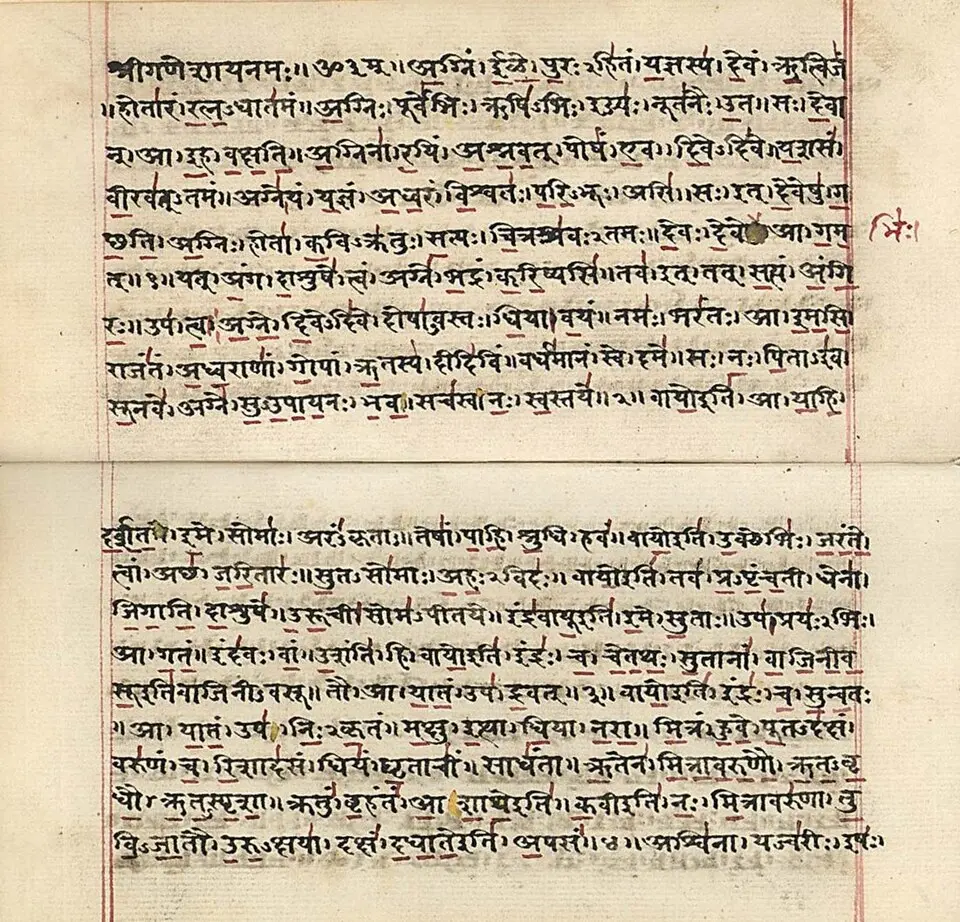
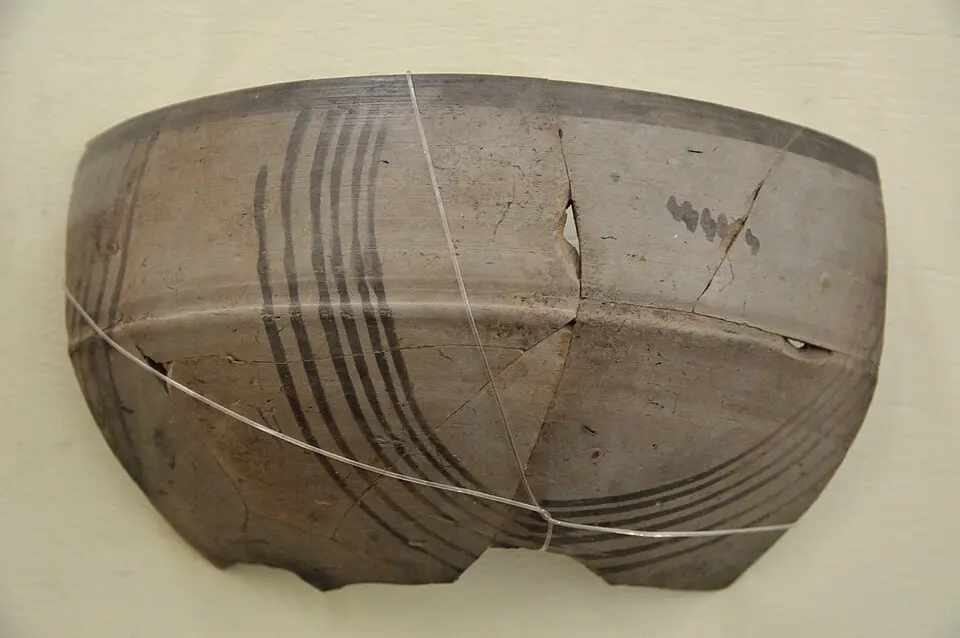
The main source is the Vedic literature: the four Samhitas (Rig, Sama, Yajur and Atharva), the Brahmanas on ritual, the Aranyakas and the Upanishads on philosophy. The Rigveda is the earliest. Archaeology adds the Painted Grey Ware sites of the Ganga Yamuna doab, such as Hastinapur and Atranjikhera, linked with later Vedic settlement and iron, while the Boghazkoi inscription in Anatolia (about 1400 BCE) names Indra, Mitra, Varuna and the Nasatyas, showing that these gods were known in West Asia too.

Rig Vedic society and religion
- Economy. People were mainly pastoral, and cattle were the measure of wealth: war was gavishti (search for cows) and a daughter was duhitri (one who milks). Barley (yava) was grown, but farming was secondary.
- Polity. The tribe (jana) was led by a rajan, who was a war leader rather than a monarch, and tribal assemblies such as the sabha, samiti and vidatha checked his power. The famous battle of ten kings on the Parushni (Ravi) shows tribes fighting each other, and bali was a voluntary offering, not a regular tax.
- Society. Kinship was the basis of society, and varna was fluid: one hymn has a poet say that he is a bard, his father a physician and his mother a grinder of corn. The Purusha Sukta of the tenth mandala, which names four varnas, is a late addition.
- Women. Women attended assemblies, chose husbands, and some composed hymns, including Lopamudra, Ghosha, Apala and Vishvavara; there is no evidence of child marriage, and widow remarriage through niyoga was known.
- Religion. The chief gods were Indra (war and rain), Agni (fire, the messenger to the gods) and Varuna (guardian of rta, the cosmic and moral order). Prayer and sacrifice were offered for material ends, such as cattle, sons and victory, without temples or idols.
Changes in the later Vedic period
- Economy. The centre shifted east to the Ganga Yamuna doab and on to Videha. Iron (krishna ayas) from about 1000 BCE helped clear forest and plough heavy soil, rice (vrihi) appears, and the Painted Grey Ware villages show settled farming. Crafts multiplied, though coins and true towns came only after the Vedic age.
- Polity. Tribes became territorial kingdoms (janapadas) such as Kuru and Panchala. Kings performed the Rajasuya (consecration), Vajapeya (chariot race) and Ashvamedha (horse sacrifice) to claim authority, bali became a regular tax, and the sabha and samiti weakened.
- Society. Varna became hereditary and rigid, with Brahmins and Kshatriyas on top and Shudras placed at the bottom to serve. Gotra, descent from a common ancestor, appeared, along with the rule of marriage outside one's gotra.
- Women. Women were excluded from the sabha, and some texts rank them low, though learned women such as Gargi and Maitreyi still appear in the Upanishads.
- Religion. Indra and Agni lost ground to Prajapati, Vishnu and Rudra, and sacrifices became long and costly, with priests as their sole masters. The Upanishads reacted by turning inward: they taught that the self (atman) is one with the universal reality (brahman), that action (karma) shapes rebirth (samsara), and that knowledge brings release (moksha).

Dimensions
- Social. The Vedic age produced the ideas of varna, gotra and the ashrama scheme (student, householder, forest dweller, renunciant), which took final shape just after this period.
- Economic. Iron, rice and the surplus of the Ganga plain created the base for kingdoms, towns and later the mahajanapadas.
- Political. The move from chief to king, and from assembly to ritual consecration, laid the ground for monarchy as the normal form of rule.
- Religious and philosophical. Two streams emerged: the ritual path of sacrifice (karma kanda) and the knowledge path of the Upanishads (jnana kanda), and both run through later Hinduism.
- Cultural. Sanskrit, metre, oral memory and the idea of rta as cosmic order became lasting foundations of Indian learning.


In practice
Which Vedic features still prevail?
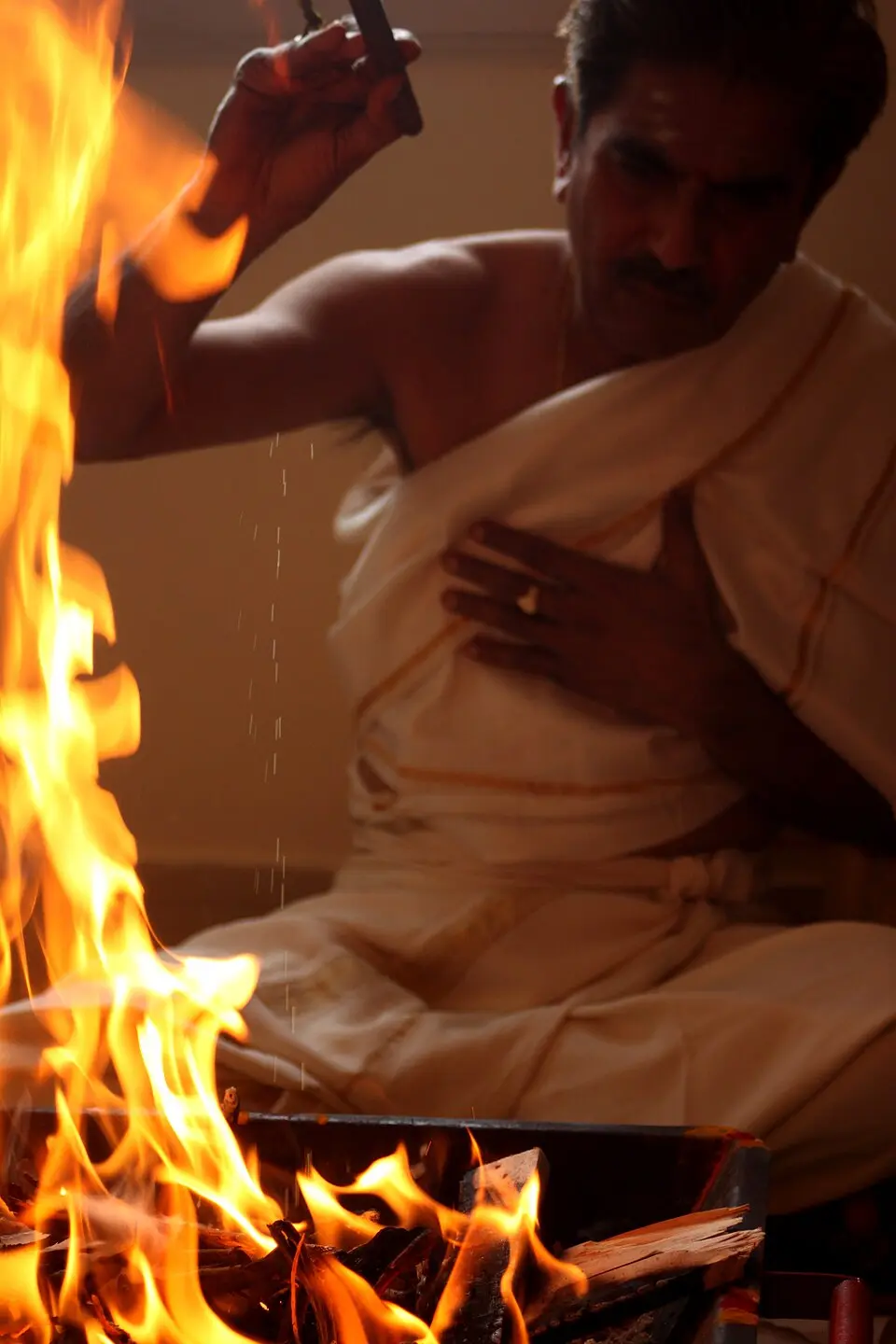
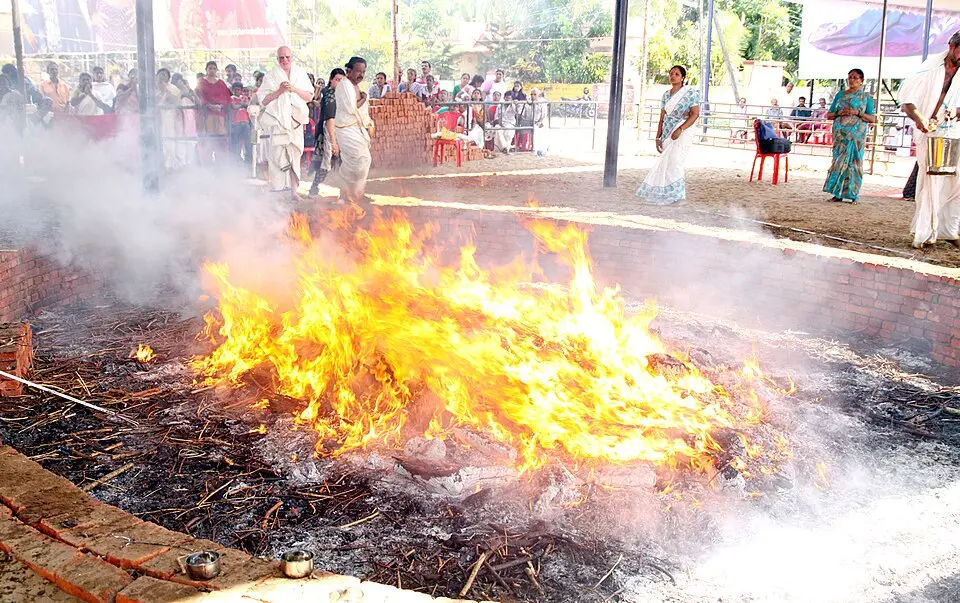
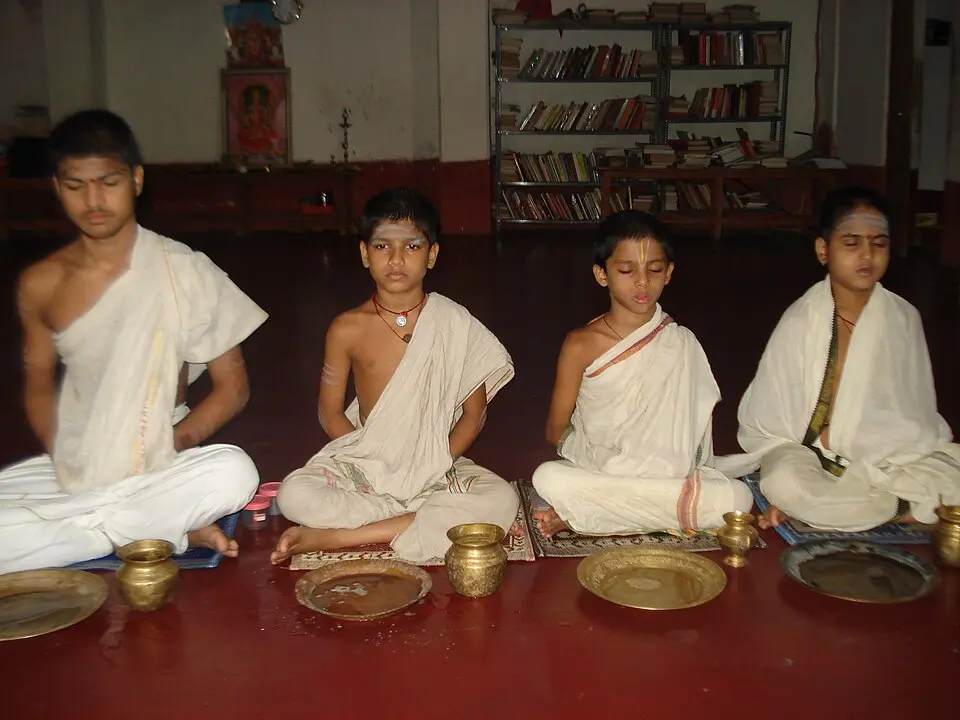
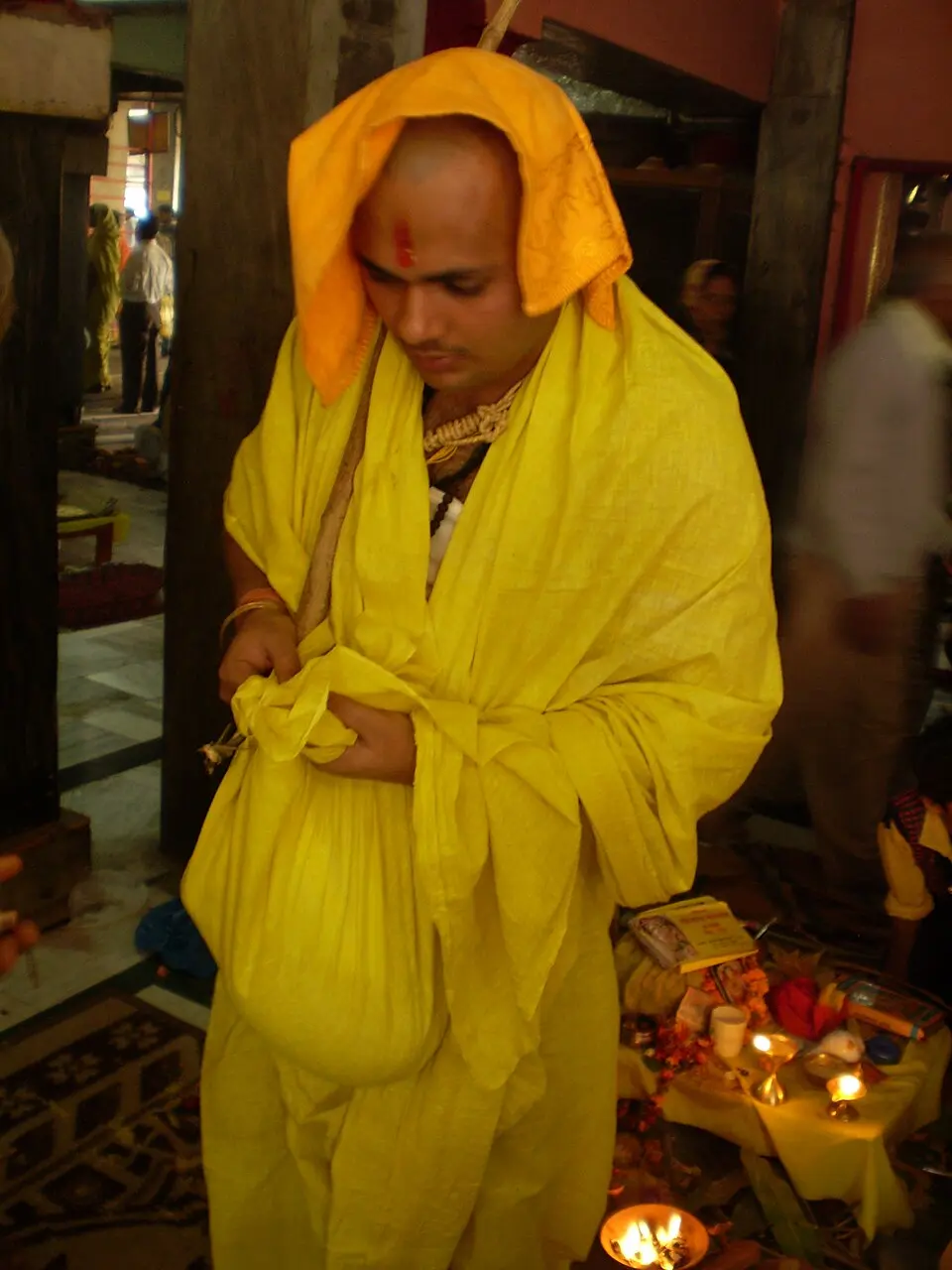
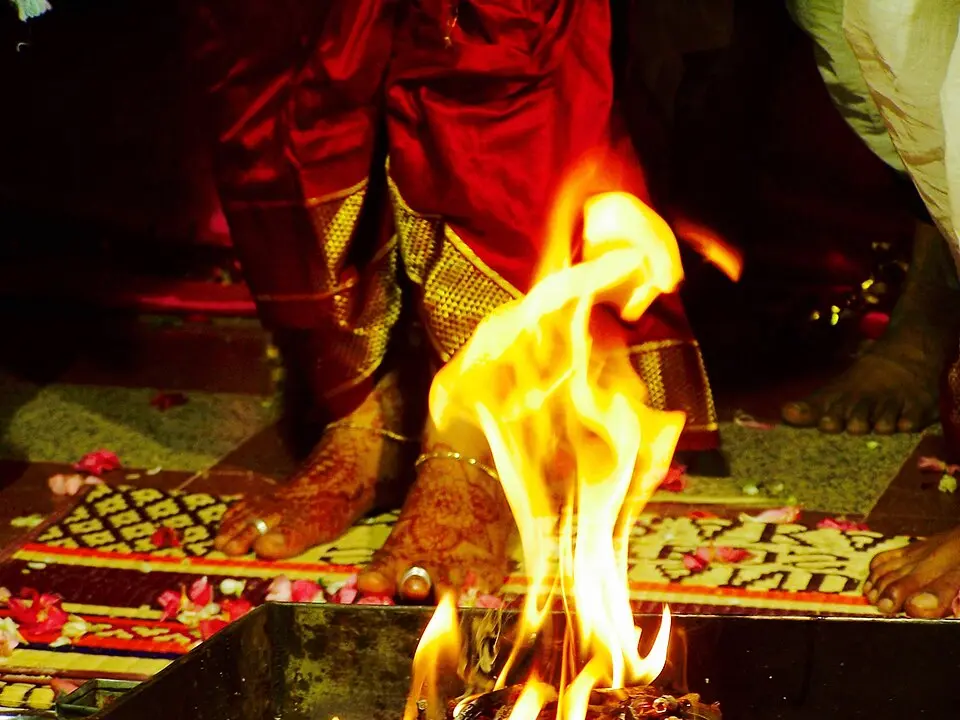
Many do, mainly in ritual form. The havan and fire offerings remain central to domestic worship. Vedic chanting, with its precise methods of memorisation such as pada and krama patha, was proclaimed a masterpiece by UNESCO (United Nations Educational, Scientific and Cultural Organization) in 2003 and inscribed on its intangible heritage list in 2008. The samskaras survive: upanayana (the sacred thread), and the wedding with Agni as witness and the seven steps (saptapadi), whose verses go back to the marriage hymn of the Rigveda's tenth mandala. Gotra exogamy still governs marriage in many communities, the Gayatri mantra of the third mandala is recited daily by millions, Sanskrit remains the language of ritual, and rta has become dharma, the idea of a moral order. The cow, called aghnya (not to be killed) in some hymns, is revered, though cattle were also offered in some Vedic rituals.
What has changed?
The Vedic gods have given way to Shiva, Vishnu and the Goddess, worshipped in temples with images, which Vedic religion lacked. Animal sacrifice has largely disappeared under Buddhist, Jain and Vaishnava influence. Varna hardened into thousands of jatis, and the Constitution now abolishes untouchability (Article 17) and bars caste discrimination (Article 15). Women, who lost ground in the later Vedic age, have regained education and legal rights, and the ashrama ideal is rarely followed in full. So the honest answer is that Vedic society continues in ritual and family life, but not in its gods or its social order.



Laws and schemes
- The Constitution (1950) abolishes untouchability (Article 17) and the Hindu Marriage Act, 1955 (amended) and the Hindu Succession (Amendment) Act, 2005 give women equal rights in marriage and inheritance, breaking with later Vedic and Dharmashastra norms.
- The Maharshi Sandipani Rashtriya Vedavidya Pratishthan, Ujjain (Ministry of Education) supports Veda pathashalas and oral transmission, which is how the UNESCO listed chanting tradition is kept alive.
Issues and way forward
- Reading the Vedas selectively. Some use the Vedic age to claim a golden past, others to blame it for caste; both overlook change over a thousand years. Reading the texts with archaeology, as historians such as R S Sharma and Romila Thapar recommend, gives a balanced picture.
- Decline of oral transmission. Fewer families train children in full recitation because it offers little livelihood; stipends, recording and support through Veda pathashalas keep the tradition alive.
- Varna to caste. The rigid later Vedic hierarchy lives on as caste discrimination; constitutional remedies and social reform must continue.
- Gotra rules and coercion. Gotra exogamy is sometimes enforced by khap panchayats against couples; the Supreme Court in Shakti Vahini v Union of India (2018) held that adults' choice of partner must be protected.
Common confusions
- Rig Vedic and later Vedic. Rig Vedic means the period of the Rigveda (about 1500 to 1000 BCE); later Vedic covers the other Samhitas, Brahmanas and Upanishads (about 1000 to 600 BCE).
- Ayas and iron. Ayas in the Rigveda probably meant copper or bronze; iron is called krishna ayas (black metal) in later texts.
- Varna and jati. Varna is the fourfold textual scheme of the Vedas; jati is the later, local birth group.
- Sabha and samiti. The samiti was a wider tribal assembly; the sabha was a smaller council of elders, and both lost power in the later Vedic age.
For the exam
- Keyword bank: Sapta Sindhu, gavishti, rajan, sabha, samiti, rta, yajna, Purusha Sukta, krishna ayas, Painted Grey Ware, Rajasuya, Ashvamedha, gotra, atman, brahman, karma, samskara, saptapadi.
- Previous year questions: Practise the previous year questions on this topic →
- Use in an answer:
- Introduction (data): The Rigveda's 1,028 hymns, about 250 of them to Indra and 200 to Agni, reveal a pastoral, warlike society that prayed for cattle, sons and victory.
- Introduction (judgement, quote or report): UNESCO inscribed the tradition of Vedic chanting on its intangible heritage list in 2008, recognising one of the oldest unbroken oral traditions in the world.
- Conclusion: The shift from cattle to iron and rice explains almost every change from the Rig Vedic to the later Vedic age, from kingship and costly rituals to a rigid varna order.
- Conclusion: Vedic culture lives on in India's rituals, samskaras and ideas of dharma, while its hierarchy has been rejected by the Constitution, which is how a living tradition should evolve.
Photo credits
Photographs are from Wikimedia Commons; each photo links to its file page, which gives the photographer and licence.