Mauryan and post Mauryan art
- Syllabus
- Indian culture will cover the salient aspects of Art Forms, Literature and Architecture from ancient to modern times.
- As of
- October 2026
- Ashokan pillars
- Mauryan polish
- Chunar sandstone
- Achaemenid influence
- Didarganj Yakshi
- yaksha cult
- stupa
- torana
- Jataka
- aniconism
- Gandhara school
- Greco Bactrian
- Kushana
- Mathura school
- Amaravati school
The first principle
Who pays for art decides what it looks like. Under the Mauryas an emperor paid, so art was polished, monumental and carried a state message; when the empire broke up, merchants, guilds, monks and ordinary donors paid, so art moved to stupa railings and gateways and told stories that a crowd could follow. When Kushana kings ruled a corridor from Central Asia to the Ganga, two workshops, one in Gandhara open to Greek and Central Asian styles and one at Mathura rooted in Indian folk sculpture, gave the Buddha a human form. Patron, material and contact with other cultures explain almost every difference in this period.
The core
Mauryan court art
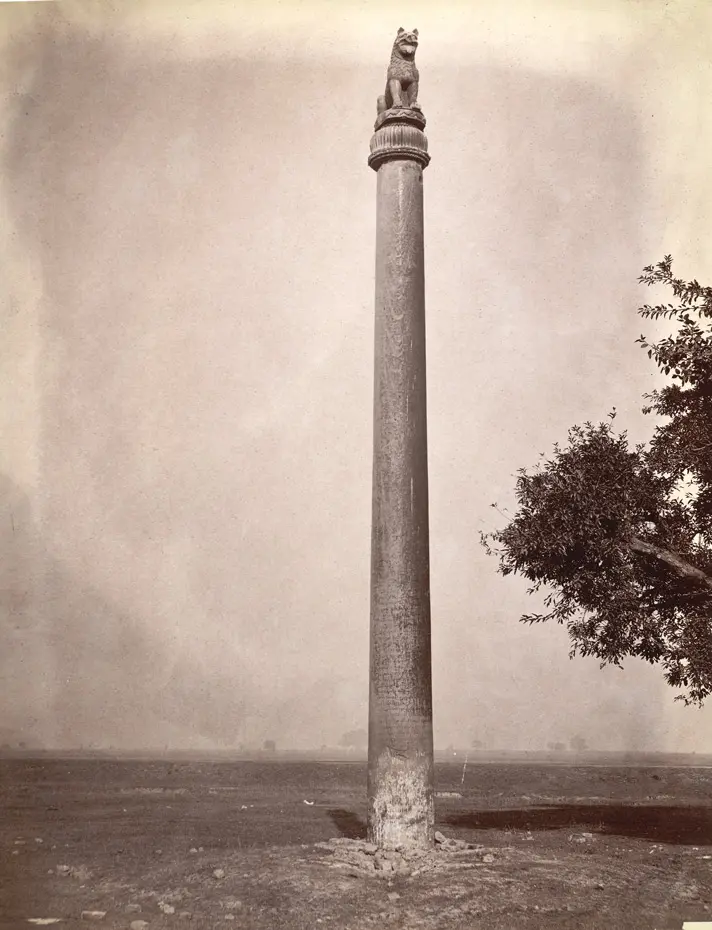
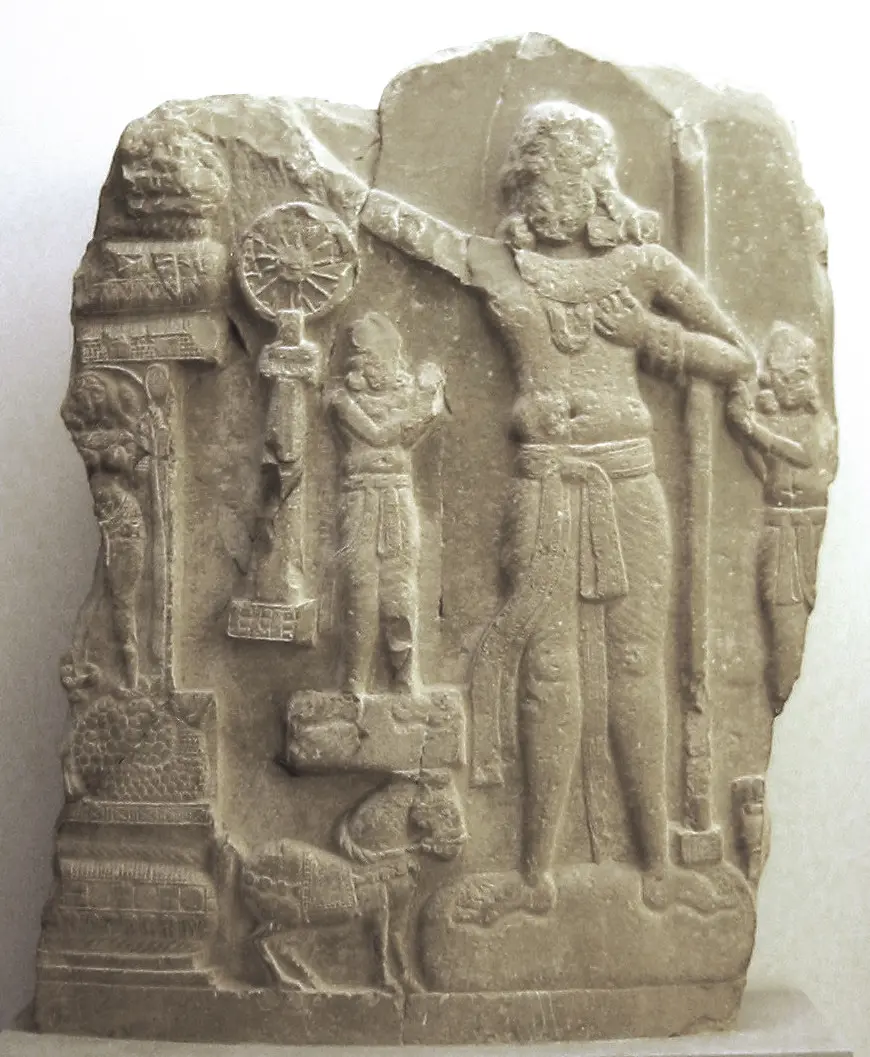
- Ashoka (about 268 to 232 BCE) set up pillars across the Gangetic plain, each a single shaft of buff Chunar sandstone, round, tapering and polished to a mirror finish now called the Mauryan polish. The shaft carried his edicts on dhamma, and the capital carried the same message in symbols: an inverted lotus (the bell), an abacus with animals and wheels, and a crowning animal.
- Crowning animals include four lions at Sarnath and Sanchi, a single lion at Lauriya Nandangarh, a bull and a lion at Rampurva, and an elephant at Sankisa. The Sarnath capital is the most refined, with the wheel of dharma, four animals on the abacus and lions facing the four directions.
- Mauryan Pataliputra also had a great pillared hall, known from excavations at Kumrahar, and the emperor's patronage extended to rock cut caves in the Barabar hills, which belong to the note on rock cut architecture.

Was Mauryan art Persian?
- Arguments for influence. Achaemenid Persia, which fell in 330 BCE, also used polished stone, bell shaped capitals and animal capitals, and Darius had his proclamations inscribed, so displaced Persian craftsmen may have reached the Mauryan court.
- Arguments for Indian character. Persian columns are fluted, built of drums, stand on bases and hold up roofs, while Ashokan pillars are plain, monolithic, without a base and freestanding, carrying a symbol rather than a roof. The lotus, the wheel and the naturalistic zebu are Indian, and the message of dhamma is Ashoka's own.
- A balanced view. Mauryan artists absorbed West Asian techniques and motifs, such as the palmettes on the Rampurva abacus, but used them for an Indian idea, so influence is better seen as borrowing than imitation.
Popular art: yakshas and yakshis
- Alongside court art, local sculptors carved large, frontal figures of yakshas and yakshis, nature spirits worshipped for wealth and fertility, such as the Parkham yaksha from near Mathura. Their heavy, solid bodies became the base from which later Buddhist, Jain and Hindu images grew.
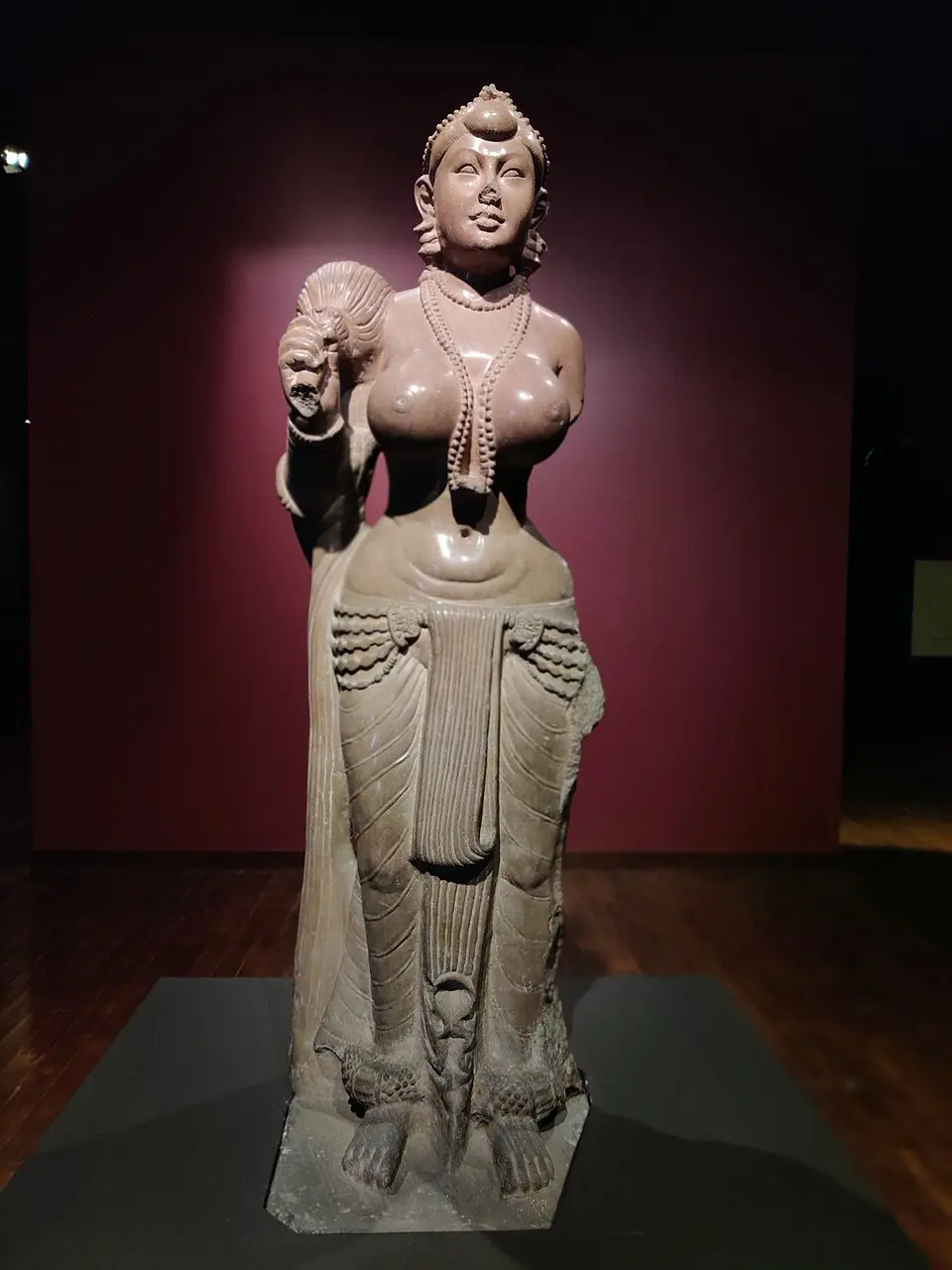
- The Didarganj Yakshi, a life size fly whisk bearer in polished Chunar sandstone found at Patna in 1917, shows full breasts, a narrow waist and heavy ornaments. Its polish led many scholars to date it to the Mauryan age, while others place it in the first or second century CE on grounds of style, so it is safest to call its date debated.

Stupas: Sanchi, Bharhut and Amaravati
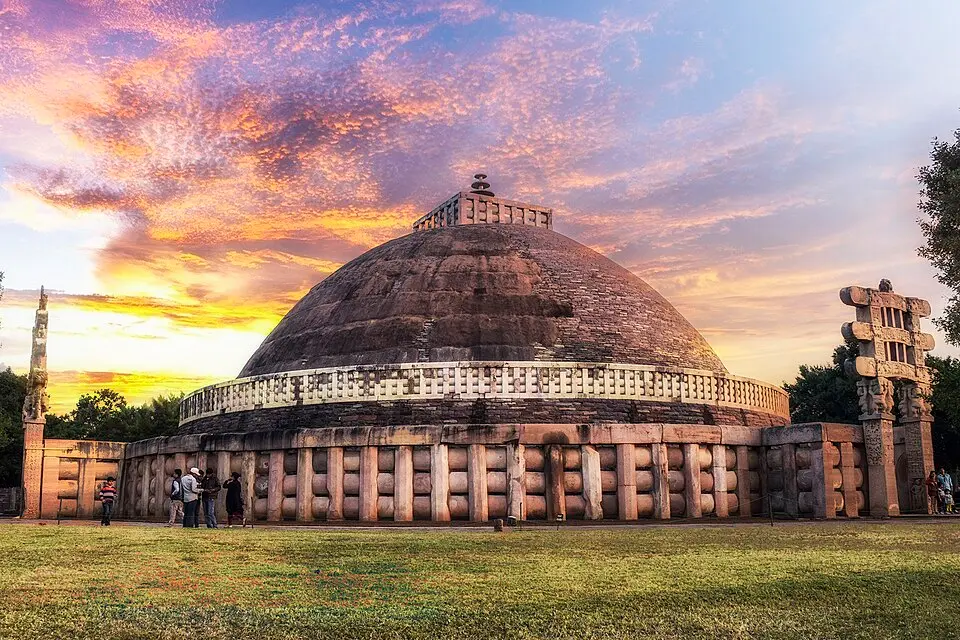
- A stupa is a solid hemispherical mound (anda) on a raised terrace (medhi), with a railed box (harmika) and umbrellas (chhatra) on top over the relics, enclosed by a railing (vedika) entered through gateways (torana). Devotees walk clockwise along the path between railing and dome.
- The Great Stupa at Sanchi began as an Ashokan brick mound, was doubled in size and cased in stone in the second century BCE, and received four gateways in the first century BCE, one inscribed as carved by the ivory workers of Vidisha. The gateways tell the Buddha's life and the Jataka tales of his past lives.
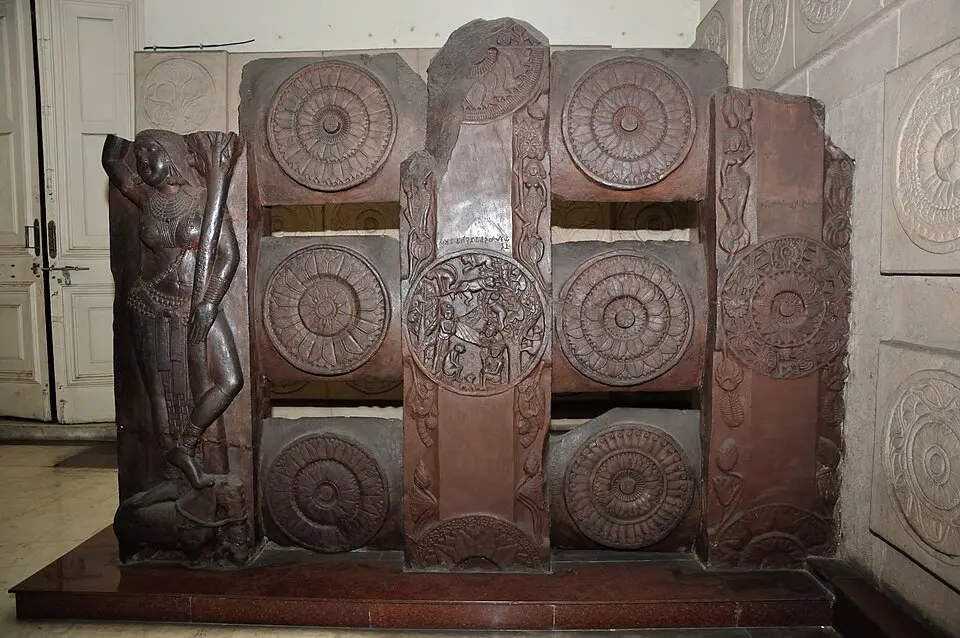
- The Bharhut railing (second century BCE, now in the Indian Museum, Kolkata) labels many of its Jataka panels and yakshis in Brahmi, so it doubles as a picture book for pilgrims.
- At both sites the Buddha never appears in human form: a tree, an empty seat, footprints, a wheel or a stupa stands for him. This aniconism reflects early Buddhist reverence for a teacher who had passed beyond form.


The post Mauryan schools of sculpture
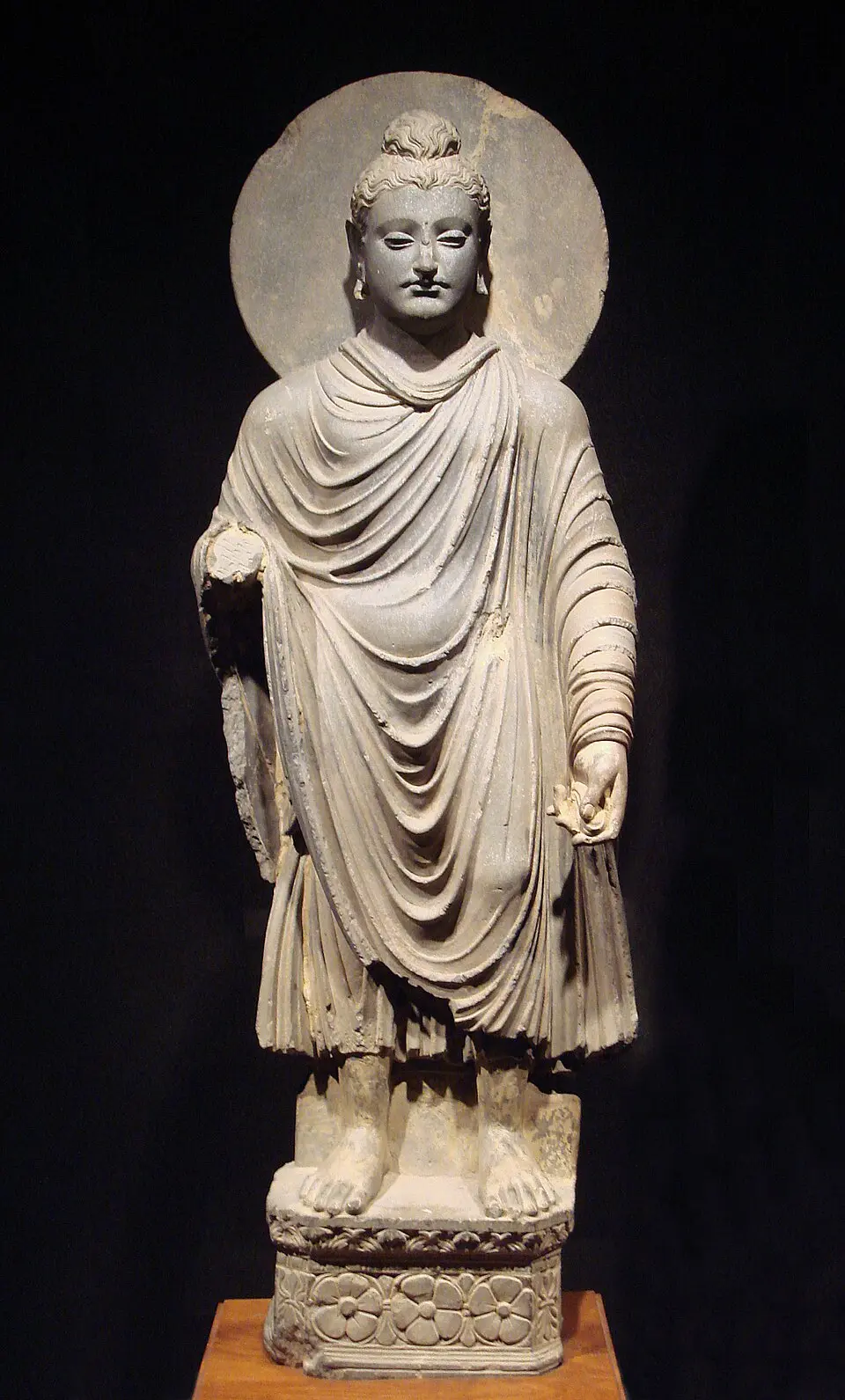
- Gandhara (Peshawar valley, Taxila, Swat and eastern Afghanistan) flourished from about the first century CE under Kushana patronage. Its sculptors used grey schist and, later, stucco (lime plaster), and made Buddhas with Apollo like faces, wavy hair gathered in a knot, heavy robes with deep, rope like folds, and muscular bodies.
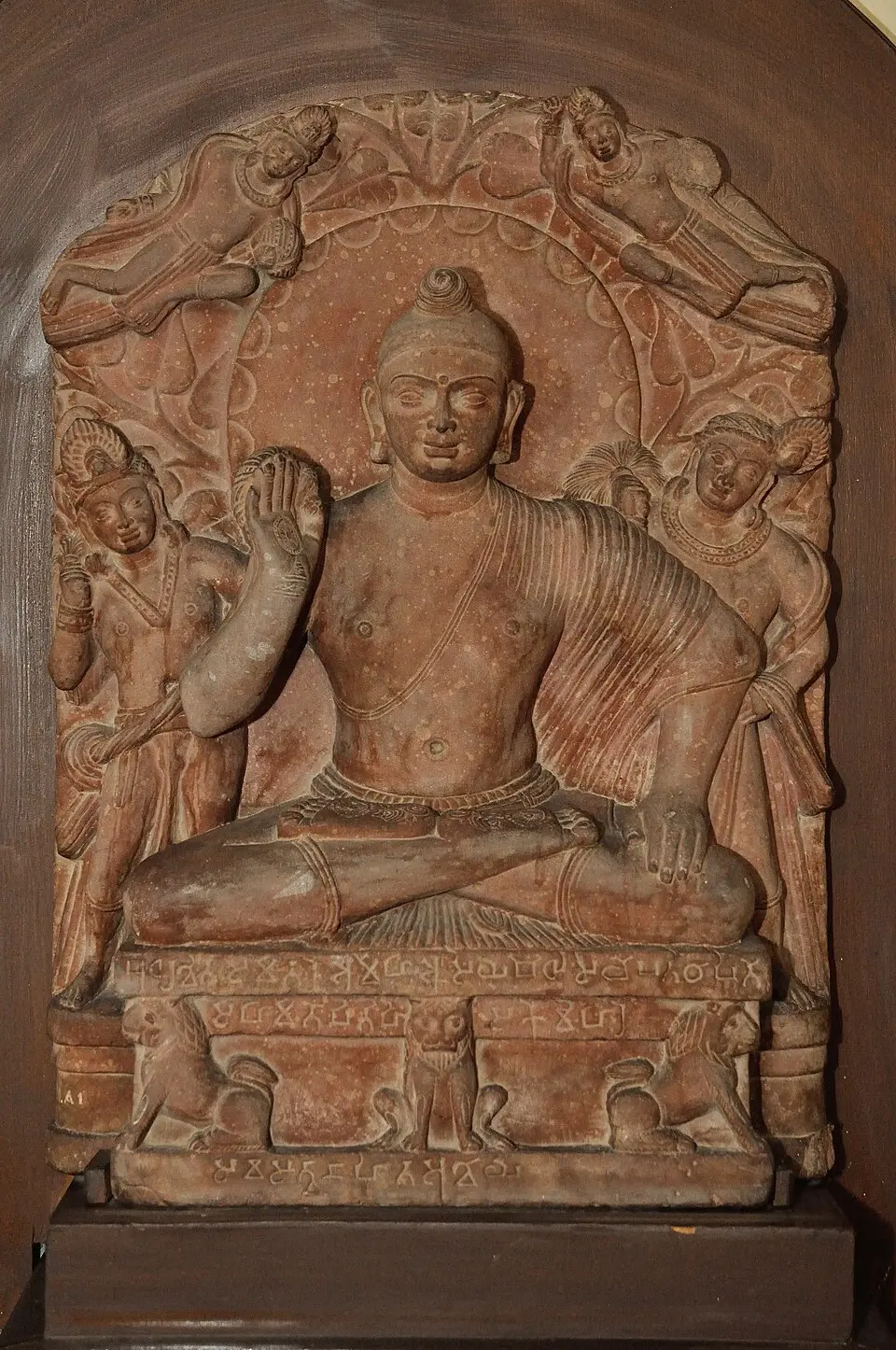
- Mathura used the local spotted red sandstone and worked in the indigenous yaksha tradition. Its early Buddhas have shaven heads with a spiral knot, round smiling faces, broad shoulders, a thin robe leaving the right shoulder bare, the right hand raised in abhaya mudra and a large halo, often seated on a lion throne. Mathura also carved Jain tirthankaras, Brahmanical gods and portraits of Kushana kings.
- Amaravati, in the Krishna valley, flourished under the Satavahanas and then the Ikshvakus. Carved in whitish limestone often called marble, its crowded, deeply cut panels show lively bodies in the tribhanga pose and dramatic narrative, with the Buddha shown first as symbols and later in human form.
Greco Bactrian and Central Asian elements in Gandhara
- Greco Bactrian and Hellenistic. The Greek kingdom of Bactria and the Indo Greeks brought Hellenistic realism: idealised, Apollo like faces, wavy hair, drapery modelled like a Greek himation or Roman toga, and correct anatomy. Architectural details include Corinthian capitals with acanthus leaves, Atlas figures, garland bearing cupids, and Herakles reworked as Vajrapani, the Buddha's guardian.
- Central Asian. The Sakas, Parthians and Kushanas added their own features: bodhisattvas dressed as Kushana princes with turbans, heavy jewellery, sandals and moustaches; donors in tunics, trousers and boots; the stiff frontality of Kushana royal portraits; and in some images flames rising from the Buddha's shoulders.
- What remained Indian. The subject, Buddhist doctrine and iconography, the mudras, the ushnisha (cranial bump) and the urna (mark between the brows) are Indian, so Gandhara put Indian content in a foreign style.



Who made the first Buddha image?
- Alfred Foucher argued that Gandhara made the first image under Greek inspiration, while A K Coomaraswamy argued that Mathura created it independently from the yaksha tradition. Most scholars now hold that both workshops produced Buddha images at about the same time under the Kushanas, responding to the same need of Mahayana devotion for an image to worship.
Dimensions
- Religious. The shift from symbol to image follows the rise of devotional Buddhism and of bhakti in Jain and Brahmanical faiths.
- Economic and patronage. Donor inscriptions at Sanchi and Bharhut name monks, nuns, merchants and guilds, so art became a collective act of merit rather than a royal project.
- Social. Jataka panels taught ethics to people who could not read, and yakshis on gateways show folk belief absorbed into Buddhism.
- Foreign influence. Trade along the Silk Route and the Kushana empire brought Greek, Roman and Central Asian ideas, which India adapted, and Gandhara forms in turn travelled to Central Asia and China.
In practice
- Sanchi was inscribed on the World Heritage List in 1989 and is protected by the Archaeological Survey of India (ASI).
- The Sarnath capital was adopted as the State Emblem on 26 January 1950 and is displayed in the ASI's Sarnath Museum.
- The Buddhist circuit under the Swadesh Darshan scheme (Ministry of Tourism, 2014 to 2015) links sites such as Sarnath and Sanchi for pilgrims and tourists.
- Case: Bamiyan. The colossal Buddhas of Bamiyan in Afghanistan, later heirs of the Gandhara tradition, were destroyed by the Taliban in 2001, a reminder that this heritage is vulnerable to conflict.
Issues and way forward
- Dispersal abroad. Many Amaravati panels left India in the colonial period and are in the British Museum, because colonial officials removed them; dialogue for return or long term loans, as the Ministry of Culture pursues for stolen antiquities, can bring them back into Indian view.
- Illicit trade. Gandhara and Mathura sculptures are looted and smuggled because demand abroad is high. India's Antiquities and Art Treasures Act, 1972 controls export, and the UNESCO Convention of 1970 against illicit trafficking provides the international route for recovery.
- Weathering. Sandstone at Sanchi and Bharhut suffers from lichen, rain and pollution, so regular chemical conservation by the ASI's Science Branch is needed.
- Dating disputes. Objects like the Didarganj Yakshi are dated by style alone, so scientific study of polish and tool marks would settle debates.
Common confusions
- Mauryan polish and Chunar sandstone. Chunar is the stone; the polish is the finishing technique. Not every polished sculpture is Mauryan.
- Stupa and chaitya. A stupa is a solid relic mound; a chaitya is a prayer hall, often rock cut, that contains a stupa.
- Gandhara and Mathura Buddhas. Gandhara: grey schist, wavy hair, heavy folds, often both shoulders covered. Mathura: red sandstone, spiral or shaven head, smiling, right shoulder bare.
- Vedika and torana. The vedika is the railing that encloses the stupa and its path; the torana is the gateway set into that railing.
For the exam
- Keyword bank: monolithic pillar, Chunar sandstone, Mauryan polish, bell capital, abacus, Achaemenid, yaksha, Didarganj Yakshi, anda, harmika, chhatra, vedika, torana, Jataka, aniconism, schist, stucco, Corinthian capital, Kushana, Katra Buddha, abhaya mudra, Amaravati limestone.
- Previous year questions: Practise the previous year questions on this topic →
- Use in an answer:
- Introduction (data): The Sarnath lion capital, carved in polished Chunar sandstone in the third century BCE, became India's State Emblem in 1950, the clearest sign of how Mauryan art still speaks for the nation.
- Introduction (judgement, quote or report): UNESCO listed the Buddhist monuments at Sanchi in 1989 as the oldest surviving Buddhist sanctuary, recognising the gateways as a high point of early Indian narrative art.
- Conclusion: Gandhara gave the Buddha a Hellenistic body, Mathura an Indian smile and Amaravati a narrative world, and together they show India absorbing outside ideas into its own meaning.
- Conclusion: From royal pillars to donors' railings, the art of this age shows that when patronage widened, art turned from proclamation to storytelling.
Photo credits
Photographs are from Wikimedia Commons; each photo links to its file page, which gives the photographer and licence.