Indian art: philosophy and symbolism
- Syllabus
- Indian culture will cover the salient aspects of Art Forms, Literature and Architecture from ancient to modern times.
- As of
- October 2026
- vastupurusha mandala
- axis mundi
- Mount Meru
- garbhagriha
- pradakshina
- darshan
- rasa
- Shilpa Shastras
- Agamas
- mudra
- aniconism
- char bagh
- Shakyasimha
- Nandi
- State Emblem
The first principle
Indian art was rarely made for its own sake; it was made to show an idea about the universe and the human place in it. A temple, a stupa or a mosque is therefore a belief drawn in stone, down to the path a visitor walks. This explains two things at once: why monuments of one tradition look alike across centuries (they follow the same texts and the same idea), and why a few animals and plants, such as the lion, the bull and the lotus, recur for four and a half thousand years (they carry stable meanings that each age reused).
The core
The temple as a model of the cosmos
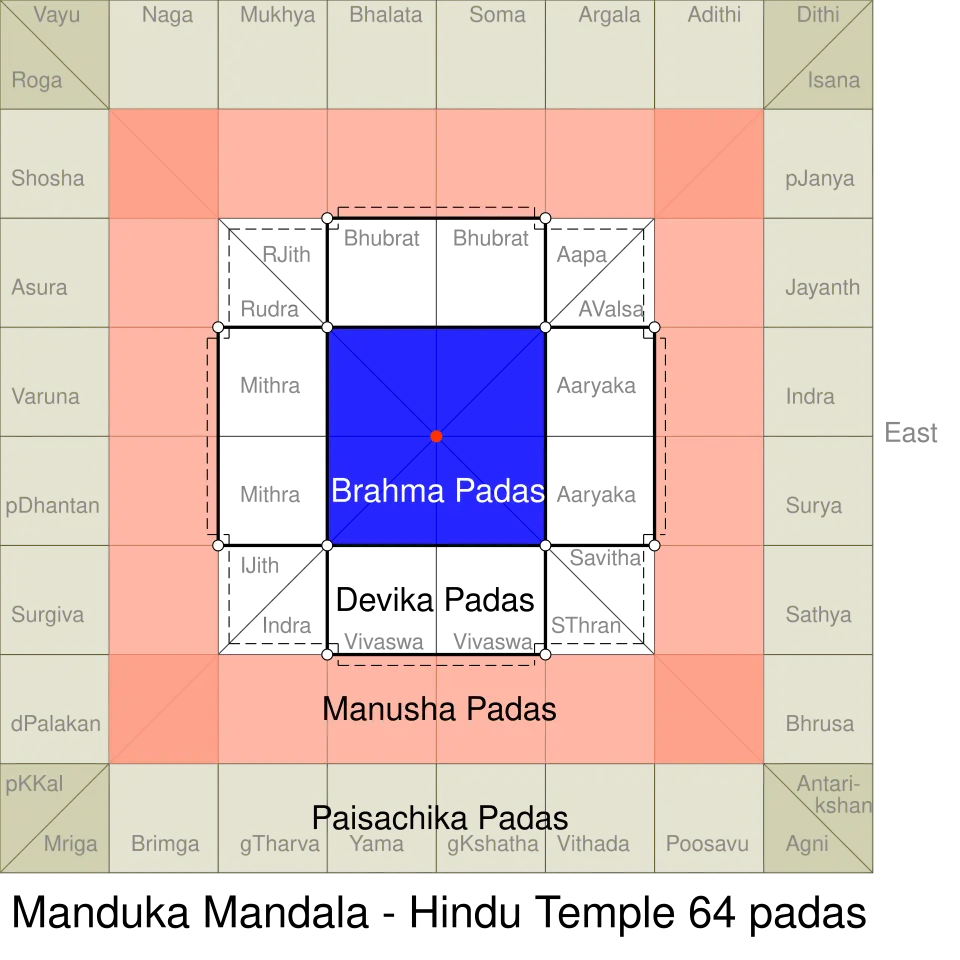
- The plan begins as the vastupurusha mandala, a square grid (commonly of 64 or 81 squares) on which a cosmic being is laid down, with the central square, the brahmasthana, kept for the deity. Since the square stands for the ordered cosmos, the temple is laid out as the universe in miniature, as Stella Kramrisch showed in The Hindu Temple (1946).
- The tower (shikhara or vimana) represents Mount Meru, the world mountain, and an axis mundi runs from the finial (kalasha) through the amalaka down to the image, joining heaven and earth at one point.
- The sanctum is the garbhagriha, the womb house, small, dark and plain, where the devotee meets the divine and is symbolically reborn. The devotee passes from bright, richly carved halls (mandapa) through a vestibule (antarala) into this single dark cell, so the building enacts a journey from the many to the one.
- Worship ends in darshan, seeing the deity and being seen, which is why images have large open eyes, and in pradakshina, the clockwise walk that keeps the sacred on one's right.

Stupa, Jain and Islamic forms
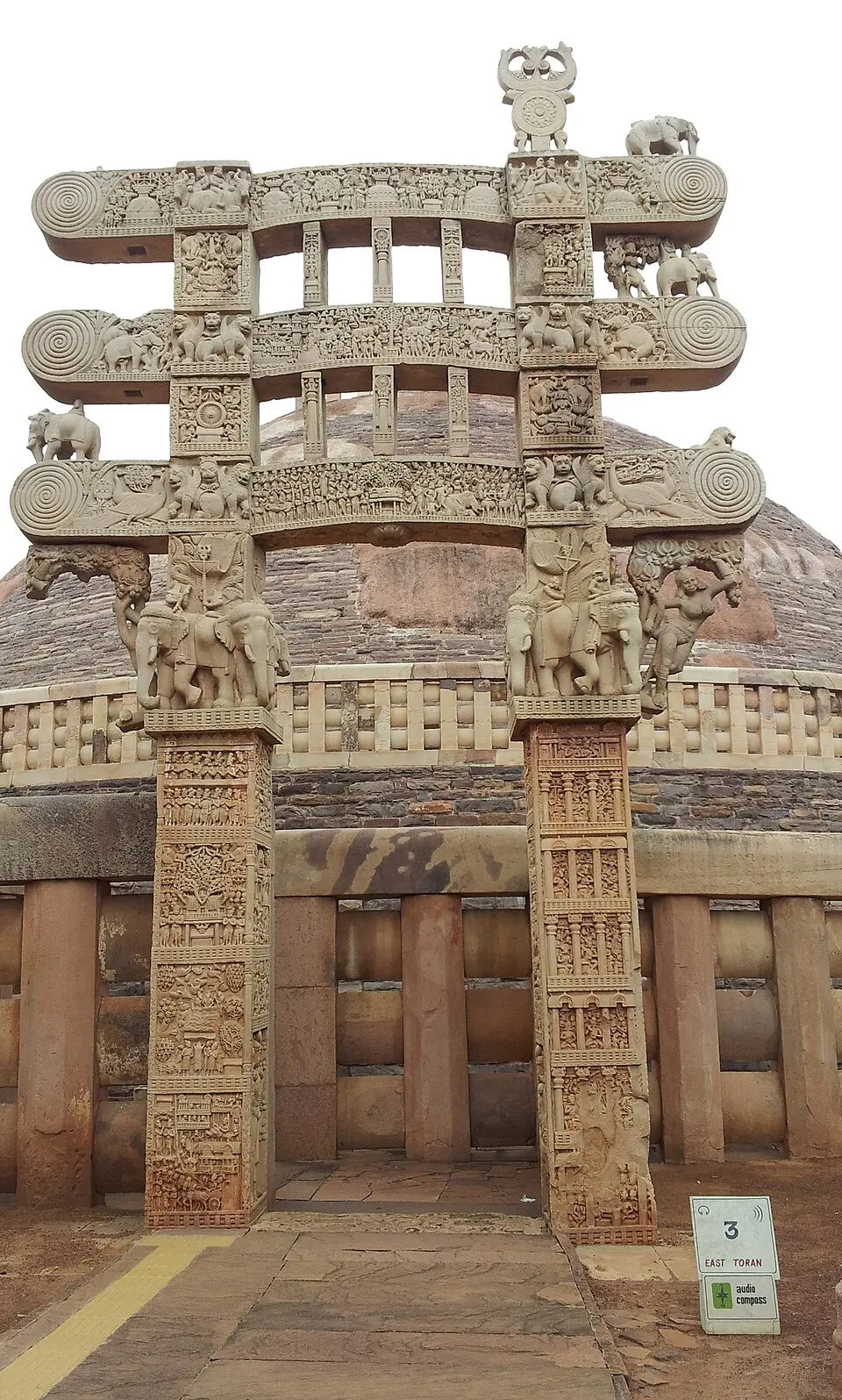
- The stupa is a hemispherical mound (anda, the egg) over relics, crowned by a railed box (harmika) and umbrellas (chhatra), a cosmic mound with an axis through it. Because Buddhism stresses the path rather than a resident deity, the stupa has no sanctum; worship is the walk round it.
- At Bharhut and Sanchi (second to first century BCE) the Buddha appears only as symbols such as the bodhi tree, empty throne, footprints and wheel, an aniconic phase suited to a teacher who had passed beyond form. The human image arrived around the first century CE with Mahayana devotion.
- Jain tirthankaras stand in kayotsarga or sit in padmasana with identical, serene faces, told apart only by their emblems (lanchhana), because every liberated soul is alike and the ideal is detachment.
- Islam forbids images in worship, so Indo Islamic buildings speak through geometry, arabesque and Quranic calligraphy, and the char bagh, a garden quartered by water channels, recalls the paradise garden of the Quran, as at Humayun's Tomb.

Texts that fixed the rules
- The Shilpa and Vastu Shastras (such as the Manasara and Mayamata) set plans and proportions, while the Agamas prescribed ritual and the form of each deity, its posture, attributes, arms and vehicle. Proportion was measured in tala (face lengths), so an image was correct when it matched its dhyana verse, not when it resembled a living person.
- Mudras (abhaya, varada, dhyana, bhumisparsha) and postures (padmasana, the tribhanga triple bend) form a visual language that a trained viewer reads like a sentence.
Elements of Indian aesthetics
- Bharata's Natyashastra (roughly 200 BCE to 200 CE) set out rasa, the relish a work produces when its causes (vibhava), expressions (anubhava) and passing feelings combine to evoke a lasting emotion (sthayi bhava). It named eight rasas, and later theorists added shanta, peace.
- Abhinavagupta of Kashmir (tenth to eleventh century), in the Abhinavabharati, explained rasa as emotion freed from personal attachment and shared by every sensitive viewer, close to spiritual bliss. That is why Indian sculpture aims at a mood, serenity or heroic energy, rather than a likeness, and why dance, poetry and sculpture share one theory.
The lion: royal and spiritual power
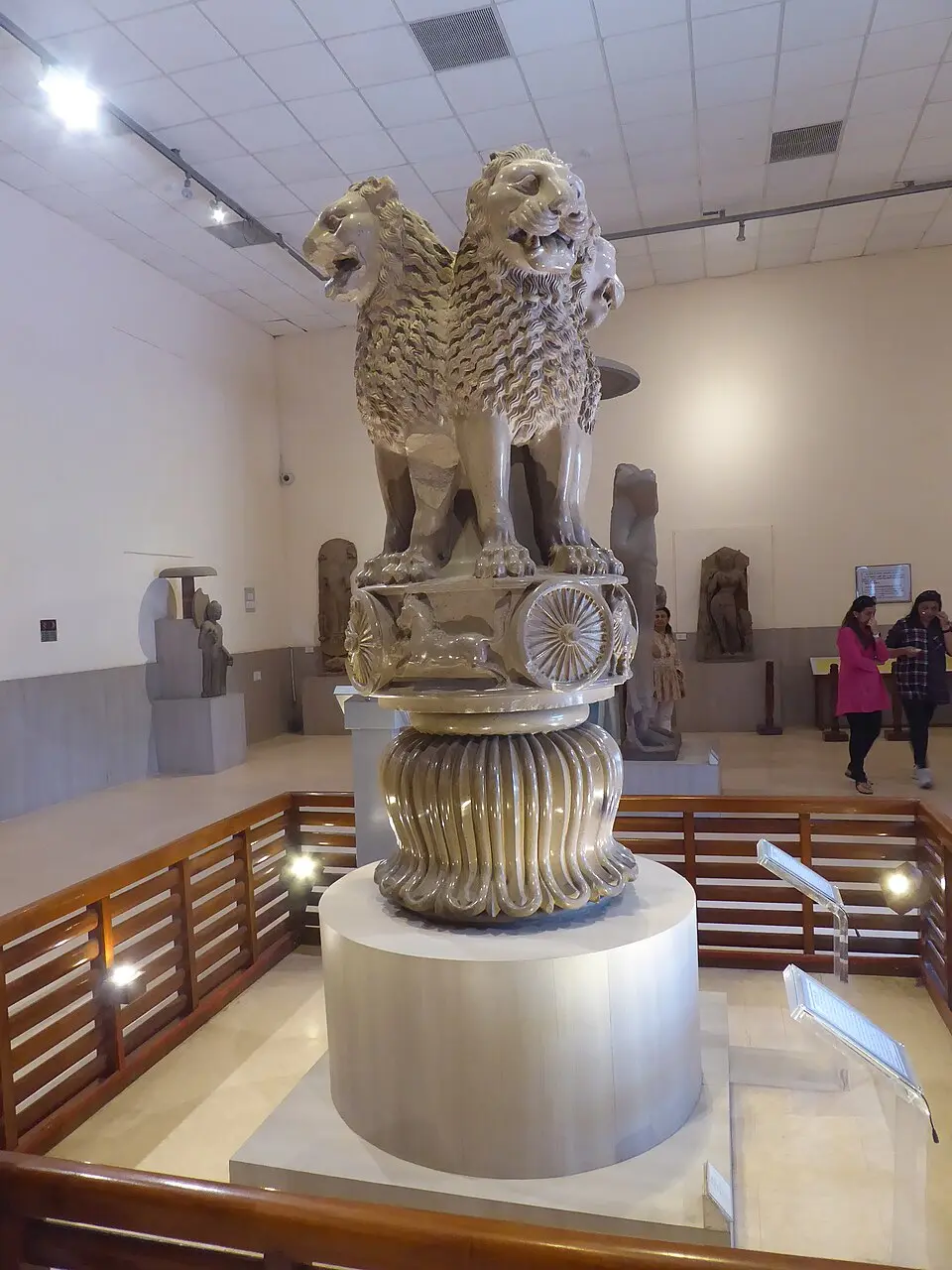
- The Buddha was Shakyasimha, the lion of the Shakyas, and his preaching the lion's roar (simhanada), so Ashoka's four lions at Sarnath (third century BCE), facing the four directions, proclaim the dharma to the whole world; lions also crown the pillars at Lauriya Nandangarh and Sanchi.
- The lion is Mahavira's emblem, Durga's vehicle and the form of Narasimha, and the simhasana (lion throne) seats kings, Buddhas and gods. It grew into the rearing yali on Vijayanagara pillars, while a Mughal painting shows Jahangir standing on a lion beside Shah Abbas of Persia on a lamb.
- Adopted as the State Emblem in 1950, the Sarnath capital now lends Buddhist righteousness to the authority of a secular republic.

The bull: fertility, strength and dharma
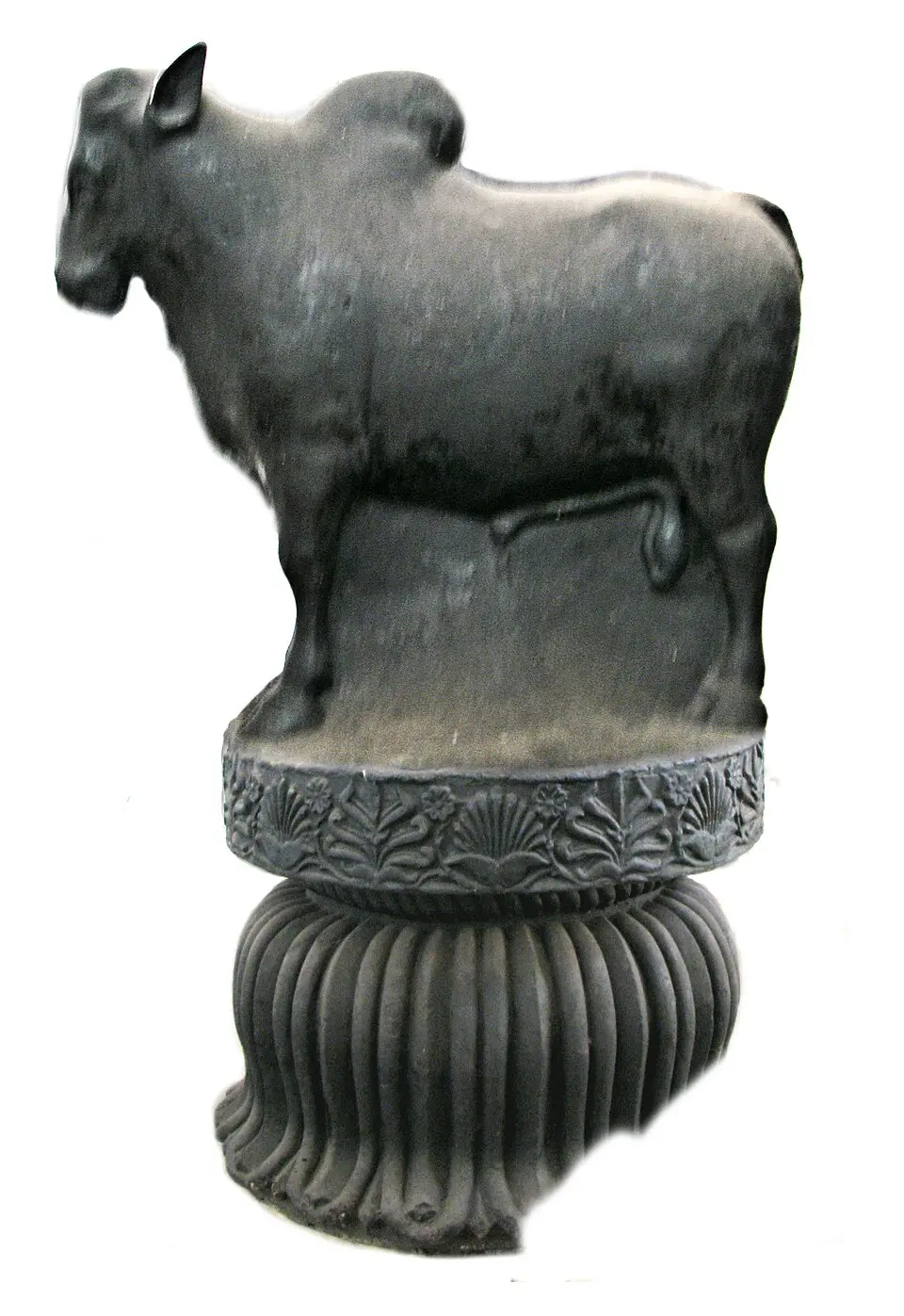
- The humped zebu is among the commonest animals on Harappan seals, reflecting the worth of cattle to a farming society, and Ashoka's Rampurva capital, now at Rashtrapati Bhavan, continues the motif.
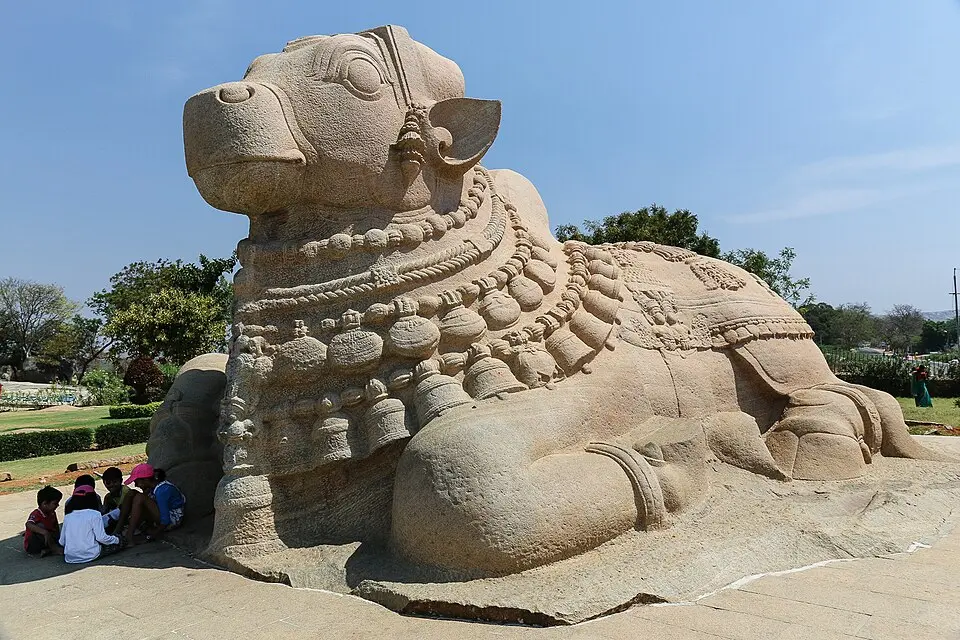
- Nandi is Shiva's vehicle and doorkeeper, seated facing the sanctum and gazing at the deity as the ideal devotee does. Coins of the Kushana king Wima Kadphises show Shiva with a bull, the Pallavas used a bull emblem, and the Vijayanagara period carved the monolithic Nandi at Lepakshi.
- In the Puranas dharma is a bull standing on four legs in the first age and losing one in each later age, and Rishabhanatha, the first tirthankara, bears the bull as his emblem, so the animal joins fertility, steadiness and moral order.


Other recurring symbols
- Lotus: purity rising from mud and the seat of creation; on the Sanchi railings, under the Sarnath lions and as the national flower.
- Chakra: the wheel of dharma and the sun, Vishnu's Sudarshana, and the 24 spoked wheel of the flag.
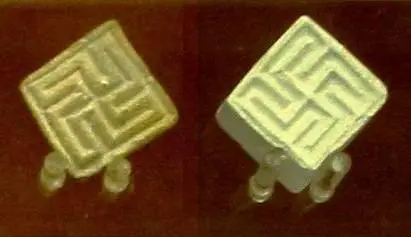
- Swastika: an auspicious sign from Harappan seals to modern doorways, and the emblem of the tirthankara Suparshvanatha.
- Kalasha: the pot of plenty crowning temple towers and, in syncretic form, Indo Islamic domes.
- Tree of life: the bodhi tree, the wish fulfilling kalpavriksha, and the stone tree in the jali of the Sidi Saiyyed Mosque, Ahmedabad.

Dimensions
- Religious and philosophical. Form follows doctrine: a resident deity needs a sanctum, a path of liberation needs a walk round relics, and a faith without images needs geometry.
- Aesthetic. Rasa theory makes mood the goal, so idealised faces, rhythmic postures and rich ornament are deliberate choices, not failures of realism.
- Social. Narrative panels such as Jataka scenes taught an unlettered public, and the temple served as a centre of learning, music and charity.
- Economic and patronage. Kings built to show piety and power, while guilds, merchants and ordinary donors paid for railings and gateways, as donor inscriptions at Sanchi record.
- Political. Symbols legitimise rule: the chakravartin's wheel, the lion throne and today the State Emblem.
- Regional and foreign influences. Persian palmettes on Mauryan capitals, Greek drapery in Gandhara and Persian geometry in Indo Islamic buildings were absorbed into Indian meanings. Syncretism followed, with the lotus and kalasha on Mughal domes and Rajput brackets and chhatris at Fatehpur Sikri.
In practice
How the state uses these symbols
- The State Emblem of India (Prohibition of Improper Use) Act, 2005 (Ministry of Home Affairs) bars trade or private use of the emblem, and the Flag Code of India, 2002 governs the flag carrying the Ashoka Chakra.
- In 2022 critics said the lions of the bronze emblem on the new Parliament building looked fiercer than Sarnath's; the Supreme Court dismissed a petition on this, finding no breach of the 2005 Act. A symbol's meaning lies partly in its style, calm strength versus aggression.
- At the G20 summit in New Delhi (2023) the Konark wheel formed the backdrop for welcoming leaders, temple symbolism used in cultural diplomacy.
Judgement
- Animal Welfare Board of India v Union of India (2023): a five judge bench upheld Tamil Nadu's law permitting Jallikattu, accepting the legislature's view that the bull taming sport is part of the state's cultural heritage.
A case of continuity
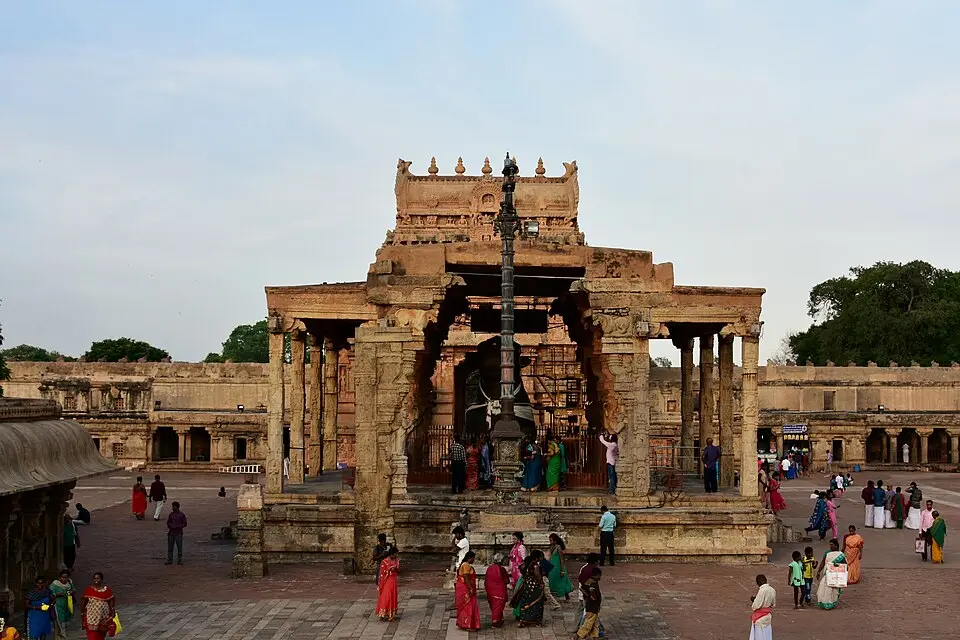
- At the Brihadeeswara temple in Thanjavur (completed about 1010 CE under Rajaraja I), the colossal Nandi and its pavilion were added in the Nayaka period, yet placed exactly on the axis of the sanctum, so later builders kept the old line from devotee to bull to god.

Issues and way forward
- Meaning lost in display. Images moved to museums lose the ritual setting that gave them meaning, since a Nandi makes sense only facing a sanctum. Labels and site interpretation centres should explain setting and symbolism, not only date.
- Living traditions thinning. Hereditary sthapatis and shilpis are fewer because the work pays poorly and lacks modern recognition. The National Education Policy, 2020 (Ministry of Education) recommends bringing Indian knowledge systems and local artists into education, which can give these crafts status and learners.
- Misreading of symbols abroad. The swastika is confused with the Nazi emblem because the shapes are similar; Victoria in Australia, banning Nazi symbols in 2022, explicitly exempted its religious use, a model for separating the two.
Common confusions
- Aniconic and iconoclastic. Aniconic art avoids showing the divine in human form; iconoclasm destroys images.
- Rasa and bhava. Bhava is the emotion portrayed in the work; rasa is the relish the viewer experiences.
- Lion capital and State Emblem. The capital has four lions; the emblem shows three, with the wheel, a bull and a horse on the abacus, and Satyameva Jayate from the Mundaka Upanishad.
For the exam
- Keyword bank: vastupurusha mandala, brahmasthana, axis mundi, Mount Meru, garbhagriha, darshan, pradakshina, aniconism, rasa, sthayi bhava, Shilpa Shastras, Agamas, mudra, tribhanga, char bagh, Shakyasimha, simhasana, yali, Nandi.
- Previous year questions: Practise the previous year questions on this topic →
- Use in an answer:
- Introduction (data): The four lions of Sarnath, carved in the third century BCE to proclaim the Buddha's dharma, became India's State Emblem in 1950, showing how an ancient symbol can carry a modern state's values.
- Introduction (judgement, quote or report): Stella Kramrisch described the Hindu temple as a model of the universe, a description that explains its plan, its tower and its dark sanctum.
- Conclusion: Indian monuments are philosophy given shape, so understanding the idea behind a form is the surest way to read and protect it.
- Conclusion: The lion and the bull have lasted from Harappa to the Republic because each age reused their meanings of power, fertility and dharma rather than inventing new ones.
Photo credits
Photographs are from Wikimedia Commons; each photo links to its file page, which gives the photographer and licence.