Biodiversity, its value and hotspots
- Syllabus
- Conservation, environmental pollution and degradation, environmental impact assessment
- As of
- October 2026
- biodiversity
- genetic diversity
- species diversity
- ecosystem diversity
- alpha beta gamma diversity
- endemism
- species area relationship
- latitudinal gradient
- total economic value
- megadiverse countries
- biodiversity hotspot
- biogeographic zones
- Biological Diversity Act
- biodiversity heritage site
The first principle
Biodiversity is the variety of life, and its value lies less in any single species than in the variety itself. Variety is insurance: a field sown with many rice varieties survives a disease that would wipe out one, and a forest with many species keeps working when a drought kills some of them. Variety is also unevenly spread, piled up in warm, wet, old and isolated places, which is why conservation concentrates on a few regions, and why India, with a small share of the world's land, carries a large share of its responsibility.
The core
Meaning and levels
- The definition. Article 2 of the Convention on Biological Diversity (CBD), 1992, defines biological diversity as the variability among living organisms from all sources, including terrestrial, marine and other aquatic ecosystems, and it includes diversity within species, between species and of ecosystems. The word biodiversity was coined by Walter G Rosen for a forum held in Washington in 1986 and was popularised by the biologist E O Wilson.
- Three levels. Genetic diversity is the variation within one species, as among the thousands of traditional rice varieties grown in India. Species diversity is the number of species in a place and how evenly they are represented, and ecosystem diversity is the variety of habitats, from deserts and grasslands to wetlands, forests and coral reefs.
- Three scales. Alpha diversity is the number of species within one habitat, beta diversity is how much the species change from one habitat to the next, and gamma diversity is the total across a region.
Why diversity is uneven
- Latitude. Species are most numerous in the tropics and fewer towards the poles, because tropical regions have had a long, stable history without glaciation, receive more solar energy and have less seasonal variation, which allows finer division of niches.
- Area. Alexander von Humboldt observed that species richness rises with the area explored, but at a slowing rate. On a logarithmic scale this becomes a straight line, log S = log C + Z log A, where S is species richness, A is area, C is a constant and Z is the slope, which typically lies between 0.1 and 0.2 but rises to between 0.6 and 1.2 when whole continents are compared.
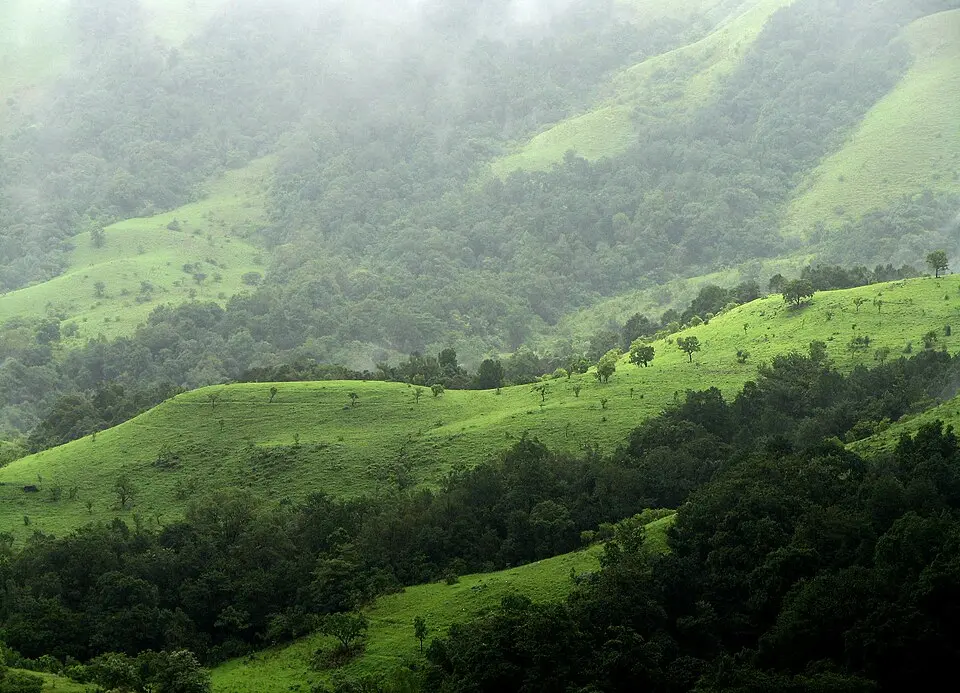
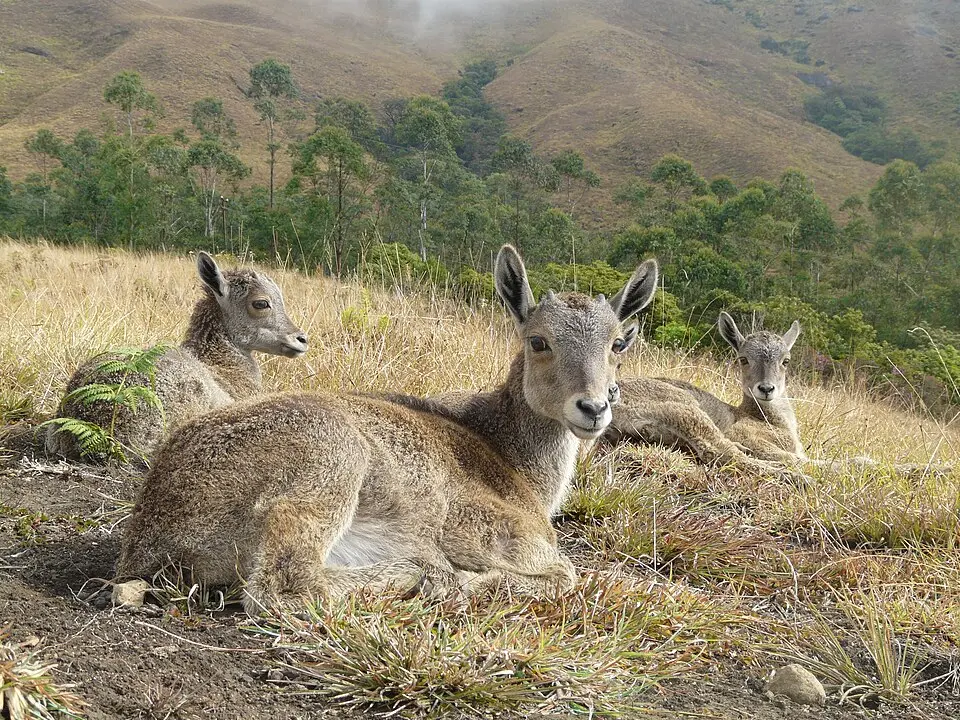
- Isolation. Islands and mountain tops cut off for long periods evolve species found nowhere else, which are called endemic, and the Western Ghats, the north east and the Andaman and Nicobar Islands are India's centres of endemism.
- Diversity and stability. David Tilman's long running field plots showed that plots with more species varied less in total biomass from year to year, and Paul Ehrlich's rivet popper analogy compares species to the rivets of an aeroplane: losing a few seems harmless until a critical one goes.
Megadiverse countries and hotspots
- Megadiverse countries. Conservation International identified 17 megadiverse countries in 1998, which together hold most of the Earth's species, and India is one of them. India is also a member of the group of Like Minded Megadiverse Countries formed in Cancún in 2002 to press the interests of biodiversity rich nations in negotiations.
- Hotspots. Norman Myers proposed the idea of biodiversity hotspots in 1988, and Conservation International now defines a hotspot as a region with at least 1,500 endemic species of vascular plants that has lost at least 70 per cent of its original habitat. The 36 hotspots cover about 2.5 per cent of the Earth's land but hold more than half of its endemic plant species.
- India's four. Parts of India fall in four hotspots: the Himalaya, Indo-Burma in the north eastern hills, the Western Ghats and Sri Lanka, and Sundaland through the Nicobar Islands. Signature species include the red panda, Ailurus fulgens, of the eastern Himalaya, the western hoolock gibbon, Hoolock hoolock, of the north east, and the lion tailed macaque, Macaca silenus, of the Western Ghats; all three are Endangered on the International Union for Conservation of Nature (IUCN) Red List, in Schedule I of the Wildlife (Protection) Act 1972 as amended in 2022, and in Appendix I of the Convention on International Trade in Endangered Species of Wild Fauna and Flora (CITES).

Dimensions
- Economic. Biodiversity supplies food, fodder, fuel, timber, fibre and medicine, and much of it never reaches a market, as when forest dwellers gather minor forest produce for their own use. Bioprospecting, the search for useful genes and chemicals in wild species, gives biodiversity an option value for the future.
- Food security. India is among the regions where many crops were first domesticated or diversified, including rice and mango, so its crop wild relatives and traditional varieties are a genetic reserve for breeding crops that resist heat, drought and pests.
- Ethical and cultural. Sacred groves, totem species and the duty in Article 51A(g) of the Constitution to have compassion for living creatures express an intrinsic value that needs no price, and the next generation's claim to the same variety is the basis of bequest value.
In practice
- How much India holds. India has about 2.4 per cent of the world's land area. Its recorded fauna, as compiled by the Zoological Survey of India, now exceeds one lakh species and subspecies, and several hundred new species and new records for India are added each year.
- The biogeographic zones. W A Rodgers and H S Panwar of the Wildlife Institute of India divided the country into biogeographic zones in 1988 to plan a network of protected areas, and the 2002 revision with V B Mathur recognises ten zones divided into biotic provinces.
| Zone | Provinces | Character |
|---|---|---|
| Trans Himalaya | Ladakh; Tibetan Plateau; Sikkim | cold, high desert; sparse alpine steppe |
| Himalaya | North West, West, Central and East Himalaya | altitude zones from subtropical forest to alpine meadow |
| Desert | Thar; Kachchh | hot, arid; sand dunes, salt flats |
| Semi Arid | Gujarat-Rajputana; Central India | dry thorn forest and grassland |
| Western Ghats | Malabar Coast; Western Ghat Mountains | wet evergreen forest; very high endemism |
| Deccan Peninsula | five provinces, from the Central Highlands to the Deccan South | dry and moist deciduous forest; the largest zone |
| Gangetic Plain | Upper and Lower Gangetic Plain | fertile alluvium, floodplain grassland, wetlands |
| North East | Brahmaputra Valley; North Eastern Hills | wet forest; meeting point of Indian, Malayan and Chinese life |
| Coasts | West Coast; East Coast; Lakshadweep | beaches, mangroves, estuaries, coral atolls |
| Islands | Andaman; Nicobar | coral reefs, island endemics |
- The law. The Biological Diversity Act 2002 implements the CBD in India through a three tier structure: the National Biodiversity Authority (NBA) in Chennai, State Biodiversity Boards and Biodiversity Management Committees in local bodies, which prepare People's Biodiversity Registers. The Biological Diversity (Amendment) Act 2023 eased rules for research and for the Indian system of medicine and decriminalised many offences; the details are in the Biological Diversity Act note.
- Heritage sites and plans. Under section 37 of the Act a State can notify a biodiversity heritage site, and the Nallur Tamarind Grove in Karnataka became the first in 2007. India presented its updated National Biodiversity Strategy and Action Plan, aligned with the Kunming–Montreal Global Biodiversity Framework of 2022, at the sixteenth Conference of Parties to the CBD in Cali, Colombia, in 2024.

Issues and way forward
- Much is still unknown. New species are described in India every year, mostly invertebrates, plants and fungi, which means many will vanish before they are named; more taxonomists, digital reference collections and citizen science are needed to close the gap.
- Hotspots are under pressure from development. The Western Ghats, the Himalaya and the north east are also where dams, roads, mines and plantations are concentrated, so landscape level planning, strict eco sensitive zones and cumulative impact assessment should guide projects there.
- Value is not counted. Because markets pay only for direct uses, biodiversity is cleared for land that seems more profitable; valuing ecosystem services and sharing benefits with local communities, as the Biological Diversity Act intends, changes that calculation.
- Registers on paper. Many People's Biodiversity Registers were prepared hurriedly and are not used in local decisions, so updating them with communities and linking them to access and benefit sharing would make the three tier structure real.
- Agrobiodiversity is shrinking. Traditional varieties are giving way to a few high yielding ones, so community seed banks, procurement and markets for millets and local varieties, and protecting farmers' rights help keep genetic diversity in fields.
Common confusions
- Hotspot and megadiverse country. A hotspot is a region defined by high endemism and heavy habitat loss, while a megadiverse country is a nation with a very large total number of species; India is a megadiverse country that contains parts of four hotspots.
- Endemic and endangered. An endemic species is found only in one area, whatever its numbers, while an endangered species faces a high risk of extinction; many endemics are also endangered because their range is small.
- Biogeographic zone and hotspot. Biogeographic zones divide the whole of India by its living communities to plan protected areas, while hotspots are a global priority list that covers only parts of India.
For the exam
- Keyword bank: genetic, species and ecosystem diversity, alpha, beta and gamma diversity, endemism, latitudinal gradient, species area relationship, total economic value, option and existence value, bioprospecting, megadiverse country, biodiversity hotspot, biogeographic zones, biodiversity heritage site, People's Biodiversity Register.
- Previous year questions: Practise the previous year questions on this topic →
- Use in an answer:
- Introduction with data: With about 2.4 per cent of the world's land, India has recorded more than one lakh animal species and subspecies, and adds several hundred every year (Zoological Survey of India).
- Introduction with a law: The Biological Diversity Act 2002, which gives effect to the Convention on Biological Diversity, treats biodiversity as a national resource held for the benefit of local communities, through a three tier structure that reaches every panchayat.
- Conclusion: India's four hotspots and ten biogeographic zones mean that no single model of conservation will work everywhere, so policy must be planned zone by zone and with the people who live there.
- Conclusion: Biodiversity is insurance against an uncertain future, and counting its value before it is lost is cheaper than restoring it afterwards.