The Gupta age: art, coins and culture
- Syllabus
- Indian culture will cover the salient aspects of Art Forms, Literature and Architecture from ancient to modern times.
- As of
- October 2026
- classical age
- Sarnath school
- Udayagiri Varaha
- Deogarh Dashavatara temple
- Sultanganj Buddha
- iron pillar
- Kalidasa
- Amarakosha
- Aryabhatiya
- place value
- Gupta dinar
- lyrist type
- Ashvamedha type
- paucity of coins
- land grants
The first principle
The Gupta age, about 320 to 550 Common Era (CE), is called classical because it fixed the forms that later Indian art kept returning to: the serene image of the god, the stone temple with a sanctum, Sanskrit poetry and drama, and a confident gold coinage. These forms rested on three supports, namely a large empire that could pay for them, a revived Brahmanical religion that needed images and shrines, and a court culture that prized refinement. When those supports weakened after the sixth century, some forms, such as temples, kept growing under new patrons, while others, such as the gold coinage, never recovered.
The core
Sculpture: the inner calm
- Gupta sculptors refined the Mathura and Gandhara traditions into an Indian ideal of smooth bodies, thin clinging drapery and half closed eyes that turn attention inward. The aim was spiritual calm rather than realism, so ornament is held back and proportion carries the effect.
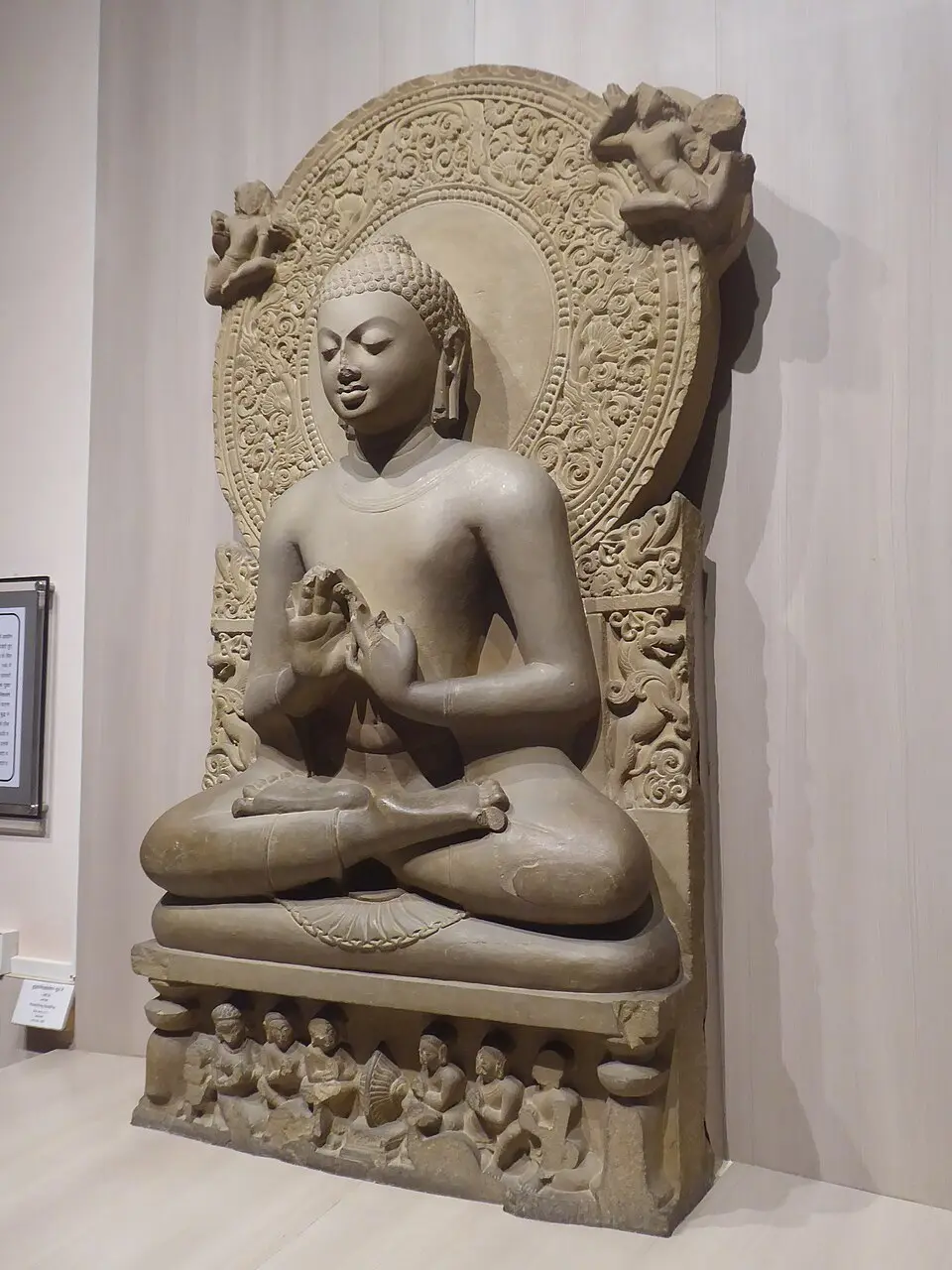
- The seated Buddha from Sarnath, in fine Chunar sandstone, shows the dharmachakra pravartana mudra of the first sermon, while the standing Buddhas of Mathura, in red sandstone, wear robes whose folds fall like loops of string over the body.
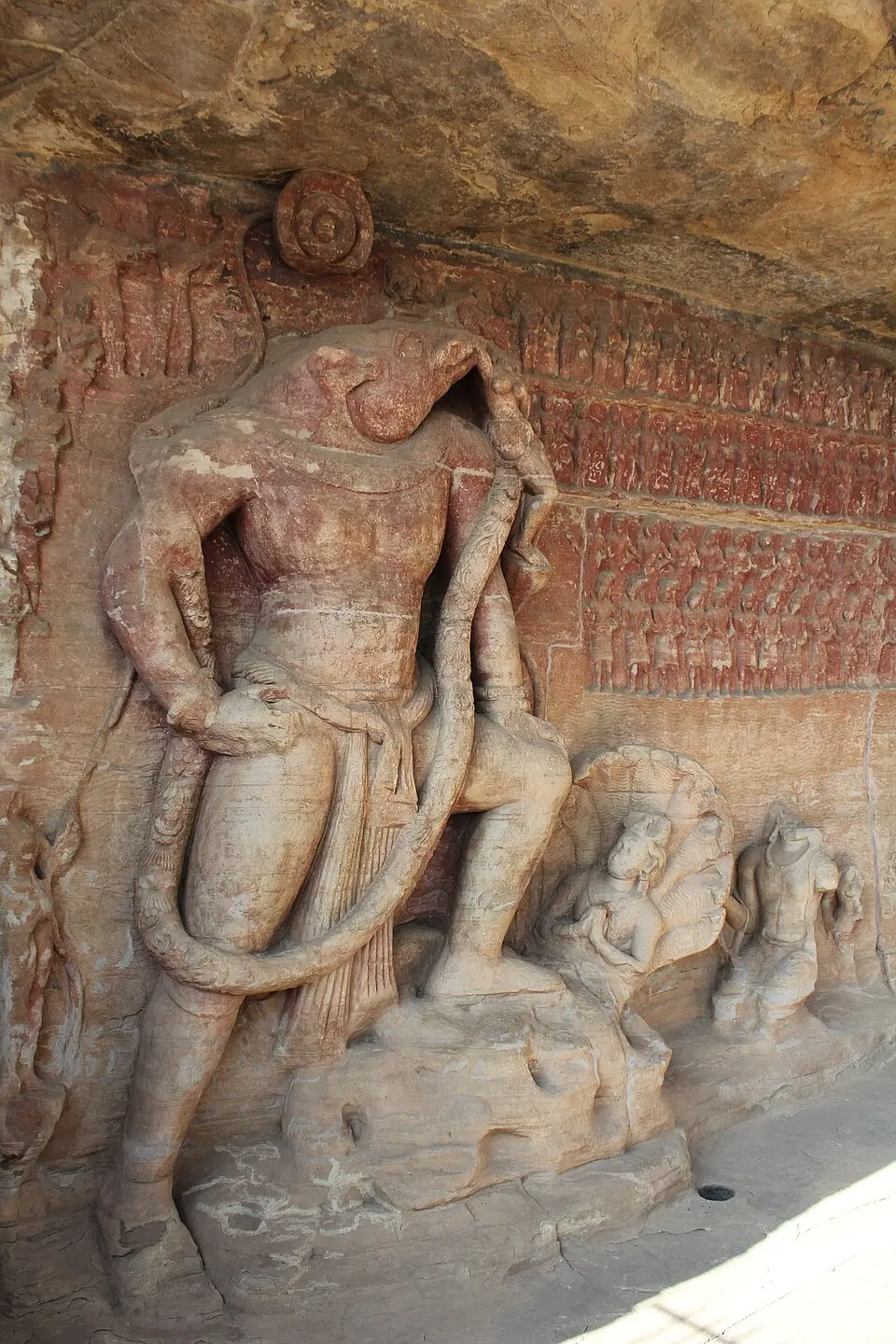
- The Varaha panel at Udayagiri near Vidisha, carved in the early fifth century during the reign of Chandragupta II, shows Vishnu as a giant boar lifting the earth goddess out of the ocean, and many read it as a statement of the king rescuing the land.
- The Sultanganj Buddha from Bihar, a copper image over two metres tall now in Birmingham, shows that large metal casting had been mastered by the late Gupta period.


Temples: the beginning of the stone shrine
- Temple building moved from caves to free standing structures: Temple 17 at Sanchi is a flat roofed cell with a pillared porch, the Parvati temple at Nachna adds a covered path around the sanctum, and the brick temple at Bhitargaon near Kanpur rises into a tower.
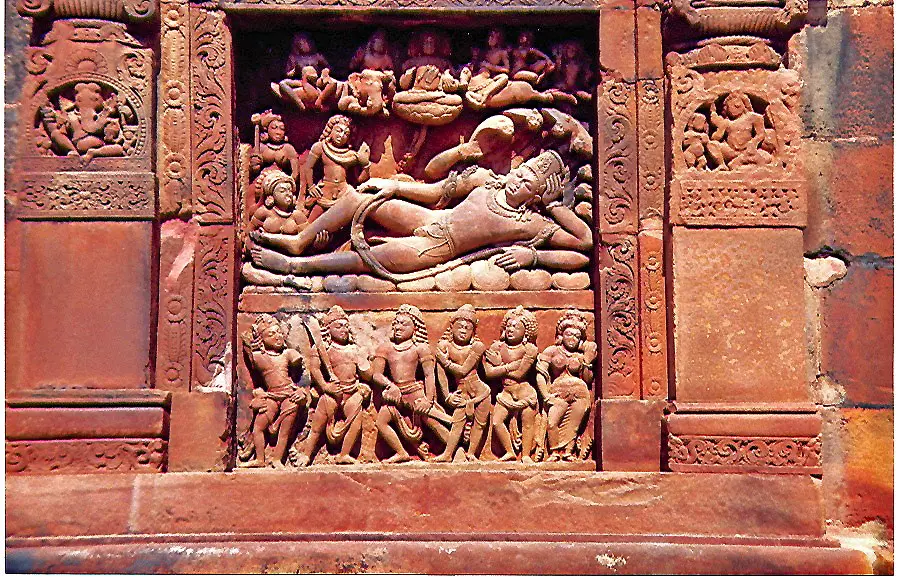
- The Dashavatara temple at Deogarh (Lalitpur, Uttar Pradesh), built around 500 CE, stands on a high platform with a doorway carved with river goddesses and side panels of Vishnu sleeping on the serpent Ananta, Gajendra moksha and Nara Narayana. Its ruined tower is among the earliest Nagara shikharas, which is why it marks the start of a style detailed in the note on temple architecture.

Painting, literature and science
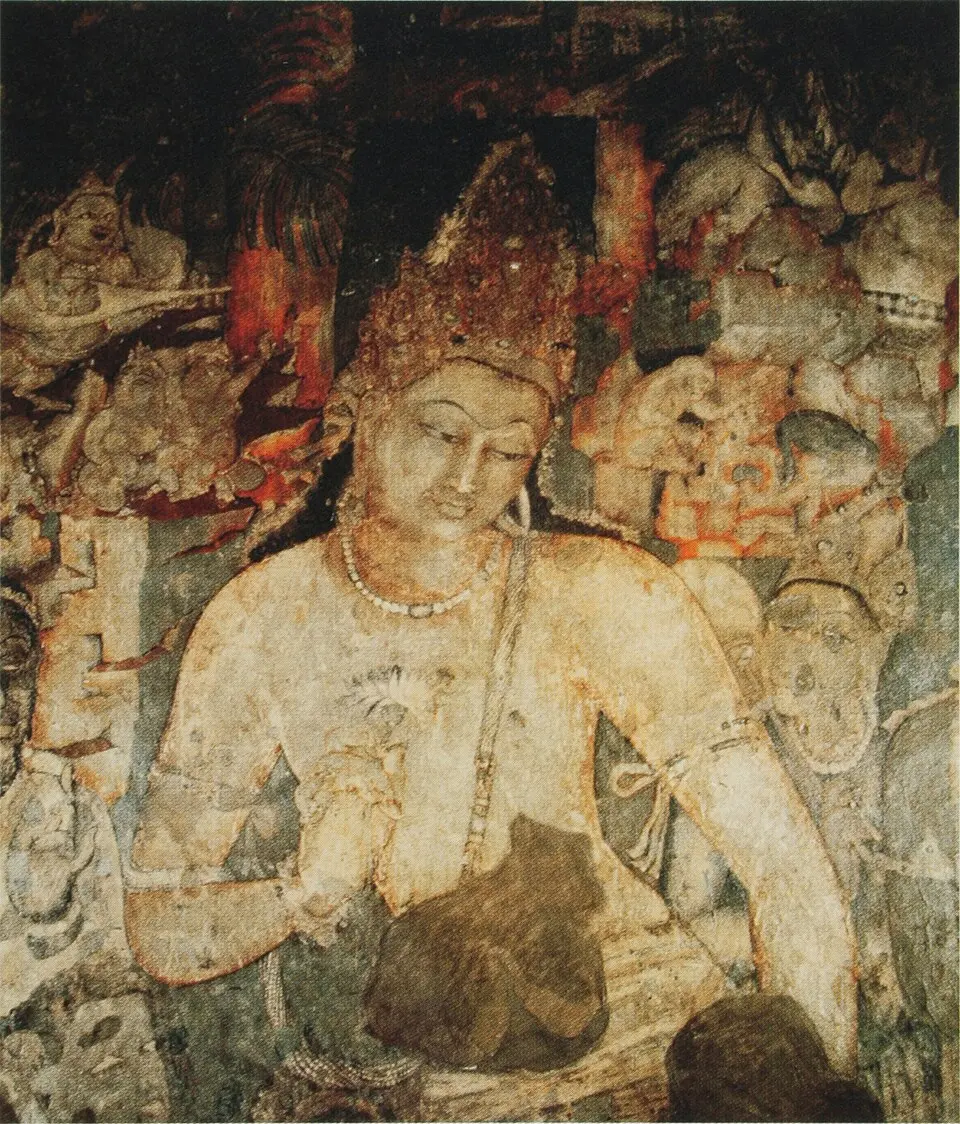
- The finest murals at Ajanta, in caves 1, 2, 16 and 17, were painted in the late fifth century under the Vakataka king Harishena, a Gupta ally by marriage, so they belong to the same classical moment. Painters used mineral colours on lime plaster and modelled faces with shading, which gives figures like Padmapani their quiet depth.
- Kalidasa wrote the plays Abhijnanashakuntalam and Malavikagnimitram and the poems Meghaduta, Raghuvamsha and Kumarasambhava. Shudraka's Mrichchhakatika and Vishakhadatta's Mudrarakshasa show Sanskrit drama at its height, the Puranas took their present shape, and Amarasimha compiled the Amarakosha, a Sanskrit thesaurus still used.
- Aryabhata, in the Aryabhatiya (499), held that the earth rotates on its axis, explained eclipses by shadows and gave a close value of pi, while Varahamihira's Brihat Samhita and Pancha Siddhantika gathered astronomy, astrology and natural science. The decimal place value system was in use by this time, and Brahmagupta (628) later set out rules for zero as a number.
- Nalanda was founded in the fifth century, traditionally credited to Kumaragupta I, and grew into the greatest monastic university of Asia.

Dimensions
- Aesthetic. Restraint, balance and an inward gaze replaced the heavy ornament and earthy energy of earlier yakshas, and this became the measure of beauty for later Indian sculpture.
- Religious and philosophical. Vaishnavism and Shaivism, with devotion to a personal god, created demand for images and sanctums, while Buddhism and Jainism kept their patrons.
- Social. The label "golden age" needs care. Historians such as R S Sharma and Romila Thapar note that the splendour belonged to a court elite, that land grants to Brahmins began to weaken peasants, that the Chinese pilgrim Faxian saw Chandalas made to live apart, and that an inscription at Eran (510) records an early act of sati.
- Economic and patronage. Royal and merchant wealth, much of it from trade, paid for coins, temples and monasteries.
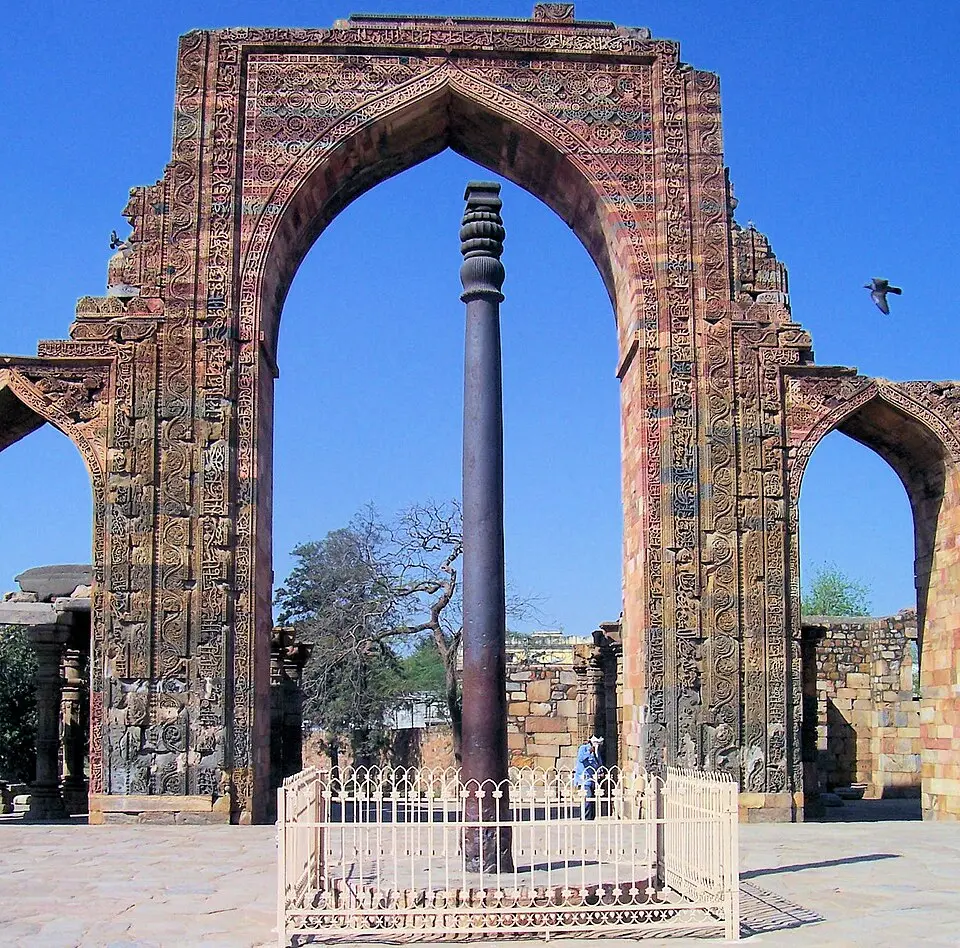
- Technical. The Mehrauli iron pillar, generally linked to Chandragupta II, has resisted rust for over sixteen centuries, and the Sultanganj casting shows equal skill in copper.
- Foreign influences. Coins began on Kushan models but became fully Indian in theme, and Gupta art in turn shaped Southeast Asia.

In practice
Gupta coins: art in gold
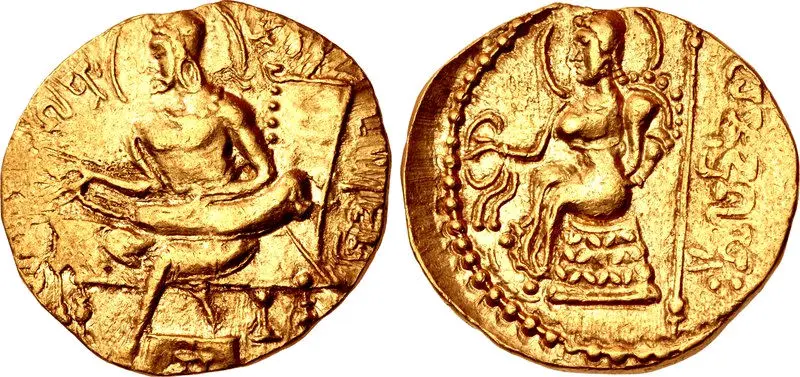
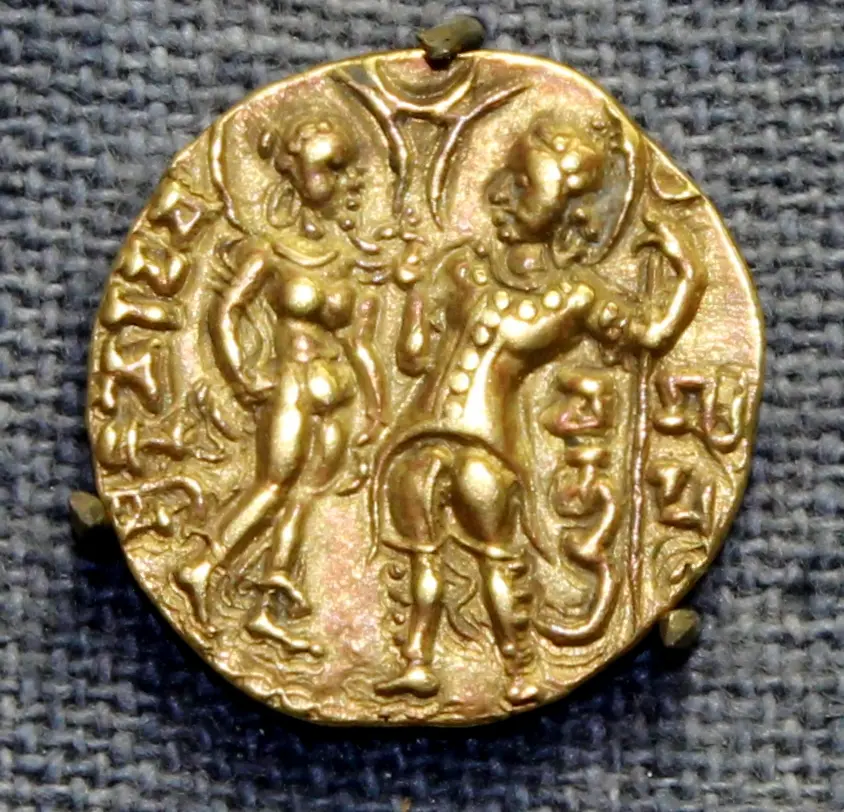
The Guptas issued the largest and most varied gold coinage of ancient India, and each dinar was a political message in miniature, with the king as archer, horseman, musician or slayer of lions on one side and Lakshmi or another goddess on the reverse. Three things set these coins apart: the design shows real movement, the early gold is of high purity, and the legends are Sanskrit verses praising the king, so the coin is at once sculpture, poetry and propaganda. The Chandragupta I and Kumaradevi type, showing king and queen together, advertised the marriage alliance with the Lichchhavis; Samudragupta's lyrist type shows him seated playing a veena, matching Harishena's Prayag praise of him as a musician; and his Ashvamedha type, with a horse before a sacrificial post, announced a claim to paramount power.


Why the excellence was never matched later
The quality of a coinage depends on gold supply, a strong treasury and a monetised economy, and all three declined after the fifth century. Skandagupta had to fight the Huns, his heavier coins carried less gold, and later Gupta dinars were clearly debased. Trade with the Roman world, a major source of gold, faded, and kings increasingly paid officials, priests and temples with land grants rather than cash. R S Sharma calls the period from about 600 to 1000 a phase of paucity of coins in north India, when regional dynasties issued few coins and those were crude. Later coinages excelled in other ways, since Sultanate and Mughal coins are fine in calligraphy and Jahangir's zodiac coins are celebrated, but none combined lively figure art, pure gold and Sanskrit poetry as the Gupta dinar did.
Data and cases
- Bayana hoard. Found in 1946 in Bharatpur district, Rajasthan, it held 1,821 Gupta gold coins and remains the main base for classifying their types.
- Iron pillar study. Research by R Balasubramaniam at the Indian Institute of Technology (IIT) Kanpur (2002) traced the pillar's rust resistance to a thin protective film formed on iron rich in phosphorus.
Gupta and Chola compared
Both periods are classical in different fields: the Guptas set the northern standard in sculpture, Sanskrit literature, science and coins and began the Nagara temple, while the Cholas perfected the Dravida temple and bronze, built village self government, reached across the sea and enriched Tamil literature (detailed in the note on Pallava, Chola and Vijayanagara art).
Issues and way forward
- Fading murals. Ajanta's paintings suffer from moisture, dust and visitor breath. The Archaeological Survey of India (ASI) limits visitors in the painted caves and has built replica caves at the visitor centre, an approach that should be extended.
- Neglected early temples. Deogarh, Nachna and Bhitargaon lie off tourist circuits and get few visitors; site museums and inclusion in circuits under the Ministry of Tourism's Swadesh Darshan scheme would help.
- Objects abroad. The Sultanganj Buddha and many Gupta coins left India in colonial times, and steady diplomatic effort, as with recent returns of antiquities, is the realistic path.
- One sided teaching. Calling the age simply golden hides its inequality, so teaching should present both its achievements and its social costs.
Common confusions
- Ajanta and the Guptas. The famous Ajanta murals were made under the Vakatakas, not the Guptas, though they share the classical style of the age.
- Iron pillar and Ashoka. The Mehrauli pillar is a Gupta period work with an inscription of King Chandra; it is not an Ashokan pillar.
- Dinar and suvarna. Dinar is the name taken from the Roman denarius for the early coin on the Kushan weight; suvarna is the heavier Indian standard adopted by Skandagupta.
For the exam
- Keyword bank: classical age, Sarnath school, Udayagiri Varaha, Deogarh, Sultanganj Buddha, iron pillar, Kalidasa, Amarakosha, Aryabhatiya, Gupta dinar, lyrist type, Ashvamedha type, paucity of coins, land grants.
- Previous year questions: Practise the previous year questions on this topic →
- Use in an answer:
- Introduction (data): The Bayana hoard alone yielded 1,821 Gupta gold coins, evidence of a coinage unmatched in ancient India for variety of design and purity of metal.
- Introduction (judgement, quote or report): Historians such as R S Sharma accept the cultural brilliance of the Gupta age but question the label "golden age" because its prosperity was confined to an elite.
- Conclusion: The Gupta age gave India its classical vocabulary in sculpture, literature and science, which later regional styles adapted rather than replaced.
- Conclusion: Gupta coin art declined not for want of skill but because the gold, trade and money economy that sustained it gave way to an economy of land grants.
Photo credits
Photographs are from Wikimedia Commons; each photo links to its file page, which gives the photographer and licence.