Buddhist heritage and the Pala age
- Syllabus
- Indian culture will cover the salient aspects of Art Forms, Literature and Architecture from ancient to modern times.
- As of
- October 2026
- Pala dynasty
- Dharmapala
- Devapala
- Vikramashila
- Nalanda
- Odantapuri
- Somapura Mahavihara
- Vajrayana
- Atisha Dipankara
- Charyapada
- Pala bronzes
- palm leaf manuscript painting
- Mahabodhi
- Buddhist circuit
- Nalanda University
The first principle
After the Guptas, Buddhism in India came to depend on great monasteries rather than on lay householders, and monasteries live or die by royal patronage. The Pala kings of Bengal and Bihar (about 750 to 1160) gave that patronage for four centuries, so eastern India became the last great home of Indian Buddhism, the place where its later doctrine, Vajrayana, took shape and from where it was carried to Tibet and beyond. The same dependence explains the end: when the monasteries were destroyed around 1200, there was no wide lay base left to rebuild them.
The core
Royal patronage and the great monasteries
- Gopala was chosen king around 750 to end a period of anarchy, and his successors Dharmapala and Devapala made the dynasty a power in north India while calling themselves devout Buddhists (parama saugata). Their land grants to monasteries, recorded on copper plates, paid for food, books, buildings and teachers.
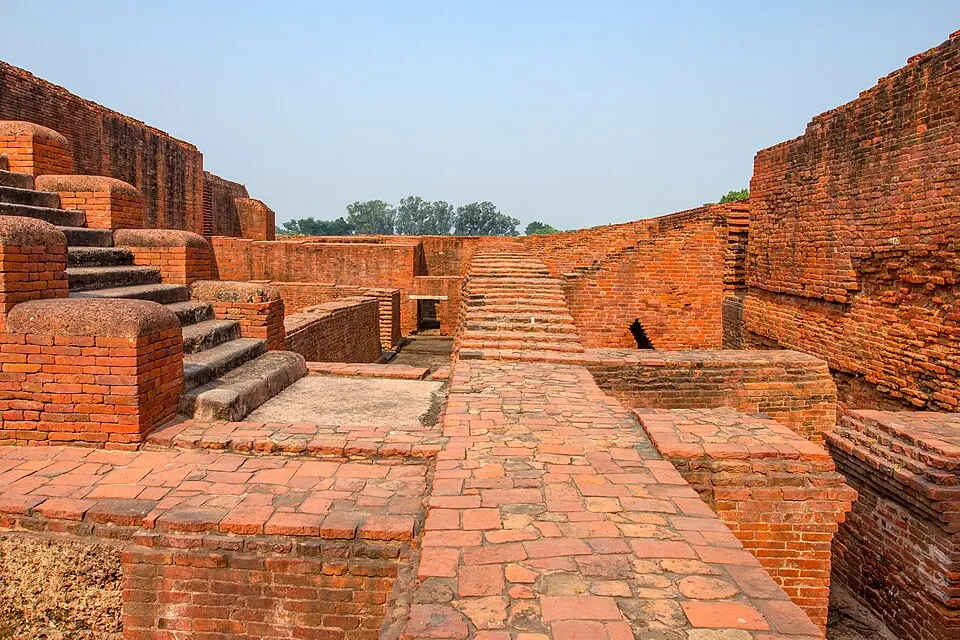
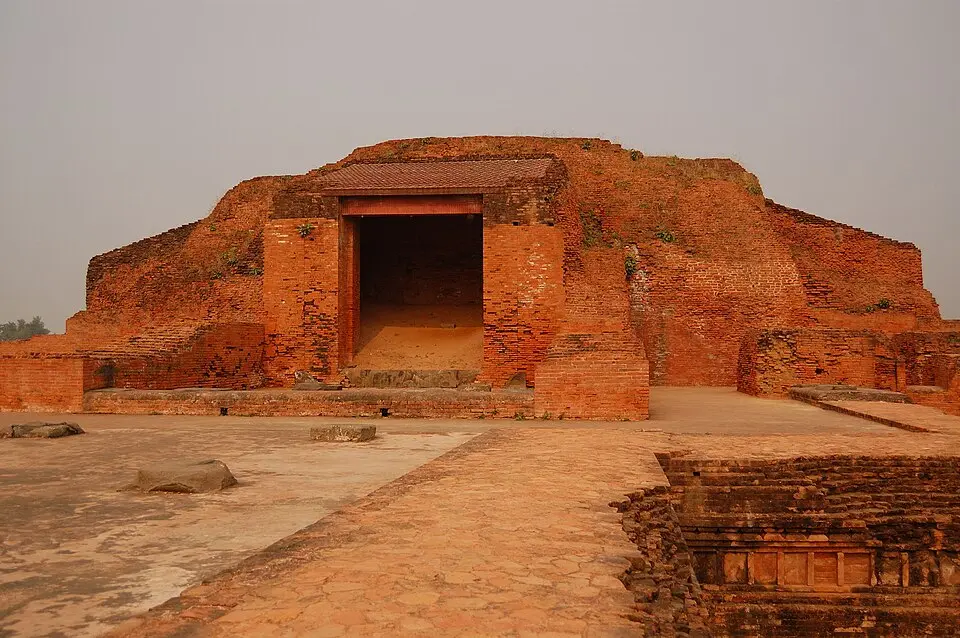
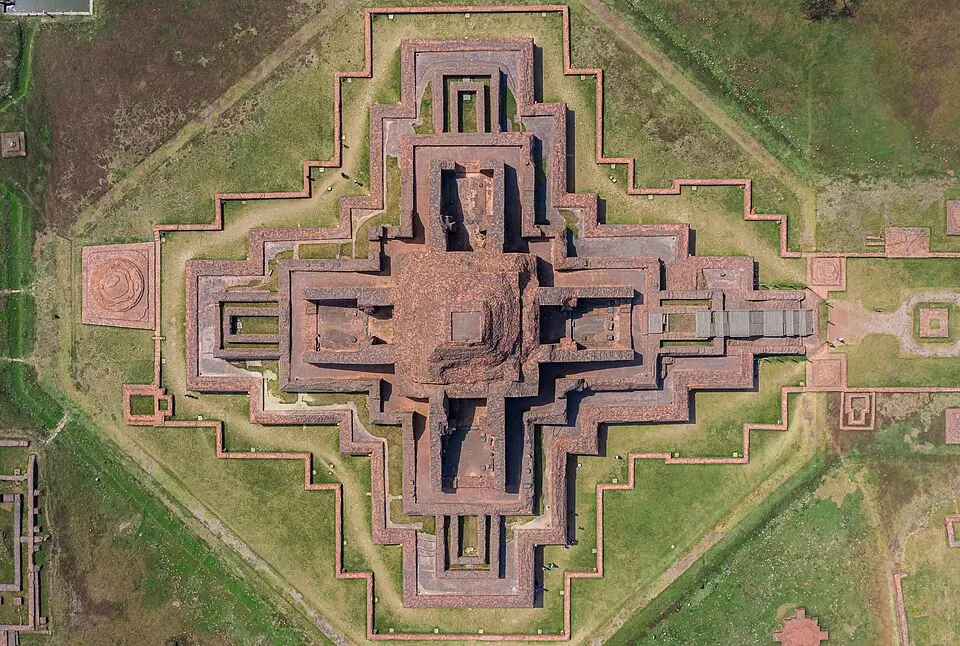
- Dharmapala founded Vikramashila near Bhagalpur in Bihar, with a large cruciform stupa at its centre, and the Somapura Mahavihara at Paharpur in present Bangladesh, whose square of 177 cells around a terraced shrine made it one of the largest monasteries south of the Himalaya.
- Nalanda, founded under the Guptas, was revived and enlarged, and Devapala's Nalanda copper plate records five villages granted to a monastery there built by Balaputradeva, the Sailendra king of Suvarnadvipa (Sumatra and Java). Odantapuri near Bihar Sharif and, later, Jagaddala in north Bengal under Ramapala completed the network.



Doctrine: from Mahayana to Vajrayana
- Mahayana philosophy, with its compassionate bodhisattvas and goddesses such as Tara and Prajnaparamita, was taught alongside Vajrayana, the "diamond vehicle", which sought quick enlightenment through mantra, mandala, initiation by a guru and tantric ritual. Vikramashila became the leading centre of these studies.
- The Buddhist siddhas composed the Charyapada, mystical songs in an early eastern language that are claimed as the oldest literature of Bengali, Assamese and Odia, so Pala Buddhism also shaped regional languages.
Art: bronze, black stone and the painted page
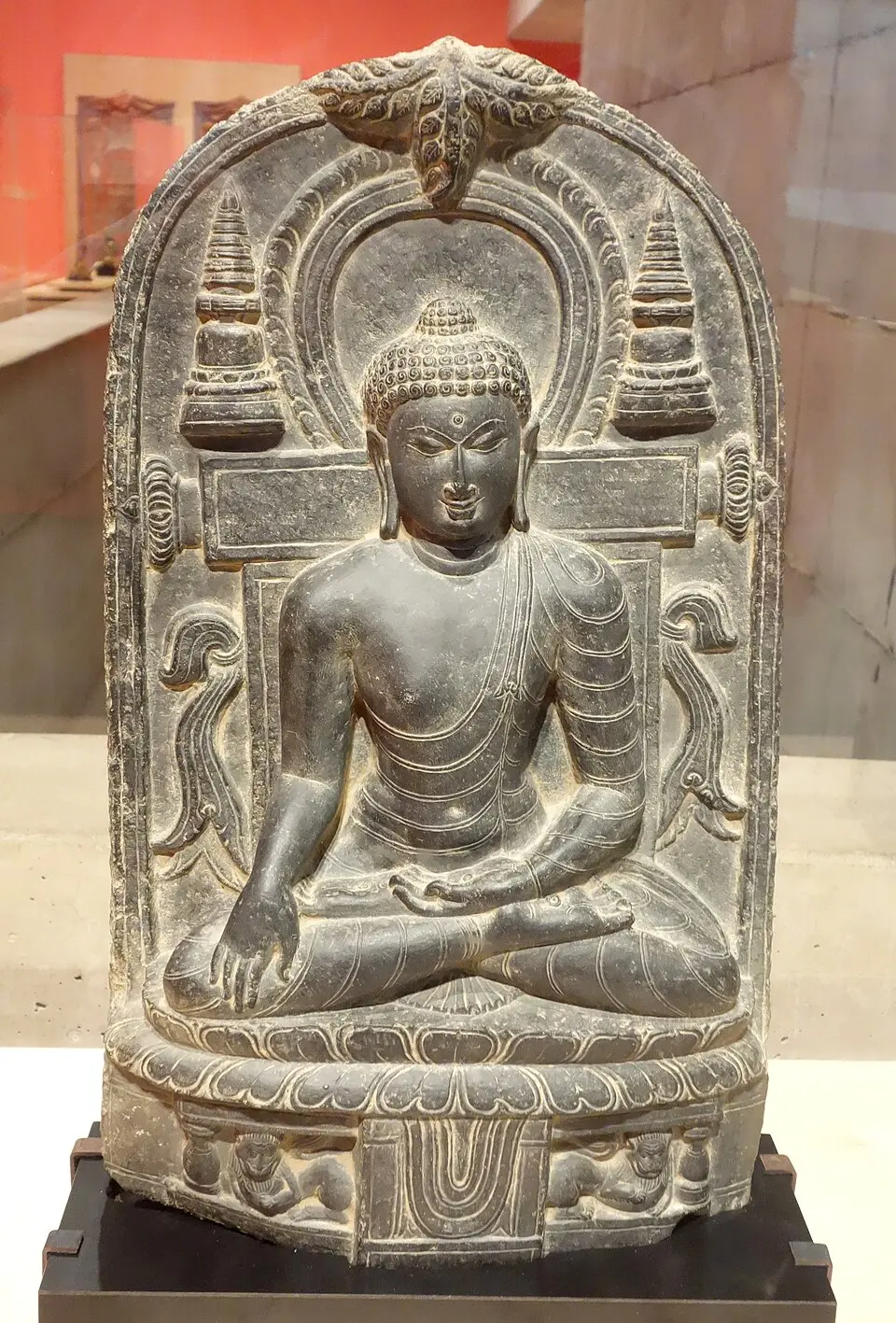
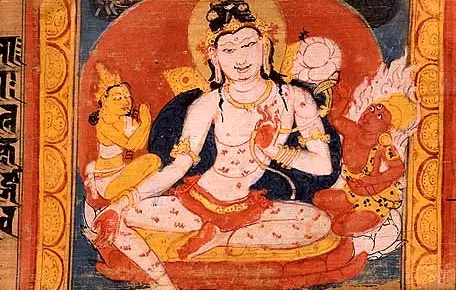
- Pala sculptors worked in fine grained black stone and in bronze, producing crowned Buddhas, Taras and bodhisattvas with sharp detail, elaborate backplates and rich jewellery; hoards from Nalanda and Kurkihar show the range. The Tibetan historian Taranatha names two masters, Dhiman and his son Bitpalo, as founders of this eastern school.
- The National Council of Educational Research and Training (NCERT) notes that the earliest Indian miniature paintings are the illustrations in Buddhist palm leaf manuscripts made under the Palas, such as the Ashtasahasrika Prajnaparamita, painted in a smooth, curving line with mineral colours on narrow leaves and wooden covers.


Dimensions
- Religious and philosophical. The Pala monasteries were where Buddhist logic, Madhyamaka philosophy and tantra were systematised, and their curriculum became the core of Tibetan Buddhism.
- Educational. The mahaviharas were residential universities with entrance tests, libraries and teachers in grammar, logic, medicine and philosophy, so they drew students from Tibet, China and Southeast Asia.
- Foreign influence and outreach. Shantarakshita of Nalanda went to Tibet in the eighth century, and Atisha Dipankara, a head of Vikramashila, went there in 1042 and revived its monastic tradition; Pala bronzes and manuscripts became models in Nepal and Tibet, and the Nalanda grant shows ties with Java and Sumatra.
- Social. Patronage was royal and monastic, so Buddhism grew distant from ordinary householders even as Brahmanical temples won them over.
- Economic and patronage. Land grants, not trade, financed the monasteries, which tied their survival to the fortunes of the dynasty.
- Plural patronage. The Palas also granted land to Brahmins and temples, so their reign was not exclusively Buddhist.
In practice
Is the Pala period the most significant phase of Buddhism in India?
The case in favour is strong. It was the longest unbroken royal patronage Buddhism received in India, it produced the great monastic universities, it gave birth to Vajrayana, and through its teachers and art it shaped the Buddhism of Tibet, Nepal and Bhutan that survives today. Its limits are equally real: it was confined to Bihar and Bengal, while the Mauryan and Kushan phases spread the faith across Asia and created its early art; monks became remote from lay followers; and tantric practice blurred the line with Hindu Tantra, while the Buddha was absorbed as an avatar of Vishnu. When Turkish raids around 1200 destroyed Odantapuri, Nalanda and Vikramashila, and the Brahmanical Senas had already replaced the Palas in Bengal, the faith had no popular base from which to recover. The fair judgement is that the Pala age was the most significant phase of later Indian Buddhism and its last flowering, rather than the most significant phase overall.
India's wider Buddhist heritage
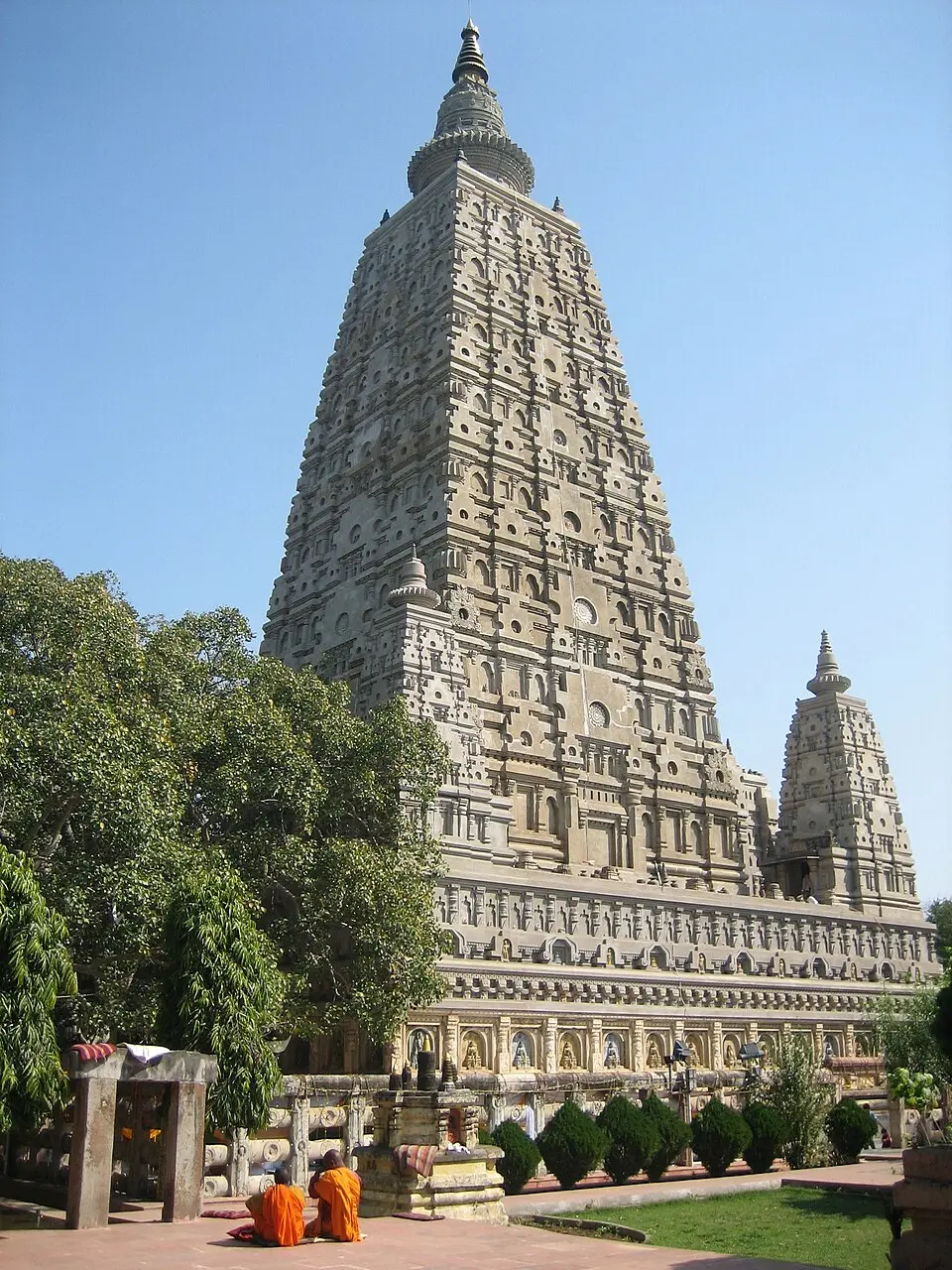
The four main sites of the Buddha's life are Lumbini in Nepal, Bodh Gaya (enlightenment), Sarnath (first sermon) and Kushinagar (death). Bodh Gaya's brick Mahabodhi temple, built in the Gupta period and restored in the nineteenth century, became a World Heritage Site in 2002; Sanchi (1989) and Ajanta (1983) carry the earlier stupa and cave traditions; Ratnagiri in Odisha was a Vajrayana monastery; and in the Himalaya, Tabo in Spiti (founded 996) and Hemis in Ladakh keep the Tibetan tradition alive. The ruins of Nalanda were inscribed by the United Nations Educational, Scientific and Cultural Organization (UNESCO) in 2016.

Data and cases
- Nalanda University. The Nalanda University Act, 2010 created a new international university near the ancient site at Rajgir, with support from East Asia Summit countries, and its new campus was inaugurated in June 2024.
- Buddhist circuit. The Ministry of Tourism has developed a Buddhist circuit under the Swadesh Darshan scheme (2014) to link Bodh Gaya, Rajgir, Nalanda, Sarnath and Kushinagar.
- Piprahwa relics. In 2025 the Ministry of Culture halted an overseas auction of gems linked to the Piprahwa stupa relics, and they were brought back to India that year.
- Manuscripts. The National Mission for Manuscripts (Ministry of Culture, 2003) documents old texts, and the Gyan Bharatam Mission announced in the Union Budget 2025 to 2026 aims to survey and digitise India's manuscript heritage.
Issues and way forward
- Fragile brick ruins. Exposed brick at Nalanda and Vikramashila weathers in the monsoon, and much of Vikramashila remains only partly excavated. The Archaeological Survey of India (ASI) needs steady conservation funds and modern site interpretation.
- Texts lost or abroad. Most Pala manuscripts survive in Tibet, Nepal and foreign museums because the Indian libraries were burnt. Digital copies and partnerships, which the manuscript missions provide for, are the practical answer.
- Management of Bodh Gaya. The Bodh Gaya Temple Act, 1949 gives management to a committee of four Hindu and four Buddhist members chaired by the district magistrate, and Buddhist groups have long demanded full control; any change must be settled through dialogue and law.
- Thin tourism. Buddhist pilgrims from Asia are fewer than the heritage warrants because of weak air links and facilities, which better connectivity on the circuit can address.
Common confusions
- Mahayana and Vajrayana. Mahayana stresses the compassionate bodhisattva path; Vajrayana, which grew out of it, adds tantric ritual, mantra and initiation as a faster route.
- Nalanda's founder. Nalanda was founded under the Guptas in the fifth century; the Palas revived it, while Vikramashila and Somapura were their own foundations.
- Somapura's location. The Somapura Mahavihara is at Paharpur in Bangladesh, not in India.
- Ancient and modern Nalanda. The UNESCO site is the ancient ruin; Nalanda University at Rajgir is a new institution created by law in 2010.
For the exam
- Keyword bank: parama saugata, Dharmapala, Vikramashila, Somapura, Nalanda copper plate, Sailendra, Vajrayana, Charyapada, Atisha Dipankara, Pala bronzes, palm leaf painting, Mahabodhi, Buddhist circuit, Nalanda University Act.
- Previous year questions: Practise the previous year questions on this topic →
- Use in an answer:
- Introduction (data): The Somapura Mahavihara founded by Dharmapala had 177 monks' cells, a scale that shows how generously the Pala kings funded Buddhist learning.
- Introduction (judgement, quote or report): NCERT records that the earliest Indian miniature paintings are the illustrations of Buddhist palm leaf manuscripts made under the Palas.
- Conclusion: The Pala age was the last flowering of Buddhism in India, whose monasteries, art and teachers still live on in the Buddhism of Tibet and the Himalaya.
- Conclusion: Reviving this heritage through Nalanda University, conservation and the Buddhist circuit can make it a living bridge to Asia rather than a ruin.
Photo credits
Photographs are from Wikimedia Commons; each photo links to its file page, which gives the photographer and licence.