Rock cut architecture
- Syllabus
- Indian culture will cover the salient aspects of Art Forms, Literature and Architecture from ancient to modern times.
- As of
- October 2026
- chaitya
- vihara
- Barabar caves
- Lomas Rishi
- Ajivikas
- Karle chaitya
- Ajanta murals
- Ellora
- Kailasa temple
- Elephanta Maheshmurti
- Udayagiri Varaha panel
- Hathigumpha inscription
- Pancha Rathas
- Descent of the Ganga
- donative inscriptions
The first principle
A rock cut cave is architecture made by subtraction: the builder removes rock until only the building is left. A hall cut into a cliff cannot collapse, so it lasts; it is cool and quiet and away from towns, which suited monks who needed shelter for the rainy season retreat; and it costs labour rather than material, so it needs a patron, whether a king, a merchant, a guild or a pious woman, whose gift was often written on the wall. Since nothing can be added once the rock is cut, every cave is a fossil of its maker's plan, and that is why caves preserve so much of early Indian art, religion and society.
The core
Mauryan beginnings: Barabar
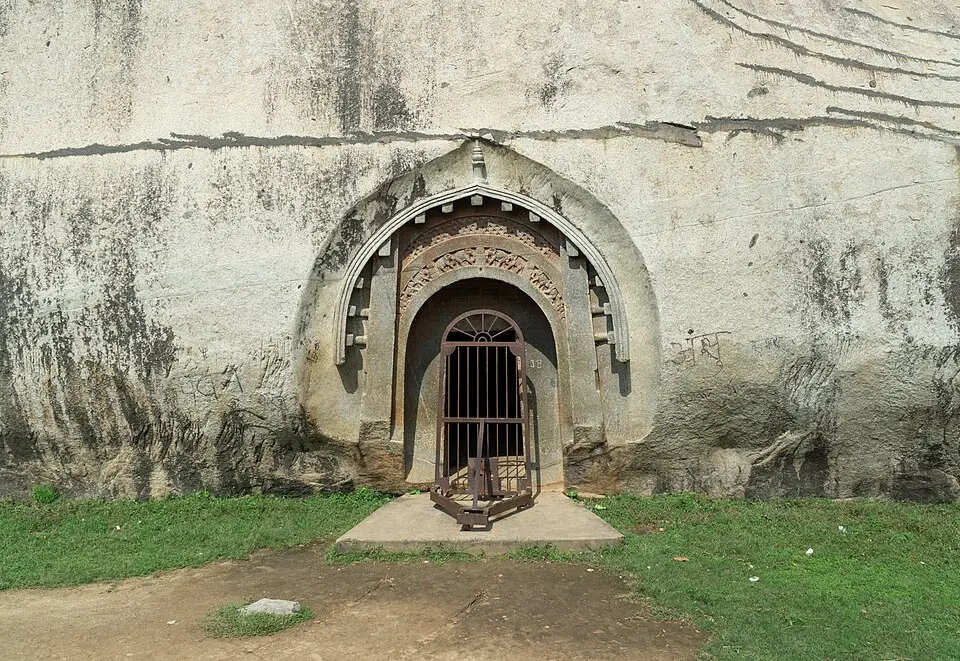
- In the Barabar hills near Gaya, Ashoka dedicated polished caves to the Ajivikas, an ascetic sect, in the 12th and 19th years of his reign, in the third century BCE (Before Common Era). The Lomas Rishi cave carries no dedication, but its doorway copies in stone the curved roof and bent rafters of a timber hut, with a frieze of elephants moving towards a stupa, which shows builders translating wooden forms into rock.

Chaityas and viharas of the western Deccan
- From the second century BCE, Buddhist caves were cut in the Deccan basalt along the passes linking Konkan ports such as Sopara and Kalyan with plateau towns such as Paithan, because monks settled where traders passed and traders gave alms in return for merit and a safe halt.
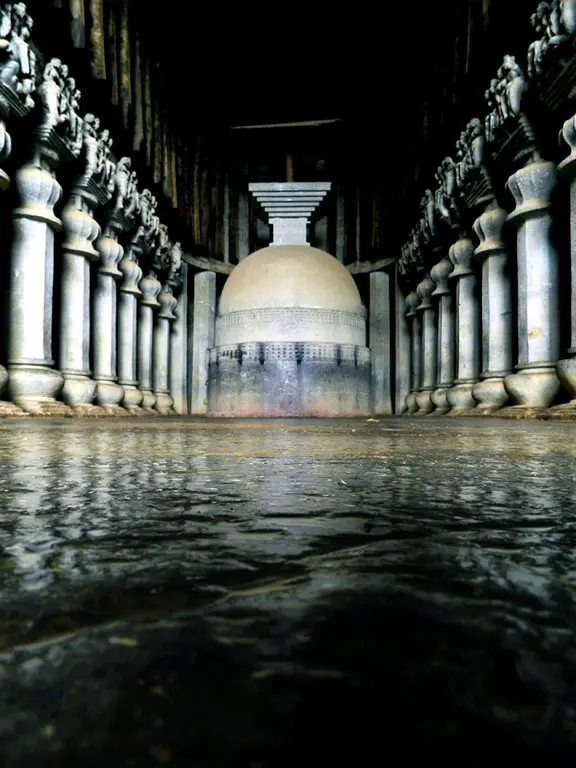
- The chaitya is a prayer hall, long and apsidal, with a barrel vaulted roof, two rows of pillars dividing nave from aisles, and a stupa at the far end that monks walked around, lit by a great horseshoe window above the door. The vihara is a residence, a square hall with cells on three sides and a verandah, to which later caves added a shrine with a Buddha image.
- At Bhaja the pillars lean inwards like timber posts, while at Karle, the largest chaitya of the period, the stone vault still carries ribs of teak and inscriptions name a merchant of Vaijayanti and several Yavana (Greek or western foreign) donors. Kanheri near Mumbai has over a hundred caves, and Nashik carries royal Satavahana and Shaka inscriptions.

Ajanta: architecture and painting together
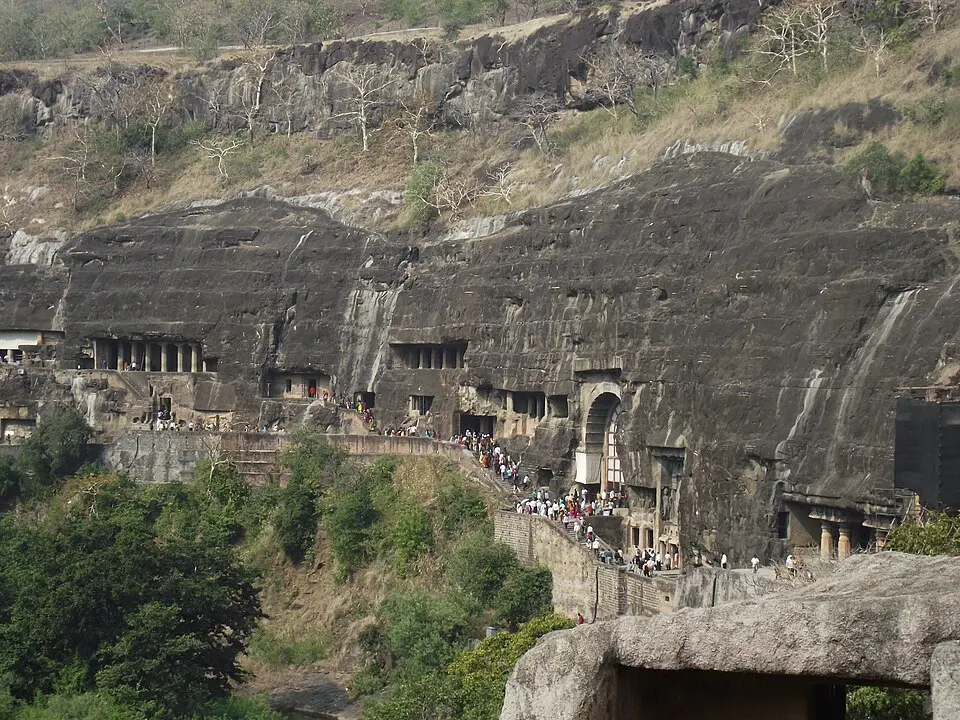
- Thirty caves cut into a horseshoe bend of the Waghora river were made in two phases. The first, in the second and first centuries BCE, showed the Buddha only through symbols such as the stupa; the second, in the fifth century CE (Common Era) under the Vakatakas, added carved viharas with Buddha images and the chaityas of caves 19 and 26, and an inscription in cave 16 records its gift by Varahadeva, a minister of the Vakataka king Harishena.
- The murals were painted on dry lime plaster, so they are not true frescoes, and they show Jataka stories, palaces, streets and the Bodhisattva Padmapani of cave 1, with shading that gives figures volume.

Ellora: three faiths in one hill
- Ellora's 34 caves, cut roughly between the sixth and tenth centuries, place 12 Buddhist, 17 Hindu and 5 Jain caves side by side, from the Vishwakarma chaitya (cave 10) to the Jain Indra Sabha (cave 32).
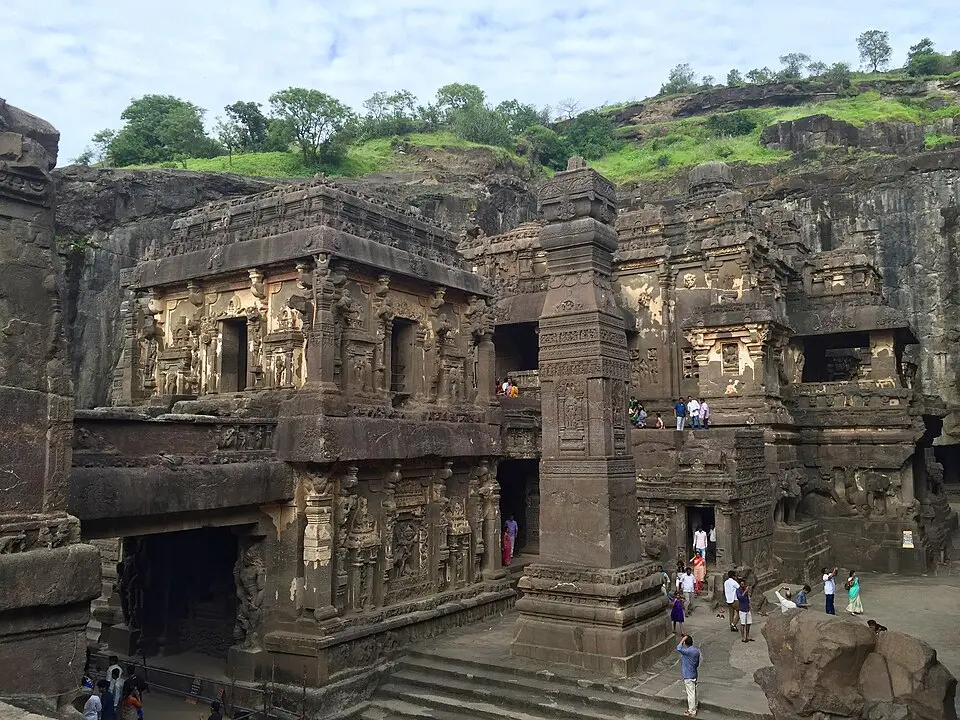
- The Kailasa temple (cave 16), carved under the Rashtrakuta king Krishna I in the eighth century, is not a cave but a complete Dravida style temple with vimana, mandapa, Nandi shrine and gateway, freed from a single mass of rock by cutting trenches and then carving from the top downwards.

Elephanta, the two Udayagiris and Mahabalipuram
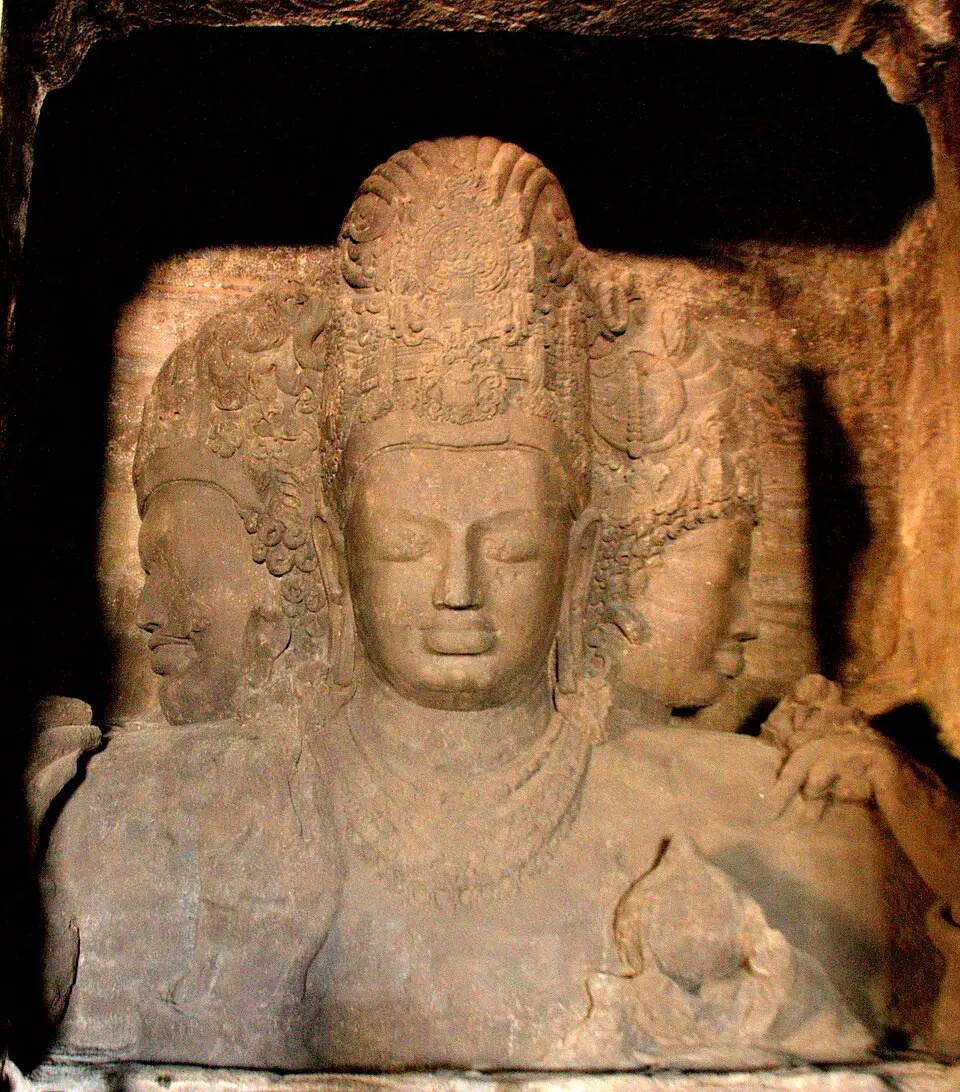
- At Elephanta, in Mumbai harbour, the Shaiva cave of about the sixth century CE centres on the colossal Maheshmurti, three faces of one Shiva, calm in the middle, fierce on one side and gentle on the other.
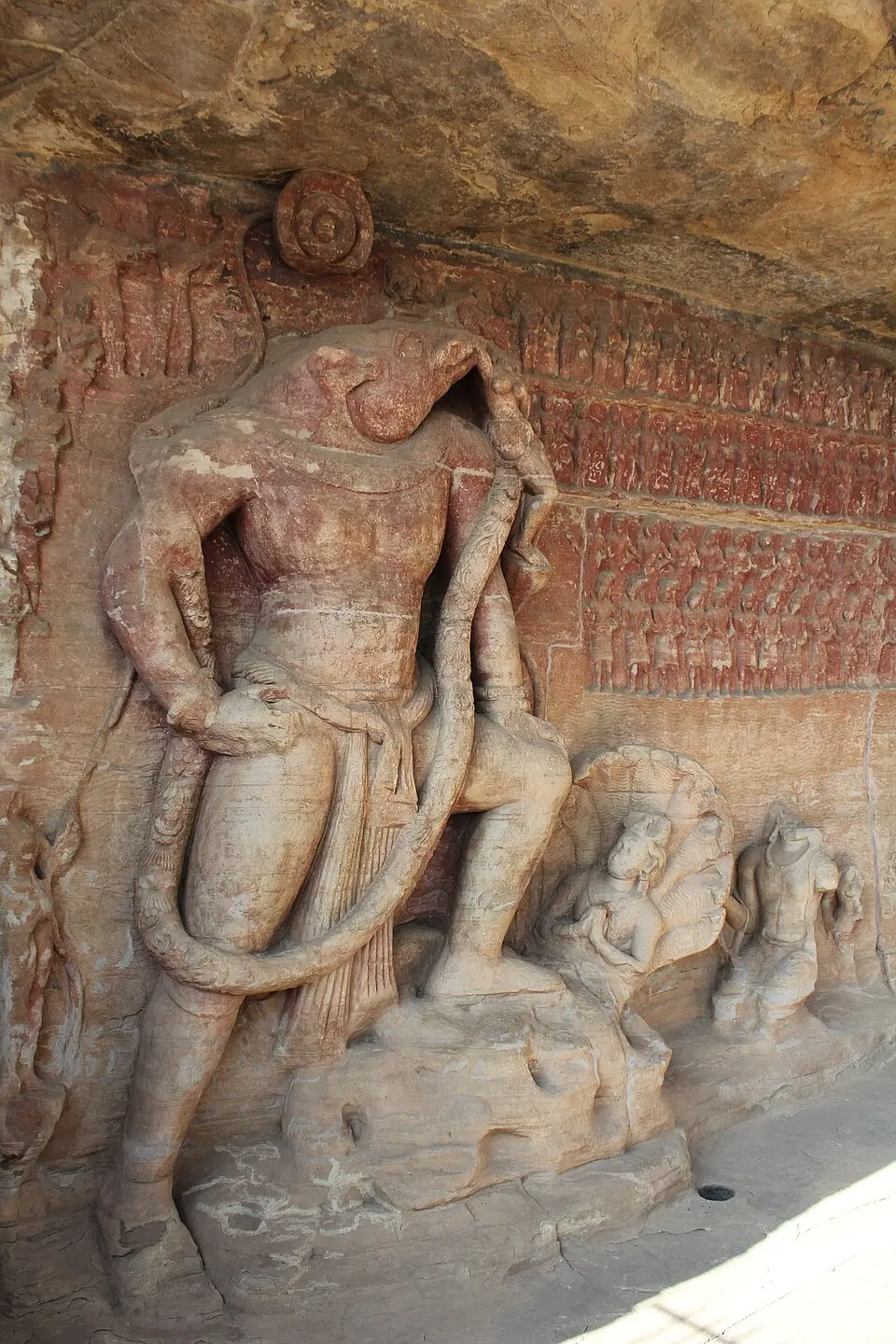
- At Udayagiri near Vidisha in Madhya Pradesh, caves cut under the Gupta king Chandragupta II in the early fifth century carry the Varaha panel, where Vishnu as a giant boar lifts the earth goddess from the ocean, a scene many historians read as the king rescuing his land.
- At Udayagiri and Khandagiri near Bhubaneswar, Jain monks lived in caves of about the first century BCE linked to Kharavela of Kalinga, whose Hathigumpha inscription records his reign year by year.
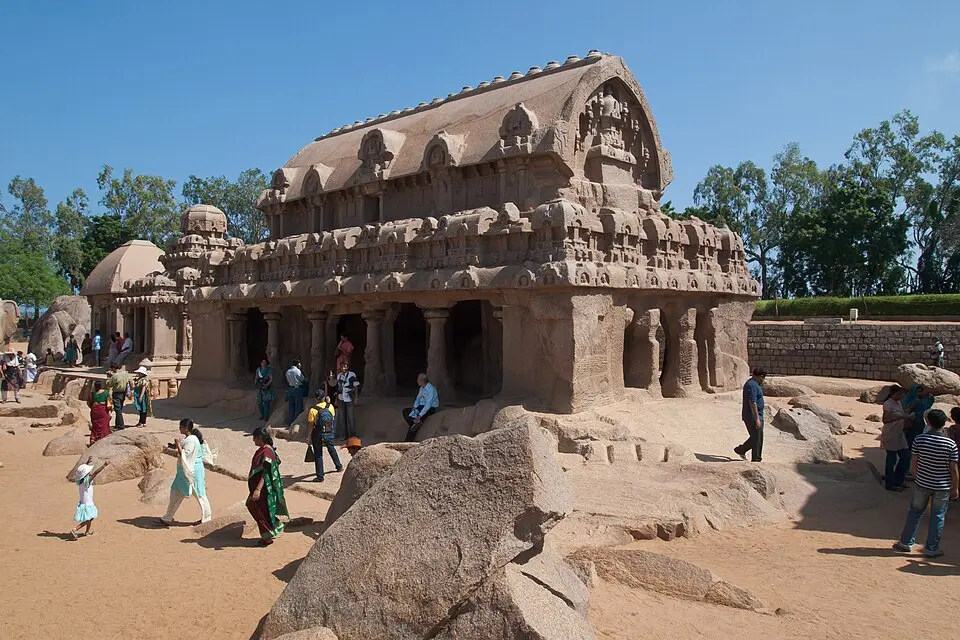
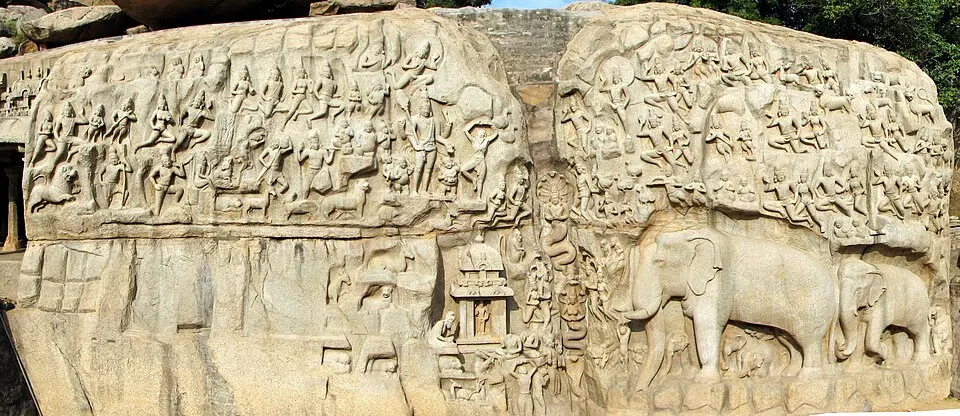
- At Mahabalipuram the Pallavas, above all Narasimhavarman I in the seventh century, cut the Pancha Rathas, five monolithic shrines each with a different roof, and the open air relief of the Descent of the Ganga across two boulders whose natural cleft becomes the river.


Why caves are among our best sources for early Indian art and history
- Evolution of form. Caves show stone copying wood, from the Lomas Rishi doorway to the teak ribbed vault at Karle, and then the leap from cave to monolith at Mahabalipuram and Ellora that prepared the structural temple. The change from symbolic stupa to Buddha image records the rise of Mahayana Buddhism.
- Art in place. Ajanta holds the largest surviving body of early Indian painting, and panels at Elephanta, Ellora and Udayagiri give a dated sequence of iconography that loose sculptures cannot give.
- Dated records. Ashoka's Barabar dedications, the Hathigumpha inscription, the Nashik inscription of Gautami Balashri praising her son Gautamiputra Satakarni, and the Udayagiri and Ajanta records are fixed in the rock where they were cut.
- Economy and society. Donative inscriptions name merchants, artisans, monks, nuns and many women donors, and one at Nashik records money placed with weavers' guilds so that the interest would clothe monks, early evidence of guilds acting as banks.
- Limits. Caves speak for monks and the wealthy who paid for them, inscriptions are often brief and much dating rests on style, so they must be read with coins, texts and excavation.
Dimensions
- Aesthetic. The chaitya window throws light on the stupa while the aisles stay dim, so light itself guides the worshipper.
- Religious and philosophical. Caves served the monks' rainy season retreat and the ritual of circling the stupa; later Hindu caves treated the cave as the cosmic womb where the deity lives.
- Economic and patronage. Early Deccan caves were collective gifts of merchants, guilds and ordinary devotees, while Ellora and Mahabalipuram show royal patrons, often supporting more than one faith.
- Technical. Every cut had to be planned because a mistake could not be patched, and the stone shaped the result: granite at Barabar took a polish, Deccan basalt allowed large halls, and sandstone at Udayagiri allowed deep relief.
- Foreign links. Yavana donors and Roman trade through Konkan ports place the caves on wide networks, and the Ajanta idiom travelled with Buddhism to Sri Lanka and Central Asia.
In practice
- The United Nations Educational, Scientific and Cultural Organization (UNESCO) inscribed Ajanta and Ellora in 1983, Mahabalipuram in 1984 and Elephanta in 1987.
- The Ancient Monuments and Archaeological Sites and Remains Act, 1958 (Ministry of Culture) protects these sites, and its 2010 amendment created a 100 metre prohibited area, a 200 metre regulated area beyond it and the National Monuments Authority.
- The Adopt a Heritage scheme (Ministry of Tourism, 2017; Adopt a Heritage 2.0 in 2023) invites companies to fund visitor amenities at monuments.
- Case, Ajanta's replica caves. Breath, body heat and light from crowds raise humidity and harm the murals, so a Japanese funded conservation and tourism project built a visitor centre with full size replicas of key caves to take pressure off the originals.
- Case, Mahabalipuram. Salt laden sea winds weather the granite, so the Archaeological Survey of India (ASI) treats and monitors the open air reliefs regularly.


Issues and way forward
- Seepage and weathering. Monsoon water enters through joints in the rock and dissolves carving and plaster, so drainage above the caves, sealing of cracks and regular treatment by the ASI's science branch are needed.
- Fragile murals. Humidity, insects, bats and varnish from early restoration attempts have darkened and flaked the Ajanta paintings. Timed entry, cool lighting, visitor caps and digital documentation are the answer, and UNESCO's World Heritage Committee requires management plans of this kind for listed sites.
- Weak records. The Comptroller and Auditor General (CAG), in its 2013 audit, found that the ASI lacked a complete database of monuments and antiquities and recommended building one, the base for any monitoring.
Common confusions
- Chaitya and vihara. A chaitya is a prayer hall with a stupa; a vihara is a monastery with cells.
- Cave and monolith. Kailasa and the Pancha Rathas are monoliths carved in the open, not caves cut into a cliff face.
- Two Udayagiris. Udayagiri near Vidisha is Gupta and Hindu; Udayagiri near Bhubaneswar is Jain and linked to Kharavela.
- Trimurti at Elephanta. The image is the Maheshmurti, three aspects of Shiva, not Brahma, Vishnu and Shiva.
- Barabar caves. They were given to the Ajivikas, not to Buddhist monks.
For the exam
- Keyword bank: chaitya, vihara, Ajivikas, Lomas Rishi doorway, timber to stone, Karle, Yavana donors, Ajanta murals, Vakatakas, Kailasa top down, Maheshmurti, Varaha panel, Hathigumpha, Pancha Rathas, donative inscriptions, guilds.
- Previous year questions: Practise the previous year questions on this topic →
- Use in an answer:
- Introduction (data): From the Barabar caves of the third century BCE to the Kailasa temple of the eighth century CE, India's rock cut tradition spans over a thousand years, and four of its ensembles are World Heritage sites.
- Introduction (judgement, quote or report): UNESCO describes the paintings and sculptures of Ajanta as masterpieces of Buddhist religious art that have had a considerable artistic influence.
- Conclusion: Because caves fix art, inscriptions and plans in the rock where they were made, they remain among the surest sources for early Indian religion, economy and society, though they speak mainly for monks and patrons.
- Conclusion: Protecting them from seepage, crowds and neglect protects a primary archive of Indian history, not only a set of tourist sites.
Photo credits
Photographs are from Wikimedia Commons; each photo links to its file page, which gives the photographer and licence.