Plastic pollution
- Syllabus
- Conservation, environmental pollution and degradation, environmental impact assessment
- As of
- October 2026
- polymer
- thermoplastic and thermoset
- resin identification code
- microplastics
- nanoplastics
- single use plastic ban
- carry bag thickness
- Plastic Waste Management Rules 2016
- extended producer responsibility
- recycled content
- compostable plastic
- multilayered packaging
- global plastics treaty
- Intergovernmental Negotiating Committee
- production cap
The first principle
Plastics are useful for the same reason they pollute: they are cheap, light and almost indestructible. Their long carbon chains, made from oil and gas, are bonds that few microbes have evolved to break, so a plastic object does not rot away but breaks into ever smaller pieces that last for centuries. Plastic pollution therefore cannot be solved at the end of the pipe alone; it has to be tackled across the whole life of the material, from how much is made, to how it is designed, to what happens when it is thrown away.
The core
What plastics are
- Plastics are polymers, long chains of repeating units (monomers) such as ethylene or propylene, usually made from petroleum or natural gas, to which additives such as plasticisers, colours and flame retardants are added.
- Thermoplastics soften on heating and can be remoulded, so they can in principle be recycled; polyethylene, polypropylene, polyvinyl chloride (PVC), polystyrene and polyethylene terephthalate (PET) are examples. Thermosets such as Bakelite and epoxy set permanently when made and cannot be remelted.
- Some additives are harmful. Phthalates (used to soften PVC) and bisphenol A (BPA, used in some hard plastics) can disturb hormones in the body, and burning PVC releases dioxins and hydrochloric acid.
- The scale. The world made about 460 million tonnes of plastic in 2019, and only about 9 per cent of its plastic waste was recycled, while the rest was burnt, landfilled or leaked into the environment (OECD, Global Plastics Outlook 2022).
Microplastics and nanoplastics
- Microplastics are plastic pieces smaller than 5 millimetres. Primary microplastics are made small on purpose, such as microbeads in cosmetics and the pellets from which products are moulded, while secondary microplastics come from the breakdown of larger items by sunlight, heat and waves, and from the wear of tyres and the washing of synthetic clothes.
- Nanoplastics are smaller than a micrometre, small enough to cross cell membranes, which is why they concern health scientists most.
- Why they matter. Microplastics are eaten by plankton, fish and birds and move up the food chain; their large surface area also carries persistent organic pollutants, so they act as carriers of other toxins. They have been found in sea salt, drinking water, seafood and human blood.
Dimensions
- Environmental. Plastic chokes drains and worsens urban floods, entangles and kills marine animals, and lost fishing nets, called ghost gear, go on catching fish for years.
- Health. Burning mixed plastic in open dumps releases dioxins and fine particles, and the health effects of microplastics in the body are an active area of research.
- Climate. Plastic is made from fossil fuels, so its production and burning add greenhouse gases throughout its life.
- Economic. Plastic packaging keeps food fresh and medicines safe, and the industry employs millions, so bans on items with no cheap substitute are hard to enforce.
- Social. Informal waste pickers collect high value plastics such as PET bottles, while low value films and multilayered packets are left behind because nobody pays to collect them.
- International. Plastic waste crosses borders through rivers, ocean currents and trade, which is why amendments to the Basel Convention, in force from 2021, bring mixed plastic waste under the prior consent rule, and why a global treaty is being negotiated.
In practice
India's rules
- Scale in India. The Central Pollution Control Board (CPCB) estimated that India generated about 41 lakh tonnes of plastic waste in 2020-21.
- Plastic Waste Management Rules 2016 (Ministry of Environment, Forest and Climate Change, under the Environment (Protection) Act 1986) replaced the 2011 rules, raised the minimum thickness of carry bags to 50 microns and made urban local bodies and producers responsible for collection.
- The 2021 amendment banned 19 identified single use plastic items from 1 July 2022, and raised carry bag thickness to 75 microns from 30 September 2021 and 120 microns from 31 December 2022. The banned items include earbuds with plastic sticks, balloon sticks, plastic flags, candy and ice cream sticks, polystyrene (thermocol) for decoration, plates, cups, glasses, cutlery, straws, trays, wrapping films for sweet boxes, invitation cards and cigarette packets, PVC banners under 100 microns, and stirrers.
- The EPR guidelines of February 2022 require producers, importers and brand owners to register on a CPCB portal and meet yearly targets for collecting and recycling the packaging they place on the market, in four categories: rigid (I), flexible (II), multilayered (III) and compostable (IV). They also require minimum recycled content in new packaging, which for rigid plastic rises from 30 per cent in 2025-26 to 60 per cent by 2028-29.
- The 2024 amendment tightened the definitions of biodegradable and compostable plastic. Compostable plastic must meet the Indian standard IS 17088 and breaks down only in industrial composting conditions, not in a drain or a field.
Cases
- Sikkim banned plastic carry bags as early as 1998, long before the national rules, showing that a small State with strong local enforcement can make a ban stick.
- Plastic in roads. Shredded waste plastic is blended with bitumen in road building, which uses low value plastic that recyclers do not want.
- World Environment Day 2018, hosted by India, had the theme "Beat Plastic Pollution", and India used the occasion to commit to phasing out single use plastic by 2022.
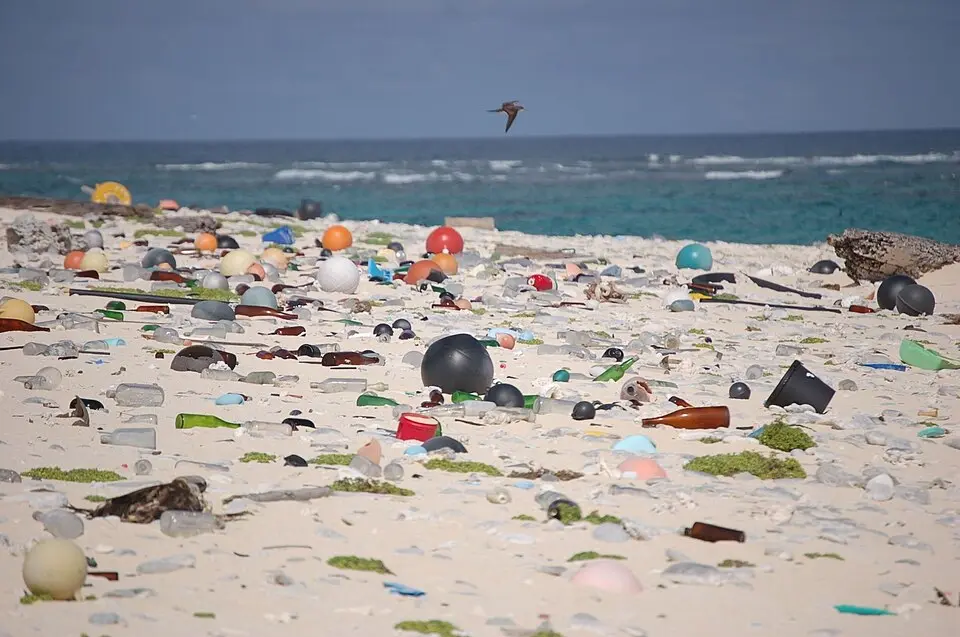

The global plastics treaty
- The mandate. In March 2022 the United Nations Environment Assembly adopted resolution 5/14 to negotiate a legally binding instrument on plastic pollution covering the full life cycle of plastic, through an Intergovernmental Negotiating Committee (INC), with the aim of finishing by the end of 2024.
- The talks so far. Sessions at Punta del Este (2022), Paris and Nairobi (2023), Ottawa and Busan (2024) and Geneva (August 2025) all ended without an agreed text. At a one day session in Geneva on 7 February 2026 (INC-5.3), countries elected a new chair to carry the talks forward.
- The dividing line is whether the treaty should cap the production of new plastic and regulate harmful chemicals in it, as the High Ambition Coalition led by Norway and Rwanda wants, or deal mainly with waste management, recycling and design, as oil and plastic producing countries prefer. India has opposed binding limits on production and has asked for finance and technology for developing countries.
Issues and way forward
- Weak enforcement of the ban. Banned items still circulate because small makers in the informal sector are hard to police and substitutes cost more, so steady checks by State Pollution Control Boards and support for small units to switch products are needed.
- Multilayered packaging. Chips packets and sachets are made of fused layers of plastic and foil that cannot be separated, so they are not recycled; design rules that favour single material packaging and higher EPR targets for this category are the answer.
- Certificates without collection. The EPR system depends on honest certificates, so audits of recyclers and traceability on the portal matter as much as the targets.
- The informal sector. Waste pickers already collect much of India's recycled plastic, and EPR money should reach them through material recovery facilities rather than bypass them.
- Substitutes with their own costs. Paper, cloth and so called bioplastics have their own land, water and carbon footprints, so the priority is reuse and refill systems rather than swapping one disposable item for another.
- A treaty without production limits would leave the growth of plastic unchecked, while a treaty without finance would be hard for developing countries to implement, so a workable treaty will likely need both design standards and support.
Common confusions
- Biodegradable and compostable. Biodegradable plastic breaks down by microbial action in some environment over some period, while compostable plastic must break down within a set time under composting conditions to a standard such as IS 17088, usually in an industrial facility.
- Primary and secondary microplastics. Primary microplastics are made small, such as microbeads and pellets, while secondary microplastics form when larger plastic breaks down.
- The ban and EPR. The single use plastic ban prohibits 19 items with easy substitutes, while EPR governs packaging that is not banned, such as bottles and multilayered packets, by making producers pay for its collection.
- Recyclable and recycled. A product can be technically recyclable and still never be recycled if collecting it costs more than the material is worth.
For the exam
- Keyword bank: polymer, thermoplastic, resin identification code, microplastics, nanoplastics, ghost gear, single use plastic ban, 120 micron carry bags, Plastic Waste Management Rules 2016, extended producer responsibility, recycled content mandate, multilayered packaging, compostable plastic (IS 17088), UNEA resolution 5/14, production cap.
- Previous year questions: Practise the previous year questions on this topic →
- Use in an answer:
- Introduction with data: The world made about 460 million tonnes of plastic in 2019 but recycled only about 9 per cent of its plastic waste (OECD, 2022), and India alone generated about 41 lakh tonnes of plastic waste in 2020-21 (CPCB).
- Introduction with a law: Through the 2021 amendment to the Plastic Waste Management Rules, India banned 19 single use plastic items from 1 July 2022 and raised the minimum thickness of carry bags to 120 microns.
- Conclusion: Bans remove the most visible items, but the plastic that matters most is packaging, so the real test of India's policy is whether extended producer responsibility leads to plastic actually being collected and recycled.
- Conclusion: A durable answer to plastic pollution needs action at every stage of the life cycle, from less production and better design to reuse and honest recycling, and the stalled treaty talks show how hard that is to agree globally.