Aquatic and marine species
- Syllabus
- Conservation, environmental pollution and degradation, environmental impact assessment
- As of
- October 2026
- Gangetic dolphin
- Project Dolphin
- echolocation
- Vikramshila Gangetic Dolphin Sanctuary
- dugong
- seagrass
- Dugong Conservation Reserve
- olive ridley
- arribada
- Operation Olivia
- turtle excluder device
- temperature dependent sex determination
- gharial
- whale shark
- coral polyp
The first principle
An aquatic animal cannot be protected by fencing a patch of habitat, because water connects everything it needs. A river dolphin needs the whole river, with enough flow, fish and unbroken stretches, and a sea turtle needs a quiet beach to nest, a safe coastal sea to feed in and an open ocean to cross. So the conservation of these species is really the management of rivers, coasts and fishing, and the most common killer is the same everywhere: being caught by accident in fishing gear.
The core
Gangetic dolphin (Platanista gangetica)
- Status: Endangered on the Red List of the International Union for Conservation of Nature (IUCN); Schedule I of the Wildlife (Protection) Act 1972 (WPA); Appendix I of the Convention on International Trade in Endangered Species of Wild Fauna and Flora (CITES). It was declared India's national aquatic animal in 2009.
- Biology: Its eyes lack a lens, so it is practically blind and finds fish by echolocation, sending out clicks and reading the echoes; it must surface to breathe, and it prefers deep pools where currents meet.
- Range in India: The Ganga, Brahmaputra and their tributaries, with Uttar Pradesh and Bihar holding most of the population. The Vikramshila Gangetic Dolphin Sanctuary at Bhagalpur in Bihar (1991) is the only protected area set up for the species, and a small population of the related Indus river dolphin survives in the Beas in Punjab.
- Main threats: Drowning in gill nets, barrages that split the river into isolated stretches, dredging for waterways, sand mining and sewage and industrial pollution.
- Programme: Project Dolphin, announced on 15 August 2020, covers river and marine dolphins, and the first national estimate counted 6,327 river dolphins in 2025.

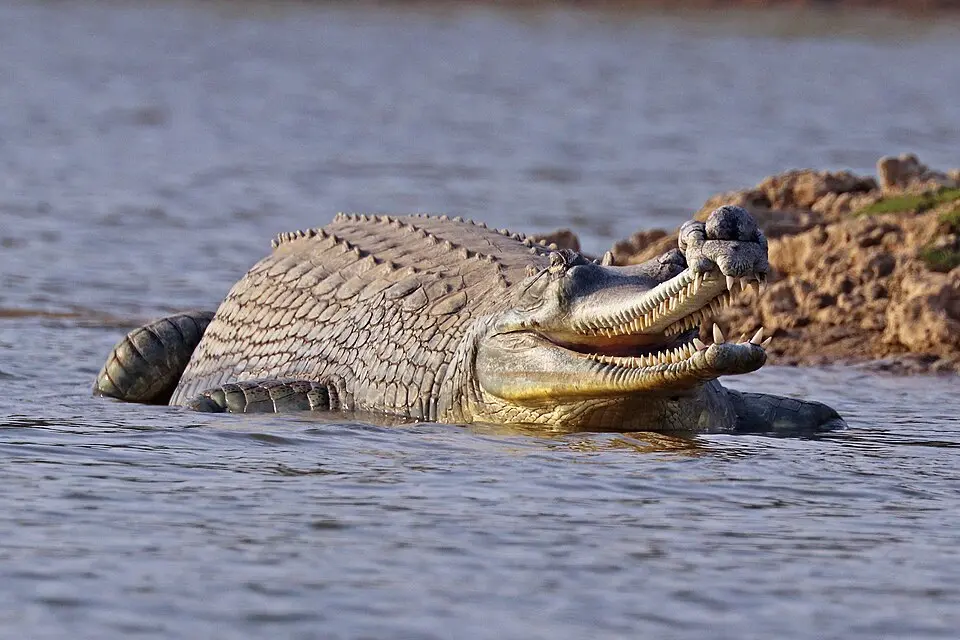
Gharial (Gavialis gangeticus)
- Status: Critically Endangered on the IUCN Red List, Schedule I of the WPA and CITES Appendix I.
- Biology: A crocodilian with a long, thin snout lined with teeth for catching fish; adult males carry a bulbous knob, the ghara, on the tip of the snout, which gives the animal its name.
- Range in India: The National Chambal Sanctuary, spread across Madhya Pradesh, Rajasthan and Uttar Pradesh, holds the largest population, with smaller ones in the Girwa at Katarniaghat, the Son, the Gandak and the Ramganga.
- Main threats: Gill nets, sand mining on nesting banks, dams that change flow, and loss of the deep pools it rests in.
- Programme: Project Crocodile, begun in 1975 with help from the United Nations Development Programme and the Food and Agriculture Organization, collected eggs from the wild, reared the young in centres and released them, which saved the species from near extinction in the 1970s. The mugger (Crocodylus palustris), the broad snouted crocodile of lakes and rivers, is Vulnerable on the IUCN Red List.

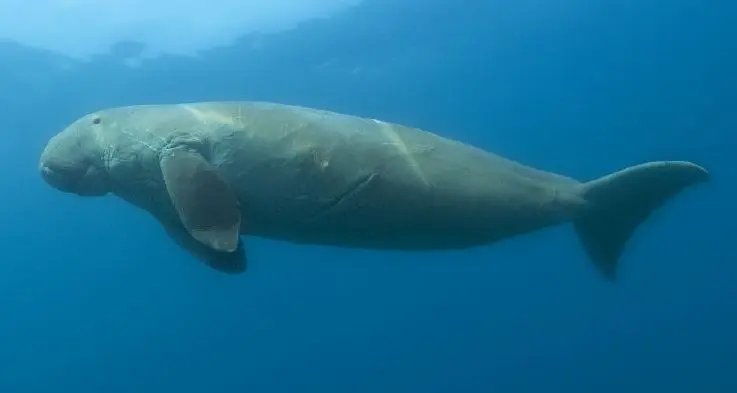
Dugong (Dugong dugon)
- Status: Vulnerable on the IUCN Red List, Schedule I of the WPA and CITES Appendix I.
- Biology: The dugong, or sea cow, is a marine mammal that feeds only on seagrass, which it grazes from the sea floor, and it breeds slowly, with a single calf after a long gap.
- Range in India: The Gulf of Mannar, Palk Bay, the Gulf of Kutch and the Andaman and Nicobar Islands; only a few hundred dugongs are thought to remain in India, most of them in Palk Bay and the Gulf of Mannar.
- Main threats: Accidental capture in nets, loss of seagrass to bottom trawling and silt, and boat strikes.
- Programme: Tamil Nadu notified India's first Dugong Conservation Reserve, 448 sq km of Palk Bay off Thanjavur and Pudukkottai districts, in September 2022.

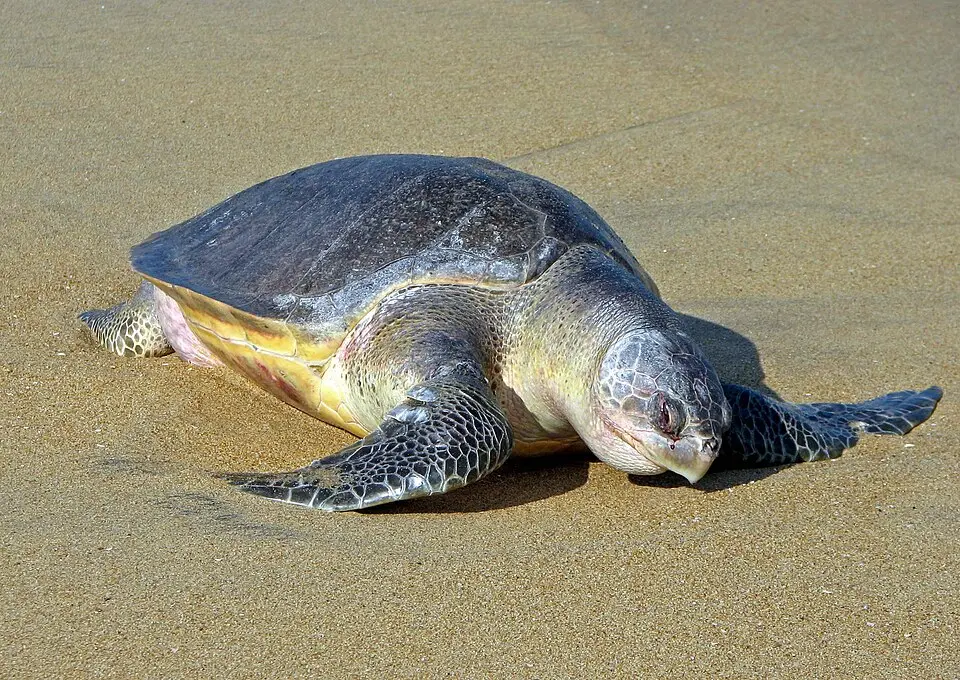
Sea turtles
- Status: Five species visit Indian waters: the olive ridley (Lepidochelys olivacea, Vulnerable), the green turtle (Endangered), the hawksbill (Critically Endangered), the leatherback (Vulnerable) and the loggerhead (Vulnerable). All five are in Schedule I of the WPA and CITES Appendix I.
- Arribada: The olive ridley nests in arribadas, the Spanish word for arrival, when thousands of females come ashore together over a few nights. In India this happens on the Odisha coast at Gahirmatha, protected as a marine sanctuary since 1997, and at the mouths of the Rushikulya and the Devi.
- Main threats: Drowning in trawl and gill nets, lights and construction on nesting beaches, and erosion of the beaches themselves. The leatherback, the largest turtle, nests on the beaches of the Andaman and Nicobar Islands, including Great Nicobar.
- Programme: Odisha bans fishing close to its nesting coast during the season; the Indian Coast Guard patrols these waters under Operation Olivia; trawlers are asked to fit turtle excluder devices, grids that let a turtle escape from the net; and the National Marine Turtle Action Plan of 2021 sets the national framework.
- Temperature decides sex. In sea turtles, and in crocodilians such as the gharial, the sex of a hatchling is set by the temperature of the nest during incubation, not by sex chromosomes, so a warming beach can tip a whole generation towards one sex.

Sharks and rays
- *Whale shark (Rhincodon typus):* the largest fish, a filter feeder that eats plankton; Endangered on the IUCN Red List, listed under CITES, and in 2001 the first fish placed in Schedule I of the WPA. It visits the Saurashtra coast of Gujarat, where fishermen are compensated for cutting their nets to release a trapped shark.
- Why sharks are fragile: They grow slowly, mature late and bear few young, so they cannot replace a heavy catch, and the trade in fins drives much of it. All sawfishes are in CITES Appendix I, and in 2022 CITES added the whole requiem shark family to Appendix II, so trade in their fins needs permits.
Corals as animals
- What a coral is: A coral is a colony of tiny animals called polyps, relatives of jellyfish in the phylum Cnidaria, which build skeletons of calcium carbonate. Algae called zooxanthellae live inside their tissue, give them colour and supply most of their food by photosynthesis, while the coral gives the algae shelter and nutrients.
- Status: Corals are in Schedule I of the WPA, which the Ministry of Environment, Forest and Climate Change (MoEFCC) told Parliament in 2024 gives them the highest protection, and all hard corals are in CITES Appendix II.
- Bleaching: When the sea stays warmer than the usual summer maximum for weeks, the polyps expel their algae, turn white and starve; reefs recover if the heat passes, but repeated bleaching kills them. Reefs, mangroves and the rules for coasts are covered in the note on mangroves, coral reefs and coasts.
Dimensions
- Ecological. A dolphin or gharial sits at the top of a river food web, so a healthy population means a healthy river; this is why the dolphin is treated as an indicator species for the Ganga.
- Economic. The same rivers and coasts feed millions of fishing families, so a rule that protects a dolphin or turtle often restricts a livelihood and works only with compensation or alternative income.
- Developmental. Barrages, inland waterways, ports and beach resorts change flow, depth and light, which are exactly what these species depend on, so their protection must enter project appraisal.
- Climate. Warmer nests skew turtle sex ratios, hotter seas bleach corals, and rising seas erode nesting beaches.
- International. Turtles, whale sharks and dugongs cross national waters, so India works through CITES and through agreements under the Convention on the Conservation of Migratory Species of Wild Animals (CMS), including its memorandum of understanding on dugongs.
In practice
- First river dolphin estimate (2025). The survey covered 28 rivers in eight states and counted 6,327 river dolphins; Uttar Pradesh had 2,397, Bihar 2,220, West Bengal 815 and Assam 635. The report was released at the seventh meeting of the National Board for Wildlife at Sasan Gir in March 2025.
- Dugong reserve (2022). The Palk Bay reserve protects the largest seagrass beds used by dugongs in India, so protecting the animal and protecting the meadows it feeds on become the same task.
- Odisha's turtle season. The fishing ban near the nesting coast, Coast Guard patrols and turtle excluder devices together protect the arribadas, though the ban is resented by small fishers who lose income for months.
- Gharial die off. About a hundred gharials died in the Chambal in the winter of 2007–08, which showed how quickly a species concentrated in one river can be lost.
Issues and way forward
- Bycatch. Gill nets and trawls kill more of these animals than any poacher, so gear rules, turtle excluder devices, seasonal closures and compensation for released catch must go together.
- Fragmented rivers. Barrages isolate small groups of dolphins that cannot breed with each other, so environmental flows and fish passes should be part of every river project, and dredging for waterways should avoid deep pools.
- Sand mining. Mining removes the banks where gharials and turtles nest, so sand mining rules must protect nesting stretches during the breeding season.
- Seagrass and reef loss. Bottom trawling and silt destroy seagrass, and warming destroys reefs, so marine protected areas need to cover feeding grounds, not just nesting beaches.
- Data. Apart from the 2025 dolphin count, most of these species lack regular population estimates, so periodic national surveys are needed.
Common confusions
- Gangetic dolphin and Indus dolphin. Both are blind river dolphins of the genus Platanista, but the Gangetic dolphin lives in the Ganga and Brahmaputra systems, while the Indus dolphin survives in India only in the Beas.
- Gharial and mugger. The gharial has a long thin snout and eats fish, while the mugger has a broad snout and eats almost anything; the gharial is Critically Endangered and the mugger Vulnerable.
- Dugong and dolphin. The dugong is a seagrass eating sea cow related to elephants, while a dolphin is a toothed whale that hunts fish.
- Coral and seagrass. A coral is an animal colony that builds a reef, while seagrass is a flowering plant that grows on sandy sea beds.
For the exam
- Keyword bank: national aquatic animal, Project Dolphin, echolocation, indicator species, environmental flow, bycatch, dugong conservation reserve, seagrass meadow, arribada, Operation Olivia, turtle excluder device, temperature dependent sex determination, gharial, coral polyp and zooxanthellae, coral bleaching.
- Previous year questions: Practise the previous year questions on this topic →
- Use in an answer:
- Introduction with data: India's first national estimate counted 6,327 river dolphins across 28 rivers in eight states in 2025, with Uttar Pradesh and Bihar holding most of them.
- Introduction with a law: The Gangetic dolphin, the dugong and all five sea turtles in Indian waters are in Schedule I of the Wildlife (Protection) Act 1972, the highest protection Indian law gives.
- Conclusion: An aquatic species is saved only when its whole river or coast is managed, so dolphin and turtle protection must be written into fishing rules, river flows and coastal projects.
- Conclusion: Bycatch is the common thread in the decline of dolphins, gharials, turtles and dugongs, so working with fishers, not against them, is the core of aquatic conservation.