Solid and hazardous waste
- Syllabus
- Conservation, environmental pollution and degradation, environmental impact assessment
- As of
- October 2026
- municipal solid waste
- segregation at source
- Solid Waste Management Rules 2026
- bulk waste generator
- refuse derived fuel
- legacy waste and biomining
- sanitary landfill
- leachate
- electronic waste
- biomedical waste
- battery waste
- construction and demolition waste
- extended producer responsibility
- circular economy
- waste hierarchy
The first principle
Matter is not destroyed, only moved and changed, so every product we throw away goes somewhere: into soil, water or air, or back into use. The person who throws it away rarely pays for where it ends up, which is why waste is a classic externality that markets alone will not fix. Good waste policy therefore does two things: it keeps material in use for as long as possible, and it puts the cost of what remains on whoever made or discarded it.
The core
Kinds of waste
- Municipal solid waste is what homes, shops, offices and markets discard. In Indian cities about half of it is wet, biodegradable kitchen and garden waste, and the rest is dry waste such as paper, plastic, glass, metal, cloth and inert dust.
- Hazardous waste is waste that is toxic, corrosive, flammable, reactive or infectious, such as industrial sludge, spent solvents and used oil, and it must be stored, transported and treated separately.
- Electronic waste is discarded electrical and electronic equipment. It contains toxic lead, mercury, cadmium and brominated flame retardants, but also gold, silver, copper and rare metals, so recovering them is called urban mining.
- Biomedical waste comes from hospitals, laboratories and clinics and can carry infection; construction and demolition waste is concrete, brick, soil and steel from buildings; and battery waste, especially lead acid and lithium ion, carries toxic and valuable metals together.
How waste is treated
- Wet waste can be composted, where microbes break it down in the presence of oxygen into manure, or biomethanated, where microbes digest it without oxygen to give biogas (mostly methane) and slurry.
- Dry waste goes to a material recovery facility for sorting and recycling, and what cannot be recycled but burns well can be shredded into refuse derived fuel (RDF) for cement kilns.
- Waste to energy plants burn waste to make power, but mixed Indian waste is wet and has a low calorific value, so many such plants have run poorly or caused air pollution.
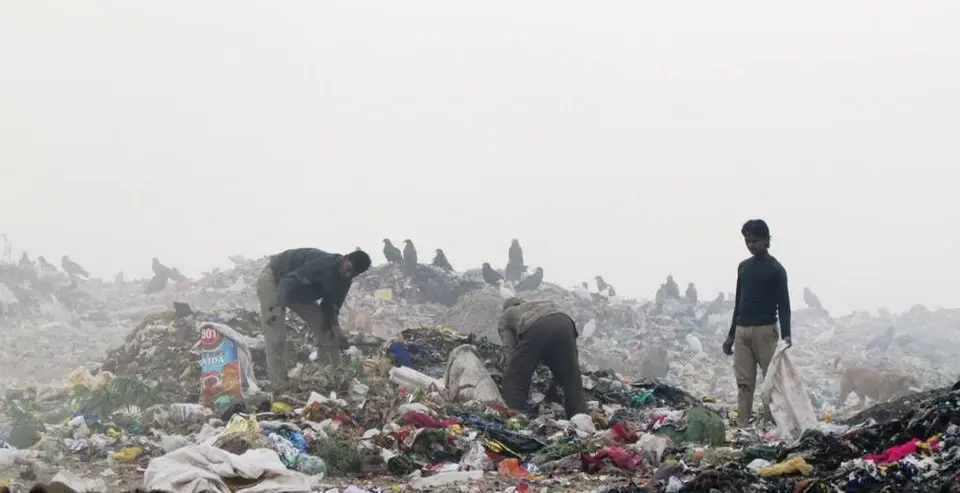
- A sanitary landfill is an engineered pit with a liner, a system to collect leachate (the toxic liquid that drains through waste) and a vent for gas. An open dump has none of these, so it leaks leachate into groundwater, releases methane and catches fire, as the Ghazipur dump in Delhi has done repeatedly.
Extended producer responsibility and the circular economy
- Extended producer responsibility (EPR) makes the producer, importer or brand owner responsible for a product after the consumer discards it. In India the producer registers on a Central Pollution Control Board (CPCB) portal, receives a yearly collection or recycling target, meets it by buying certificates from registered recyclers, and pays environmental compensation if it falls short.
- India now applies EPR to plastic packaging, electronic waste, batteries, waste tyres, used oil and end of life vehicles, each under its own rules, and the newest rules also require new products to contain a minimum share of recycled material, which creates demand for what is collected.
- A circular economy keeps materials in use by designing out waste, repairing and reusing products, and recycling what is left, in contrast to the linear take, make and throw model. Sustainable Development Goal 12 on responsible consumption and production is its international frame, and Mission LiFE (Lifestyle for Environment, 2022) takes the idea to the consumer.
Dimensions
- Health. Open dumps and burning release dioxins and fine particles, informal recyclers who burn cables or leach circuit boards with acid are exposed to lead and mercury, and badly handled biomedical waste spreads infection.
- Environmental. Leachate contaminates groundwater, and organic waste rotting without oxygen in dumps releases methane, a greenhouse gas many times stronger than carbon dioxide over a century.
- Economic. Recovered paper, metal and plastic are raw material, and India's informal waste pickers already recover much of it, so waste is also a livelihood for some of the poorest urban workers.
- Governance. Solid waste management is listed in the Twelfth Schedule of the Constitution, added by the 74th Amendment, so it is the task of urban local bodies, which usually lack money, land and trained staff.
- Social. Waste work is unsafe and carries stigma, so formalising waste pickers through identity cards, safety gear and a place in material recovery facilities is a question of dignity as well as efficiency.
- International. The Basel Convention controls the movement of hazardous waste across borders, and India's Hazardous and Other Wastes Rules 2016 bar import of waste for disposal, as the chemicals and waste conventions note explains.
In practice
The rules in force in 2026
All of these are framed under the Environment (Protection) Act 1986 by the Ministry of Environment, Forest and Climate Change (MoEFCC).
- Solid Waste Management Rules 2026, in force from 1 April 2026, replaced the 2016 rules. They require segregation at source into four streams (wet, dry, sanitary and special care waste), make bulk waste generators, those with a floor area of 20,000 square metres, water use of 40,000 litres a day or waste of 100 kg a day, responsible for their own waste through Extended Bulk Waste Generator Responsibility, restrict landfills to waste that cannot be recycled or burnt for energy, set timelines for biomining of legacy dumps, require industries that burn solid fuel, such as cement kilns, to raise their use of RDF in steps, and put everything on a single CPCB portal.
- E-Waste (Management) Rules 2022, in force since 1 April 2023, cover 106 types of equipment and replaced the old collection targets with recycling targets met through EPR certificates traded on the CPCB portal.
- Battery Waste Management Rules 2022 cover every kind of battery, from portable to electric vehicle batteries, with collection and recycling targets and a minimum share of recycled material in new batteries.
- Bio-Medical Waste Management Rules 2016 require segregation into colour coded categories (yellow, red, white translucent and blue), treatment at common biomedical waste facilities, and bar coding of bags.
- Environment (Construction and Demolition) Waste Management Rules 2025, in force from 1 April 2026, put EPR on builders of projects with a built up area of 20,000 square metres or more, with recycling targets rising to 100 per cent and a rising share of recycled material in new construction.
- Hazardous and Other Wastes (Management and Transboundary Movement) Rules 2016, with EPR added for waste tyres in 2022 and used oil in 2023, and separate rules of 2025 for end of life vehicles.
Data and cases
- Municipal waste. India's cities generated about 1.6 lakh tonnes of solid waste a day in 2020-21; about 95 per cent was collected, about half was treated and the rest was landfilled or remained unaccounted for (CPCB).
- Electronic waste. CPCB estimates put generation at well over ten lakh tonnes a year, and much of it is still dismantled informally in clusters such as Seelampur in Delhi and Moradabad.
- The judgement that began it. Almitra H Patel v Union of India, a public interest petition filed in the Supreme Court in 1996, led to the first Municipal Solid Waste (Management and Handling) Rules of 2000.
- Swachh Bharat Mission (Urban) 2.0, launched in 2021, aims at garbage free cities and the clearing of legacy dumpsites.
- Indore topped the Swachh Survekshan cleanliness rankings for seven years in a row from 2017 by insisting on segregation in every household and running a large bio CNG plant on wet waste, while Alappuzha in Kerala shifted to household and community composting instead of a central dump.

Issues and way forward
- Segregation fails at the doorstep. Mixed waste cannot be composted or recycled well, so the 2026 rules pair user fees with higher landfill charges for unsegregated waste; the lesson of Indore is that steady enforcement and daily collection matter more than technology.
- Legacy dumps. Decades of waste sit in mountains on city edges, so biomining with recovery of soil, RDF and inert fill, on fixed timelines, has to precede any new landfill.
- Weak cities. Urban local bodies lack funds and engineers, so the Fifteenth Finance Commission tied part of its grants to sanitation, and the Second Administrative Reforms Commission urged stronger municipal finance.
- The informal sector is left out. EPR certificates often flow to large recyclers while most collection is done by waste pickers, so integrating them into material recovery facilities and the EPR chain is needed.
- Certificates without recycling. A portal system invites false claims, so the 2026 rules add audits and environmental compensation, but regular physical checks of recyclers by the State Pollution Control Boards remain essential.
- Waste to energy disappointments. Burning wet mixed waste wastes money and fouls the air, so plants should receive only dry, high calorific residue after composting and recycling.
Common confusions
- Sanitary landfill and dump. A sanitary landfill is lined and managed for leachate and gas, while a dump is open ground where waste is simply piled.
- Composting and biomethanation. Composting works with oxygen and yields manure, while biomethanation works without oxygen and yields biogas.
- EPR and Extended Bulk Waste Generator Responsibility. EPR puts the duty on producers of a product, while the bulk generator duty in the 2026 rules falls on large waste generators such as housing societies and offices.
- Recycling and downcycling. Recycling turns a material back into a product of similar value, while downcycling turns it into something of lower value, such as plastic bottles into fibre.
- Hazardous waste and biomedical waste. Hazardous waste rules cover industrial and chemical waste, while biomedical waste, though often hazardous, has its own rules because of the risk of infection.
For the exam
- Keyword bank: waste hierarchy, segregation at source, four stream segregation, bulk waste generator, refuse derived fuel, legacy waste and biomining, sanitary landfill, leachate, urban mining, extended producer responsibility, EPR certificate, material recovery facility, circular economy, Twelfth Schedule, informal waste pickers.
- Previous year questions: Practise the previous year questions on this topic →
- Use in an answer:
- Introduction with data: Indian cities generate about 1.6 lakh tonnes of solid waste a day, and only about half of it is treated, the rest going to dumps or remaining unaccounted for (CPCB, 2020-21).
- Introduction with a law: The Solid Waste Management Rules 2026 replaced the 2016 rules with four stream segregation, responsibility for bulk waste generators and a single online portal to track waste from generation to disposal.
- Conclusion: India's waste problem is less one of technology than of segregation, enforcement and money for cities, and the informal waste picker is a partner in the solution rather than an obstacle to it.
- Conclusion: Extended producer responsibility can turn waste into a resource only if each certificate on the portal stands for material actually collected and recycled.